Obama Talks to Naughty and Nice Women

President Obama held a press conference at the White House. where he did something rare: He took questions from all female reporters.

Obama took questions from mostly print reporters, including McClatchy’s Lesley Clark, BNA’s Cheryl Bolen, Politico’s Carrie Budoff Brown, and The Wall Street Journal’s Colleen Nelson. The president also took one question from a radio reporter, April Ryan. None of the major TV networks was called upon for a question.

It is unclear if this was the first time a president called on all women during a press conference, but longtime White House reporters were declaring it a historic occasion.

At the end of the press conference, hours before Obama leaves for his Christmas vacation in Hawaii, a male reporter tried to fire off a question about Hillary Clinton, Obama’s former secretary of State and the 2016 Democratic front-runner for president if she runs.

White House officials could not confirm whether an all-women presser had ever been done before. But they did recognize what Earnest called a “unique opportunity.”

“The fact is, there are many women from a variety of news organizations who day-in and day-out do the hard work of covering the President of the United States,” Earnest said in a statement. “As the questioner list started to come together, we realized that we had a unique opportunity to highlight that fact at the President’s closely watched, end of the year news conference.”

White House officials say they informed the the television networks prior to the news conference that they were not likely to be included on the President’s list because each of them has asked the President questions at least twice since last month’s election.

The officials say most of the network reporters have had exclusive presidential interviews during that timeframe. So, the officials decided to call on reporters who have not questioned the president since the election.

Woman Reporter

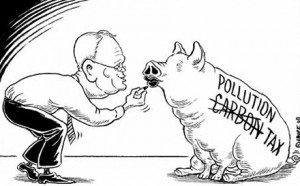
Time for a Carbon Tax

Kemal Dervis writes:  The sharp drop in the price of crude oil since late June has been grabbing headlines worldwide – and producing a lot of contradictory explanations.  Declining global growth expectations, the expansion of America’s oil and gas production and a tacit agreement between Saudi Arabia and the United States aimed at, among other things, weakening political rivals like Russia and Iran probably all contribute.

International Monetary Fund Managing Director Christine Lagarde has noted that lower oil prices may boost overall global growth, with the oil-importing advanced economies gaining the most, the impact on efforts to combat climate change could be devastating.

Indeed, a sustained decline in oil prices would not only make renewable energy sources less competitive, it would impede their future competitiveness by discouraging research and investment.  It would also reduce the incentive for consumers, companies, and governments to pursue more energy-efficient practices.

Even if we remained on our current trajectory, keeping temperatures from rising more than 2º Celsius above pre-industrial levels  would be next to impossible to achieve.

World leaders continue to depend on non-binding commitments,  leaving the world on a dangerous climate trajectory.

A sharp decline in oil prices does, however, provide a rare political opportunity to introduce more carbon pricing.  With declining oil prices now exerting downward pressure on oil substitutes, a carbon tax could be introduced without raising the price of energy for consumers.

The structure of a carbon-pricing scheme remains up for discussion. One option would be to introduce flexible pricing, tied to the price of oil. For example, for every $5 decline in the price per barrel, the carbon tax could be raised by a specified amount; for every $5 increase, the tax could be lowered by, say, two-thirds of that amount.

The carbon price would thus increase over time – the optimal outcome, according to growth models that account for climate constraints. At the same time, it would buffer consumers from oil-price volatility, thereby stabilizing their energy spending.  Such an approach would be more politically attractive than a fixed carbon tax, especially if it is introduced at a time of sharply declining oil prices.

Given the multitude of existing taxes, fees, and subsidies on energy products in various countries, the goal of aligning the effective cost of carbon with its most economically efficient level would take time to achieve.

Today’s environment of falling oil prices enables the world to take that step. It should be modest, so that it is politically feasible; flexible, so that it helps stabilize user prices; and it should increase over time, to place the global economy on a more sustainable path. Most important, it should be implemented quickly.

Carbon Tax?

ASEAN Express

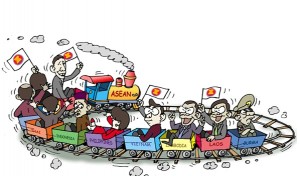
Can ten countries with different cultures, traditions, languages, political systems, and levels of economic development act in concert to expand their collective potential? That is the question with which the Association of Southeast Asian Nations (ASEAN) has been wrestling for decades. Judging by their leaders’ ambitious vision for cooperation, the answer may be yes.

What began as a straightforward push to reduce trade tariffs has evolved into a blueprint for a dynamic open market of 600 million consumers and a production base that can compete directly with the world’s largest economies.

Taken together, the group’s members – Brunei, Cambodia, Indonesia, Laos, Malaysia, Myanmar, the Philippines, Singapore, Thailand, and Vietnam – would comprise the world’s seventh-largest economy. Moreover, ASEAN’s international trade has almost tripled over the last decade.

The AEC plan aims to build on this momentum by removing barriers to the movement of goods, services, capital, and people throughout the region. The ASEAN countries could gain $280-625 billion in annual GDP by 2030.

Part of that growth stems from encouraging local companies to expand beyond their home markets.

ASEAN’s quest to become a unified market is far from complete. While average tariff rates in the original five member states (Indonesia, Malaysia, the Philippines, Singapore, and Thailand) have been virtually zero since 2010, some barriers must still be dismantled.

Though full integration appears unlikely by ASEAN’s target date of 2015, lately the effort has been imbued with a renewed sense of urgency. As wages in China rise, Southeast Asian economies have a window of opportunity to become the next “factories to the world.”

Of course, competing on the basis of low wages alone would be inadequate to raise living standards in the long term. ASEAN will also need to compete on productivity – an area in which countries like Cambodia, Indonesia, and Vietnam are currently at a disadvantage. Excluding Singapore and Brunei, average labor productivity in ASEAN remains about 40% lower than in China.

For ASEAN to become a real manufacturing powerhouse, its lower-income economies will need to focus on modernizing equipment and processes and building their workforces’ skills. They must also increase – and sustain – investment to address glaring infrastructure gaps and bring down high logistics costs.

Some critics insist that, even with such efforts, ASEAN members vary too widely in terms of their level of economic development to create a smoothly functioning single entity. But ASEAN, unlike the European Union, is not attempting to form a monetary union.

In fact, ASEAN’s focus on trade makes diversity an advantage, as companies seek to benefit from low-cost labor in some countries and intermediate manufacturing capabilities in others, all while gaining access to one of the world’s most sophisticated financial and logistics centers.

ASEAN’s lower-income economies have expressed concern that they will miss out on many of the benefits of deeper integration. But this does not have to be the case. Mexico, for example, has arguably enjoyed greater economic benefits from the North American Free Trade Agreement than the United States or Canada has.

ASEAN governments must urge businesses to expand into neighboring markets. Here, removing a handful of key administrative barriers could go a long way.

As it stands, restrictions on foreign investment and trade barriers continue to shield many domestic industries from competitive pressures. Now, ASEAN countries must decide whether to retreat into protectionism or reaffirm their commitment to a more open approach.

As a regional grouping, ASEAN does not have the kind of deep institutional ties and infrastructure links that bind together the EU’s members. Nor has it built the kind of seamless supply chains that funnel massive trade flows through North America. But, if ASEAN can execute the vision outlined in the AEC plan, it could exceed the sum of its parts.
ASEAN Express

ECB and QE

Peter Praet writes:  Konrad Adenauer, Germany’s first chancellor after World War II, famously said: “Why should I care about the things I said yesterday?”

We at the European Central Bank noticed that our monetary policy was no longer having the effect on private borrowing costs to which we were accustomed. It was obvious that the lending channels in the banking system had become dysfunctional; excessively restrictive borrowing conditions were suppressing demand. In response, the ECB did precisely what any central bank would have done: we acted to restore the relationship between our monetary policy and the cost of borrowing.

In June, we introduced a series of targeted longer-term refinancing operations (known as TLTROs) to provide funding for banks at very low fixed rates for a period of up to four years. Our programs to purchase asset-backed securities and covered bonds were tailored to help lower funding costs from banks to customers.

Together, these measures address the root causes of impaired bank lending,facilitating new credit flows to the real economy.
At the same time, inflation has continued trending down. In November, annual inflation in the euro area fell to a cyclical low of 0.3%, largely owing to the sharp fall in oil prices since the end of the summer.
Falling oil prices and the prospect of a prolonged period of low inflation also seem to have affected inflation expectations. Given the potency of the recent oil-price shock, the risk is that inflation may temporarily slip into negative territory in the coming months. Normally, any central bank would welcome a positive supply shock. After all, lower oil prices boost real incomes and may lead to higher output in the future.
That is why the ECB Governing Council has reiterated its unanimous commitment to use additional unconventional instruments within its mandate should it become necessary to address a prolonged period of low inflation, or should the monetary stimulus fall short of our intention to move our balance sheet toward its size in early 2012.

If we were to judge that the economy is in need of further stimulus, one option could be to extend the ECB’s outright asset purchases to other asset classes.

An important criterion for the choice of additional measures should be the extent of their influence over broad financing conditions in the private economy. For example, purchases of bonds issued by euro-area non-financial corporations (NFCs) would probably have some direct pass-through effect on firms’ financing costs.

It would be a different matter if we were to decide to buy bonds issued by euro-area sovereigns – the only market where size would generally not be an issue.

The effectiveness of interventions in the sovereign-bond market will also rest on the state of the banking sector. Higher capital ratios, lower exposure to bad loans, and more transparent balance sheets increase the chances that the ECB’s quantitative impulses will be transmitted to the wider economy.

That is why the completion of the ECB’s comprehensive assessment of banks’ balance sheets and the start of Europe-wide banking supervision will help revitalize sluggish lending in the euro area.

A decision to purchase sovereign bonds would also need tofactor in the institutional specificities of the euro area, including the limits set by the EU Treaty.

 ECB Policy

Putin’s Proposals?

Marc Champion writes: The picture Russian President Vladimir Putin painted of his country at his annual press conference was Panglossian: Unemployment low, industrial production and the trade surplus up, more people having babies — what could be better? As for the crashing ruble and oil price, these things would correct themselves — within two years at the most.

There were at least two important messages to read between the lines of all this bravado. The first was that Putin isn’t as confident about the economy as he makes out; the second, that he may be willing to talk more seriously about ending the conflict in Ukraine.

The two-year time frame Putin described for the economy was important, because it’s the back-of-the-envelope number many analysts use for the length of time Russia could survive under sanctions and a low oil price, before its foreign currency reserves run out.

Putin went on to suggest Russia’s economy was vulnerable because it had failed to diversify beyond commodities.  Now, according to Putin, Russia is in a position to succeed with diversification, because “life itself” will force the change. Sanctions, which he said account for about 25 percent to 30 percent of Russia’s woes, will make domestic investors finally do the right thing and invest in something other than energy and metals.

Putin promised to keep pensions topped up; subsidize mortgages, now that the central bank has increased the base interest rate to 17 percent; and generally stop ordinary Russians from feeling the pain of recession.

French President Francois Hollande called for the EU to “bring about a de-escalation.” “Once Russia engages in a process that could contribute to resolving the Ukrainian situation, there would be no reason for us to prolong this,” he said. Interestingly, Hollande recently made an unscheduled stop in Moscow to talk to Putin.

That language is far too squishy.  Russia needs to do more than “engage in a process” — but the the idea is right. Sanctions were designed to bring Putin to this point. Thanks to the falling price of oil, he faces an economic crisis sooner than anybody could have predicted.  The smart thing to do now is to state loudly and clearly that a settlement and permanent Russian withdrawal would produce an end to those penalties that aren’t tied to Crimea’s annexation. Then leave it to Putin to deliver.

Where is Putin?

Do Business Cycles Exist?

Noah Smith writes:  U.S. economy’s current expansion past its sell-by date?  Will we soon go back to the employment levels we had before 2008, or did the recession do lasting damage? Macroeconomists wrestle with these questions, but usually without much success. To understand why it’s so hard to predict business cycles, you need to realize that nobody really knows if a business cycle actually exists.

The word “cycle” conjures up images of waves and seasons, but the business cycle isn’t a regular cycle.

There’s an obvious upward trend to this line. But take a look at the recessions (the gray areas on the graph). Do you see temporary bumps, followed by the return to a trend? Or shifts in the trend itself? Or both? As hard as it is to make that call using the naked eye, it’s equally hard to do using mathematical tools.

One traditional method, pioneered by the Nobel-winning macroeconomist Ed Prescott, is called the Hodrick-Prescott Filter, or H-P Filter. Basically, an economist just picks a time horizon — say, three months, or five years, or 20 years — that he thinks represents the business cycle, and the H-P Filter will separate the squiggly line into a cycle and a trend.

But there are some big problems with this method. Roger Farmer, a macroeconomist at the University of California, Los Angeles, expresses his frustrations.

 [Prescott] proposed that we should evaluate our economic theories of business cycles by how well they explain…the wiggles. When his theory failed to clear the 8ft hurdle of the Olympic high jump, he lowered the bar to 5ft and persuaded us all that leaping over this high school bar was a success…

Keynesian economics is not about the wiggles. It is about permanent long-run shifts in the equilibrium.

In other words, modern macroeconomic theories all assume that recessions are temporary — that they don’t permanently damage the economy’s productive potential. If that assumption is wrong, then most modern macroeconomic theories are barking up the wrong tree.  It might mean that government needs to engineer a boom to undo the effect of a slump.

Some macroeconomists, such as Greg Mankiw and John Campbell of Harvard, have been presenting evidence  to this effect since the 1980s.

In fact, the evidence is now piling up that the 2008 recession did have lasting effects. Researchers at the Federal Reserve have crunched the numbers and have tentatively concluded that economies don’t usually bounce back on their own. They write:

 The finding that recessions tend to depress the long-run level of output may imply that demand shocks have permanent effects. The sustained deviation of the level of output from pre-crisis trend points to flaws in the way the economics profession models the recovery of output to economic shocks and raises further doubts about the reliance on measures of output gaps to determine economic slack. For policymakers, the results also point to the cost of recessions, especially deep and long ones, and provide a rationale for strong and rapid policy responses to economic downturns.

In general, this is bad news — it means that it may be decades before an extraordinary boom undoes the damage of the Great Recession. But there’s a silver lining, because it also means that the current economic expansion probably isn’t about to die of old age. It may simply be time to stop thinking of the business cycle as a cycle.

Business Cycles?

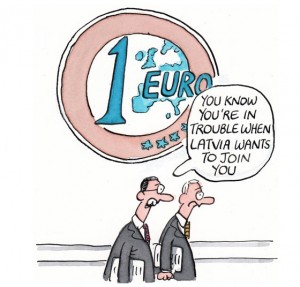
Latvia An EU Model?

In the US Latvia is known for its musicians.  Young Latvian conductor Andris Nelsons has just taken over the Boston Symphony as music director.  Atonenko and Garanca are household names as singers of opera.  Now the country has made a strong showing in its firt year using the Euro.

Latvia will enter its big year in the European Union’s spotlight in the style that all politicians like: according to projections, it will prove to be the fastest-growing economy in the eurozone in 2014, its first year using the common currency. It had already topped the EU’s growth league in 2013 and 2012, and ranked second in 2011.

Jānis Dūklavs, 62, initially became Latvia’s agriculture minister – a post traditionally reserved for the Union of Greens andFarmers when they are in government – in 2009. That year Dūklavs, previously unaffiliated, joined the Union, but – along with his party – was out of power from 2011-14.

On the dark side, Gajlina Karmača, who is the financial director at the company Lage Ko, which owns the Gan Bei and other restaurant franchises, is being held under suspicion for being one of the core masterminds of an organized crime group that rigged cash register accounting software to avoid paying up to €800,000 a month in duties to state tax authorities.

Latvia

Laundering Money?

Nicolas Hirst writes:  Members of the public will have the right to find out who is behind complex corporate structures, shell companies and letterbox firms, under new rules to combat money laundering and tax avoidance agreed by European Union lawmakers.

Under the deal, member states will be required to maintain central registers with details of the owners of all companies based in their territory. The registers will be accessible to any member of the public who can show a “legitimate public interest”.

Although member states will have to compile registers of the beneficial owners of trusts, these will not be accessible to the public.

The reforms follow on from the ‘Lux Leaks’ revelations earlier this year that laid bare the tax affairs of hundreds of companies that moved to Luxembourg to enjoy sweetheart tax deals.

Central registers will also make it much more difficult for criminals to launder money within the EU.

Krišjānis Kariņš, a Latvian centre-right MEP, who led negotiations along with Sargentini, said: “For years, criminals in Europe have used the anonymity of offshore companies and accounts to obscure their financial dealings. Creating registers of beneficial ownership will help to lift the veil of secrecy of offshore accounts and greatly aid the fight against money laundering and blatant tax evasion.”

The European Parliament estimates that money laundering affects between 2%-5% of global gross domestic product each year.

Although campaigners welcomed the creation of centralised registers, some expressed concern that they would not be freely available to all members of the public.

“Requiring the public to prove a ‘legitimate interest’ is contradictory to the idea of transparency, and places all the burden on the public, rather than the potential criminals who are treating the European financial system like their personal launderette,” said Nienke Palstra, a policy officer at Transparency International.

There is also doubt about whether the register will be accessible to non-EU citizens wishing to trace funds hidden by corrupt political leaders.

One motivation for creating the central registers had been the revelation that the son of Viktor Yanukovych, president of Ukraine in 2010-14, had hidden money in a company in the Netherlands – transfers that were revealed because of a detailed investigation by a Ukrainian civil society organisation.

Ukrainian prosecutors have since charged Oleksandr Yanukovych with embezzlement.

The proposal to introduce public registers faced opposition from several member states, in particular Germany. France and the United Kingdom were strong proponents of public registers, although the UK fought hard to ensure that these did not include trusts.

Under the deal, the centralised registers will give details of the owners’ names, country of residence, nationality, month and year of birth, and the nature and extent of the beneficial interest held.

Bank Transparency

MIT Scientists: We Can Do It!

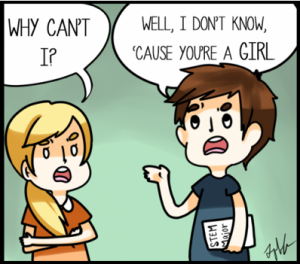
Three female computer scientsts at MIT offer to asnwer questions.  They are doctoral candidates at MIT’s largest department, the Computer Science and Artificial Intelligence laboraoty.  They say, “As computer science PhD students, we were interested in fielding questions about programming, academia, MIT CSAIL, and how we got interested in the subject in the first place. As three of the few women in our department and as supporters of women pursuing STEM [Science, Technology, Engineering, and Mathematics], we also wanted to let people know that we were interested in answering questions about what it is like to be women in a male-dominated field. We decided to actively highlight the fact that we were three female computer scientists doing an AMA, to serve as role models in a field that’s less than 20 percent female.”

They conitnue: As it turned out, people were extremely interested in our AMA, though some not for the reasons we expected. Within an hour, the thread had rocketed to the Reddit front page, with hundreds of thousands of pageviews and more than 4,700 comments. But to our surprise, the most common questions were about why our gender was relevant at all. Some people wondered why we did not simply present ourselves as “computer scientists.” Others questioned if calling attention to gender perpetuated sexism. Yet others felt that we were taking advantage of the fact that we were women to get more attention for our AMA.

The interactions in the AMA itself showed that gender does still matter. Many of the comments and questions illustrated how women are often treated in male-dominated STEM fields. Commenters interacted with us in a way they would not have interacted with men, asking us about our bra sizes, how often we “copy male classmates’ answers,” and even demanding we show our contributions “or GTFO [Get The **** Out]”. One redditor helpfully called out the double standard, saying, “Don’t worry guys – when the male dog groomer did his AMA (where he specifically identified as male), there were also dozens of comments asking why his sex mattered. Oh no, wait, there weren’t.”

As for the question of whether we brought this treatment upon ourselves by mentioning our two X chromosomes, it is well known people give women on the internet a hard time whether they call attention to their gender or not. And as one redditor says, “Gender neutrality and a push for equal rights is prevalent precisely because men and women have fought for it to become a topic of discussion.”

The dynamics of our AMA reflects gender issues that lead to disparities in who chooses to pursue careers in STEM fields. People treat girls and boys differently from an early age, giving them different feedback and expectations. There is strong evidence that American culture discourages even girls who demonstrate exceptional talent from pursuing STEM disciplines.

We made gender an explicit issue in the AMA to engage our audience in a discussion about both the existing problems and potential solutions.

This is how change happens. Though we were surprised by the sheer amount of sexist and undermining comments. We hope to help women and other minorities feel more supported pursuing careers in STEM. We won’t keep quiet. You can keep asking us anything.

Why Not?

Reversing the Brain Drain in China

Until recentlyuniversities routinely hired their own students when thez graduated.  <manzy staff did ot have doctorates.  Lecturers were given jobs for life iwth no motivation to ecel.  All promotion was internal.  Ten years ago wehn Peking Univeristz tried to reverse this system with limited employment contracts and open competition for postsit faced such resistance from the staff that it had to shelve its plans.

Today signs are encouraging.  Universities are finding it easier to atract staff from abroad.  Departments hire and promote based on international evaluation methods.  <jobs are advertised and promotions are rewarded based on achievement.

China has more than 2,000 universities and research facilities.  Change is coming.

Chinese Universities