The Ying &Yang of Immigration Policy

Ian Baruma writes: The British shadow minister for Europe, Pat McFadden, recently warned members of his Labour Party that they should try to make the most of the global economy and not treat immigration like a disease. As he put it, “You can feed on people’s grievances or you can give people a chance.”

In a world increasingly dominated by grievances – against immigrants, bankers, Muslims, “liberal elites,” “Eurocrats,” cosmopolitans, or anything else that seems vaguely alien – such wise words are rare. Leaders worldwide should take note.

In the United States, Republicans are threatening to close the government down just because President Barack Obama has offered undocumented immigrants who have lived and worked in the US for many years a chance to gain citizenship. The United Kingdom Independence Party (UKIP) wants to introduce a five-year ban on immigration for permanent settlement. Russia’s deputy prime minister, Dmitry Rogozin, once released a video promising to “clean the rubbish” – meaning migrant workers, mostly from former Soviet republics – “away from Moscow.”  Even the once famously tolerant Dutch and Danes are increasingly voting for parties that fulminate against the scourge of immigration.

Retaining one’s job in a tightening economy is undoubtedly a serious concern. But the livelihoods of most of the middle-aged rural white Americans who support the Tea Party are hardly threatened by poor Mexican migrants. UKIP is popular in some parts of England where immigrants are rarely seen. And many of the Dutch Freedom Party’s voters live nowhere near a mosque.

Anti-immigrant sentiment cuts across the old left-right divide. One thing Tea Party or UKIP supporters share with working-class voters who genuinely fear losing their jobs to low-paid foreigners is anxiety about being left behind in a world of easy mobility, supranational organizations, and global networking.  On the right, support for conservative parties is split between business interests that benefit from immigration or supranational institutions, and groups that feel threatened by them.  On the left, opinion is split between those who oppose racism and intolerance above all and those who want to protect employment and preserve “solidarity” for what is left of the native-born working class.

It would be a mistake to dismiss anxiety about immigration as mere bigotry or apprehension about the globalized economy as simply reactionary.  In the new global economy, there are clear winners and losers. Educated men and women who can communicate effectively in varied international contexts are benefiting. People who lack the needed education or experience – and there are many of them – are struggling.
In other words, the new class divisions run less between the rich and the poor than between educated metropolitan elites and less sophisticated, less flexible, and, in every sense, less connected provincials.

Populist rabble-rousers like to stir up such resentments by ranting about foreigners who work for a pittance or not at all. But it is the relative success of ethnic minorities and immigrants that is more upsetting to indigenous populations.  This explains the popular hostility toward Obama. Americans know that, before too long, whites will be just another minority, and people of color will increasingly be in positions of power.

Economic globalization cannot be undone. But regulation can and should be improved. After all, some things are still worth protecting. There are good reasons not to leave culture, education, lifestyles, or jobs completely exposed to the creative destruction of market forces.
Migration Policy

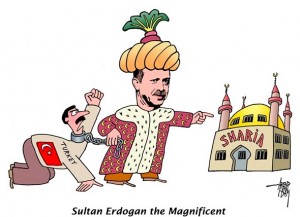
Bribes are Turkish

In the Dec. 17-25 corruption investigation in Turkey millions of dollars were in shoeboxes. Sons of some ministers and bureaucrats were detained. But only a few months later, on March 30, 2013, local elections were held and the ruling AKP increased its votes by 5% compared with the previous elections, to 44.19%. Its nearest rival, the Republican People’s Party (CHP)also increased its vote totals.

That was yet another illustration that allegations of corruption and bribery did not mean much to people. But such allegations have been rapidly eroding Turkey’s image abroad. Transparency International released its 2014 Corruption Perception Index that placed Turkey 11 places lower than last year. Anne Koch, the organization’s director for Europe and central Asia said Turkey’s regression from 53rd place to 74th among 175 countries was because of the Dec. 17 operation,  Koch said, “Millions of dollars in shoeboxes, the firing or resignation of ministers, many detentions, led the news on corruption.” She said some countries in Africa and Middle East were better placed than Turkey.

Oya Ozarslan, chairwoman of the Turkey branch of Transparency International, said in Turkey one out of five persons pays bribes to benefit from public services.

A corruption report by the powerful Industry and Business Association (TUSIAD) followed. The report, based on interviews with 801 businesspeople, cited half of the respondents saying there was corruption in Turkey.

TUSIAD Chairman Haluk Dincer said their research by and large matched their predictions. “There is corruption in Turkey and the trend is for further increase,” he said. Dincer said corruption added 10% to production costs.

The Turkish National Assembly established an inquiry commission to investigate the Dec. 17-25 corruption and bribery allegations.

Main opposition CHP leader Kemal Kilicdaroglu bitterly criticized the assembly speaker, who is from the AKP. Kilicdaroglu said, “Since when has the national assembly become the protector of thieves? Your duty is to preserve the reputation of the national assembly.”

At the moment, the investigation is said to be going on, but nothing is being told to the people. Anyway, even if the people were kept informed, nobody would expect an outcome that would have the accused ministers tried in court, because the commission findings must be approved by the assembly quorum. Since AKP has 312 out of 550 parliamentary seats, such an outcome is unlikely.

In short, there were always allegations of corruption in Turkey.  They continue today. Nobody, including top businessmen, think it will ever end. Nature and the scope of corruption may change, but corruption continues to be an unchanging agenda item of the country.

Bribes in Turkey

Embezzled Egyptian Funds

The amendment to Egypt’s Law on Illicit Earnings allows for amicable settlement between the government and the public figures who embezzled public funds. Some see this law as an attempt to recover embezzled funds and introduce a hard currency, which the country’s declining economy needs. Others consider the law a legalization of corruption and a loss to state authority.

Egypt’s judiciary will consider a new reform to allow for amicable settlement between the government and those accused of embezzlement, bringing in recovered funds but also possibly legalizing corruption.
One article states that the accused, who is under the [jurisdiction of the] Illicit Gains Authority, can at any moment reach a settlement with this authority by returning the illicitly gained funds. As a result of the settlement, investigations are stopped and the penal proceedings for the accused are halted, but he is obliged to pay the expenses of the lawsuit and the judges’ fees.”

Saad noted that the new law includes added categories, such as members of the judiciary and its six committees and members of the police force.   Saad said the new law stipulated the complete independence of the Illicit Gains Authority by transferring its subordination from the executive authority, represented by the Minister of Justice, to the Supreme Judicial Council, in addition to allocating a budget for the authority to spend on cases. The law also stated the right of this authority to manage suspicious funds or companies by assigning a financial comptroller to maintain and monitor them. The comptroller would also open a special account for the profits of these funds.

Meanwhile, Ahmad Refaat, former dean of the faculty of law at the University of Cairo, said that he supported the amicable settlement system and that it was applicable in Egypt to cases related to customs smuggling, tax evasion and currency exchange in unofficial rates.

Money has been smuggled abroad, but its destination, route and amount remain unknown. Some states such as Switzerland announced that they froze the acoounts of  Mubarak and some of his men. This move benefits the banks and states where the money is frozen because they do not pay interest on frozen funds, and at the same time, they do not disclose the amount of funds nor do they return them — except if a final judicial decision is issued that pinpoints the smuggled funds and proves they are corrupt with irrefutable evidence. Yet, all of this data is unclear given Egypt’s status quo.

When the committees visited the states, like Switzerland, that had declared freezing the accounts of Mubarak and some of his men, their banks refused to disclose any information about these accounts, because they are bound by the principle of secrecy. An amicable settlement should be applied to funds that were smuggled during Mubarak’s rule, provided that the state’s monitoring institutions play their role in the new phase and close the loopholes that allow leeway for the corrupt.

Mubarak's Embezzlement


Black Gold Depreciated?

Is there a story that is not being reported here?  Is the US more interested in demolishing dysfunctional regimes and in providing oil producers with big profits?  Is the State Department involved in these decisions?  They have supported the Keystone Gas Line, foriinstance.

Keith Johnson writes,

il prices are flirting with yet another five-year low, which is straining plenty of governments from Tripoli to Tehran. But few countries are as fundamentally threatened as Venezuela, where the sudden collapse in crude prices is making a dire economy downright dismal.

That’s particularly worrisome, because for all the pain that other big oil producers such as Russia, Iran, and Iraq are feeling thanks to less oil revenue, those countries are facing mostly fiscal pressure–not the risk of total collapse.

“It’s more likely that this ends up like Libya” than a replay of orderly transitions, such as the one that led to the end of the dictatorship of Augusto Pinochet in Chile, said Pedro Burelli, a former board member of state oil firm Petroleos de Venezuela, or PdVSA, and an outspoken critic of the Chavez and Maduro governments.

“You take fragmentation of political power, a dire political situation, high social expectations, no cash, and a lot of people involved, and that to me is the recipe for a mess,” he said.

Crude prices continued their slide on Monday, falling to about $64 a barrel in New York and $67 in London. Global benchmark prices have now shed 40 percent since their June highs. For a country like Venezuela, which is dependent on oil for nearly all of its export earnings, the threat is becoming more urgent by the day.

Last week, Venezuela’s government announced a 20 percent spending cut. While President Nicolas Maduro vowed that the cuts won’t affect the country’s cherished social spending–a key to maintaining what little popular support the successor to Hugo Chavez still enjoys–it’s clear that Venezuela’s inability to drum up fresh sources of revenue is tearing at the sinews of an economy that was already reeling from rampant inflation, consumer shortages, and widespread (if underreported) unemployment.

Complicating everything is the country’s byzantine currency exchange rate, which officially values the local currency, the bolivar, at huge multiples of the black-market exchange rate, despite stealth devaluations over the past year. That means that even Venezuela’s oil earnings tend to evaporate when they are converted into artificially inflated local coin.

Although the country has vowed to repay its debt, traders are dumping are Venezuela’s sovereign bonds and there are signs that the market is increasingly pricing in the possibility of a default.  Venezuelan bonds are trading at 50 cents on the dollar and offering sky-high yields, while bond traders are preparing to cover themselves–with debt swaps–in the event that Caracas follows the path of other troubled Latin American countries such as Argentina.

There’s one telling indication of Maduro’s desperation to secure short-term cash, even at the cost of mortgaging the nation’s much-needed future revenues: The country is reportedly in talks with U.S. investment bank Goldman Sachs to sell it debt obligations owed by other countries, such as the Dominican Republic, at a hefty discount. Media reports suggest that Venezuela is mulling the sale of about $4 billion worth of IOUs from its Caribbean neighbor for less than half that amount.

Not all the dysfunction in Venezuela’s economy is caused by falling oil prices, of course: Toilet paper disappeared from store shelves even when crude was trading at $115 a barrel. Large protests rocked Caracas and other major cities earlier this year, a reflection of growing discontent with Maduro’s ability to keep the flame of “Chavismo” alive. Recent opinion polls show support for Maduro has cratered to about 25 percent.

What’s ominous about the latest oil-induced pressures is that it seems to be pushing the government to take even more desperate measures than it did earlier this year. Last week, the Venezuelan government charged opposition leader and member of Congress Maria Corina Machado with allegedly conspiring to assassinate Maduro, a charge that could put her behind bars for years. The U.S. State Department criticized Venezuela’s “arbitrary use of prosecutorial power to silence and punish government critics.”

At this point, the opposition movement is cowed and divided. But even if it were possible to replace the unpopular Maduro government with leaders from the opposition, it wouldn’t likely cure what ails the country, Burelli said. He likens Venezuela to a broken-down bus careening toward a cliff with no brakes, no gearshift, frozen steering, and a drunk driver: simply making a change behind the wheel won’t be enough to keep the bus from crashing sooner or later.

“We’ve confused the problem of, ‘who will run this country?’ with ‘what is the state of this country?’” Burelli said.

Oil Prices and Politics

Economics of Immigration

Immigration is an important economic issue throughout the world.  Many people immigrant for the public benefits of countries.  Both Sweden and the US are struggling with this issue.  Although some UN studies suggest that immigrants pay enough in taxes to pay for their health and welfare benefits, these figures vary from country to country.

Certainly in the US, the rios which have been broadcast across the world are caused by our failure to take care of our own children.   Admitting five million foreign children at this time in going for the ‘cute because we don’t know you,’  instead of the ‘dfficult and tough to deal with’ kids.  A shame to go for votes instead of continuing the hard march to economic and racial equalitiy of opportunity.

Germany is promoting immigrants who can join the workforce immeditately.  Their population if aging and birth rates are low, so they bring in young people who can fill available jobs.  This is a sensible and perhaps necessary policy resolution to a problem, not a political move like the one made recently in the US. REPLACEMENT MIGRATION ISSUED BY UN POPULATION DIVISION

Immigration Economics?


Inviting Men at the Top to Help Women

IMPACT Leadership 21′s revolutionary approach to transforming women’s leadership in this hyper-connected world understands that men are part of the solution.  Men can be powerful ambassadors for change. Men are untapped, yet a critical resource in advancing women’s global leadership and achieving equality.  How do we harness this untapped resource?  We engage them.”

“Conversations with Men” has four major goals:
Serve as a platform for candid conversations about collaboration between women and men in all spheres of leadership.
Engage men as crucial and equal partners in advancing women’s leadership at the highest level of influence.
Emphasize the importance of a women’s network that is inclusive of men in leadership roles.
Create opportunities with men in leadership roles for an accelerated place of equal representation of women in our society.

The overarching goal is to engage men in leadership positions in accelerating women’s leadership at the top. After all, the so-called “women’s issues” must no longer be labeled as such – because these issues are also men’s issues, and the society’s issues.  Bottom line, both women and men, businesses, corporations, organizations and governments benefit from having a gender-balanced decision-making table.  Impact White Paper

Men and Women Talking

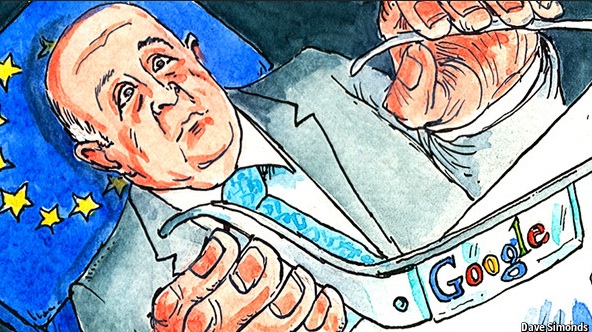
Google Break Up?

Parliamentarians want Google to split its search business from its other services. Experts say that won’t happen.

Europe’s elected elite want to break up Google. The technology giant, known for its web search engine but offering many other products and services, can too easily promote its own wares, they say. Yet leading experts and academics say it’s not going to happen, calling it a nuclear option that would have made more sense in larger, prior corporate scandals.

The European Parliament in late October called on Internet companies operating in the regiion to unbundle its search engine from its other commercial properties. The call was clearly directly at Google.

The non-binding resolution had no legal weight, but sent the strongest signal yet to the European Commission to take action after almost four-years worth of unsuccessful negotiations to settle an ongoing antitrust probe into the company’s business practices. The company has been accused of anti-competitiveness including claims it deliberate buried search results of rival sites and services. The recent motion sought to “prevent any abuse in the marketing of interlinked services by operators of search engines.”

Newly-elected EU competition commissioner Margrethe Vestager said that she would “need some time” to review the case, which has been kept open by her predecessor Joaquín Almunia, and talk to complainants before moving forward.

“What’s most likely to happen, and what will hopefully happen, is a continuation of the resolution for which Almunia set the framework before he left office,” says David Balto, a former U.S. Justice Department antitrust lawyer.

Politics and pressure behind the scenes from Google’s competitors—including Microsoft — have dragged the case out “to draw as much blood as possible,” Balto argues. Shortly after the parliament’s vote, one unnamed senior EU official said that the 28-member state bloc had been used as a “battleground” by American companies. After three rounds of settlement negotiations, Balto says Google’s efforts to address the matter have resulted in better competition in the region.

One question is whether the Commission has enough evidence to support moving from seeking a settlement to conducting an infringement procedure. Florian Wagner-von Papp, director of the University College London’s Institute of Global Law, tells Fortune that he wishes the EC would “put up or shut up.” Antitrust officials should either charge the search giant with flouting European antitrust law, he says, or drop the case altogether. The alternative? More settlement negotiations and “political mud-slinging” by Google’s supporters and opponents.

By charging Google with antitrust offenses, the Commission can take any measures it deems necessary to end that infringement. Could that really include a break-up of Google? In theory, yes—the European Commission’s antitrust division has the right to force a company operating in the region to restructure. But Wagner-von Papp is willing to make a big bet that it won’t happen. “The Commission has to date never imposed a structural remedy in an infringement decision,” he says.

Still, a move toward an infringement decision could leave Google facing fines of up to 10 percent of its annual global sales for the affected years, a staggering amount totaling billions of dollars. The reality has been more conservative. The biggest antitrust fine in the region’s history—levied against Intel years ago barely broke 4 percent.

Splitting up Google by unbundling its search business from its advertising business would leave the company without a way to make money from its search results, Wagner-von Papp says. Such a move is “nonsense,” he says. “The search engine can be free for users only because Google gets its revenue from advertisers and can channel consumers to their vertical search results,” he says, “much like newspapers can be free if it sells ad space for a high price.”

Balto agrees, calling it an “extreme proposal” that few people take seriously. “Google relies on a lot of synergies among products and advertising revenue that works across products to do what they do,” he says. Consumers would actually suffer if Google’s search business was unbundled from its advertising services.

Politics remain a sore point for those involved. The European Parliament’s involvement was unusual without any prior committee inquiry, Brussels-based antitrust solicitor Matthew Hall says, and the parties on each side of Google are pushing for their own resolution to the case.

During his tenure as Europe’s antitrust chief, Almunia made it clear that he would not be swayed by politics. It’s not yet clear which path Vestager plans to take or which cards she will play to get there. Vestager will “decide on how to take the ongoing antitrust investigations into Google’s business practices forward once she has heard what those most directly affected by the practices in question have to say,” a spokesperson for the European Commission says.

Balto is optimistic. “There are good signs that Vestager will not be swayed,” he says. “I don’t think the delay will lead to a rush to judgment.”

Google Breakup

Does Germany Need to Relax on Fiscal Flexibility and Inflation?

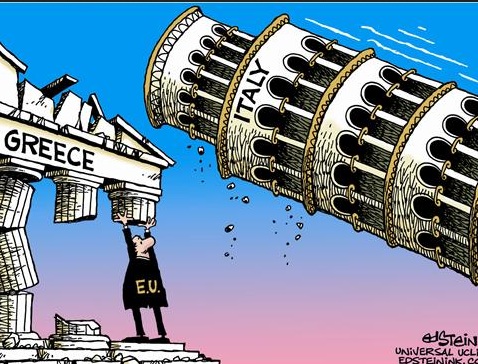
Mark Gilbert writes, Italy, a founding member of the euro project and one of the Group of Seven industrialized nations, is slipping so deeply into debt, its credit rating is just one downgrade away from junk. At the same time, the country’s borrowing costs are the lowest they’ve ever been. This contradiction highlights the conundrum the European Central Bank faces as it tries to revive the moribund euro economy.

Standard & Poor’s cut its assessment of Italy’s creditworthiness late on Friday. “Italy’s weak real and nominal economic prospects have undermined public debt dynamics,” the rating company said. S&P expects the Italian economy to expand by just 0.2 percent next year, down from a previous estimate of 1.1 percent. By the end of 2017, the country will owe more than 2.25 trillion euros ($2.77 trillion), about 127 percent of gross domestic product.

It’s not that Italy isn’t trying. Prime Minister Matteo Renzi is forcing labor market reforms that make it cheaper for companies to hire workers and easier for them to fire underperformers. He’s also freezing wages in the public sector.

But in an environment where inflation is almost absent while private-sector wages are still rising, Italy’s competitiveness against its euro peers is slipping. Its membership in the common currency, meantime, rules out a currency devaluation to boost export growth.

It’s the kind of situation you might expect bond vigilantes to exploit for profit, driving yields higher to force yet more government action. With ECB government bond purchases seeming ever more likely, however, those financial-market sanctions won’t happen.

The more the ECB intervenes, the less pressure there is on euro-region governments — particularly Germany. With the central bank bearing the burden of rejuvenating the economy, Germany can continue to berate its neighbors for fiscal negligence and ignore the clear and present danger of deflation.  Germany needs to relax on both fiscal flexibility and inflation to bail out its more indebted peers, rewarding them for progress made and helping them grow faster.

EU Debt

Immigrants Too Expensive?

Sweden has long been a beacon for some political parties in Europe. Bring up Stockholm’s immigration policies with any center-left politician in the Netherlands, France, or Great Britain, though, and you’ll be met with exasperation and incredulity.

The Swedish minority government has fallen. The far-right Sweden Democrats in essence brought the fresh center-left coalition down over the party’s demands for changes to immigration policies – changes that Prime Minister Stefan Lofven of the Social Democratic Party, and his coalition partner, the Green Party, refused to accept.

Determined not to compromise with parties on the right, Lofven formed a minority government with the Green Party shortly after elections in September. He was opposed by center-right parties who disagree with his socio-economic policies but are generally in alignment concerning refugees and asylum seekers. Not so the Sweden Democrats. The party wholly rejects Sweden’s current asylum policies.

Lofven made another gamble by sticking to the previous government’s liberal policies on asylum, in combination with his new government’s center-left budget. The policy cocktail proved too much to bear, both for the center-right opposition and for the Sweden Democrats. Although the parties generally loathe each other, their vote went against the budget, and it was rejected. Lofven called new elections; yet another gamble, one through which Lofven hopes to finally attain a majority.

This now puts Swedish voters in a bind. Lofven will likely cast the opposition parties as irresponsible, but the minds of many voters will be on immigration, thanks to Sweden Democrats’ move.

A social problem is brewing in Sweden. The country has thus far been very welcoming to refugees from wartorn countries such as Syria. Former Prime Minister Fredrik Reinfeldt roused Swedes when he bluntly stated that Sweden should accept more asylum seekers, regardless of popular opinion. The Scandinavian country, however, seems stuck in the 1990s. It continues to accept refugees from countries with different cultures, but it doesn’t seem to have thought through what to do with them. In 2013, riots hit the Stockholm suburbs, with many cars burnt throughout areas populated by refugees. The main reason: unemployment and frustration.

Unemployment among asylum seekers and second-generation immigrants is rampant, and the economy isn’t providing enough jobs for all Swedes. Immigrants seem to be concentrated in small areas, creating pockets of discontent, much like in France.

This kind of discontent has proven to be fertile ground for populist far-right parties like the FPO in Austria, the Front National in France and the PVV in the Netherlands. Stefan Lofven – and anyone else hoping to win Swedish elections set for March 22, 2015 – would do well to heed the lessons of Western Europe of the past 20 years.

Costly Immigrants

Would Women on Boards Improve Corporate Governance?

Vanguard, one of the world’s largest fund managers, is demanding a big shake-up of relations between company directors and shareholders amid concerns about the quality of corporate governance in the US and abroad.

Vanguard will float the idea of “shareholder liaison committees” in letters to company boards that it plans to send in the new year.

The call is particularly significant coming from Vanguard, a permanent shareholder in every major company and world’s second-largest fund manager. Its power has been growing as investors move capital from active managers to the low-cost tracker funds in which it specialises.

Bill McNabb, Vanguard chief executive, said it was wrong that many directors had never met shareholders in their companies, leaving the task to the chairman or a senior independent director.

“Independent directors are doing a good job but we find they are not as engaged with shareholders as they should be,” he said. “Directors are standing in on behalf of owners — it is an important concept — and there are many independent directors who have never met an investor.”

The Vanguard initiative comes amid a surge in activism by hedge funds and corporate governance campaigners, and increasing demands by long-term institutional investors for greater input.

A growing shareholder movement is trying to make boards more accountable, not just on issues such as executive pay but also on strategy.

Meetings with shareholder liaison committees would allow investors to express their opinions on how a company’s strategy compared with its competitors, or to suggest questions that independent directors should be asking of management, Mr McNabb proposed.

Vanguard’s proposal, which will initially be put to the US companies in which it invests, will feed into an international debate on best practice in corporate governance.

In the UK, an Investor Forum, comprising the country’s leading shareholders, was launched in June to discuss issues such as pay, auditing and company strategy.

Daniel Godfrey, chief executive of the UK Investment Management Association, said: “We are trying to improve communication and engagement between directors and shareholders that will lead to greater focus on long term, sustainable wealth creation in the boardroom. The Investor Forum was a decisive step towards this.”

In the US, a majority of companies combine the roles of chairman and chief executive but increasing criticism of the practice has seen more create the role of lead independent director to act as a conduit for shareholder concerns.

Would more women on board help corporatee governance standards?

Women on Boards