Did the US Improve Life in Afghanistan?

Gallup’s poll on the wellbeing of Afghanistan — a country that has been on the receiving end of substantial investment in U.S. blood and treasure for well over a decade. The results are grim.  (Darkest green areas on the map below are the most damaged).

Afghans’ ratings of their lives declined even further in 2014. More than six in 10 Afghans evaluate their lives poorly enough to be considered ‘suffering’ — the highest figure ever recorded for any country since Gallup started tracking life evaluations in 2005. As in 2013, no Afghans rate their lives highly enough to be considered ‘thriving.'”

The percentage of Afghans who described themselves as thriving was not always zero. In 2010, Gallup found the percentage up to 12 percent, having grown year-over-year since 2008. Not great, obviously, but at least moving in the right direction.

The South was a Taliban stronghold and reports indicate steady Taliban advances and bolder military assaults in the region, which likely contributes to the suffering rates (if not explains them outright). As for Western Afghanistan, it is, as Gallup notes, a bastion for opium addiction.

The NATO mission in Afghanistan ended this year.  After 13 years, the costs and benefits of the U.S. nation-building committment there will certainly be debated for years, if not decades, to come. Most experts in the US State Department did not approve of continuing in the country when the Democrats, Obama and Secretary of State Clinton took over in 2008.

AFghanistan Suffers

Can US Play Catchup on Carbon Emissions?

The Barack Obama administration went into the talks with a lot to brag about, including new fuel-efficiency standards, proposed rules on power plants and a commitment to cut emissions by as much as 25% by 2025. Meanwhile, solar power production is set to double this year for the seventh year in a row.

Except for one number: 9 percent. That’s the share of electricity generation that will come from renewable power, excluding hydroelectric sources, in 2030, according to the Environmental Protection Agency. (Include hydro, and that figure is still just 16 percent.) And that’s with the proposed power-plant rule. Without it, the EPA projects renewables will make up just 8 percent of generation capacity, or 14 percent including hydropower.

In other words, the Obama administration’s signature change to electricity production will lead to an increase in the share of power from solar, wind and similar sources of just one percentage point. The fast growth in solar and wind still isn’t fast enough to make a significant dent in the national power fleet.

Compare that with other countries. The European Commission has a target to reach 20 % renewable power by 2020.   Mexico’s target is to get a third of its power from renewable sources by 2020.  Even China, in its deal last month with the U.S., pledged to get 20 percent of its power from non-fossil-fuel sources by 202.

Why is the U.S. trailing on renewables, even with the new rule? One reason is how the EPA structured that rule, giving each state enormous flexibility to meet emissions targets. That flexibility includes the ability to choose whether, and how much, renewable power is used to hit those targets.

Also U.S. renewable power depends in part on better storage technologies, which the EIA says are “in early stages of development or not yet commercially avialable”  When that will change is anyone’s bet; I asked the Department of Energy two weeks ago how much it’s spending on researching storage technology, and have yet to get an answer.

Why does it matter how much of the country’s power supply comes from renewables, so long as emissions are going down?  Meaningful, lasting emissions reductions require moving away from fossil fuels, not just making them more efficient or shifting the distribution from oil to natural gas. “In the long term, we’re going to have to get away from gas.

If the government’s own projections are right, it means that absent more aggressive policy — such as increasing the renewable targets in the EPA’s final power-plant rule, action from Congress or tougher renewable mandates from states — the U.S. won’t break double digits on solar and wind by 2030. And at that rate, we’re not fixing the climate problem.

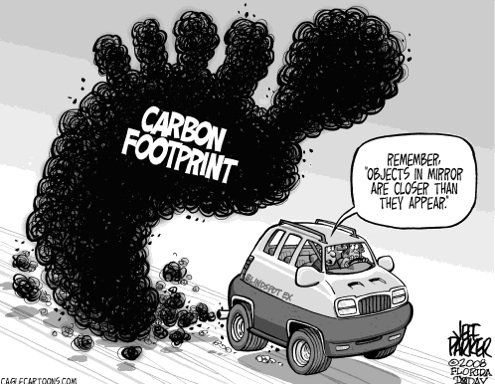
 Carbon Footprint

Kirchner Not Singing for Argentina

Cristina Fernanez de Kirchner has a 30% approval rating in Argentina, but people protest corruption, runaway inflation, and crime more than they protest her.  She cannot run again for President net year.

Argentina’s economy has been suffering from a combination of global slowdown, an a series of self-inflicted wounds: exchange controls and debt defaults.

Unemployment rates are higher than the 7% reported.  Inflation has soared to 41 percent this year. In real terms, wages are lower.  Car sales have plummeted.

The threat of social turmoil coninues.  Police officers and school tachers strike.

The next step is a January meeting with creditors.  And after that, the elections in October, where everyone looks better than Kirchner right now.   The popular mayor of Buenos Aires is running.  He is pro market and in favor of a global presence and good trading relatiions with neighbors.

Mrs. Kirchner does not make women leaders look good.

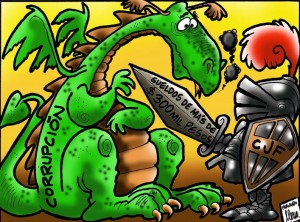
Kirchner

Innovation Labs: Governments Around the World Are Taking Them Up

Places to hatch new ideas. One the province of big corporations, today government departments often have innovation labs.   Schumoeter writes:  Incubators, accelerators, granaries, laboratories and biog companies have had them for years. Now state governments around the world are following suit.  Demarik has a Mind Lab and Singapoore a PS21 office.

Sometimes governments copy what private companies are doing.  Mind Lab is based in the innovation unit of a big insurance firm, Skadia,  The New Orleans innovation delivery area is funded by Michael Bloomberg, the former mayor of New York

In the UK, a behavioral insights team was the first government sgency dedicated to applying the insights of behavioral economics to public policy,

Whereever their location, these offices are first and foremost interested in harnessing technology. One common innovation to get customers to improve the products they have used.  These units are willing to experiment. Bureaucracies are designed to kill innovation while making everything more predictable.  Not Mind Lab.

Can Renewable Energy Be Cost Effective?

The Swiss company Alevo opened a battery manufacturing plant in the USA this year.  But the batteries are not for mobile phones.  They are making batteries that can store megawatts hours of electricity and they plan to sell them to grid operators.

These batteriee will smooth the consequences of irregular demand during the day.  They will eliminate plans for gas-powered sqeaker stations.  Alevo estimates that if a grid as big as the American west were to use 18gw worth of batteries, it could save $12 billion a year.  Alevo has no North American contracts yet, but it does have contracts with Guangdong, China,

Today we count on pumped hydro. But pumoed-to storage depends on friendly geography  Hills and valleys are not present in many areas.  Alevo is not alone.  Tesla is building a plant near Reno Nevada. Stations that regulate output in wind farms have already been built.  Toshiba is building one based in lithium batteries,

Alevo thinks these batteries can not only deal with irregular demand, but also with the regular supply.  Sun power is highly irregular as is wind power.  Cheap grid scale storage would overcome irregularities.  Renewables could compete on cost alone, a tantalizing prospect.

Regularizing Renewables


No Bore for Ore in Guinea

Ebola is not the only problem that Guinea has.  Simandou, a mining project in the country, is mired in problems.    Simandou has Ben called the El Dorado of mine ore.   Its deposits are large enough to fill seven percent of the world demand for a question after of a century..  The ore has unusually high iron content.  The cost for the mine, the railway and a port for shipping is 20 billion dollars.

When a new government was elected in Guinea in 2010, they replaced a long-term corrupt regime that had made many mining deals.  A committee was established to review all past mining contracts,  Brazilian companies Rio Tinto and Vale filed suits against BSG owned by the Steinmetz family trust.  BSG then filed for arbitration wiith Guinea.  Steinmetz also sued Global Witness, backed by George Soros, for not being a journalistic outfit, but instead an advocacy group.

Prospective investors are afraid of the risk.  The legal challenge from Steinmetz is outstanding.  Guinea is not politically stable. And. of course Ebola epidemic continues.

Development of Simandiu ciukd do wonders for an economy whose GDP is $530 per person.  It could generate tens of thousands if jobs and make the country’s agriculture business competitive for export thanks to the new railways.  Success might encourage the mining of otehr minerals like bauxite, graphite and manganese.

Nothing is expected to come out of the ground for at least five years if not ten.  Arbitration cases could drag on for years. Rio is focusing on projects in Australia.  Questionable circumstances  may cost the people of Guinea dearly.

Mining Ore

Turkey and China Flunk Corruption Test

Corruption in China and Turkey has worsened dramatically over the past year according to the latest rankings released by Transparency International (TI).

The annual report showed an increase in corruption in some of the world’s fastest growing economies such as Turkey, China and Angola whose GDPs grew by 4 percent last year.

The anti-corruption NGO added that money laundering was the biggest barrier to economic development among the worst ranking countries.

“What is extremely important for emerging markets and developing countries is the return of laundered money which is sitting, for example, in Germany, in some bank somewhere or has been parked somewhere. These countries could put this money towards their economic development, once they have been able to get rid of their dictators,” explained Edda Mueller, head of TI in Germany, where the NGO has its headquarters.

But she went on to concede that this was easier said than done. “Tracking money laundering and finding where it is being hidden is a very difficult area of investigation and because of this is often neglected. So, a potential criminal drug dealer, if one can catch him, will be punished but not the real criminal cause of money laundering. This is a big problem that we have to address.”

The TI annual report shows perceived levels of corruption in 175 countries, with a 0 being highly corrupt and 100 being highly clean. China ranked 80 in 2013 and has slumped to 100 in 2014.

China’s drop will come as a blow to Chinese President Xi Jinping, who took office in 2012 vowing to root out graft. His anti-corruption office has fired 270,000 cadres.

Turkey dropped to 64th place. The country was struck by a corruption scandal in December last year, the worst since the AK party came to power more than ten years ago.

Denmark retains its title as the least corrupt country, while North Korea and Somalia were jointly named the most corrupt.

Coruption Index

Bitcoin’s Future?

“When people write the history of this thing, of bitcoin, they are not going to write the story of 6 million to a billion. What is truly remarkable is the story of zero to 6 million. It has already happened! And we’re not paying attention! That’s incredible. That’s what had one chance in a million, and it already happened.”– Wences Casares, Founder & CEO of Xapo

Worth Wray cliarifies the bitcoin:

Bitcoin is a peer-to-peer digital currency that trades on public exchanges and can be instantly transferred between any two people anywhere in the world with the speed of an email… and at FAR lower cost than for transactions processed through the trdaitional financial system.

While a lot of people have experimented with digital currencies in the internet age, Bitcoin’s mysterious creator, “Satoshi Nakamoto,” was the first person to solve the issue of “double spending” in a completely decentralized network, meaning that all transactions are made directly between parties, with no middlemen, yet in a way that is verifiable across the entire network and virtually impossible to counterfeit.

Much like the internet itself, the Bitcoin hive is essentially a distributed network of computers and people that are relying on a common technological process – the Bitcoin protocol – to confirm and validate every transaction made, using a unit of account called a “bitcoin” that can be broken down into fractions, thereby enabling previously impossible micro-transactions.

Bitcoin protocol is an element of the “blockchain”  — a giant, globally shared ledger of every bitcoin and every transaction in the history of the network.  Whenever two people follow through with a transaction, it is broadcast throughout the entire network, and the blockchain expands as that exchange is automatically lumped together with other transactions in a new “block.”

Bitcoins are created through a process called “mining,” which happens to be the same mathematical process that seals blocks of new transactions onto the blockchain by verifying that every exchange is valid and using real bitcoins. By rewarding “miners” with new bitcoin for devoting their time and computing power to maintenance of the blockchain, the Bitcoin protocol provides the incentive for the network to continue running in a completely decentralized manner.

In the early days, the mining process could be competitively and profitably run from a series of graphics cards linked to a home computer, but in recent years bitcoin mining has become a BIG business. Today, a lot of the mining is done on massive server farms in places like Iceland, where temperatures are cool and power is cheap.

There is an upper limit of 21 million bitcoins that can ever be minted, and the protocol is designed to release a “reward” of a new bitcoin every 10 minutes until every unit of the digital currency has been created. As of today, roughly 13.5 million bitcoins have been mined, with roughly 7.5 million to go.

The Possible Stages of Bitcoin’s Future:

  1. Experimentation phase (2009 – 2010)
    No real value associated with Bitcoin. Hackers & developers playing around with the source code. Experimenting with Bitcoin as a medium of exchange.
  1. Early adopters phase (2011 – 2013)
    Interest from investors and entrepreneurs started to grow with substantial press coverage in the wake of the Silk Road bust. First generation of Bitcoin-related companies (exchanges, merchant processors, wallet providers, etc.) started. Potential began to shine through poor management.
  1. Venture capital phase (2013 – present)
    World-class VCs started investing in Bitcoin companies, and rapid ramp-up is already outpacing the early days of the internet. VCs poured more than $90 million into Bitcoin-related businesses in 2013 and are on track to invest more than $300 million in 2014 (compared to $250 million invested in internet-related businesses in 1995).
  1. Wall Street phase (2015?)
    Institutional investors, banks, and broker-dealers begin moving money into Bitcoin. Rising price and volume (in addition to development of derivatives) become the catalyst for mass adoption as retail investment follows.
  1. Global consumer adoption phase (?)
    Only happens if (a) companies continue to innovate and make it easier for consumers to buy, hold, and spend Bitcoin, (b) volume expands dramatically so that large merchants can start accepting payment in Bitcoin, and (c) Bitcoin awareness continues to rise with these developments.

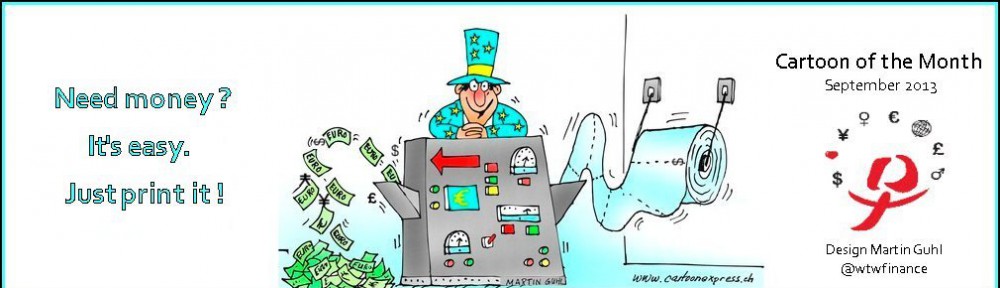
Bitcoin's Future

Global Citizens

We hit a snag in 2007-9/  Th economic crises contracted the globe.  People drew in.  But the world again is connecting the dots.  One way to see this is to look at global indices: happiness, terrirism, carbon emissions, and obesity, for example.

W-T-W Women and Finance focuses on women around the globe interconnecting through finance: in trade, the movement of money, information and people.  Need to know includes need to know about your neighbor’s economy and well-being, whether you are an informed citizen, or someone in the finance commnity.  Or both.

The DHL Global COnnectedness Index shows globalization on the rebound.  A latest small economic recovery shows restored faith in the upward march to a smaller world.

The McKinsey Global Institute shows the world flow of goods, servics and finance more than 1 1/2 times the level in 1990.

Most of the recent rebound in globialization occurred in emerging countries.  Yet advanced countries ike the Netherlands and Germany are also ranked high in thier breadth and depth of conectedness.

Funny statistics show that we have room for growth.  Onlly 5 % of phone calls are international.  Immgratts only make up 3 percent of the world’s population.

Boundaries are firm, however, and most people do not say, as DIogenes did in anciet Greece, “I am a citizen of the world.”  But we are getting there.

Global citizens


Easing the Process of Doing Business in India

Ajey Shah writes about reducing the cost of doing business in India.

As an example of the improved economic thinking underlying the 2014 depository receipts Scheme: the 1993 Scheme embeds industrial policy with names of many industries. The 2014 Scheme eschews industrial policy..

Word count. The first test of simplicity is the word count. The 1993 Scheme (paragraphs 1 to 11) had 2984 words, while the new 2014 Scheme (paragraphs 1 to 11) has 1659 words – a reduction of 44.4% in usage of words. However, this difference is overstated as the previous Scheme dealt with FCCBs also while the new Scheme does not.

Readability.  The 2014 Scheme wins clearly on reliability.

Structured document. For a given word limit, a well structured document is more comprehensible. The 2014 Scheme follows the logical sequence of a depository receipt transaction. The 1993 Scheme was a haphazard mess.

Use of examples. When drafting the Indian Penal Code, Thomas Babington Macaulay intentionally included many terse, exemplary cases to illustrate the application of a provision. The Justinian Code and writings of Roman jurists persuaded him to make clear the legislative intent: ‘they are cases decided not by the judges but by the legislature, by those who make the law, and who must know more certainly than any judge can know what the law is which they mean to make‘. This unusual innovative feature of the Code earned the praise of John Stuart Mill, who wrote:  ‘besides the greater certainty and distinctness given to the legislator’s meaning, [it] solves the difficult problem of making the body of the laws a popular book, at once intelligible and interesting to the general reader‘. The 2014 Scheme includes examples which clarify the law.

Minimal set of defined terms. The 2014 Scheme uses a standardised set of defined terms. For example, it strictly uses a defined term – ‘international exchange’ – on listing institutions. In contrast, the 1993 Scheme used three different terms to explain listing institutions;  `overseas stock exchanges’, `over the counter exchanges’ and `book entry transfer systems’. None of them were defined.

Principles-based definitions. With the rapid development of technology, the concept of an `exchange’ itself has evolved substantially. To make the law neutral to such evolution, the 2014 Scheme is technology-neutral and principles-based in its definition of `international exchange’.

Rationale statement. Finally, there is the backdrop of the drafting intent and rationale of the Scheme. The 1993 Scheme was not backed by a document articulating what was sought to be done. The 2014 Scheme is accompanied by the Sahoo Committee Report which performs this function. When faced with litigation in the future, practitioners and judges will be able to use this document to reduce legal risk.

The Indian system of capital controls comprises the FEM Act, regulations under FEMA, RBI circulars, etc. The 1993 Scheme is representative of the mess that is the Indian system of capital controls. The cost of doing business in India is being greatly raised by the badly thought out and badly implemented capital controls that are all over the landscape.

This is one area where it is dificult to make progress.

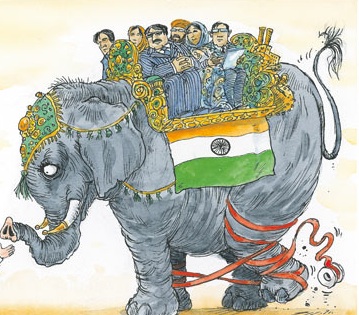
Doing Business in India