Banksters Galore!

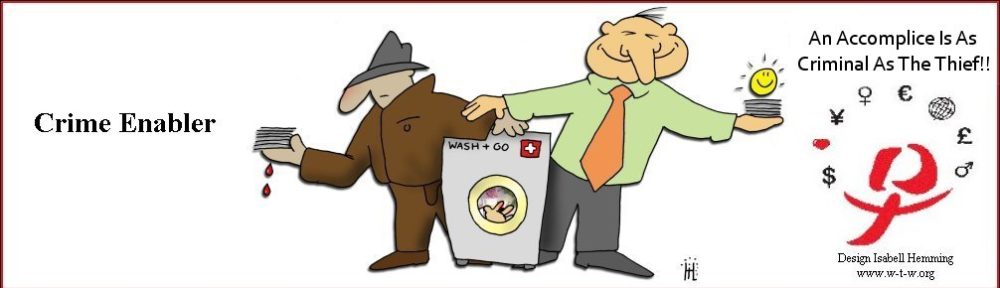
Business culture int he banking industry is favoring, or at least tolerating, fraudulent or unethical behaviors.

That’s what Ernst Fehr told reporters in a telephone interview last week.

Fehr is an economist at the University of Zürich in Switzerland who co-led a study about business behavior.  Fehr’s team conducted a laboratory game with bankers, then repeated it with other types of workers as comparisons. Participants were asked to toss a coin 10 times, unobserved, and report the results. For each toss they knew whether heads or tail would yield a $20 reward. They were told they could keep their winnings if they were more than or equal to those of a randomly selected subject from a pilot study. The results showed the control group reported 51.6% winning tosses and the treatment group – whose banking identity had been emphasized to them – reported 58.2% as wins, giving a misrepresentation rate of 16%. The proportion of subjects cheating was 26%. The same experiments with employees in other sectors – including manufacturing, telecoms and pharmaceuticals – showed they don’t become more dishonest when their professional identity or banking-related information is emphasized.

The U.S. Senate Permanent Subcommittee on Investigations finished up a two-day hearing Friday on whether banks like Goldman Sachs Group Inc, J.PMorgan Chase and Morgan Stanley should be restricted from owning or trading physical commodities such as oil and metals.

The Senate subcommittee has been investigating whether banks’ participation in markets, where they also control infrastructure assets, influence prices and harm consumers. Some lawmakers argue such activity – particularly banks’ ownership of power plants, shipping containers, and metals warehouses – creates the potential for anticompetitive behavior.

Banks don’t own all these hard-asset facilities just because they are profitable businesses to own and run. Banks own them to manipulate prices and markets, which is infinitely more profitable than just owning storage and transportation facilities.

Last week, Sen. Carl Levin (D-MI), chairman of the subcommittee, spent three hours accusing two witnesses from Goldman Sachs of manipulating aluminum markets. He then asked J.P. Morgan Chase and Morgan Stanley why they had tried to hide their supposed “investments” in metals and natural gas from regulators.

Levin’s rhetorical quote of the day was this:

“If you liked what Wall Street did for the housing market, you’ll love what they’re doing for commodities.”

We don’t need to be reminded that bundling mortgages brought down the US economy.

Senate Hearing
Conflict Minerals and Trade

Michael Gibb writes on Conflict Minerals:  “That diamond upon your finger, say how came it yours?” asks Shakespeare’s Cymbeline. “Thou’lt torture me,” responds the villainous Iachimo, “to leave unspoken that which, to be spoke, would torture thee.” The story behind certain parts of the global trade in natural resources today, whether spoken or not, is no less a source of anguish.

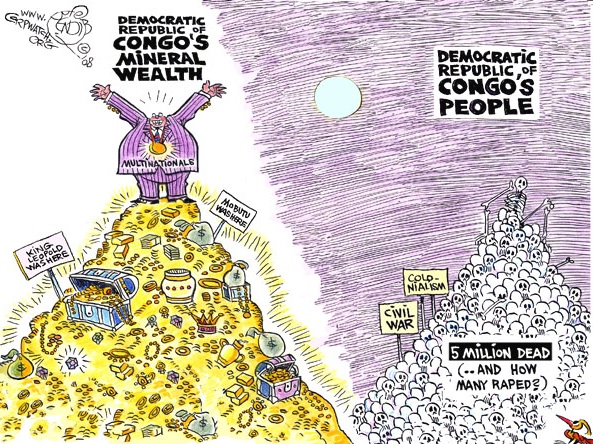
Natural resources should be a major contributor to development in some of the countries that need it most. And yet, in some of world’s poorest and most fragile states, they bring just the opposite. In many of these countries, the trade in natural resources motivates, funds, and prolongs conflict and egregious human-rights abuses. Resources such as diamonds, gold, tungsten, tantalum, and tin are mined, smuggled, and illegally taxed by violent armed groups, and provide off-budget funding to abusive militaries and security services.

Consider just four African countries: Sudan, South Sudan, the Central African Republic, and the Democratic Republic of Congo. Together, these resource-rich countries account for just over 13% of the population of Sub-Saharan Africa, but some 55% of the region’s internally displaced persons (and one in five worldwide) due to conflict. But the problem is global, with similar patterns in parts of countries such as Colombia, Myanmar, and Afghanistan.

The deadly trade in conflict resources is facilitated by supply chains that feed major consumer markets, such as the European Union and the United States, with cash flowing back the other way. Natural resources, such as tin, tantalum, tungsten, and gold – all minerals that have been linked in some parts of the world to conflict and human-rights abuses – are found in our jewelry, cars, mobile phones, games consoles, medical equipment, and countless other everyday products.

There is clear consumer demand for information that will help buyers make sure that their purchases do not implicate them in appalling abuses. But the responsibility to reconcile global commerce with the protection of basic human rights does not fall first and foremost on consumers. Conflict prevention and human-rights protection are primarily the responsibility of states, and it is increasingly recognized that businesses must play their part as well.

Indeed, we are now at a critical point in what has become a global movement to stop irresponsible corporate practices from being viewed as business as usual. Since 2010, companies working in conflict areas have had a global standard at their disposal. The OECD offers guidance on how to source minerals responsibly. Developed in close collaboration with the industry, it offers “detailed recommendations to help companies respect human rights and avoid contributing to conflict through their mineral purchasing decisions and practices.”

The United Nations has also endorsed similar requirements. In 2011, the UN published a set of Guiding Principles on Business and Human Rights, according to which companies whose “operating contexts pose risks of severe human rights impacts should report formally on how they address them.”

In 2013, Dutch researchers surveyed 186 companies listed on European stock exchanges that make use of conflict minerals. More than 80% made no mention on their Web sites of what they had done to avoid funding conflict or human rights abuses. Similarly, the European Commission’s Directorate General for Trade found that only 7% of 153 EU companies refer to a due-diligence policy for conflict minerals in their annual reports or on their Web sites.

The Securities and Exchange Commission requires companies that use tantalum, tin, gold or tungsten in their products to investigate these raw materials’ origin, and to mitigate risks in their supply chains in line with the OECD Guidance if they are found to originate in certain conflict-affected or high-risk areas. The 12 member countries of Africa’s International Conference on the Great Lakes Region have committed to similar mandatory due-diligence requirements.

That is as it should be. Responsible sourcing is a duty, not a choice. And here, the EU is lagging behind. In March, the European Commission proposed a plan under which disclosure would continue to be voluntary, meaning that the minerals that enter the EU would not be subject to mandatory checks.

The proposal is now being reviewed by the European Parliament and the European Council. It is crucial that both institutions seize this opportunity to strengthen the EU’s response by making disclosure and compliance mandatory and extending coverage to include finished and semi-finished products. Better regulating the trade in these resources will not itself bring peace to conflict-affected areas. But funding conflict and human-rights abuses is not an acceptable cost of doing business.

Conflict Minerals

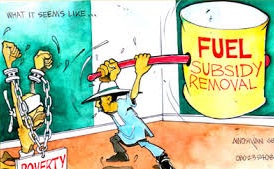
World Agrees: End Fuel Subsidies

Countries from Tunisia to Indonesia have cut subsidies to fossil fuels.

In Malaysia the Prime Minister said, “If we are willing to sacrifice with sincerity without expecting any return, we willl be amply rewarded.”

In Egypt the President asked Egyptians to sacrifice in the same spirit they had in the 1973 war with Israel: to retrieve national dignity.

In Indonesia the President hiked gs and diesel prices by a third. He said thatsubsidies were a waste of money because they rarely benefited the poor.

The IMF estimates that 3 rtillion is spent to sbsidize hyrocarbons, even in the US. Such subsidies help the well-off six times more than they do the poor.

A global consenus is forming to cut back these subsidies.

Hyrocarbon Subsidies

Karoshi, or Overwork, Banned in Japan

A law preventing overowork or Karoshi, was recently passed in Japan.  In 2013 alone, 133 people died from suicide or health related issues attributed to overwork.  The law requires the government to implement programs which enlighten the public about the risks of overwork.  Counseling systess are to be established and suppor proivded for NGOs dealing with the problems connected to overwork.

The business community has called for the end of regulation of overtime hours, and is opposed to a cap on hours worked weekly.  The key to eiminating death from overwork will be efforts to curb the long working hours of many corporate employees.

Karoshi

Banagladesh: Mobile Revolution

Bangladesh topss the use of mobile devices in Southeast Asia, followed by Pakstan and India.  100 million users ar elisted in Bangladesh, a huge stride forward for the country.  Mobile devices are being used for exchange of information relating to marketing, agriculture, health and educaiton.  An editorial suggests that young people should be encouraged to develop apps fr these devices so the employment opportunities afforded by the devices can be maximized.

Mobile?

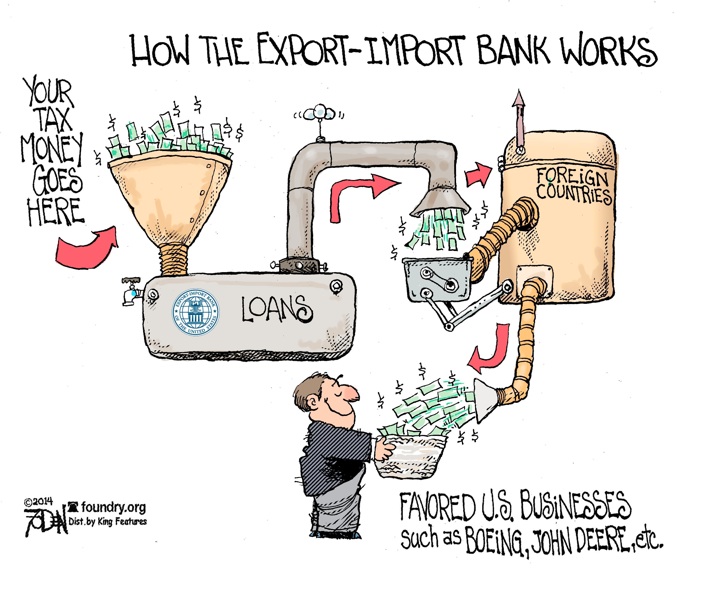
Ax Ex Im Bank?

Reasons for and against the Export/Import banks survival.  Over the last several years, the U.S. Export-Import Bank has become controversial for the first time in its 80-year history.  The controversy doesn’t make much sense since Ex-Im is a small, self-sustaining agency that does nothing more than what export-credit agencies in dozens of other nations do.  In fact, its operations are dwarfed by the export-promotion activities of countries like China.  Nonetheless, a handful of ideologues in the House Republican Conference have sought to block reauthorization of the bank despite large majorities in both chambers favoring its continuation.

Critics complain that it puts the government at risk, distorts markets and detroys jobs, all of which are paently untrue.  Whiile the US ExIm is not allowed to finance military exports, it is clear that miilitary and industrial exports are often interchangeable.  Oshkosh and Navistar were enlised to produce mine-resistant trucks when improvised explosive devices became a problem in wars in Iraq and afghanistan.  Foreign commerical sales help military contractors weather defense downturns.

The National Review fights back in generalities.  “his is the clear case of a government program that should be abolished. It is not free marke, it introduces many distortions in the capital market, it is unfair, it engages in careless ledning and fraud,  it benefits a few politically connected winners.

Actually,  by helping U.S. technology companies to sell abroad, Ex-Im enhances the ability of the joint force to exploit dual-use technologies from secure sources.  Most experts do not believe it is feasible to sustain a domestic industrial base for such items while only serving defense users.

One Version of the Ex Im Bank

The Export-Import Bank is one of the few federal agencies equipped to step in and level the playing field for industries that might otherwise be driven out of business by state-financed or influenced foreign competitors.  Many of the industries in question lie outside the traditional boundaries of the defense industrial base.  But when big threats arise, the entire economy must be mobilized to serve the demands of national security.  The only way sufficient indigenous industrial capacity can be sustained is to stay competitive in global markets, and Ex-Im plays a pivotal role in that process.


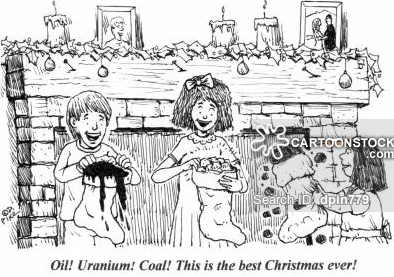
US Regulators Go After Commodities Business

The big guys like JPMorgan Chase are being examined for fraud in the commodities markets.  The U.S. Commodity Futures Trading Commission (CFTC) announced that Paul Greenwood of North Salem, New York, who operated a $1.3 billion investment scam where he and a co-Defendant misappropriated at least $554 million from commodity pool participants, was sentenced to 10 years in federal prison for charges related to his participation in the scam.  Commodities are commanding the attention of US regulators.
Oil, Uranium, Coal


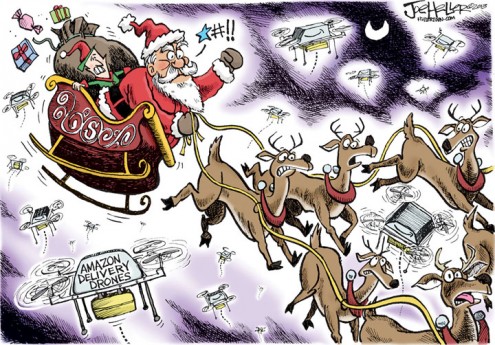
All I Want for Christmas is a Little Drone….

One of this year’s top-selling Christmas presents is a drone. For $50 you can buy a tiny quadcopter with a video camera, perfect for snapping a bird’s-eye view of your garden; for $700, one equipped with a gyroscopically stabilised camera which, when paired with a wireless tracking device on your wrist, will film you while you ski, cycle or kite-surf.

Initially developed for military use, drones are taking off in civilian life largely thanks to the falling costs of commodity electronics.

One immediate commercial use is surveying land cheaply and effectively. A drone can photograph a road to a resolution of 2cm, compared with the 30cm that a satellite offers—and it can do so at a third of the cost. Already farmers are using them to monitor crop growth, which in turn enables modern farm machinery to deliver exactly the right amount and type of fertiliser. In France, where the technology is widely used, farmers say drones boost revenues by €50 ($62) or so per hectare. Drones also improve safety: they can be used to do jobs, such as inspecting power lines, that currently require dangling a man from a helicopter. And they can deliver goods faster: DHL, a logistics firm, already uses a “parcelcopter” to deliver medicine to Juist, a small island off the coast of Germany.

But their potential depends on regulation. Since they can be dangerous—there are increasing numbers of reports from nervous airline pilots of drones flying near them—governments need to set rules for their use. And treatment of the commercial drones varies between countries.

America’s Federal Aviation Authority (FAA) bans almost all commercial drone use. That will soon change, as Congress has ordered it to come up with rules for commercial drone flights by September 30th 2015.

The FAA’s attitude is damaging America’s drone business. Firms are shifting fledgling drone operations outside the country. Amazon has tested a drone-delivery service in Canada while Google has experimented with robotic aircraft in Australia. Overly protective regulation also leads to less safe skies.

The right way to balance safety and innovation may be to create a set of rules for commercial drones that depend on their size, use and so on.  Canada, for instance, exempts small drones from regulatory oversight. The rules should also vary according to location, since surveying the outside of a building in a city is more hazardous than flying over a field. Japan recognizes this. And requiring drone pilots to have experience flying manned aircraft is daft. Far better to say, as Britain and Australia do, that drone pilots need to be certified as competent to fly a drone.

Like any disruptive technology, commercial drones will hurt existing businesses. Some pilots will lose their jobs as more farmers and logistics firms use drones instead of hiring a helicopter or aircraft. The incumbents’ opposition to the drone industry is understandable. The FAA’s is not. It should take a more objective view, and free commercial drones.

Christmas Drones

Why Putin Can Cut West

Harold James writes:  At the 2007 Munich Security Conference, Putinpresented a new face, emphasizing the potential of the major emerging economies – Brazil, India, China, and Russia – to provide an alternative to what he viewed as an arbitrary unipolar world order. Many observers were shocked by his statements, and took the speech as evidence of his insecurity or irrationality.

The next year, the financial crisis struck, convincing Putin that his assessment had been prophetic. The crisis, in his view, was proof that the days of American global dominance were over.

In fact, before 2007 financial crisis, Russia had acquiesced to the logic of global capitalism, recognizing the need to cooperate with multinational corporations to modernize and diversify an economy based on raw materials and energy production. After the crisis, however, there was no longer as much to be gained from global markets – at least not in terms of power. Instead, Russia’s best option was to cooperate with other countries that had adopted a similar model of state-centered capitalism, especially China.

Putin’s interpretation of the crisis was underpinned by political developments in America and Europe. The US elected a president who appeared intent on scaling back America’s global commitments. When the Arab Spring revolutions erupted, the US response was weak and muddled, oscillating between pro-democracy rhetoric and support for anti-Islamist autocrats. This enabled Putin to project himself, particularly in Syria, as a credible proponent of geopolitical pragmatism.

In fact, the economic crisis and its aftermath have permitted Putin to argue in favor of a return to other economic models and engagement with developing natinos whose politics often look more like his.

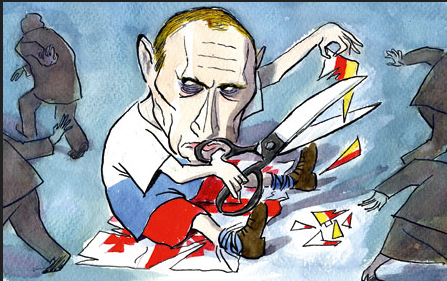
Putin Cuts off West

Europe’s debt crisis – and its leaders’ apparent inability to take coordinated action – gave the Kremlin additional ammunition. Given that Europe’s overall debts and deficits are much lower than those of the US or Japan, the logic went, it should have been able to avoid polarization and paralysis.

More broadly, Putin’s belief that the economic crisis was causing the West to disintegrate aligns with traditional Soviet geopolitical thinking. As Stephen Kotkin shows in a new biography of Stalin,  Soviet policy was strictly rational. The Great Depression convinced Stalin that the different factions of capitalism would go to war; in 1938-1939, Nazi aggression seemed to vindicate his analysis. But Stalin’s predictions fell apart after Hitler’s defeat, when conflicting interests did not lead to a clash between the US and the United Kingdom.

While Western politicians and economic policymakers were trying to avert Great Depression II, Putin was already working on the assumption that it had arrived. For the West, managing the resulting geopolitical imbroglio will be even more challenging than repairing its damaged economies.


Taxation in an International Economy

Giles Merritt writes:  The new European Commission President Jean-Claude Juncker had barely moved into his new office when journalists around the world started seeking answers regarding  the Luxembourg’s government under Juncke’s tax-avoidance deals with multinational corporations at the expense of ordinary taxpayers.

Indeed, though Juncker admitted to being “politically responsible” for the controversial tax rulings, owing to his position as finance minister and prime minister when they were signed, he stressed that Luxembourg had always been in compliance with national legislation and international rules.

Juncker then took his case to the European Parliament, many of whose members had been openly critical of the tax deals.

But the Lux leaks are not just fueling criticism in European political circles. European citizens have suffered through five years of tough austerity, spurred by a global financial crisis that is widely considered to be the fault of greedy bankers and financiers. In this context, public opinion risks becoming very hostile, not only toward the Luxembourg government, which Juncker led for almost 20 years, but also toward the European Commission that he now heads.

What happened in Luxembourg was legal.  What it really shows is that in an international economy tax policies should also be international.  It is difficult for US companies to compete internationallly when their tax burden is so much greater than corporate tax assessments in other countries around the world.

International Tax Policies