Can Abe’s Policies Succeed?

Kenneth Rogoff writes:  Japanese Prime Minister Shinzo Abe’s recent policy decisions – to increase monetary stimulus dramatically, to postpone a consumption-tax increase, and to call a snap election in mid-December – have returned his country to the forefront of an intense policy debate. The problem is simple: How can aging advanced economies revive growth after a financial crisis?

It is now clear that the first round of Abe’s reforms – known as “Abenomics” – has failed to generate sustained inflation.Rogoff aargues  that the “three arrows” of Abenomics 1.0 basically had it right: “whatever it takes” monetary policy to restore inflation, supportive fiscal policy, and structural reforms to boost long-run growth.

The central bank, under Governor Haruhiko Kuroda, has been delivering on its side of the bargain, the other two “arrows” of Abenomics have fallen far short.

There has been no significant progress on supply-side reforms, especially on the core issue of how to expand the labor force. With an aging and shrinking population, Japan’s government must find ways to encourage more women to work, entice older Japanese to remain in the labor force, and develop more family-friendly labor policies. Above all, Japan needs to create a more welcoming environment for immigrant workers.  Germany is doing this.  Japan begaan with emphasis on the SUmmer Olympics in Tokyo in 2020.

Overall progress has been slow. Japan desperately needs more nurses and hospice workers to care for its aging population, but bureaucratic and political resistance to immigration is deeply entrenched.. Without structural reforms, especially of the labor market, Abenomics cannot succeed in the long run.

The timing of the April 2014 consumption-tax hike (from 5% to 8%) was also unfortunate. It would not have been easy for Abe to postpone the move, given that it had been locked in place by broad-based political agreement before he took office. But the government could have engaged in more aggressive fiscal stimulus to counteract the hike’s short-term effects. Instead, two successive quarters of negative growth have had a dispiriting psychological impact.

True, the slump is partly an illusion: the earlier boom was fueled by Japanese households’ effort to beat the tax by front-loading purchases of consumer durables – a nuance that seems to have been lost in the public debate. But the big picture remains: Abenomics so far has failed to turn around a deflationary mindset.

Mind you, Japan’s outsize government debt and undersize pension assets are a huge problem, and only the most reckless and crude Keynesian would advise the authorities to ignore it.

Fiscal sustainability requires an eventual rise in the consumption tax, and of course Japan should not wait until international investors start doubting its willpower. The problem is in the timing and tactics. Postponing the second consumption-tax increase seems like a good compromise between pushing Abenomics to escape velocity and maintaining long-run credibility.

Demand policies alone will not alone prevent two more lost decades, much less guarantee two golden ones.

Japan’s experience holds important lessons for Europe, the main one being that stimulus policies, though necessary in the short run to support demand, cannot address long-term structural deficiencies. If Abenomics 2.0 fails to embrace deep structural reform, it will fare no better than the original.
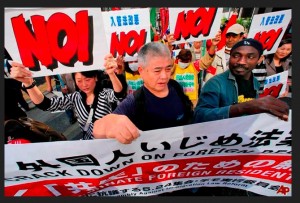
Immigration to Japan


Xi’s Dream?

Xi’s dream may not extend across China, writes Joseph Bosco, a former China desk officer in the US Dept. of Defense. Taiwan’s local elections this week and Hong Kong’s public demonstrations send an implicit but clear message to Beijing: These two populations do not want to live under the rule of China’s Communist Party.

The rejection embodied in these events has been building for years in both places. Xi Jinping now must decide whether he should hold firm or find ways to broaden his China Dream to accommodate the democratic aspirations of Hong Kong and Taiwan.

Xi has greater legal latitude and practical opportunity to use force in Hong Kong.  But if Hong Kong’s authorities prove unable to handle larger demonstrations, would Xi risk a Tiananmen-like massacre rather than honor Deng’s home-rule promise?

Taiwan presents a different kind of legal, diplomatic, or military challenge. First of all, a couple dozen governments still recognize the Republic of China. Washington has long provided arms to help Taiwan prepare its own defense, and the Taiwan Relations Act pronounced any threat to Taiwan’s future a matter “of grave concern to the United States,” falling just short of the explicit security commitment contained in the earlier Mutual Defense Treaty.

As a legal counterweight to the Taiwan Relations Act, the National People’s Congress in 2005 adopted the Anti-Secession Law, which threatens war if Taiwan declares independence.

The elections in Taiwan may have convinced Beijing that the possibility of closer political ties is vanishing. If Beijing has indeed determined that possibilities for peaceful unification are “completely exhausted,” as the Anti-Secession Law warns, Beijing may conclude it is now justified in taking military action against Taiwan. Or cooler heads may prevail, pushing China instead to await a more tangible pretext for hostilities. The assessment of America’s role will weigh heavily in Beijing’s deliberations.

Xi is thus left pondering critical dilemmas, not only regarding war and peace, but concerning the very legitimacy of China’s Communist regime. He might want to consider the sound advice Taiwanese President Ma Ying-jeou has been offering Beijing for years: Start following Taiwan’s lead and move along the peaceful path to democracy. With one country, two systems now a dead letter for Taiwan, two countries, one system would be the better answer.

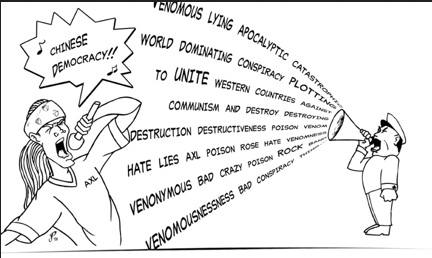
Democracy in China?

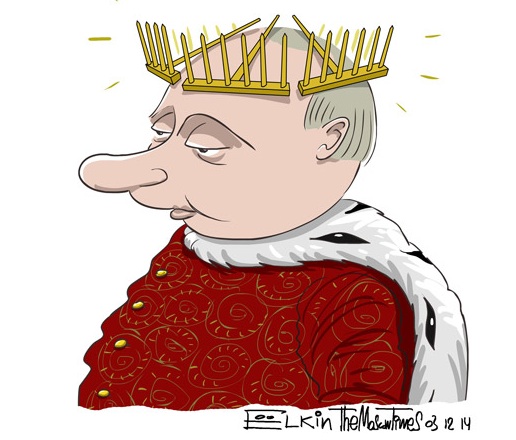
Russia: A Failed State?

Ivan Suhkov writes in the Moscow Times:  Crimea symbolizes revenge — in the Soviet, political and negative sense of the word. A more accurate word is “restoration” — a restoration of the state and its rights that were allegedly violated.

By reinstating the Soviet anthem, imposing a power vertical, giving greater social and political importance to siloviki structures — particularly the secret police — and reintroducing Crimea into the country’s daily weather forecasts, Yeltsin’s successor, Vladimir Putin, has symbolically restored the Soviet Union.

However, advocates of restoration tend to miss one important point: both the Russian Empire and the Soviet Union ended in failure and collapse — the former in 1917, the latter less than a century later in 1991.

The search for a new doctrine did not end unsuccessfully because it never really began.

To appreciate that this process did not begin with the absurd ban on the “falsification of history” or the “new historiography” trumpeted by Culture Minister Vladimir Medinsky, just peruse the preamble of the Russian Constitution.

It speaks of “historically established state unity,” “revering the memory of ancestors who have passed on to us their love for the fatherland” and “reviving the sovereign statehood of Russia.”

On Nov. 19, an Investigative Committee task force teamed up with riot police in an attempt to detain a citizen allegedly involved in the criminal withdrawal of a huge sum of money. The person’s name is not as important as the fact that the police staged the operation in the center of Moscow in broad daylight against the backdrop of an unprecedented level of excitement over the revival of the Russian state.

The police operation was a complete failure.

To better understand the circumstances, note that the figure sought by police is Ramzan Tsitsulayev, whom Chechen leader Ramzan Kadyrov named one year ago as that republic’s envoy to Ukraine. The men who managed to thwart the sting operation were Chechens, and the region where Tsitsulayev is hiding out — and from where he mocks the Moscow police — is, of course, Chechnya.

That is the same republic where Moscow began operations 20 years ago to “restore constitutional order.”

Two weeks ago Moscow police detained and drove off with Magomed Aliyev, a young native of Dagestan who had come to visit his sister.  Aliyev resurfaced at a detention center in Stavropol, a regional center and a sort of outpost of the federal authorities in the North Caucasus. Aliyev was urgently hospitalized on Nov. 26 after he was repeatedly beaten and someone jabbed a pen in his eye.

Regardless of any crime the young man might have committed, the actions of the siloviki far overstep the bounds of legal procedure. It might seem that Stalinist terror and a failed state are at opposite ends of the spectrum. But terror, by definition, is an act that bypasses the rule of law and so indicates the failure of the state.

In one way or another, former Soviet leader Josef Stalin is the focus of many current leaders’ ideas concerning “restoration.” They erroneously quote Churchill — namely, that “Stalin came to power when Russia had only a wooden plow, and left it in possession of atomic weapons.”

It so happens that the world has never had to cope with a failed state holding a nuclear arsenal large enough to destroy all of humanity several times over. The world barely managed to avoid such a threat in 1991, but only with some intense diplomacy, significant financial outlays and a whole lot of nail-biting.

Russian fans of “reconstruction” would like a replay of those times. And despite blithe assurances from the Defense Ministry that the command and control structure of the country’s nuclear arsenal has been fully modernized, there is no guarantee that the final act in this dark drama will end as peacefully as it did the first time.

Putin


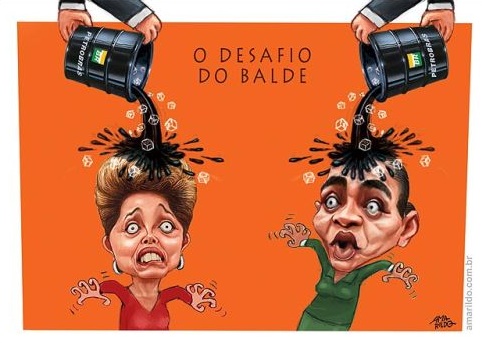
Kickbacks Rampant in Brazil

Paulo Roberto Costa, who is himself under investigation for his alleged involvement in a kickback scheme at Petrobras, said such practices happened “all over Brazil”.  He said corruption was an accepted way of doing business there.

The Petrobras scandal is believed to be one of the biggest in Brazil’s history.  Mr Costa was arrested in March.  As part of a plea bargain, he helped uncover a scheme that allegedly used inflated Petrobras contracts to funnel money to parties of the governing coalition.

President Dilma Rousseff, a former Petrobras chair, denies any knowledge of bribery.

Mr Costa said he had given investigators the names of dozens of politicians who received payments in the Petrobras case.  But he said the practice went much further than Petrobras.  “What has been reported occurring at Petrobras happens all over Brazil in contracts for roads, railways, ports, airports, hydroelectric dams,” Mr Costa told the congressional committee.

Prosecutors are investigating a number of other state-run companies and police last month arrested more than 20 executives of some of the country’s largest construction and engineering firms in connection with the probe.

In the wake of the arrests, President Rousseff called the case “symbolic” and said it could change the country forever.  Petrobras is not only the largest but also one of the most internationally recognised firms in Latin America.

Kickbacks in Brazil


More Deposits, More Loans? Not Necessarily

Matthew Plosner, an economist with the New York Federal Reserve, asks why banks keep unexpected deposit money instead of paying down debt or lending it.

For banks in energy-producing areas, there are three major uses of the deposit windfall: they can make more loans, invest in liquid assets, and pay down debt. If loan demand falls, all else being equal, other uses of funds should increase. Therefore, I should see both increased allocations to liquid assets and increased paydown of debt. In the pre-recessionary period, 2003-07, 9 percent of the deposit inflow is allocated to debt paydown. However, when loan allocations fell during the recession, banksreduced debt paydown and increased liquid asset allocations. The pattern of activity is not consistent with the falling loan demand narrative.

Finally, if the cause is a shortage of demand for loans, larger banks with a wider footprint should be better able to find uses for funds. A test to see if banks operating in more counties exhibit a stronger lending propensity during this period does not detect a meaningful difference; banks with more than one branch lend slightly more, but the difference is small and not statistically significant.

The development of unconventional energy provides a unique laboratory to observe how banks allocate unsolicited deposits. The ability of affected banks to allocate deposits toward loans varied significantly over the business cycle. While loan demand may have declined in the crisis, it does not easily explain why banks reduced both debt paydown and lending in order to hold cash and securities. When I compare different types of banks, I observe banks that lack access to non-deposit financing and banks with less tolerance for risk are more sensitive to the business cycle, consistent with a heightened demand for precautionary liquidity. The results highlight heterogeneity in banks’ response to the business cycle that can impede capital reallocation during downturns.

Bank Deposits


Post Brisbane Black and Blues

Ellen Brown writes:  Did the G20 know what they were doing when they whisked into Brisbane, posed for their photo ops, approved some proposals, made a show of roundly disapproving of Russian President Vladimir Putin, and whisked out again. It was all so fast, they may not have known what they were endorsing when they rubber-stamped the Financial Stability Board’s “Adequacy of Loss-Absorbing Capacity of Global Systemically Important Banks in Resolution,” which completely changes the rules of banking.

Deposits are now “just part of commercial banks’ capital structure.” That means they can be “bailed in” or confiscated to save the megabanks from derivative bets gone wrong.

Rather than reining in the massive and risky derivatives casino, the new rules prioritize the payment of banks’ derivatives obligations to each other, ahead of everyone else. That includes not only depositors, public and private, but the pension funds that are the target market for the latest bail-in play, called “bail-inable” bonds.

“Bail in” has been sold as avoiding future government bailouts and eliminating too big to fail (TBTF). But it actually institutionalizes TBTF, since the big banks are kept in business by expropriating the funds of their creditors.

It is a neat solution for bankers and politicians, who don’t want to have to deal with another messy banking crisis and are happy to see it disposed of by statute. But a bail-in could have worse consequences than a bailout for the public. If your taxes go up, you will probably still be able to pay the bills. If your bank account or pension gets wiped out, you could wind up in the street or sharing food with your pets.

In theory, US deposits under $250,000 are protected by federal deposit insurance; but deposit insurance funds in both the US and Europe are woefully underfunded, particularly when derivative claims are factored in.

Kept inviolate and untouched in all this are the banks’ liabilities on their derivative bets, which represent by far the largest exposure of TBTF banks.  tt is estimated that American banks have some $280 trillion in derivatives on their books.

All this fancy footwork is to prevent a run on the TBTF banks, in order to keep their derivatives casino going with our money. Warren Buffett called derivatives “weapons of financial mass destruction,” and many commentators warn that they are a time bomb waiting to explode.  When that happens, our deposits, our pensions, and our public investment funds will all be subject to confiscation in a “bail in.”

Post Brisbane Black and Blues

Ruble in Free Fall

Prostitutes in the Russian port of Murmansk hiked their prices 40% as the value fo the ruble fell.  The ruble fell to 54.82 against the dollar and 67.82 to the euro before somewhat recovering.
The rouble has lost more than a third of its value against the dollar and euro since the start of the year.Western sanctions against Russia over Ukraine and the fall in oil prices are hurting the economy.

A decision by the oil producers’ group Opec not to rein in production – which would have bolstered crude prices – sparked a big fall in the rouble. The currency dropped by 9% on Monday – its biggest one-day decline since 1998.

Oil and gas revenues are the biggest single source of revenue for Moscow.

On Monday, Russia’s central bank spent about $700m to support the currency, according to official data.

There were unconfirmed reports on Wednesday that the bank was again intervening to prop up the ruble.

The bank indicated in early November that interventions would be less frequent as part of a plan to let it float freely on the currency markets.

Russian Call Girls Raising Prices

Turkey and Russia Dance

Moscow and Ankara do not really see eye to eye on politics, but despite that have big economic potential, with Turkey considering itself an in-between partner who would take gas from Russia to Europe writes Martin McCauley of the University of London,

From the political point of view Russia and Turkey are poles apart, but from the economic point of view the gas deal and the atomic power plant that is going to be built – that has been on the cards for quite a long time.  Turkey would like the gas pipeline to go through their country because then they collect the rent from it. And also Turkey would like to pipe natural gas from Iran through Turkey to the West. That is blocked by sanctions at present. So Turkey sees itself as the in-between partner who will take gas from Iran and Russia to Europe.

Europeans are softening on sanctions toward Russia. Sanctions are hitting German companies particularly hard. Russia needs thier gas to bring a hundred dollars a barrell.  For whatever reason, Saudi Arabia is not cutting production to get the price up.  TURKEY AND RUSSIA

Turkey and Russia Dance

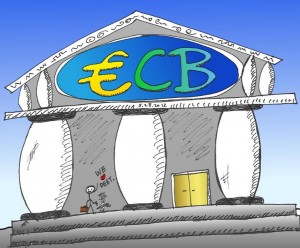
ECB and QE

Central banks across the world are filling in where politicians fail.  Europe has an alaraming mix of low growth, high unemployment and shrinking potnetial writes Mohamed A. El=Erian.  The European Central Bank is trying to address issues.  What could be done to help?

Four areas that could be addressed:  Politicians in Italy and France could enhance competitiveness, growth and production.  Second, countries like Germany could increase demand by infrastructure expenditures.  A bigger effort could be made to decrease pockets of indebtedness like Greece.  Fourth, countries could work togehter to supplement monetary union with closer fiscal, banking and political integration.

ECB


New Railway Links Persian Gulf to Central Asia

Ceremony marks opening of the new railway in the Turkmenian village of Ak Yayla, Dec. 3, 2014. Turkmenistan, Kazakhstan and Iran on Wednesday inaugurated the new railway route that will improve resource-rich Central Asia’s access to markets in the Middle East and South Asia.

The the presidents of Iran, Kazakhstan and Turkmenistan attended the official opening of the line in the Turkmen frontier village of Ak-Yayla. Children handed white gloves to the leaders, together bolted a final golden-colored segment of track into place.

The 928-kilometer (577-mile) route, which runs from western Kazakhstan to the northern Iranian city of Gorgan, will substantially hasten transportation of cargo between a long-isolated region and markets in the Middle East and Asia.
The line is intended to transport cargo, although there are plans to eventually open it to passengers.

Central Asia to the Persian Gulf