Yemen’s Survival

Farea Al-Muslimi writes: If Yemenis want to save whatever and whomever remains in Yemen, they must adopt a new political and economic equation — a kind of Yemeni Noah’s Ark — leading to an intelligent, technical and economic Marshall Plan extending to 2025, during which time a state could be built. The plan should be similar to the one adopted for Germany after World War II in being an intelligent, nontraditional mechanism that intersects but remains unrelated to the plans of state institutions. In other words, it should employ permanent components, not piecemeal, expedient measures and committees.

A workable plan would embody a unified and genuine will to instill stability in Yemen and restore the conflict there to the previously espoused mechanism, which was based on fair political and economic competition as well as shared interests without the threat of force. That Yemen is wracked by great institutional and social destitution actually facilitates the adoption of state-building projects, as societies and institutions are less resistant to change in desperate times. A sustainable peace plan for Yemen cannot succeed, however, without the adoption of an economic and developmental Marshall Plan capable of enduring irrespective of the faction in power while remaining largely unaffected by the prevailing security conditions.

Yemen faces many challenges related to economic development, but it also has great potential. For example, why not transform the beautiful island of Socotra into a world-class international maritime trade route stop and tourist destination? It is far removed from the events in the rest of Yemen and would give the entire country a glimmer of hope of things to come when peace prevails. Why can’t Socotra become another Hong Kong or Hawaii? It possesses all the elements to transform it into a maritime or tourist attraction, with its location and unique, pristine environment. Knowing that Aden’s ports competed with Liverpool’s and New York’s in the 1950s, why not transform Aden into another Dubai or Singapore?

Yemen

\

Did North Korea Hack Sony?

US spies and Sony executives are speculating that North Korea hacked Sony to retalizate for a film opening in February 2015 in which the leader of North Korea is targeted for assassination.

Hacking doesn’t cost much; all it takes is some technical skill, readily available hardware and access to venues where hackers trade bits of code and information about vulnerabilities. The entry barriers are low; it’s possible to do billions of dollars of damage with an investment of tens of thousands.

That’s why it’s impossible to know whether it was a rogue government or a bunch of high-school students that brought down Sony’s network, distributed its unreleased films online and published its internal documents. We should ask ourselves how much of our vital information should be online at all. For North Korea, the answer is none, which gives it the advantage.

Hacking

Why Uber Goes Private Before Public

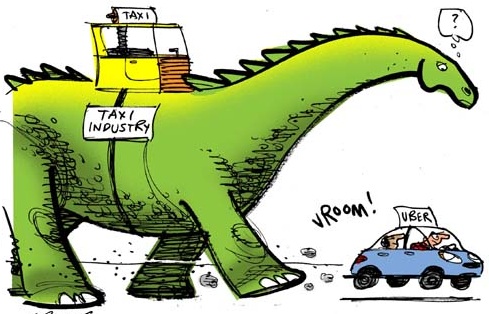
Matt Levine writes: Uber can raise all the money it needs,7 from all the investors it wants, as often as it wants. And it doesn’t have to file audited financials with the Securities and Exchange Commission, or subject itself to stock exchange governance guidelines or flash crashes, or deal with short sellers or activist investors or nuns or really any investors it doesn’t want. Companies that go public give up a lot, and don’t really get anything. So why do it?

The answer, of course, is pretty simple. The people investing now — like the ones who invested in June, or last year, or earlier — will want to be able to cash out. They could in theory cash out by selling to each other; certainly there are private companies that allow trading among their private shareholders,8 though Uber apprently does not.  But even leaving aside the administrative headaches, selling to each other has a certain zero-sum feeling: For everyone in the limited universe of pre-IPO investors who makes money by selling at a higher valuation, another is out-of-pocket paying that higher valuation.

No, the way to cash out is in an IPO. An IPO brings in new money, which can take shares off pre-IPO investors’ hands at a higher valuation, making all of those pre-IPO shareholders richer.

Uber


Dangers of Transporting Crude Oil

Isaih Thompson writes for Pro Pubica:   The oil boom underway in North Dakota has delivered jobs to local economies and helped bring the United States to the brink of being a net energy exporter for the first time in generations.

But moving that oil to the few refineries with the capacity to process it is presenting a new danger to towns and cities nationwide — a danger many appear only dimly aware of and are ill-equipped to handle.  Dangers of Transporting Crude Oil

Transporting Crude Oil


Micropower

Twenty-five percent of the world’s energy is created by micrropower up from 10% last year. Small-scale electricity generation is slowly replacing big fossil-fuel driven power plants, which are currently the world’s single largest contributor to greenhouse gas emissions.

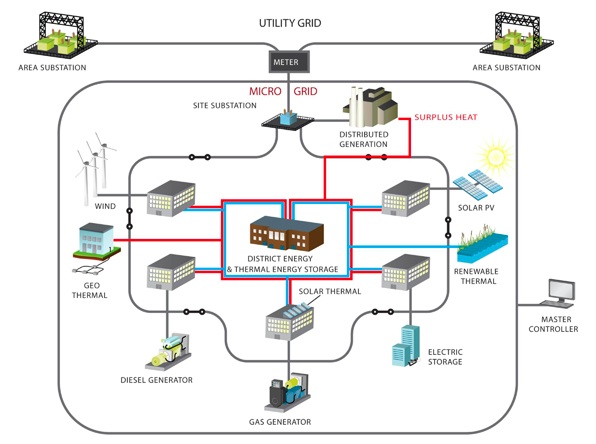
Defined as “all renewables except big hydro”  Micro grids are being built all over the world.both to increase energy efficiency and to provide adaptable and resilient power in the case of major storms or natural disasters like Hurricane Sandy. This is particularly important as extreme weather events are likely to increase due to global warming.

These micro-grids, which typically incorporate renewables and cogeneration, are designed to be able to operate independently of the main power grid. If disaster strikes, they can produce islands of power to critical facilities such as police, fire services and hospitals.

More than 260 such projects are planned or operating in the US.  Micro-grids aren’t just helpful during natural disasters — they avoid long-distance transmission, so can reduce line energy losseswhich can reach as high as 20%.

Cities, and the way they are powered, will undoubtedly play a huge role in the transition to a sustainable and resilient energy future. New York has reduced its greenhouse gas emissions by 19% since 2005.  This is partly from an increased use of cogeneration and natural gas, and upgraded city operations using cleaner vehicles.

Microgrids

Putin and the Russian Kleptocracy

Anne Applebaum in the New York Review of Books writes onPutin’s Kleptoccracy.  Who Owns Russia by Karen Dawisha:  The question is asked: Did the failure of reforms, of privatization, bring us to Russia today, or did the ascendancy of Putin and his KGB friends
Instead from the beginning sought to create an authoritarian regime ruled by a close-knit cabal…who used democracy for decoration rather than direction.
This is the remarkable story of one group of unrepentant, single-minded, revanchist KGB officers who were horrified by the collapse of the Soviet Union and the prospect of their own loss of influence.
In league with Russian organized crime, starting at the end of the 1980s, they successfully plotted a return to power. Assisted by the unscrupulous international offshore banking industry, they stole money that belonged to the Russian state, took it abroad for safety, reinvested it in Russia, and then, piece by piece, took over the state themselves. Once in charge, they brought back Soviet methods of political control—the only ones they knew—updated for the modern era. Russian Kleptocracy

Acid Water FInds Acid Judge

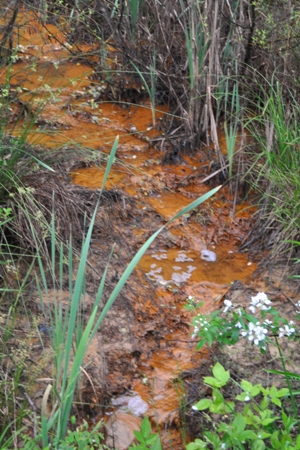
Acidic Mine WaterTwenty-seven hundred coal mine owners have gotten away with dodging nearly $70 million in safety fines in Kentucky.  Miners are injured at much higher rates in delinquent operations.  Seven of the top 10 scofflaws, including West Virginia billionaire Jim Justice, control mines in Eastern Kentucky.

Last week, a ruling by Franklin Circuit Judge Phillip J. Shepherd laid bare the charade that is Kentucky’s enforcement of coal industry compliance with the Clean Water Act. The judge described a state agency that barely even goes through the motions of enforcing the law.  Shepherd rejected a state-proposed settlement with what was one of Eastern Kentucky’s largest producers of surface mined coal before going through bankruptcy, the West Virginia-based Frasure Creek Mining, which still has mining sites under permit in the state. The company for years submitted false water monitoring data. Shepherd concluded there was either a scheme to commit fraud “or incompetence so staggering as to defy belief.”

The Beshear administration’s Cabinet for Energy and Environment chose to handle the 1,520 violations as paperwork errors, so did not investigate “substantive pollution violations” except in a very limited way and even that “tasked the staff significantly,” wrote Shepherd.  “With only a handful of enforcement personnel, and a dwindling number of field inspectors, and with the position of Director of Enforcement unfilled since 2007, it is impossible for the Cabinet to effectively regulate permittees such as Frasure Creek who systematically violate” the Clean Water Act.

No wonder 93 percent of the Big Sandy River, the watershed where Frasure Creek does most of its Kentucky mining, is unfit to support aquatic life mainly because of surface-mining runoff. The cabinet does not even know how many discharge outfalls are associated with the state’s 2,200 coal general permits, Shepherd wrote. Therefore, the cabinet can’t say whether coal companies are self-monitoring water pollution as required by federal law, much less whether they are violating their water pollution limits.

The massive violations were discovered by citizens who threatened to sue. The cabinet agreed to a consent decree under which Frasure Creek would pay $310,000. The cabinet also fought — and lost — all the way to the state Supreme Court to exclude citizens from any involvement in deciding the case. Shepherd ruled the penalties were too small “to deter future violations” and sent “the message that cheating pays. This puts the many companies that comply with the law at a competitive disadvantage.”

Hiring a new lab cost Frasure Creek an extra $30,000 a month. For a while, the company’s quarterly reports appeared to be accurate with many more actual violations reported. Then, as if to prove Shepherd right, Frasure Creek started sending obviously false reports again.

Operators who increase profits by taking shortcuts on safety and health, put lives at risk. Economic dependence on cheap energy from coal is not cheap.  The costs are high — they just get pushed onto someone else, the disabled or dead miners, or Kentuckians who depend on water, ruined by surface mining, that flows from the mountains across the state.


Russia and EU in Tug of War Over Moldova

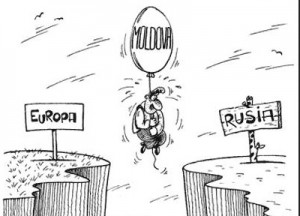
The EU and Russia are in a tug of war over Moldova.

Two main factors have damaged the pro-western camp in the country.

The country has been subjected to an extraordinary amount of blackmail by Russia.  Russia has banned imports of Moldovan wines, meat, and vegetables. Russia has also threatened to cut off Moldova’s energy supplies.  The new trade accords with the EU should give reformers the impetus to introduce structural changes in the economy, provided there is sufficient political will to do just that. But reforms would take time to kick in.

The government in Chişinau has adopted a tough stance against the Gagauz community. Observers warn that this could alienate the minority even further, and with the support from Moscow, Chişinau could have a major separatist movement on its hands.

Indeed, in a referendum carried out among the Gagauz minority in February 2014, 97.2 percent voted against Moldova’s closer ties with the EU, and 98.4 percent favored Moldova’s integration into the Russian-led Eurasian Customs Union.

The leader of the Gagauz region, Mihail Formuzal, who was a major in the Soviet army, has repeatedly opposed Moldova moving closer to the EU. He has claimed such a development would threaten the autonomy of the Gagauz minority.

With a frozen conflict in Transnistria and Russia’s support for the Gagauz, Moldova’s future stability is not a foregone conclusion. This time around, the EU cannot afford to be caught napping-as it was over Ukraine.

Moldova Torn

Israel to Cyprus to EU Pipeline?

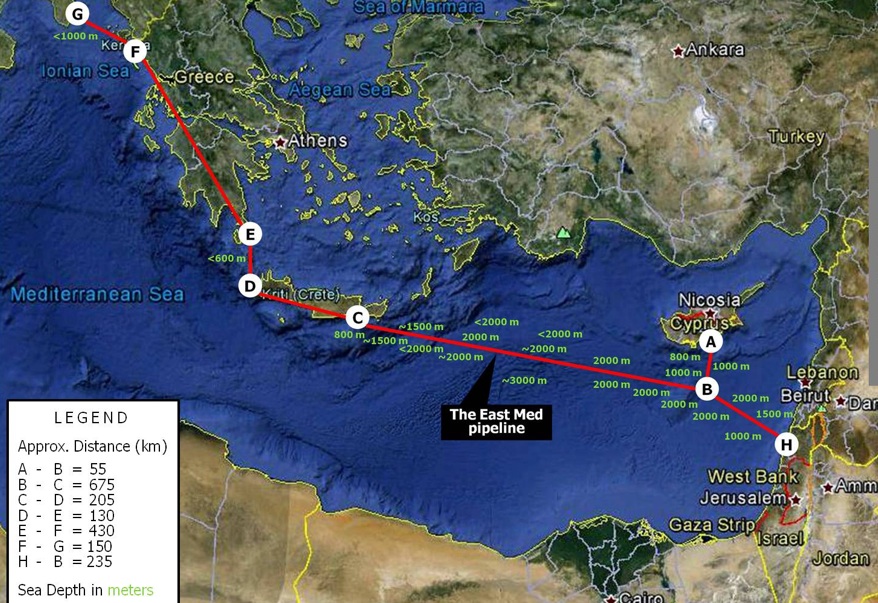
Israel and Cyprus have launched a new push for EU funds to build a pipeline that could bring about 10 billion cubic metres (bcm) of their natural gas to Europe annually, and ease the continent’s energy security anxieties.  But Palestinians are warning that without a broader resolution of regional disputes, the pipeline risks becoming a source of conflict.

The Cyprus-centred project could be the world’s longest pipeline if built, stretching up to 1,530km, and passing through depths of up to 3,000m.

Israel, Greece and Cyprus expect a formal meeting with Sefkovic to discuss ways of actualising the project, on the fringes of an EU energy ministers’ summit on 9 December.

“The three countries involved intend to raise this issue [on the 9th] as it involves funding from the commission,” an EU diplomat said. Israel, as a non-EU member, will depend on its partner countries’ powers of persuasion.

With energy diversification and security both rising up Europe’s political agenda, “it looks like the stars have aligned in one position now and that might be good for our timing,” Guy Feldman, an advisor to Shalom told the Guardian.

But the Palestinian Authority cautioned the EU against signing any contract until territorial gas disputes with neighbouring countries such as Lebanon were resolved.

“The objective of energy security starts with a clear cut boundary of all the gas fields,” said the PA’s energy minister, Omar Kettaneh. “Otherwise instead of being a source of security the pipeline will be a source of conflict.”
Advertisement

In 2010, the US Geological Survey (USGS) estimated that the Levant Basin, could hold more than 3,455bcm of gas, which is comparable to Iraq’s reserves.

But until now, political instability has hindered its exploitation, with Israeli and Cypriot claims to overlapping gas fields contested by Lebanon and Turkey, respectively.

In 2012, Israel, Cyprus and Greece signed a deal to promote exports of their gas to the EU through an eastern Mediterranean corridor.

The planned offshore pipeline, which diplomats say could transport between 8-15bcm of natural gas annually, has already been selected for “project of common interest” status by the EU. This potentially gives it access to a €5.85bn fund, and preferential treatment from multilateral banks.

A commission timeline estimates that the pipeline could begin pumping gas by 2020, four years after the Leviathan field, which contains around 450bcm of gas comes online.  As well as Leviathan, the already operating Tamar field has proven reserves of 283bcm. Israel also has several smaller gas fields and is searching for more exploitable reserves. The country wants to export up to 60% of the gas it produces.

But Kettaneh said that such words rang hollow in Gaza, which has been prevented from exploiting its own natural gas resources as a result of Israel’s blockade, and internal political divisions.

Pipeline?

Germany to Require 30% Women on Boards

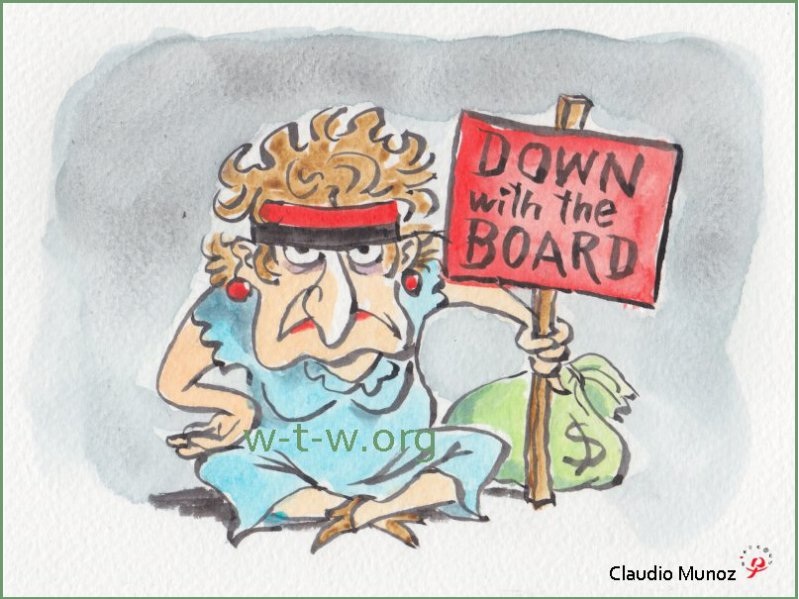
Germany’s leading companies will need to have at least 30 percent women on their supervisory boards from 2016, according to a new directive being adopted by the government, Chancellor Anglela Merkel announced.

The leaders of Germany’s Social Democrats and Merkel’s conservative bloc agreed on the measure at a late-night meeting Tuesday. A bill will be put to Cabinet on Dec. 11.

Currently, women hold just 22 percent of non-executive positions on the boards of companies listed in Germany’s benchmark DAX 30 index, according to Economy Ministry  figures. They hold just six percent of management board posts.

The new plan will affect 100 listed companies starting 2016. Companies that fail to recruit enough women to non-executive boardroom posts will be barred from giving vacant seats to men.

Introducing a women’s quota was one of the center-left Social Democrats’ demands for entering into a coalition with Merkel’s conservatives.

Germany has lagged far behind other European countries in terms of female representation in the boardroom. Norway, Spain, Iceland and France already have similar quota requirements.

Women on Boards