Demand for Sand in US Fracking

The practice of hydraulic fracturing has rightly received a lot of the credit for allowing the U.S. to boost its oil production in recent years by as much as 60%. The U.S. is now producing more oil than it has in decades and the boom is expected to continue.  But in order to fracture a well, there is one key ingredient needed: sand. Also called “frac-sand” or more officially known as “proppant,” sand is vital to opening up shale to allow oil and gas to escape.

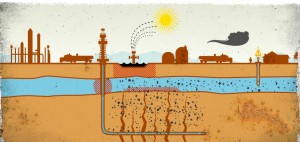
When oil and gas companies conduct a fracking job, they send a mix of water, sand, and proprietary chemical cocktails down a well. The extraordinary pressure at which they inject the mixture fractures shale rock, and the frac-sand props open the fissures. With cracks kept open by frac-sand, oil and gas flow out from shale rock and into the well.

Frac-sand often comes from high-purity quartz and is crush resistant, allowing it stay intact while shale rock fractures. A single frac job can require several thousand tons of sand. But oil and gas companies have found that by increasing the volume of sand in the fracturing process, they can increase output, often by as much as 30%. The number of shale wells using that extra burst of sand stands at just 20%, but may rise to 80% according to RBC Capital Markets.

All of this is creating a run on frac-sand, which has turned into a booming industry virtually overnight. Prices have climbed as demand has increased. In 2010, frac-sand sold for between $45 and $50 per ton, but that jumped to $54 per ton the following year. Sand prices could increase by 50% in the coming years as demand rapidly rises.

Most frac-sand is produced in the Midwest, which has the most favorable geology. There are other regions that have high-quality sand, such as Appalachia. However, sand in Appalachia has been ravaged by tectonic forces, which has weakened the grains of sand, making it much less suitable compared to sand found in the Midwest.

That means that states like Wisconsin, Minnesota, and Illinois have become powerhouses in terms of frac-sand production, where the most highly-prized frac-sand – Northern White sand – is located. One of the biggest problems with the frac-sand market is transit. Most drilling occurs in Canada, in the Bakken, and in South and West Texas – regions that are relatively far from Wisconsin and Minnesota. That means only the companies with secure transportation links will be the ones that will ride the frac-sand wave over the next several years.
Fracking Sands


Saudi Arabia Gushes

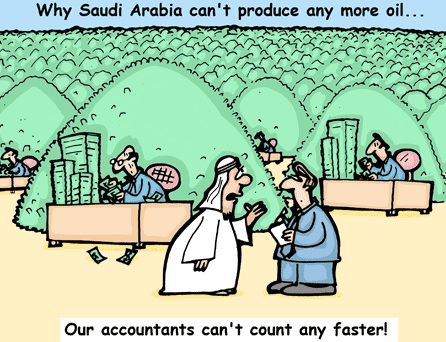
Saudi Arabia did it. After stonewalling for weeks, all attention is on the House of Saud and its refusal to let OPEC cut production, even by a modest 2 million barrels a day. The immediate impact of this decision was felt with WTI falling to $65.99, its lowest point in over four years, while Brent settled at $70.07 after a near $7.67 drop. That Saudi Arabia thought this to be “a great decision” shows the defiance of the former top global oil producer when confronted with a new energy world order. The news also handed out a battering to oil stocks, with Premier Oil falling by 7%, with Statoil, Total and Shell all down around 4%.

Despite this immediate impact, Western powers quickly moved to dispel concern about the impact of this decision on their economies. Canadian Finance Minister Joe Oliver  stated that Canada had not counted on an OPEC deal, saying that “when we took into account the oil price decline…we made the assumption that the prices would stay at the low level for the entire period.”

Will OPEC break up?. That is the question.  Russia needs high oil prices to stay financially stable, especially with economic troubles and political sanctions costing well over $100 billion a year. The shift in production power to the U.S., allied with the likes of Canada, Mexico and Brazil, has exposed the deep divisions between OPEC members that were once papered over in the name of joint economic prosperity. If the shale boom truly makes the U.S. energy independent and the oil export ban is lifted, certain OPEC members may shift their allegiance.

Much has also been made of the fact that low oil prices will also help the gas-guzzling U.S. economy at the pump, while also trickling down to help consumers in Europe and Asia.

MarketWatch is clearly loving this situation, crowing that those who will suffer are hardly U.S. allies. It estimates that with production ever fluctuating, Libya needs prices at $185 a barrel to balance its budget, while Iran needs $133, and Russia needs $100. “The rogue states’ cash flow can’t handle it. OPEC’s low-cost producers are Western-friendly powers like Kuwait.” Its economic analysis continues with the fact that U.S. shale-oil production is expanding by the capacity of Libya every year, and that American production would still be boosted at $60 a barrel, albeit in a limited fashion. Its final rhetorical flourish is perhaps a tad over-played but is emblematic of markets that are not as worried about OPEC’s decision: “If shale’s job is depriving rogue regimes of oil leverage, it’s done.”

Saudi Arabia for Gushing


How Best to Use Public Assets

But a better understanding of public commercial assets—defined as government property that generates profit, such as state-owned firms, real estate, and forests—could help yield significant amounts of wealth for economies struggling to get back on track. According to our calculations, which draw on data from the International Monetary Fund and other public sources (and which will be published in our forthcoming book, The Public Wealth of Nations), central governments alone hold significantly more commercial assets than private equity firms, hedge funds, pension funds, sovereign wealth funds, or the super-rich. The value of public commercial assets is on the same order of magnitude as annual global GDP—and comfortably higher than global public debt. If central governments managed their assets better, they could generate annual returns of roughly $3 trillion, or more than the world’s yearly investment in infrastructure including transportation, power, water, and telecommunications. Every percentage point of improvement on annual global portfolio returns would generate the equivalent of the GDP of Saudi Arabia.  The Public Wealth

Public Wealth

Juncker Won’t be Junked

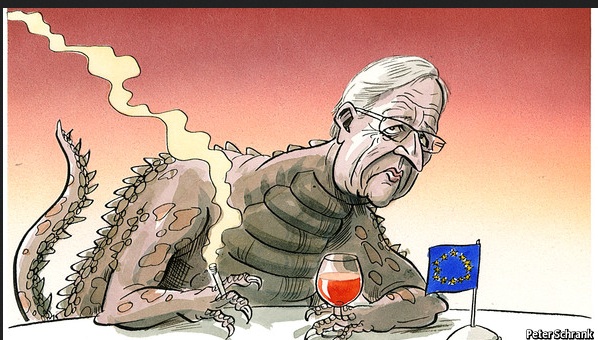
Jean-Claude Juncker, the European Commission’s new president, comfortably survived a no-confidence vote on Thursday that was prompted by news that Luxembourg lured multinational businesses with super-low tax rates during his tenure as its prime minister. The censure motion in the European Parliament was defeated, 461 to 101. But the vote was hardly an auspicious start for Juncker, under fire in his first month in office both over his role when he was Luxembourg’s leader and over a potential conflict of interest as head of a commission examining tax avoidance.

The executive EU Commission,upholds the laws of the 28-nation bloc. The Commission is now investigating several tax schemes offered by Luxembourg to global companies to see whether they broke European Union laws on state aid. Ireland and the Netherlands are also under investigation.

Juncker has said Competition Commissioner Margrethe Vestager will conduct the investigation and that he will not discuss the case with her to avoid being seen as trying to influence the outcome, which would harm his authority.

Juncker has billed his new Commission as “Europe’s last chance” to show citizens the EU can act in their interests.

However, a near-record unemployment rate of 11.5 percent and an economy that has barely grown in seven years have left many EU citizens disillusioned, leading to large victories by Eurosceptic parties in May’s European Parliament election.

Junkcer’s five year term could prove contentious.

Juncker

Going Global?

Ian Goldin writes:  An important characteristic of the risks of a globalized world is that they often become more serious over time. As a result, the speed at which they are identified, along with the effectiveness of the response, can determine whether an isolated event becomes a global threat. One need only look at the financial contagion of 2008 to see what happens when a danger remains unidentified for too long or a coordinated response is missing or mismanaged.

And yet, just as the need for robust regional and international institutions is at its greatest, support for them is waning. A growing number of citizens in Europe, North America, and the Middle East blame globalization for unemployment, rising inequality, pandemics, and terrorism. Because of these risks, they regard increased integration, openness, and innovation as more of a threat than an opportunity.

This creates a vicious circle. The concerns of the electorate are reflected in rapidly growing support for political parties that advocate increased protectionism, reductions in immigration, and greater national control over the marketplace. As a result, governments across Europe, North America, Asia, and Oceania are becoming more parochial in their concerns, starving international agencies and regional organizations of the funding, credibility, and leadership capabilities needed to mount a proper response to the challenges of globalization.

In the short term, countries may be able to duck their global responsibilities, but the threat posed by events beyond their borders cannot be kept at bay forever. Unaddressed, the endemic dangers of a globalized world will continue to grow. In confronting dangers such as the Islamic State, Ebola, financial crisis, climate change, or rising inequality, short-term political expediency must be overcome – or the entire world will come to regret it.

Global Cooperation

Entpreneur Alert: Chocolate in China?

Hershey is successfully focusing on global investment and in 2013 annoned an Asian iInnovation Center, which brings together world-class knoweldge and development capabitlies. Locally-relevant products are being invented.

Hershey Kisses Deluxe takes an iconic American product and re-imagines it in the Chinese market.  They are twice the size of Hershey’s Kisses and have a whole hazelnut in the center.  The product was developed to fit the Chinese consumers’ demand for a unique premium chocolate.

Chocolates tailored for the Chinese market may be a rich entrepreneurial field.

Chocolate in China?

Japan’s Deflation

The Bank of Japan’s unprecedented stimulus and Abe’s pro-growth reforms have yet to spur a recovery in inflation and gross domestic product growth, and the country is yet again in recession. Worse, BOJ Governor is rapidly running out of weapons in his battle to eradicate Japan’s “deflationary mindset.”  Many of the staff at the BOJ think the central bank has already gone too far to weaken the yen and buy virtually every bond in sight. That’s a problem for Kuroda, the BOJ Governor,  and Abe in two ways.

First, board members warned that the costs of further monetary stimulus outweigh the benefits.

Second, maintaining stability in the bond market just got harder. The only way 10-year yields — currently 0.44 percent — can be stopped from spiking is by making ever bigger bond purchases. But fellow BOJ board members will be giving Kuroda less latitude to cap market rates.

Japan is lucky in one way: Given that more than 90 percent of public debt is held domestically, Tokyo can the avoid wrath of the “bond vigilantes.” Kuroda further neutralized these activist traders by saying there’s “no limit” to what he can do to make Abenomics work. The fact that so many of his colleagues are skeptical of the policy, however, undermines Kuroda’s credibility. If markets begin to doubt his staying power, yields are sure to rise.

The answer, of course, is for Abe to get more serious about deregulating the economy; that was the thrust of Kiuchi’s dissenting vote last month. Unfortunately, progress on Abe’s so-called third-arrow reforms is set to slow as Tokyo stops all business to contest a Dec. 14 election. The vote could well leave Abe with a smaller mandate for change than he won in 2012. Whatever the margin, though, the prime minister needs to act faster to increase competitiveness. Or Abe ay be voted out.

 QE

HSBC Fined for Unregistered Broker-dealer Advice to US Clients

SEC has charged HSBC’s private banking unit with providing unregistered broker-dealer and investment advisory services to
HSBC Private Bank (Suisse) agreed to admit wrongdoing and pay $12.5 million to settle the SEC’s charges. Said Andrew J. Ceresney, Director of the SEC’s Division of Enforcement:

HSBC’s Swiss private banking unit illegally conducted advisory or brokerage business with U.S. customers. HSBC Private Bank’s efforts to prevent registration violations ultimately failed because their compliance initiatives were not effectively implemented or monitored.

According to the SEC’s order instituting settled administrative proceedings, HSBC Private Bank and its predecessors began providing cross-border advisory and brokerage services in the U.S. more than 10 years ago, amassing as many as 368 U.S. client accounts and collecting fees totaling approximately $5.7 million. Personnel traveled to the U.S. on at least 40 occasions to solicit clients, provide investment advice, and induce securities transactions. These relationship managers were not registered to provide such services nor were they affiliated with a registered investment adviser or broker-dealer. The relationship managers also communicated directly with clients in the U.S. through overseas mail and e-mails. In 2010, HSBC Private Bank decided to exit the U.S. cross-border business, and nearly all of its U.S. client accounts were closed or transferred by the end of 2011.

According to the SEC’s order, HSBC Private Bank understood there was a risk of violating the federal securities laws by providing unregistered broker-dealer and investment advisory services to U.S. clients, and the firm undertook certain compliance initiatives in an effort to manage and mitigate the risk. The firm created a dedicated North American desk to consolidate U.S. client accounts among a smaller number of relationship managers and service them in a compliant manner that would not violate U.S. registration requirements. However, relationship managers were reluctant to lose clients by transferring them to the North American desk. HSBC Private Bank’s internal reviews revealed multiple occasions when U.S. accounts that were expected to be closed under certain compliance initiatives remained open.

The SEC’s order finds that HSBC Private Bank willfully violated Section 15(a) of the Securities Exchange Act of 1934 and Section 203(a) of the Investment Advisers Act of 1940. HSBC Private Bank agreed to admit the facts in the SEC’s order, acknowledge that its conduct violated the federal securities laws, and accept a censure and a cease-and-desist order. The firm agreed to pay $5,723,193 in disgorgement, $4,215,543 in prejudgment interest, and a $2.6 million penalty.

HSBC Fined


Oil Everywhere and Revenue Clogged

Mohammed A. Saih writes: While a recent deal between Baghdad and Erbil to export oil from the northern fields is seen by many as a breakthrough after years of stalemate, the prospect of further progress on oil exports still remains uncertain.  Despite a breakthrough deal between the Iraqi federal government and the Kurdistan Regional Government to cooperate on oil exports from northern Iraq, thorny issues remain.

On Nov. 13, Iraq’s oil minister, Adil Abdul-Mahdi, and Iraqi Kurdish authorities agreed that the Kurdistan Regional Government (KRG) will export 150,000 barrels of oil per day.

In return, the Baghdad government will possibly deliver as much as $1 billion to the KRG, which has been struggling to pay its employees and fund public projects ever since the central authorities in Baghdad cut its budget in February.

Saad al-Mutalebi, a member of the Shiite State of Law Coalition and a politician close to former Prime Minister Nouri al-Maliki, described the deal as “unrealistic.””

When the Islamic State (IS) swept through large parts of northern and western Iraq in June, the Kurdish peshmerga forces brought Kirkuk under their firm control as Iraqi army units deserted their posts there, fearing an IS onslaught. Ever since, oil exports from Kirkuk to the Turkish port city of Ceyhan have stopped, causing the Iraqi government a significant loss of revenue while it is locked in a brutal conflict with IS.because it leaves the KRG free to handle as it pleases the remainder of the oil it produces.

The Iraqi oil minister has said the deal “does not constitute a final solution” but is only a step toward a broader solution.  The challenge for Iraqi authorities is to justify the deal as it amounts to an acknowledgement of the KRG’s de facto control over the oil fields of Kirkuk, an anathema to many non-Kurdish Iraqis.

The KRG and Baghdad have been in deep disagreement for much of the past decade over controlling the production and export of oil from Kurdish territories.  Even though the KRG has had a difficult time selling its oil on the international market due to threats of legal action by the Iraqi government and strong opposition from the United States, it has adamantly refused to let the Iraqi national oil marketing company, SOMO, control oil exports from the Kurdistan region proper, which constitutes the three provinces of Erbil, Sulaimaniyah and Dahuk, in addition to smaller areas of Ninevah, Diyala and Kirkuk provinces.

Without a solid agreement over SOMO’s role in Kurdish oil exports, it will quite likely be difficult for the Iraqi government to maintain the current deal due to heavy pressure from non-Kurdish circles in Baghdad.

Another solution could be possible in the form of the KRG selling its oil and keeping the Iraqi government in the loop on its production and export activities. In that case, he said the KRG will still have to send the revenues to the federal government’s coffers in Baghdad to be redistributed nationally.

Why US Dollar is Strong

A. Gary Shilling writes about the credibility of the US dollar.  There aer eexternal reasons why hte dollar is storng now:  the devaluation of the euro and the yen, weakness in commoidty-driven securities, slower growth in China, the carry trade, the safe-haven appeal and the developiing economy woes.

But if you want an argument for democracy, even one that sometimes seems flawed to people living in the US, the country is  relatively transparent, kleptocracy, except for the current ascendancy of big banks, is kept low.

the principal force affecting imports and exports is the US is economic growth. When an economy is growing, consumers and businesses buy more of everything, especially imported products. The correlation between U.S. imports and the dollar is weak, but the relationship between imports and GDP is strong.

Yet the rising dollar has depressed U.S. corporate earnings. With 46 percent of S&P 500 company revenues coming from abroad, the strengthening greenback is negative in two ways. First, to the extent the dollar’s strength is due to weak foreign economies, foreign sales and earnings will be lower.

Second, foreign earnings convert to fewer dollars when the dollar is strong. U.S. companies with major foreign exposures include Alcoa, Ford, GM, Coca-Cola, McDonald’s, Wal-Mart and Procter & Gamble.

The rising greenback attracts foreign investment, which promotes domestic economic growth and a stronger currency. The appreciating dollar and stability of the U.S. continue to attract wealthy foreigners to the real estate market in New York City and elsewhere, even with the prospect of very low returns.

A climbing dollar encourages investment by foreigners in U.S. assets because of the currency gains on top of U.S. domestic appreciation and income. Also, the foreign money flowing into Treasuries, with their safe-haven appeal rivaling that of the dollar, helps keep interest rates low, to the advantage of the U.S. economy.

The dollar has been the primary trading and reserve currency since World War II and is likely to remain so for decades. Rapid growth in the economy and per-capita output weigh in the dollar’s favor. American financial markets are broad, deep and transparent, as is the economy. Despite the dollar’s decline since 1985, its credibility is substantial.  And there is no real substitute for the dollar as a global currency.


Strong Dollar