German Deflation?

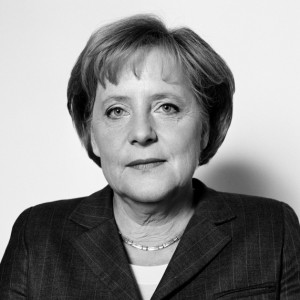
Daniel Gros writes:  German Chancellor Angela Merkel acted in 2012 only when she could tell her domestic constituency that there was no alternative. But in the end, Merkel agreed to a permanent bailout fund for the eurozone. She also backed the formation of a banking union, which remains incomplete but still represents a key step toward a financial system supervised by the European Central Bank. Thanks to these measures, and ECB President Mario Draghi’s vow, which Germany tacitly approved, to do “whatever it takes” to save the euro, the financial storm abated.  But now the eurozone seems incapable of escaping near-deflation, with little economic growth and prices barely moving upwards.

When the crisis struck, the economies of the eurozone periphery were buffeted by the twin shocks of spiking risk premiums and a collapsing housing market. At the same time, the German economy benefited from the return of capital fleeing the periphery. Real (inflation-adjusted) interest rates in Germany became substantially negative, triggering a housing boom. It was assumed that this would generate strong domestic demand in Germany, helping the periphery to export more.

Instead, the German economy has barely grown; indeed, weaker world trade threatens to put it in recession. The current-account surplus, which was supposed to decline sharply, has actually increased, as savings have remained higher – and investment lower – than expected.

Inflation in Germany remains too low. With German prices rising at less than 1% annually, the eurozone periphery needs falling prices in order to regain the competitiveness lost during the pre-2008 boom years.  This lack of dynamism at the core of the eurozone has now become its key problem. With no growth in Germany, the rest of the eurozone might not be able to reduce debt via external surpluses. And there might be no solution short of a magic button to increase German domestic demand.

Obviously, the German government is in charge of the country’s public finances. But fiscal policy has been roughly neutral in recent years, and thus cannot be blamed for the German economy’s lack of dynamism. This year, the public-sector budget might move from a small deficit to what German officials call a “black zero” – a very small surplus. But this tightening by a fraction of a percentage point of GDP implies no adverse effect on growth.

The root cause of Germany’s sluggish economic performance in recent years is the continuing unwillingness of its households and enterprises to consume and invest. And it is difficult to see what the government can do about thiis.  Iinvestment has fallen despite financing conditions for enterprises that have never been easier, both in terms of ultra-low interest rates and banks’ willingness to lend. Yet Germany’s corporate sector remains reluctant to borrow and invest in the country, because it sees little reason to expect long-term economic growth, given that the population is set to decline and productivity gains remain anemic.

So what more could the German government do to wean the Germans off their abstemious habits?  Public investment is the one area where the government could act. But the growth fillip from public-sector infrastructure spending can only be modest. Increasing infrastructure spending by a quarter, which would represent a huge administrative effort, would lift GDP growth by just 0.4 percentage points.
The main danger now is political. A weak German economy makes the necessary structural adjustments in the eurozone periphery much more difficult. That, in turn, fuels the perception that responsibility lies with the German government, which is seen as unwilling to take the steps needed to strengthen domestic demand.

The German government does not even acknowledge that there is a problem. With unemployment remaining near record lows, the lack of demand growth is simply dismissed, and the absence of inflation is taken as a sign of success.  Europe’s German anchor has become stuck, and the rising tide of anxiety among Germany’s partners should not leave its government indifferent.

W-T-W.org women and finance raises a fundamental question:  Should economists begin to formulate theories that do not make ‘consumption’ central.  German and Japanese citizens refuse to be nudged. Are they wrong?
Angela Merkel

The EU Needs A Strong, Clear Commission

Daniel Gros writes:  The new European Commission headed by Jean-Claude Juncker is off to a rocky start.  The European Union’s fiscal rules are at issue, and the Commission – in principle the EU’s watchdog – should bark loudly when they are flouted.
Last month, howls seemed inevitable after two large EU countries, Italy and France, submitted budget plans for 2015 that clearly violated their governments’ vows of continued austerity. At first, the Commission dutifully rejected the two budgets as incompatible with the rules of the EU’s Stability and Growth Pact (SGP).

Within days, both countries offered mini-adjustments to their budgets, worth about 0.2% of GDP, and their finance ministers wrote to the Commission that their budgets should now be approved.  The latest forecast reflects an even worse outcome for France and Italy this year than originally promised, with France’s deficit set to increase slightly for 2015 and Italy’s cyclically adjusted deficit expected to deteriorate. The Stability and Growth Pact prescribes an annual improvement of at least 0.5 % of GDP.

The new Commission thus risks losing its authority from the very start of its mandate. Whether it does is a crucial question, because maintaining a high degree of credibility is essential to economic policymaking in the eurozone.  The SGP’s original rules were judged “stupid” by one former Commission president because the single-minded pursuit of a deficit below 3 % of GDP could be inappropriate during recessions. That argument was accepted, and the SGP was supposedly rendered more “intelligent” by, for example, permitting budget deficits to be adjusted for the economic cycle, adding medium-term objectives for expenditure, and introducing escape clauses.

But the new rules obviously require a strong institution to interpret them, and whose judgment is accepted by everybody. Though checking whether a budget is below the SGP’s ceiling of 3% of GDP may be a straightforward matter, there can be reasonable disagreement about whether the business-cycle adjustment should be estimated at 0.5% or 0.8% of GDP, or whether a country is adhering to its medium-term expenditure objective.  The Commission is supposed to have the last word, thereby ensuring the rules’ credibility and consistency – and it seems to have lost this fight in the first round. One could, of course, argue that the SGP should be scrapped, because austerity makes no sense when the eurozone faces the risk of deflation. But the Commission, not fiscally louche member countries, should be the one to decide that.

The United Kingdom, which has been asked to pay an additional contribution to the EU budget of about €2 billion ($2.5 billion, which amounts to a rounding error of the UK’s own budget).  The UK’s Office for National Statistics announced, proudly, that it had discovered that the country’s gross national income (GNI) had been much higher than previously assumed, not only in 2013, but also in all previous years. Including the revisions for the 2002-2012 period, the difference comes to about £350 billion ($560 billion).
Because every EU member state is obliged to contribute about 1% of its GNI to the Union’s budget, the UK’s data revision had to lead to a back payment of billions of euros. But British Prime Minister David Cameron’s government has declared that it does not intend to pay money that “the European Commission was not expecting and does not need.”

These two cases threaten the EU’s fundamental workings, which are based on a clear rulebook enforced vigorously by a strong Commission.  The Commission must regain political and intellectual leadership and make its choice: either explain why the SGP rules must be followed even now, in the face of deflation, or agree with those who argue that the current environment calls for a fiscal stimulus. It cannot avoid taking sides by insisting publicly on austerity rules but then acquiescing when member states break them.  Leaders in member states have to play their part as well. Pandering to populists may be attractive in terms of short-term electoral gains, but the long-term cost in terms of credibility, both their own and that of the EU, will be very high.

UK's Position in EU


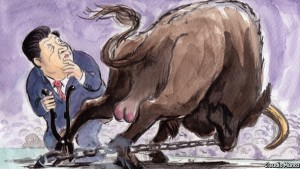
Xi Jinping Going Forward?

Mike Spence writes:  Chinese President Xi Jinping’s massive anti-corruption campaign has advanced a number of key objectives: It has gone a long way toward restoring confidence in the Communist Party’s commitment to a merit-based system; countered a decades-old pattern of public-sector domination; reduced the power of vested interests to block reform; and bolstered Xi’s popularity among private-sector actors, if far less so with the bureaucracy.

In short, Xi’s effort to root out corruption has empowered both the Party and the reformers. The question is how far they will take their reform ambitions.  Xi is certainly not finished yet, having outlined a set of legal reforms at last month’s Fourth Plenum of the Communist Party aimed at creating a more level playing field for the public and private sectors. If implemented properly, the reforms will create a more efficient system for the creation and enforcement of contracts, ease the path for market entrants, and strengthen the application of China’s competition laws.

Greater fidelity to the rule of law will also lead to the creation of a legal and financial infrastructure that reduces fraud in the private sector, including in financial reporting. That, together with increased access to capital, will help to accelerate the development of the services sector, which is needed to create urban employment.  Better management of China’s considerable public assets – which include $3.5-4 trillion of foreign-exchange reserves, substantial land holdings, and majority ownership of the state-owned enterprises that dominate the economy – would complement these efforts. Indeed, it could help to boost competition, encourage innovation, strengthen the financial system, and expand access to capital.
The question is how China could achieve this. As it stands, China’s economy follows, to some extent, the old Leninist “commanding heights” model, with the Party holding all political power and controlling major enterprises and sectors, even as the burgeoning private sector drives growth and employment. In this context, the kind of “meritocratic professionalism” that China is pursuing is important; but it is no substitute for genuine competition in the public or private sector – at least not if innovation and structural change are the goals.

Will Xi could simply declare that China’s version of state capitalism has worked well in the past, and will continue to do so. But experience with the microeconomic dynamics of advanced economies (where China is headed) makes this a weak stance – and, thus, one that Xi is unlikely to take.  The alternative would be to embark on a sustained program of privatization to shrink the asset side of the state’s huge balance sheet. But China’s balance sheet has served it well, enabling the extraordinarily high rates of investment that have fueled rapid growth. Meanwhile, many advanced economies have suffered considerably from their balance-sheet composition, with limited, poorly measured assets and outsize debt and non-debt liabilities.   Xi Going Forward

Xi Going Forward

Should the New York Fed Have Its Wings Clipped?

Mark Roe writes about the role of the NY Fed in the Federal Reserve System.  He questions the Fed’s role in regulation and suggests some changes.

“The New York Fed also has a particularly important role in bank supervision – most of America’s “too big to fail” banks are located in its jurisdiction (and most global banks have a presence there). And the New York Fed has long been the Fed System’s eyes and ears on Wall Street.
Or perhaps it has become the other way around. At least over the past decade, senior New York Fed officials have consistently sided with the interests of very large banks. (To be clear, I also know many Fed officials who are outstanding public servants). Though Wall Street interests have long been well represented on the board of the New York Fed, under Timothy Geithner, its president from 2003 to 2009, the big players became even more powerful – with some rather unfortunate consequences for the rest of us.
In his recent memoir, Stress Test, Geithner says, “I basically restored the New York Fed board to its historic roots as an elite roster of the local financial establishment.” His choices included Dick Fuld, CEO of Lehman Brothers, which failed spectacularly in September 2008, and Stephen Friedman, a Goldman Sachs board member, who resigned as chair of the New York Fed’s board after being accused of inappropriately trading Goldman stock during the financial crisis. Geithner also established a tangled web of connections between the New York Fed and JPMorgan Chase, some of which linger to this day.
Some senior Fed officials become angry when pressed about this reality. But the Fed’s legitimacy – and its ability to make sensible policy – is not boosted by having major banks represented, directly or indirectly, on a board that chooses and oversees a key policymaker.
Now, finally, US politicians on both the left and the right are focusing their attention on a long-overdue reform of the Fed’s governance. One important proposal comes from Senator Jack Reed, a Democrat from Rhode Island, who proposes, quite reasonably, that the president of the New York Fed should be nominated by the president and confirmed by the Senate, just like members of the Board of Governors – or any other important economic policymaker. The president of the New York Fed would also be required to testify before Congress on a regular basis.

Clipping the NY Fed's Wings


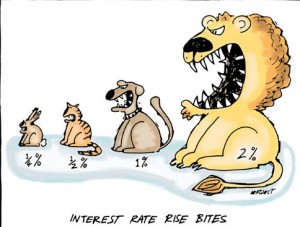
China Cuts Benchmark Interest Rates

The People’s Bank of China has cut its benchmark interest rates.  This unerscores the focus of the government’s stabilization policy which aims to put a floor of 7% on GDP growth.

Structural pressures come from a shift in consumer-led services and consumer-led growth.  Cyclical pressures grw out of a global environment in which pressure has been placed on export and investment-led growth.

Xi Jingpeng is committed to growing the serivces sector and domestic consumption.  This is how the country will arrive at midle-income status.

China is switching to a morepeffective market based mechanism, but it has to avoid being derailed by a significant gorwth slowdown in the shortterm.

With the recent monetary easing, the Chinese authorities seem to be drawing a line in the sand to prevent an excessive drop in growth. This suggests that they now view a cyclical disruption as a real threat to the country’s longer-term structural-reform agenda. To the extent that those fears persist, additional monetary easing can be expected.

Interest Rates

Strengthening Dollar and Commodities

The U.S. dollar is strengthening for reasons that go beyond deliberate devaluations of the euro and yen. Major commodity exporters are also purposely pushing down their currencies as commodity prices drop. The Canadian, Australian and New Zealand dollars as well as the Brazilian real, Russian ruble and other emerging economies are all playing this game.

Those countries want weaker currencies to offset declining commodites exports, writes A. Gary Shiiing.

So far this year, grain prices are falling, as are industrial commodity prices. Crude oil prices rose until mid-June, but have since dropped 25 percent and now are the lowest in six years. Spurred by fracking, U.S. oil output is exploding as economic softness in Europe and China and increased conservation have curtailed consumption. Copper, which is used in everything from plumbing fixtures to computers, is dropping in price as supply leaps and demand lags.

The U.S. dollar is elevated against other major currencies by the carry trade. With positive spreads between the yields on 10-year Treasury notes and those of Germany and Japan (and even less creditworthy Spain and Italy), it’s attractive to sell those sovereigns to buy Treasuries.

The spreads are small, but with a leveraged position, the carry trade can be very profitable — and even more so as the dollar appreciates. Who would want to own a 10-year German bund yielding 0.83 percent with a falling euro, or a 10-year Japanese government bond returning 0.47 percent as the yen drops, when the 10-year Treasury note yields 2.5 percent and the dollar is climbing?

In times of trouble, the dollar is the world’s safe haven. Foreigners flock to Treasuries and other dollar-denominated investments, elevating the greenback’s value.

Strong Dollar

To Buy, To Sell, To Hold?

The function of an investment bank is to get people to buy and sell securities, Matt Levine suggests. Should the clients accept the recommendations or question them.

Of course, in order for a security to change hands, one party has to buy and the other has to sell.  Can the same person perform both functions full-heartedly?

The Financial Regulatory Aurhority fined Citibank $15 million for mixed behavior.

For example, at an idea dinner that occurred in July 2011, a CGMI equity research analyst identified a stock as a “short” pick. Before the dinner, however, the analyst had upgraded that stock from Sell to Hold and reiterated his Hold rating on the company in the last report that he published prior to the dinner. Thus, the analyst’s characterization of the company as a “short” pick was inconsistent with his published research on the company at the time. Moreover, the analyst identified other companies, on which he had Hold or Neutral ratings, as “short” picks at six subsequent idea dinners between October 2011 and June 2013. These picks were therefore inconsistent with the ratings identified in the analyst’s published research.

Analysts have to certify in writing that they believe what they are saying.  Is this possible?  To Buy, To Sell or To Hold, That is the Question

Recommendations

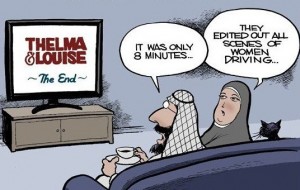
Erdogan: Women are Not Equal to Men

In an address given at a conference sponsored by the Women and Democracy Association, Turkish President Recep Tayyip Erdogan used an international conference on justice and rights for women Monday to declare that women should not be regarded as equal to men and that pregnancy presented an obstacle to equal opportunity in the workplace. Erdogan, a Muslim, also condemned feminists for rejecting motherhood, noting that pregnancy and motherhood were sacred in Islam. Some forms of work, he cautioned, are unsuitable for women. Women’s rights activists were furious.

Women Unequal

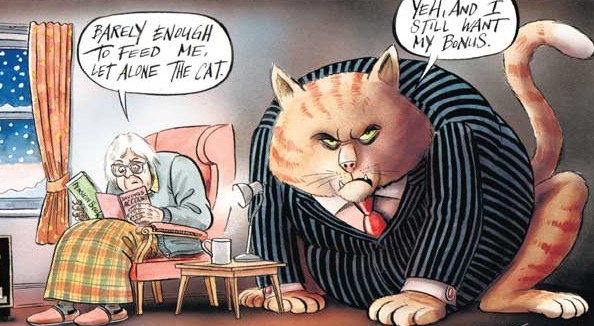
UK Backs Down from Challenge EU Cap on Bankers’ Bonuses

The European Court of Justice found that the rule the limits bankers bonuses to 100 percent of their salaries, or 200 percent if shareholders approve is valid.

Chancellor George Osborne said he had recognised the challenge was “now unlikely to succeed”.  The Treasury had argued that the cap would drive talent out of Europe and inflate basic pay, making it harder for banks to trim costs in lean years.

“I’m not going to spend taxpayers’ money on a legal challenge now unlikely to succeed,” Mr Osborne said.

But he added: “The fact remains these are badly designed rules that are pushing up bankers’ pay not reducing it. These rules may be legal but they are entirely self-defeating, so we need to find another way to end rewards for failure in our banks.”

The cap on the ratio is designed to reduce incentives for bankers to take excessive risks, but critics say it will push up basic pay and banks’ costs.

Mr Osborne also wrote a letter to Bank of England governor Mark Carney, in which he said that although the Treasury was abandoning its challenge, it “should not stop us from pursuing our objective of ensuring a system of remuneration that encourages responsibility instead of undermining it”.

“Ensuring that firms incentivise employees to behave in the right way is essential to restoring public trust in financial markets,” he added.

Mr Carney had himself voiced concerns about the EU measure, saying it had the “undesirable side-effect of limiting the scope for remuneration to be cut back”.

Bankers' Bonuses

Snap Elections in Japan

Japan’s shrinking economy led Prime Minister Aboe to call for elections in December.  Most economists thought the economy would grow in the last quarter.

An increase in the consumption tax in April has been blamed for the slide.  Abe announed that he was postponing raising this tax again until 2017.

Some economists have noted that the Japanese are not spenders and it is difficult to nudge them to buy in any case. Most QE moves are an effort to help people consume more.

No One Has Ever Liked the Consumption Tax in Japan