Petrobras Arrests in Brazil

Police have arrested 18 in investigation of corruption at Petrobras, he state-owned oil company.  A former direvctor and several members of a constrution company and engineering companies that did business with Petrobras were arrested.

They had made deals to inflate the cost of contracts and divert monies to poitical parties including the Worker’s Party of President Dilma Rousseff.

In the US there are investigations into some securities of Petrobras that are traded in New York

Arrests of Petrobras Officials

Ebola’s Economic Impact

In a World Bank study of Liberia it stated that one half of the people employed before the Ebola outbreak are now unemployed.  However, the World Bank now estimates that the countries affected will suffer about $3 billion in trimed output instead of an original estimate of about $30 billion.

Ebola

One Tax?

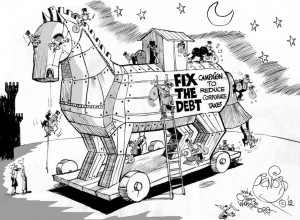
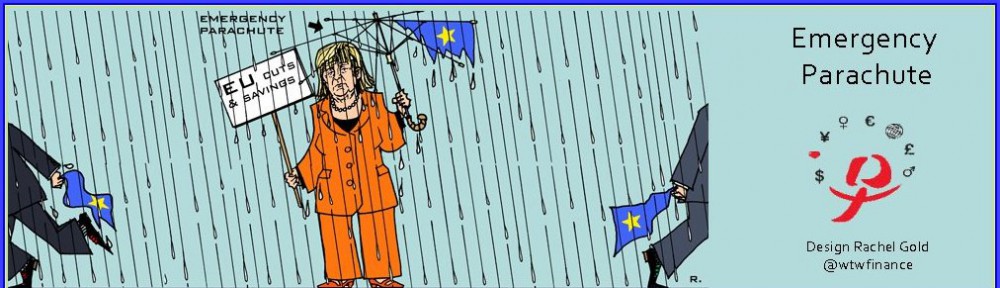
Kaj Leers writes:  Amid the furor of a tax avoidance scandal, the new chairman of the European Commission has come out in favor of a pan-European corporate tax. With public anger over corporate tax avoidance increasing, the idea may at last have legs – in large part, ironically, thanks to the chairman’s former role.

Luxembourg was the linchpin for tax rulings – in some quarters known as “comfort letters” – that helped companies secure billions of dollars in tax savings. Having served for 25 years as Luxembourg’s prime minister and its finance minister, Jean-Claude Juncker’s fingerprints are all over this activity.

The Common Consolidated Corporate Tax Base plan is still a political non-starter: It faces profound political opposition by member states.

The European Union was created to prevent open conflict. Under the surface, though, economic wars between the member states rage on. Europe’s smaller countries in particular are constantly jostling for the attention of companies they hope will bring jobs.

A number of impressive tax avoidance schemes have brought public embarrassment to a number of governments. Companies such as Starbucks and Google, but also government-owned organisations such as the Dutch national railways company Nederlandse Spoorwegen, have made use of morally odious bilateral tax treaties and tax rulings. This while any civilian caught avoiding the tax man faces often faces harsh sentences and public persecution.

The origins of these tax schemes were benign: They were meant to draw jobs and investment. They became “Double Irish with a Dutch Sandwich.”

Public support for the fiscal arms race has rapidly waned since the onset of Europe’s financial crisis, and governments have started to ask companies who use arcane fiscal constructs to explain their actions.

If national corporate taxes are scrapped and replaced by a uniform European tax rate, the very reason for the fiscal arms race ceases to exist. Politicians who have thus far said that countries should compete on the quality of education and infrastructure can finally put their money where their mouth is and dispense with the shady tax breaks.
 Is One Tax the Fix?

Stoic Russians Bear Rubles’ Fall

Russians have been hammered by economic crises over the past two decaes, so the rubles recent loss of 50% against the dollar is a iittle same old, same old.

Hyperinflation and crashes causes the problems of the 1990s.  The steep dowturn of Western economies in 2009 inficted more harm on the Russian economy than sanctions have

Now the ruble is responding to politics.  Western sanctions on Russian banks and state companies over the Ukraine have led to a credit squeeze and capital flight.  The Kremlin struck back, banning Western food stuffs.

Most ordinary citizens blame economic woes on the West.  But Russians who have dollars are having a bonanza.  The Russian government gets more than half its income in dollars on oil and gas exports.

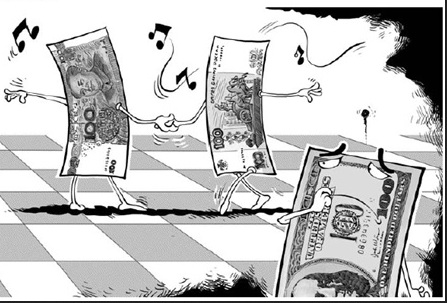
Dance of the Dollar and Ruble

Doaa ElAdl and other Cairo Cartoonists Tred Lightly

Doaa El Adl is a contributor to W-T-W.org Women and Finance. ElAdl says, “There are periods in history that are not suitable for serious criticism.  You can criticize, but you must not bring down the system.  These people who chant against the military regime don’t understand that the only option is the Musim Brotherhood.”

Egypt’s new leadership which came to power after a military coup casts itself as a bulwark against Islamic fundamentalism.  In the cartooning scene it is generally agreed that the space for dissent has shrunk.  Many see their work as a patriotic duty.

Since the fall of the Brotherhood, ElAdl and others have kept criticism to a minimum.  Threat of backlash from President Abdul Fattah al-Sisi remains a concern.

It may be that the only guarantee of freedom of speech in Egypt is its cartoonists.

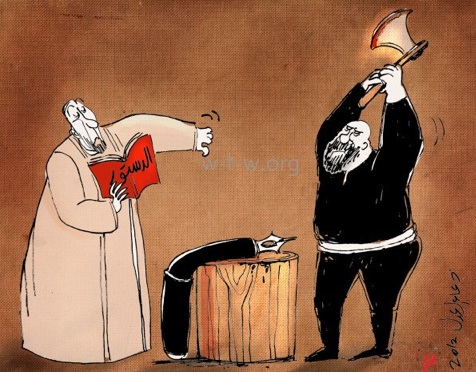
Freedom of Speech in Egypt?


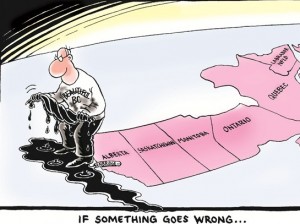
Oil Pipeline and the Canadian Economy

Environmentalists in the US object to oil taken from tar sands which will be transported across the US by pipe to ports in Texas and Louisiana.  They have so to speak drawn a line in the sand, Canada’s sand.

The US State Department has tried to help promote the pipeline in a clear effort to make nice to Canada.

Environmental studies show the impact of the pipeline in the US will be negligible.

Now we hear from the Globe and Mail in Toronto:  “If tehre were ever a major energy project that Canada’s economy needed, and needed to work wel it is the Energy East pipeline proposal from TransCanada Corp.  If  it ..lives up to its biling, the pipeline would demonstrate to skeptics the viability of transporting bitumen from Alberta’s oil sands via pipeline, essen the oil industry’s growing dependence on rail, open up new markets for Canadian crude overseas and….(create) a deep-water terminal. Alberta;s il industry is one of this country’s major economic drivers; the capacity to extract oil is there, more is being buit, and that oil has to move somehow.”

Oil Pipelines?

Should Immigrants Be Able to Work?

The Times of London is tougher than the US is on this issue.  They write that national governments have a right to decide whether immigrants should or should not be eligible for benefits.

Nationals from other European Union nations who want to stay longer than three months in the UK have to be workig or demonstrate that they will not become a burden on public funds.

Anyone who is not working has to pass an habitual reisdence test to prove a genine link with the country.   Claimants have to show that they are actively seeking work.  If they cannot do so, benefits are docked.  It is right to be tough on eligibility for benefits they argue.  It is hard to explain how someone with no work history in a country should be supported by taxpayers.

Benefits?

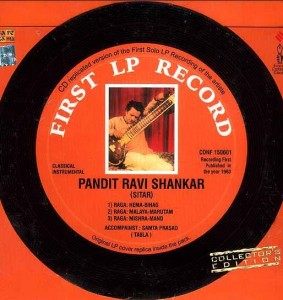
LP Records for the Future?

Entrepreneur alert.  VInly records are selling again.  The LP, thought to be long gone, is making a comeback.

Some think that listeners enjoy the warm, organic sound of vinyl reocrdings.  Perhaps people like a physical possession in this digitalized world.

Last year, vinyl record sales amounted to $281 million in the US.  The market looks as though it will continue to grow this year.

Take a chance on vinyl?  Why not?  A good, small niche business.

LP Records for the Future?

Charm Offensive in Globalization

The US deal with China asks a lot more of the US than it does of China.  Cina is only commited to reverse the growth of their admissions in 2030.   The Chinese now emit more than 7 tons of CO2 each year.  The Ameircans emit 16 tons.  Up until now, Americans appear to have been only interesed in reducing China’s oil consumption.

At the recent APEC summit in Beijing, America and China agreed to iberlize trade with deals on visa, security, and currecy as well as the environment.

China and Canada agreed to $2.5 billion in trade deals and currency exchange.

The Wrold Trade Organization dropped requirements for India on food security.

Russia, China and the Germans have worked hard to drop sanctions against Iran and enable Iran to enter the world market.

Th world has restarted, led by emerging natons.  It is multipolar, peaceful and open.  Even the West has a place.  Globalization Restart

Globalizing Again?

A study conducted by two members of the Stern Business School’s faculty shows that globalization is back.  Taking data from countries representing 99% of the world’s GDP and 95% of the world’s population, it is clear that after a big post-crisis drop in 2008, global interconnectedness returned last year.

There are more cross-border connections benig made.  Trade, incluidng goods and services, information, people and capital.

The ten countries that globalized the most in 2013 were all emerging nations, most of them in Latin America and the Caribbean.

Trade negotiators are beginning to form coalitions of the willing instead of waiting for everyone to join in.

There is plenty of scope for further globalization.  Only Singapore, Hong Kong and Lusembourg are deeply interconnected now.

Episodes of deglobalization in the past have been difficult to reverse, The fact that globalization is progressing again after such a deep crisis is hopeful.

Globalizing Again