Manufacturer Mattel Apologizes for Making Barbie Appear Incompetent as a Coder

Barbie can barely manage her computer in the new Barbie: I Can Be a Computer Engineer book

She is portrayed as an inept programmer who inadvertently plagues her friend’s computer with a virus and can’t fix a bug without help from a man.  The book implies that Barbie can only contribute to the design of the game she’s working on, rather than its more complicated technical structure.

According to one Amazon reviewer:  “Barbie starts out at breakfast stating that she’s designing a game but when questioned by her sister Skipper, she admits, ‘I’m only creating the design idea, I’ll need Steven and Brian’s help to turn it into a real game.’ Literally six sentences into the story, and already Barbie can NOT do it. She immediately admits she doesn’t know how to actually do computer engineering, and like a Disney princess, needs a white knight to rescue her.”

Naturally, the book has not been well received. The majority of parents reviewing it on Amazon have deemed it worthy of only one star, and the site’s sole three-star review suggests renaming the title “I Can Manipulate Boys Into Programming While I Sit Back and Take Credit.”

Barbie Needs a Man to CodeNote: Mattel has withdrawn this book title from sale.

Austerity Fails?

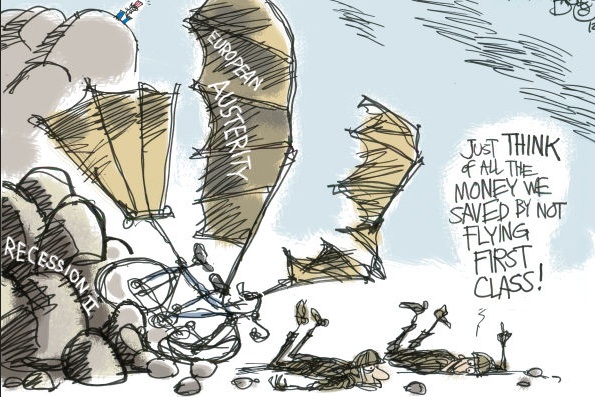
Now we know for sure George Osborne’s economic plan has failed, even on its own account. For all the self-congratulation about credit-fuelled growth, the recession in wages goes on. Four years into the coalition, most people’s living standards are still falling. Last week it seemed as though pay might have finally overtaken prices. But yesterday’s figures showed that real earnings fell by 1.6% over the past year. That continues the longest drop, of seven consecutive years, since records began in Victorian times.

The fall in living standards is greater still for the poorest, who effectively suffer higher inflation. Add in the fact that business investment as a share of national income and productivity are still declining, and no wonder David Cameron’s red lights are flashing. Of course the Tories like to boast about employment growth. But since only one in 40 of the new jobs are permanent, the number of people in enforced part-time work has doubled to 1.3 million, and there has been an explosion in artificial self-employment, the experience on the ground is something else entirely.

The most spectacular failure, however, is in the government’s central economic objective – for which all the pain was supposed to have been endured. After four years in office, the budget deficit and debt are growing, when the original plan had the books as good as balanced by now. The government’s core policy has failed on its own terms – let alone anyone else’s.

A crucial factor in that failure is falling wages and job insecurity. Cuts in real pay and growing low-wage employment have meant lower tax receipts and greater demand for benefits. Almost all the pain of benefit cuts for the most vulnerable has come to nought.

If cuts aren’t working, and low pay and insecurity are shrinking tax revenues and boosting benefit costs, you might think that would be cause for a change of direction. Not a bit of it: £50bn more cuts are lined up for the next parliament – and the government is doing everything to drive down wages and job security still further.

Austerity Fails


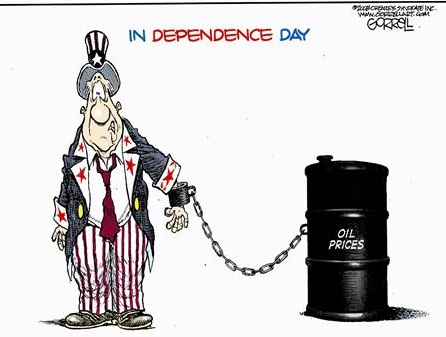
Oh Say Can You See US Energy Independence

RIch Miller writes;   Cheap oil is a geopolitical gift to the US.  A new age of abundant and cheap energy supplies is redrawing the world’s geopolitical landscape, weakening and potentially threatening the legitimacy of some governments while enhancing the power of others.

Some changes already are evident.  Surging US oil production enabled America and its allies to impose tough sanctions on Iran without having to worry much about the loss of imports from the Middle Eastern nation. Russia, meanwhile, faces what President Putin called a possibly “catastrophic” slump in prices for its oil as its economy is battered by U.S. and European sanctions over its role in Ukraine.

Oil is “the most geopolitically important commodity,” said Reva Bhalla, vice president of global analysis at Stratfor, an advisory company in Austin, Texas. “It drives economies around the world” and is located in some “usually very volatile places.”

Benchmark oil prices in New York have dropped more than 30 percent during the last five months to around $75 a barrel as U.S. crude production reached the highest in more than three decades, driven by shale fields in North Dakota and Texas. Output was 9.06 million barrels a day in the first week of November, the most since at least January 1983, when the weekly data series from the Energy Information Administration began.

“For 10 years, the defining factor in the oil market was the growth of China and Chinese oil demand,” said Daniel Yerginvice chairman of Englewood, Colorado-based consultant IHS Inc. and author of a Pulitzer Prize-winning history of the commodity. “Now the defining factor is the astonishing growth of U.S. oil production.”

The most probable case is a four- or five-year cycle with prices in a general range of $65 to $80 a barrel, he said. That compares with an average of about $88 from 2008 to 2013 and a high of more than $140 at one point during that period.

The big question is whether oil-producing nations will react with accommodation or confrontation, said James Burkhard, vice president and head of oil-market research for IHS.

“That’s where the water gets a little muddy,” he said. “That story will be unfolding in the months and year ahead. It does add greater uncertainty and volatility that can often lead to negative surprises.”

Russia is the biggest loser.  Russia’s economy will contract by 1.7 percent next year after stalling out in 2014, IHS forecasts. It projects inflation will rise to 8.4 percent from 7.6 percent, boosted by a depreciating currency.

Iran has seen its revenue from oil exports fall by some 30 percent, President Hassan Rouhani said in remarks to parliament published Oct. 29 on Shana, the Oil Ministry’s news website. The nation needs to achieve a break-even sales price of $143 a barrel this year to keep its budget in balance, according to data compiled by Bloomberg.

Like Russia, Iran’s economy has been weakened by economic sanctions — in its case over its nuclear program. The steps by the U.S. and its allies have almost closed Iran’s oil and gas fields to investment in the last decade, limiting the country’s access to technology to boost output.

Venezuela lost 30 percent of its foreign-exchange revenue in the last month because of a “tremendous” drop in oil prices, Maduro said Nov. 13 in a televised national address from Caracas. He said he sent the country’s foreign minister to five oil producers, including Mexico and Russia, to drum up support ahead of the Nov. 27 OPEC meeting.

The U.S. is emerging as a big winner, according to the Nov. 11-12 poll of investors, analysts and traders who are Bloomberg subscribers.

Increasing energy independence means the U.S. is less vulnerable to supply disruptions overseas.  The boom in U.S. energy output also enhances U.S. prestige, which had been dented by the global financial crisis that originated in America’s housing market.

China is another big winner, as it imports almost 60 percent of its crude.

The world’s second-biggest economy probably will take advantage of the savings to build up its strategic reserves rather than dedicating the funds to increased spending on defense or the environment, according to Lin.

The plunge in oil prices also gives the nation leverage in its dealings with Russia. The two countries signed a $400 billion, 30-year gas-supply accord in May during a summit in China, then deepened their energy ties earlier this month by signing a preliminary agreement for a second Russia-China pipeline.
US Energy Independence


Can Woman Live on Plants Alone?

As the government issues new dietary guidelines in the US, should entrepreneurs in the food business look for new opportunities?

The Dietary Guidelines Advisory Committee is also looking into a “sustainability” diet for the first time. The idea of a sustainable diet involves eating less meat and dairy products and shifting toward a plant-based diet in order to cut down on greenhouse gas emissions and protect the environment.

The process of raising animals, transporting them, killing them, processing the meat, etc. requires high energy usage, thus increasing the emission of carbon dioxide and other greenhouse gases. A study published in the journal Nature found that diets higher in refined sugars, refined fats, oils and meats increase such gases in the atmosphere, and also increase the incidence of diseases such as type II diabetes, heart disease and other chronic illnesses.  There would be no net increase in food production emissions if plant-based diets became the norm.   Former Preisdent Clinton and Vie Preisdent Al Gore are both on plant-based diets.

The House Appropriations Committee instructed Agriculture Secretary Tom Vilsack and HHS Secretary Sylvia Mathews Burwell to make sure the committee does not “pursue an environmental agenda.”

“Some critics argue thatt, while obesity is a significant concern with regard to people’s private health, such coercive, ideological modification of private behavior unrelated to public health is outside the Constitutional power of the federal government.

You Are What You Eat?


To Regulate or Not, Those Are the Questions

What regulating the financial industry should and should not do in the US.  J Christopher GIancarlo, Commissioner of the Commodities Futures Trading Commission laid out six principles before the US Chamber of Commerce.  His full spech:  CFTC Commissioner Giancarlo’s Speech

Six Principles for Financial Market Regulation

Regulation must:

1. Not Restrain the U.S. Economy;

2. Not Threaten American Jobs;

3. Be Impartial and Balanced;

4. Be Competent;

5. Be Accountable; and

6. Not Create the Next Crisis

The question W-T-W Women and Finance keeps asking is how we divide the services of financial institutions.  Banks perhaps should be segregated out and function as despositories of other people’s money which is then invested in the community to yeild a reasonable profit (i.e., no one expects JP Morgan Chase’s 24%).  Institutions like Chase should not be called a bank.  They are investment institutions for high rolllers.  Their deposits are not insured.  Only ‘banks’ deposits will be insured.

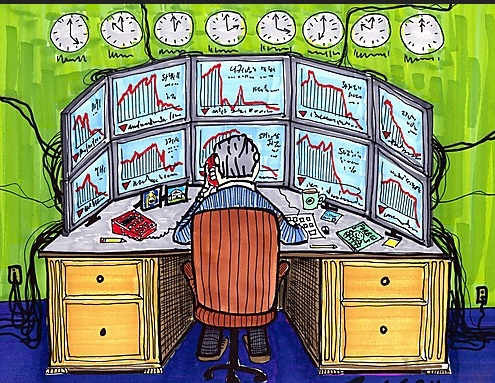
Looking at banking and finance at the most fundamental level is critical for the development of regulations.  Perhaps the cowboys of finance should simply be allowed to invest as they wish as long as people who give them money realize the risk.

Investment Bank Calls a Gambling Hotline


Free Trade for the Asia-Pacific Region?

Gao Yuan and Li Xiang write:  A well-functioning global value chain evaluation mechanism will create the foundation for a “high-level” economic free trade zone and benefit all economies, Chinese officials and researchers said.

Minister of Commerce Gao Hucheng called for the Asia-Pacific region to deepen economic integration and to push forward the process of creating the proposed Free Trade Area of the Asia-Pacific at the upcoming APEC meetings.

Gao said the Asia-Pacific region, as the engine of global economic growth, has achieved remarkable progress. There is still room for improvement of communication and connectivity in the areas of industry, human resources, infrastructure and information exchange among the APEC members.

Global economies started to sign regional free trade deals as the WTO’s Doah Round hit a dead end in 2008.

Shen Danyang, spokesman for the Ministry of Commerce, said China is actively participating the establishment of new world economic order to help all APEC members boost trade.

China is considering a series of new trade policies to fit the nation’s position in the global value chain, Shen said.

China, the world’s second-largest economy and manufacturing hub, is still on the lower end of the international value chain, according to Yang Cuihong, professor of economics at the Chinese Academy of Sciences.

“As China climbs up the chain, its trade partners will benefit from higher added values created from bilateral trade,” Yang said.

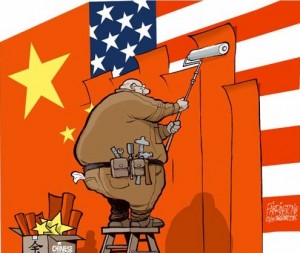
China is actively promoting the Free Trade Area of the Asia-Pacific, which can include most economies in the global value chain, including the world’s leading powers that export products with high added value and the emerging economies that contribute raw materials and cheap labor.

“A modern multilateral free trade proposal should give every economy a fair chance to trade equally, not just be a playground for developed economies,” said Lin Guijun, an economist and vice-president of the Beijing-based University of International Business and Economics.

Researchers suggested that emerging markets and exporters of natural resources should work together to reach a free trade deal that can protect the interest of economies at the lower end of the value chain.

Free Trade in the Asia-Pacific Region


As Saudi Arabia Swings, So Goes the Price of Oil

Russia and Venezuela are discussing joint action against low oil prices, Russian Energy Minister Alexander Novak said in Moscow. Venezuelan Foreign Minister Rafael Ramirez was in Moscow for talks as part of a tour of several oil-producing nations, including Algeria, Qatar and Iran, aimed at developing a joint strategy.

Asked if he discussed joint moves to counteract the 30-percent fall in oil prices this year, Novak told reporters: “Yes, there is such an initiative.”

Russia and Venezuela, like the other countries on Ramirez’ travel itinerary, are heavily dependent on revenues from oil exports for their national budgets.

Any drive to push oil prices back up can succeed only if oil-producing nations as a group agree to cut back aggregate production in the face of weaker demand caused by slower economic growth in China, Europe and other key markets and by the US surge in shale oil production, which is reducing US demand for oil imports.

If major oil producing countries with large market positions refuse to go along with a global oil supply management strategy, oil prices may stay low for an extended period. And it appears that Saudi Arabia may be playing the spoiler in this game.

The Saudis are the world’s most important “swing producer” – a country with huge oil reserves that can ramp its oil production up or down to balance changes in supply and demand. In normal times, one would expect the Saudis to go along with other oil producing nations in cutting back production to reflect weaker demand, in order to support the oil price. But this time, they aren’t doing that.

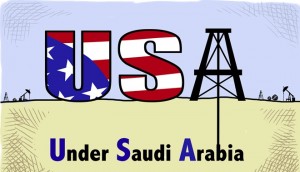
Some Russian and Venezuelan analysts – among others – believe the US and Saudi Arabia are colluding to drive oil prices down for geopolitical reasons.

After a trip to Saudi Arabia in September, Secretary of State John Kerry was asked if past discussions with Riyadh had touched on Russia’s need for a global oil price above $100 per barrel to balance its budget.  “They (the Saudis) are very, very well aware of their ability to have an impact on global oil prices,” Kerry replied.

Some analysts have speculated that one business reason for the Saudis to refuse to cut back their oil production – and therefore to drive oil prices back up – could be a desire on their part to make shale oil production in the US and elsewhere unprofitable.

Nasser al-Dossary, Saudi Arabia’s national representative OPEC, and Naimi’s deputy, Prince Abdulazis bin Salman, as well as the kingdom’s OPEC governor, Mohammed al Madhi, attended at least one of the briefing meetings, and gave the message that Saudi Arabia was prepared to withstand oil prices as low as $70 to $80 per barrel for as long as a year.

The benchmark Brent crude oil price is down to $79.

Saudi Arabian Oil Production

Swiss Franc Pushes at Cap as ECB Tries QE and a Gold Referendum Looms

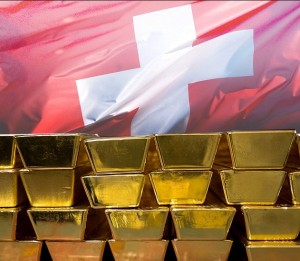
The Swiss National Bank faces the biggest test of its cap on the franc in two years but may find it easier to defend now than when euro zone breakup fears were rampant and the strategy unproven.

The franc rose to its strongest level since September 2012,  brushing up against the 1.20 euro limit the Swiss National Bank introduced in 2011 when the currency’s strength was squeezing exporters and threatening deflation.

Renewed weakness in the euro zone and the European Central Bank’s readiness to use radical measures to kick-start the economy have fired up demand for the franc.

A referendum this month on Swiss gold reserves is also playing a role. While approval seems unlikely, a Yes vote would force the SNB to buy gold alongside any currency interventions.

Still, capital flows into Switzerland have declined sharply from the height of the euro crisis, as have fears that the interventions would spark inflation.

More importantly, the SNB’s success in defending the cap back in 2011 and 2012 means it may not have to intervene on the same scale to fend off any new market challenges..

The SNB shocked markets when it imposed the limit in September 2011 after the currency shot to record highs against the euro. The following year, as fears of a Greek exit from the euro zone grew, traders unsuccessfully challenged the cap. It has since become the backbone of SNB policy.

The latest bout of franc strength is unlikely to prompt such intense purchases, economists say.

The cap was breached only once in April 2012, adding credibility to the central bank’s pledge to defend the policy with the utmost determination and purchase foreign currency in unlimited amounts to do so.

Stagnating prices and faltering economic growth in Switzerland have silenced critics who warned of inflationary risks from the interventions and has underscored the need for the cap to ward off deflation.

The policy has garnered support from exporters and tacit approval from other central banks.  The risks from the vast purchases are limited because losses on forex reserves are pure accounting losses, economists say, though the bank will need to unwind the reserves at some point.

This could change quickly if the nation votes on Nov. 30 to oblige the central bank to hold at least 20 percent of its reserves in gold, up from 7 percent currently. However, polls show limited support.

The alternative to interventions would be negative interest rates. But that could add fuel to Switzerland’s real estate boom and prove expensive for its large financial sector.

 Caps, QE and Gold


Turkey Worried About Exclusion from TTIP

Impact of US-EU Trade Deal and No Customs on Turkey:

  • Turkey’s exports will increase 7% if it is given the opportunity to sell tariff-free goods to the United States.
  • Turkey’s gross domestic product (GDP) will decrease by $4 billion if it is excluded from the US-EU free trade agreement.
  • If Turkey is allowed to join the pact, its GDP will increase by $31 billion. If including the $4 billion loss that would be avoided, the total benefit would reach $35 billion.
  • The US-EU agreement is expected to boost prosperity by 2.6%-9.7% in EU countries and by 13.4% in the United States. In Switzerland, Canada, Mexico and Turkey, if excluded from the agreement, prosperity will decrease by 3.75%, 9.48%, 7.24% and 2.5%, respectively.
The Trans-Atlantic Trade and Investment partnership is expected to be signed in 2017 at the latest.  It will re-draw the global economic map.  Turkey is terrified of the consequences if it does not become part of the deal.  The customs deal will apply to turkey because of deals signed in 1996.  But good from Turkey will not be customs free in the US.
Turkey’s eventual EU membership is only a distant prospect, Ankara is left with two options: negotiating an independent free trade agreement with the United States or persuading the EU to have Turkey included in the TTIP.

Turkey's Problems

Peeling Iranian Sanctions Away?

Will sanctions against Iran be lifted?  The UN security Council plus Germany are talking.  The Iranian supreme national security council secretary, Ali Shamkhano has said that sanctions have to be removed.

Some say that Iran does not understand the complexity of the sanctions.  When Iran signed an interim agreement in Geenva in the fall of 2013, some sanctions were lifted in exchange for a reduction in nuclear activity.  Some blocked monies were released.

Iran has not been clear on the fact that when US Congress passed sanctions on Iran in 2011, they put down every problem they had with the country including hostages.

From Iran’s point of view, all sanctions against the central bank have to be removed otherwise no one will do business with Iran.  Iranians complain that the press never discusses the complexity and range of sanctions.

Lifting Sanctions Against Iran