US Taxpayer Aid to Warren Buffett and Carlos Slim?

The United States Export-Import Bank is the official export credit agency of the United States. Ex-Im Bank’s mission is to assist in financing the export of U.S. goods and services to international markets.

Ex-Im Bank enables U.S. companies — large and small — to turn export opportunities into real sales that help to maintain and create U.S. jobs and contribute to a stronger national economy.

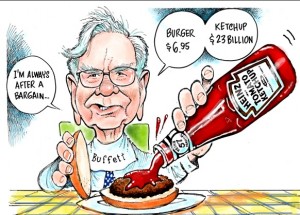
However, the bank’s mission is to assist companies realize export opportunities and a recent study suggests that it has been aiding companies like those owned by Warren Buffett and Mexco’s Carlos Slim who don’t need tqxpayer help.

What Reuters has uncovered needs further analysis to see whether these smaller companies under larger umbrellas may be deserving.

The Bank says:  “Ex-Im Bank provides working capital guarantees (pre-export financing); export credit insurance; and loan guarantees and direct loans (buyer financing). No transaction is too large or too small. On average, more than 85% of our transactions directly benefit U.S. small businesses.

With 80 years of experience, Ex-Im Bank has supported more than $567 billion of U.S. exports, primarily to developing markets worldwide.”

Buffett


Cartoonists Facing Fatwas

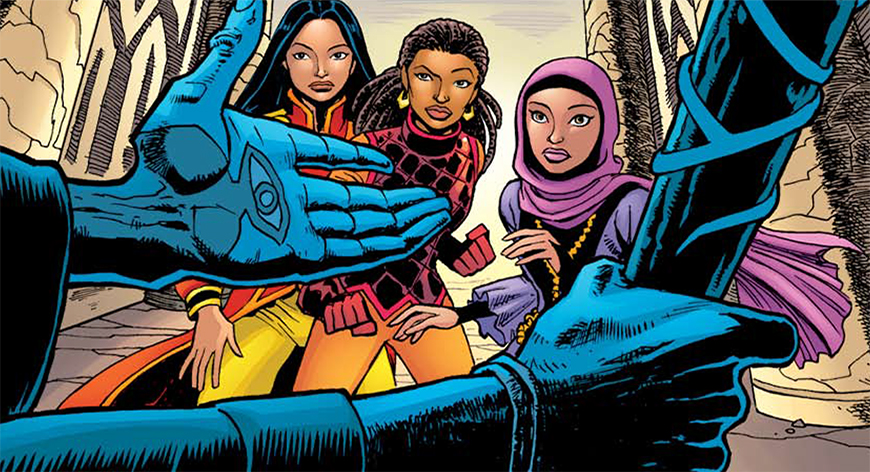
Singled out by President Obama as an unusual and important entrepreneur, Mutawa of Kuwait has retreated to his practice as a psychologist in the face of multliple threats to his life.

Seven years after Mutawa first launched his comic book series based on the 99 attributes of Allah, he’s facing a sudden onslaught of death threats, fatwas and lawsuits. His US distributor, meanwhile, continues to sit on a TV deal, in part because of pressure from conservative bloggers who object to any positive description of Islam.

Mutawa says his cartooning days are behind him and he’s focused on treating patients at his private clinic and teaching at Kuwait University’s faculty of medicine. Yet, he’s drawn back again and again into the fray over Islam and what it represents, a bespectacled superhero of sorts against intolerance.

“I finally went in to answer the charges of being a heretic,” Mutawa said nonchalantly about his visit to a Kuwaiti police station earlier this month. “Leading up to it, there’s been a whole series of death threats.”

Mutawa is facing a lawsuit by a self-proclaimed defender of the Sunni faith as well as a recent fatwa from the Grand muti of Saudi Arabia, both of whom have attacked “THE 99” for allegedly disparaging Islam — even though both the Saudi and Kuwaiti governments gave their blessing for the project years ago.

“I went there with my lawyer and when I was asked the question at the police station, I just burst out laughing,” Mutawa said.  “It’s just so ludicrous what’s happening.  I’ve been giving Islam a good name for over 10 years. They keep honoring me from here, and then they sue me from here — it’s like they don’t know what to do with me.”

More serious are reports that the Islamic State has called for his head on Twitter. But Mutawa doesn’t seem overly concerned about that either, despite the group’s grim record.

“It could be a 13-year-old girl in her closet,” Mutawa shrugs. “The cybercrimes unit in Kuwait … has said that these threats on Twitter have come from outside Kuwait. And Twitter has killed the hashtags, which took a couple of months of me going directly to talk to them and saying: ‘Hey, there’s a hashtag #whowillkillNaif. Not cool’.”

It’s not just at home that his work has sometimes gotten a cool reception. Despite the worldwide accolades that greeted “THE 99” when it first came out, The Hub — a network owned by the Discovery Channel and toy-maker Hasbro — never delivered on its plans to air the show, although two seasons did make it onto Netflix.

Mutawa blames pressure from a handful of conservative bloggers, whose campaign against the project took off after US President Obama praised him as “perhaps the most innovative” entrepreneur in the audience at his 2010 Presidential Summit on Entrepreneurship.
THE%2099%20Issue%20#22%20(Eng

Not So Quiet Flows Oil from the Don

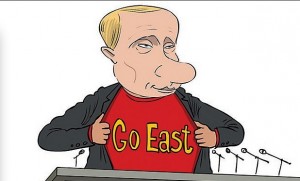
The 26th, and perhaps most anticipated, iteration of the Asia-Pacific Economic Cooperation (APEC) summit concluded Tuesday, kicking off a busy week for several of the world’s most powerful leaders. The 2014 edition was set against a backdrop of tempered global economic growth, Russia’s declining relationship with the West, continued Chinese and Japanese dispute, and of course low oil prices. President Putin launched, in earnest, his country’s Asian pivot.

The 21-member nation forum – headlined by China, Russia, and the United States accounts for nearly 40 percent of the world’s population, 55 percent of world GDP, and approximately 60 percent of world energy consumption.

Of the member economies, perhaps none was more eager to get the ball rolling than Russia. Last week, Russia’s central bank slashed economic growth forecasts for 2015 and predicted record capital outflows. Moreover, the bank anticipates Western sanctions, which have limited the country’s development of their vast energy reserves, will last until at least the end of 2017. Dependence on oil revenue remains dangerously high, but the ill effects of declining prices have actually been stemmed by the more rapid collapse of the ruble, down nearly 30 percent on the year.

With his sights firmly set on the East, Putin acted quickly and inked a second big gas deal with his Chinese counterpart Xi Jinping. The accord, signed Nov. 9th, follows the 30-year, $400 billion deal signed in May, which will move up to 38 billion cubic meters (bcm) per year through the 2,500 mile Power of Siberia pipeline currently under construction. The two nations’ most recent cooperation centers on the long-discussed Altai pipeline – a 1,700 mile route from Russia’s productive Western Siberian fields to China’s restive Xinjiang region. Under the new deal, China will purchase an additional 30 bcm of gas for a period of 30 years. Once both pipelines are complete, China will become Russia’s largest gas customer, surpassing Germany.

It’s been a busy year for Putin and Jinping, who last month opened a currency-swap line. The yuan-ruble swap line worth approximately $25 billion will allow both countries easier access to the other’s currency, facilitating greater trade and investment, especially in the financial and energy sectors. As both countries look to decrease their economic dependence on the West, China is buying into assets across Russia. Heavily indebted state-owned Rosneft just sold 10 percent of its highly productive Vankor project to China National Petroleum Corporation, and Yamal LNG – a sanctions-hit megaproject in Siberia – may soon add more than $10 billion in additional Chinese investment.Russia Looks East


Libya Tacks On Oil

Oil production returned to Libya in the middle of a civi war.  It’s one of the reasons oil prices have been tumbing.  However, an armed struggle for control of Libya’s oil fields has made production precarious.  An armed group from the rebel government in Tripoli stormed the field, but Libya’s National Oil company hopes to start production again soon.

Libya’s oil bonanza looks like the latest hope to bite the dust.  Oil prodcution was at 850,000 barrels a day in October. Now it’s down to 540,000. It’s unclear who will represent Libya when OPEC meets next month.  Not all oil is a gusher.

Oil in Libya

Tough to Go it Alone in the Markets

Daniel Altman writes: Investing is international and here are six factors that now count:

1.  Cheap money doens’t respect national borders.  When Abe’s policy cause decine in the yen’s value it effects markets worldwife.

2.  Stocks and bonds no longer move in opposite directions.  One reason is that overall demand for dollar-based assets does not differentiate beween stocks and bonds.

3.  The stock market and the labor market are no longer in sync.

4.  Americans are looking to invest at home because the US markets have been strong. This was not so true prior to 2010.

5.  You can buy index funds or exchange traded funds for almost anything.

6.  The average non-instituional invesor is at a disadvantage because because investment and pension funds trade in larger quantities and faster.

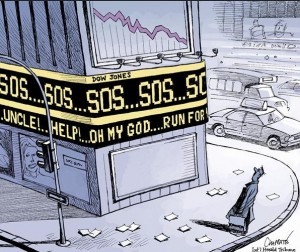
Who Knows What Impacts the Dow?

Be Prepared: The Girl Scout Model Encorporates Entrepreneurship

Today’s Girl Scouts of the USA isn’t all campfires and cookies. Recently the organization has invested in social entrepreneurship programs, STEM subjects and project-based learning.  Girls as young as 9 can earn badges in customer insights, financial literacy and product degin.

The Girl Scouts hopes to reshape the female landscape for an entire generation, so male and female leaders finally find equal footing.

But we rarely get a peek inside this national movement, to see whether these teachings are really preparing young American girls for future success.

Are we pushing kids into the board room too soon?

Child entrepreneurship is such a recent phenomenon that experts say there are few reports that assess their impact.  Teaching entrepreneurship and cultivating leadership skills in children is not a bad thing.  It’s up to individual troops balance boardroom with traditional fun, like camping, volunteering and crafts.

The entrepreneurial child is the child who is flexible, who can find more than one solution to a problem.  Adaptive thinking is especially important in a world where so many things are changing so quickly.

A lesson to us all.

Girl Scout

Turkey’s Dream of an Ottoman Empire Turns into an Economic Nightmare

In 2010, Turkey made deals all ovre the Middle East.  But its support of Hamas and the current ISIS wars have left the country isolated.

Fifty-one agreements made with Syria have been shelved.  Turkey’s exports which reached 8 billion during the ‘fraternity’ era have been lost.  Exports through Syria to 16 other Middle East countries have stopped. Turkish cargo rtucks which used to make 105,000 to 700,000 runs now sit idle at the country’s border.  Border towns are swmaped with homeless, jobless, desitute Syrians.

In October Egypt canceled a Ro-Ro line, which provided an alternate to Syria.  Soured relations with Iraq caused cancellaion of Turkish Petroleum’s access to the oifields.

Turkey had envisaged a new Ottoman Empire.  It was a desert mirage.

No Ottoman Empire in the MIddle East

Jobs, Jobs Everywhere and Not A Job for You

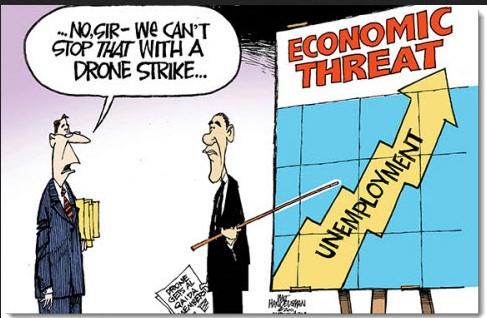
W-T-W.org Women and Finance recommens a twenty-year Infrastructure program to give people jobs while we figure out how to fit properly trained people to available jobs.

Megan McArdle writes about the recent election and notes that Republicans won even though the economy appears to be improving and new jobs are up.

She observes that the kind of jobs that satisfy people are often not available.  People can’t find jobs where they have a future.  Business startups and small businesses that employ so many people are on a decline.

It may be that a party that disapproves raising the minimum wage is perceived as being more sympathetic to the real jobs issue.

Jobs


Head, Heart, Hands and Health in Africa 4H

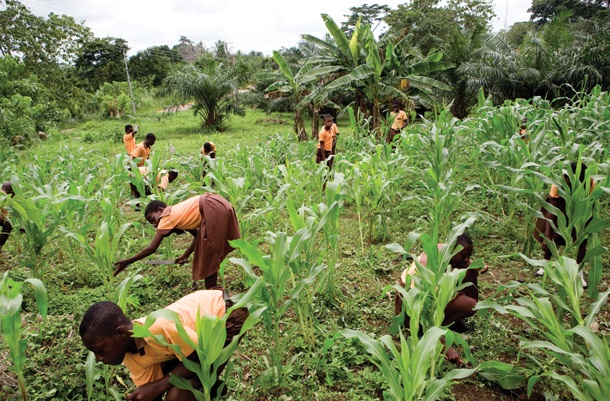
4-H is a uniquely American phenomenon, and in many ways it is. Born in the heartland of the US iin the early 1900s. when land-grant universities sent representatives to rural schools, it sought to teach the next generation of farmers, and through them reach adults skeptical of newfangled techniques. The club thrived until the middle of the century, but as industrial-scale farms gobbled up family operations and America became less rural, membership began to decline.

However, unlike many bygone rural institutions—one-room schoolhouses, barn raisings, and rural free delivery, the club, now part of the Department of Agriculture and still administered through land-grant universities, has managed to reinvent itself. It has expanded in both scope (adding science and engineering to its old standbys of agriculture and animal husbandry) and size: Today, 4-H boasts 7 million members in more than 50 countries.

It is introducing yourng people to farming as a career and these modern farming entrepreneurs are thriving.

Yet DuPont has found a very willing partner in 4-H. “We want 11- and 12-year-olds to gain an appreciation for agriculture as a possible career and a business opportunity,” says Shingi Nyamwanza, who heads 4-H’s programs in Africa. “DuPont is making that possible.” The program started as a small pilot in Tanzania in 2010, and in 2012, it expanded it to Ghana, where 3,500 children, ages 6-19, enrolled. In 2014, 4-H and DuPont have rolled out school gardens in Ethiopia, Kenya, and South Africa.

So is DuPont Pioneer, as critics charge, using 4-H kids as free advertising for a product that will put their families’ farms out of business? What’s clear is that 4-H’s African program is indicative of the continent’s transition from subsistence farming to industrial crop production. As of 2010, foreign interests—including American agribusiness giants like Monsanto and Cargill—owned up to150 million acres in Africa.  The US government has helped make those deals happen: Since 2010, the Agency for International Development has given $7 billion in grants to a wide range of corporations, including Walmart and PepsiCo. to partner with farmers in the developing world. Many of the funds came through a new program called Feed the Future, which a USDA administrator described as a push to “increase agricultural business investments in priority countries.”

In cracking the vast new market in Africa, the 4-H gardens “are essentially demonstration plots,” DuPont’s Captain told me. “We are going to work with you, and you can show your neighbors in your tribe and village what you can do. And then they want the seed as well.”

4H members in Africa

Net Neutrality?

Tim Wu, who ran a complelling race for Lieutenant Governor in NY and is a professor at Columbia Law School, writes:  A neutral network might be designed without legal prodding – as in the original internet.   In an ideal world, either competition or enlightened self-interest might drive carriers to design neutral networks.

The problem now is favoritsim by the carriers to certain subscribers.  If there were no favoritism and if the carriers were not allowed to use the information that flowed through the wires, cables and ether, they would have to be subscription based.  Companies like Verizon are now.  Google of course is not. Europeans are more sensitive to privacy issues than people in the US.  NSA and Edward Snowden have made this issue more prominent.

Preisdent Obama has come out for net neutrality.  Under this concept, the internet would be treated like a utility.

Net Neutrality