Paul Allen, A Founder of Microsoft, Bankrolls Financial Literacy

Allen bankrolled 20 shorts called “We the Economy.”  Adam McKay, who made Anchorman, parodied My Little Pony to explain income inequality.  That Film about Money, made by James Schamus, one of the founders of Good Machine, explains how bank’s leverage money.  Maarshall Curry has made an animated film about Debt and Deficits and has fun breaking down the differences betwen John Maynard Keynes and Friedrich Hayek.

Hollywood Reporter writes:  The films will be released on more than 50 digital, cable, TV and mobile platforms, including Android and iPhone custom apps, CNBC, YouTube, Twitter, Facebook, Hulu, iTunes, Netflix, Yahoo Screen, Vimeo, Dailymotion, Amazon Instant Video, AOL’s On Network, CBS News, Conde Nast Entertainment’s The Scene, Crackle and Comcast, Time Warner Cable, Cox and Verizon VOD services. Landmark Theatres is also hosting a one-night-only theatrical sneak preview on Oct. 20 at 7 p.m. in 20 cities nationwide.

“The unique distribution model for We the Economy is all about audience access,” Vulcan Productions general manager and creative director Carole Tomko said in a statement. “There’s not enough accessible, bite-size information that’s easy to digest about the economy. We wanted these short films to help people understand the fundamentals of the economy, and in order to reach the widest audience, we decided to make them available across as many channels as possible, and at no cost. There’s an appetite for this entertaining, informative short-form content, and we know that our extensive group of distribution partners guarantees that everyone in this country with a computer, a smartphone or a television will have access to the series.”
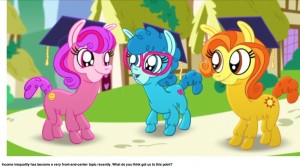
Income Inequality


Obama One-Upped by Putin in Beijing

Scrutinizing body language between Obama and Putin has become something of a pastime in diplomatic circles.  The contrast in their personal styles, Putin brash and macho, Obama more professorial and sometimes self-conscious, was also on display at APEC.

At a tree-planting ceremony at the summit venue, Putin swaggered up, chest out, and shoveled mud onto the roots of a partially-planted tree.  Obama walked up with his hands clasped behind his back, picked up the shovel, grinning slightly, and piled mud on his tree, according to a pool report of the event.  When a Spanish-language camera crew called for his attention, Obama responded with “Hey, hombre” and waved.

What Putin has succeeded in doing is making deals with China that will leave Russia less vulnerable to the West.  The impact of economic sanctions against Russia has been softened by new deals between Russia and China.

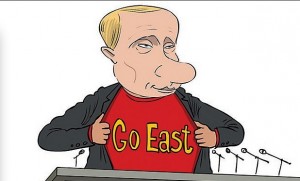
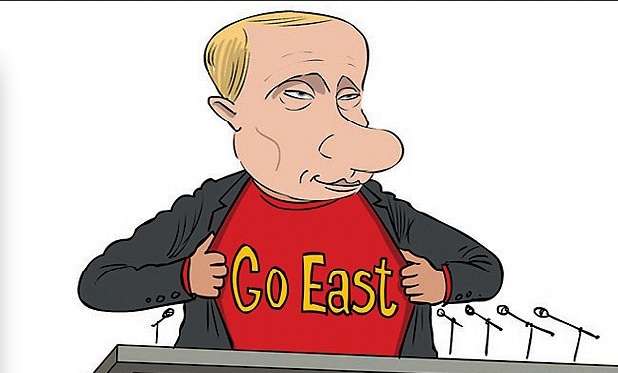
Putin Looks East


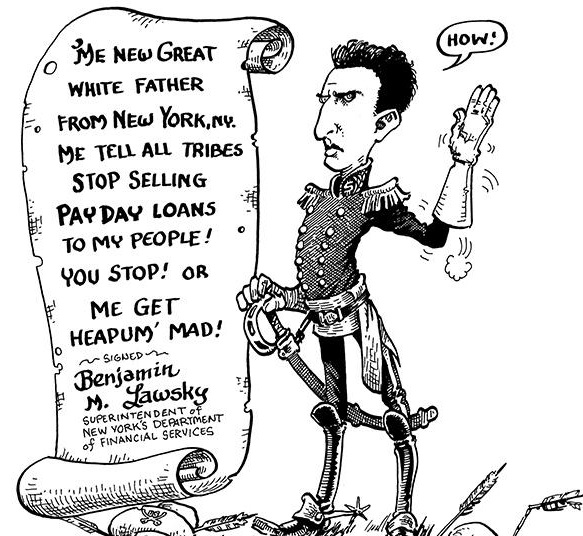
Lawsky to Leave NYS Department of Financial Regulation

Lawsky was a tiger in his job.  Reports on his departure talk about is interest in the Bitcoin and bringing it into the monetary system.  He came to know many people prominrent in the Bitcoin community.

But more than virtual currency, Lawsky fought Payday Loans,  He was also a spokeman for ‘No Banker Too Big to Jail.”  He irritated NY State Attorney General Eriic Schneiderman, who he also got to be more active in looking into banking activities.  Lawsky had shamed him by speaking out.

One wonder why this brave soul is leavaing before his work is done.  Maybe no one wants him to do his work.

Lawsky


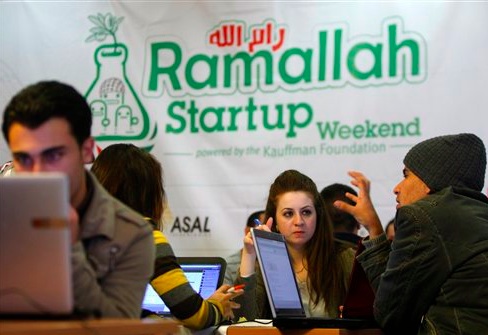
Palestinian Tech Industry Featured in Ramallah

The Palestinian Information Technology Association is making a big contribution to the Palestinian economy.  Five percent of Palestine’s workforce produce 8% of its output.

IT specialist Ala Alaeddin says that the big jump in IT use was the risky move by John Chambers of Cisco to invest in Palestine.  IT may become the engine of the Palestinian economy. The goal is to combine media with IT and to help emerging NGOs. Some complain that the govvernment puts more money into telecommunications than IT.

Palestinian IT Business

Smuggling Costs Tunisia

Smuggling has become a serious problem in Tunisia.  It is almost impossible to monitor Sahel, its surfae, the desert terrain, and the need for several countries to corrdinate.

Rising prices and the hgih cost of living drive Tunisians to buy smuggled televisions, food products, cigaretes and even gas.  The losses to the state are about $650 mllion, and to customs about $270 million.  The turnver of parallel trade is baout $970 million, or half the trade with Libya.

On the border, “knatreya” or smuggling lords live in palaces as they fiercely control their trade.  Stakeholders know what is going on, and express a willingness to control this traffic and yet nothing happens.  Why does no one act?  The equivalent of the entire Health Department’s annual budget is on the line.

Tunisian Borders

Annexation of Crimea Putting Pressure on Russian Economy

Economic considerations could prove the main factor in forcing Russia’s foreign and domestic policy to gradually normalize and evolve toward greater caution and responsibility, writes Vladimir Ryzhkov. The annexation of] Crimea will cost Russia one percentage point in economic growth, or 360 billion rubles ($9 billion) in unpaid wages and accelerated inflation due to the weakening ruble. In fact, Crimea will contribute about three percentage points to inflation this year…. Although the Russian people continue celebrating the annexation of Crimea and giving the authorities sky-high ratings, the first signs of trouble are now appearing…. As Russia’s Crimean-Ukrainian project incurs an increasingly heavy expense, the economy itself will provide an unerring litmus test of the soundness of Kremlin strategy.

The current hidden costs of the annexation of Crimea are hitting the oil and gas industries mostt prominently.  Meetings in China suggest that looking East is Putin’s best bet, as cash from the oligarchs and other big Russian businesses exit the country.

Putin Looking East

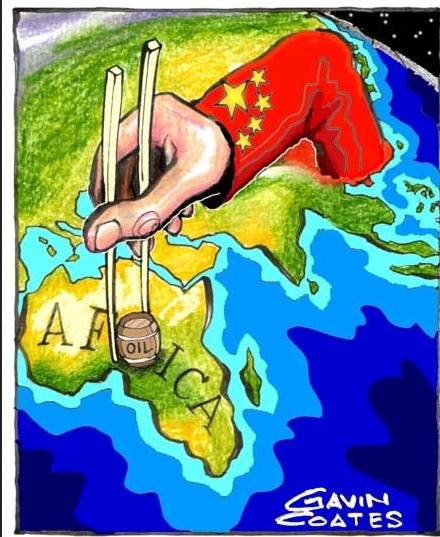
China’s One Belt, One Road Infrastructure Program

China is creating a new Silk Road to join its neighbors with roads, railways and ports.  The Asian Infrastructure Investment Bank has 21 countries aboard its infrastructure project.  The Chinese government has announced the investment of another $40 billion dollars.

China is not seeking to dominate the region, however.  It is looking for a win-win situation.  “One belt, one road” is open to all countries who wish to join, regardless of their political regime.  China is distrusted and the government will have to work hard to get rid of this image.  Mexico suddenly cancelled a rail contract, for instance.

China’s “one belt, one road” is very ambitious.  The entire world is being invited to join.  China seems to understand the wish of developing countries to develop first and to do so without encumbrances from the West.

Some countries may see this as an effort by China to dominate the world.  Others may fear dependence on China.  But so far China is taking all the right steps.

Chinese Investment

Catalonian Independence?

Politicians in both Madrid and Barcelona are using history as a source of rancor. Spanish nationalists argue that Catalonia was always part of Spain. At the same time, Catalans trace their independent identity back to the 13th century and say they have a right to express their will. Spain’s 1978 constitution doesn’t allow any region to vote alone on independence: Either all of Spain votes on the Catalan question, or no one does. Spain’s Socialist Party, which draws considerable support from Catalonia in Parliament, is proposing a wide-ranging reform of the constitution to clear the way for a negotiated setlement.  Many Catalans say it’s too late for that now.

Catalonia won back control of its health, education and language policies after Franco’s death in 1975, although it didn’t get the tax-raising power awarded to Spain’s Basque Country, where terror group ETA has killed more than 800 people during its own four-decade campaign for independence. Catalonia’s powers were extended with a 2006 law that included references to the region as a separate “nation” and guaranteed the region’s share of public investment. When large parts of that law were struck down in 2010, many Catalans decided their future lay outside of Spain and support for independence surged. Catalonia’s ballot would have come less than two months after Scotland voted to remain part of the U.K., though that referendum was sanctioned by the British government. The votes are emboldening from places like Flanders and Venice, where smaller nationalist groups aspire to dismantle European states forged in the 18th and 19th centuries.

Catalonian Independence?

Middle Class Growth in Sub Saharan Africa

While Africa’s middle class may be smaller than the oft-reported figure of 300-million, it is growing at a strong rate – and the broad-based income growth is likely to encourage more companies to invest in the region, according to a report released by Standard Bank.  There are 15-million middle-class households in 11 of sub-Saharan Africa’s top economies this year, up from 4.6-million in 2000 and 2.4-million in 1990, the report states. This represents an increase of 230% over 14 years. The report, titled “Understanding Africa’s middle class”, found that the combined GDPs of the 11 measured economies – Angola, Ethiopia, Ghana, Kenya, Mozambique, Nigeria, South Sudan, Sudan, Tanzania, Uganda and Zambia – had grown tenfold since 2000.

Income discrepancies, however, are vast among the 11 economies, with almost 86% of the 110-million households falling within the low-income band. This is expected to fall to around 75% by 2030. “While the scale of Africa’s middle-class ascent has, we believe, been somewhat exaggerated in line with the at times breathless ‘Africa Rising’ narrative, there is still plenty of scope for measured optimism regarding the size of the middle class in several key Sub-Saharan Africa economies,” said Simon Freemantle, an economist.

Freemantle said there was cause for optimism among investors as the results suggest even greater scope for future growth. The number of middle-class households in the sub-Saharan African countries is likely to increase significantly in the next 15 years. “Including lower-middle-class households, the overall number swells to over 40-million households by 2030, from around 15-million today,” the report says. The 11 countries covered by the report account for half Africa’s total GDP (75% if South Africa is excluded) and half its population. The figure of 300-million middle-class Africans – one-third of Africa’s people – comes from a study by the African Development Bank in 2011, which defined “middle class” as earning between $4 and $20 a day. “Such individuals would still be exceptionally vulnerable to various economic shocks, and prone to lose their middle-income status,” Freemantle said.

The report found there was “an undeniable swelling” of Africa’s middle class, irrespective of which methodology was used. “Reliable and proven data should if anything spur more interest in the continent’s consumer potential by adding depth to what was previously conjecture,” said Freemantle. As a caution, the report states: “Though there has been a meaningful individual lift in income, it is clear that a substantial majority of individuals in most countries we looked at still live on or below the poverty line (measured as those with a daily income of USD2 or less).”

Infrastrcture Growth in Africa

Russia and China Inking Energy Deals

Keith Johnson writes:  Russia and China took a giant step toward closer economic and political ties with an agreement on another massive energy deal that promises to tighten the bear hug between Moscow and Beijing for decades to come.

The preliminary accord, which comes just months after China and Russia inked a $400 billion natural gas deal, is a reflection of the shifting balance of power in Asia. It’s a marriage based on needs: Russia’s to break out of the isolation imposed by the West in the wake of its annexation of Crimea and China’s for reliable and affordable sources of energy.

Coupled with China’s new trade pacts with U.S. partners such as Austraia and South Korea to a push for Chinese-led development banks that can wrest financing muscle from the West — the latest gas deal shows what kind of challenges await the U.S. economic and diplomatic pivot to Asia.

Russia and China signed a memorandum of understanding on a second gas-export route from western Siberia to China’s western provinces. The 30-year accord, if consummated, would see Russia ship 30 billion cubic meters of gas to China starting in 2018 and would see Russia gain a big new customer right as it is feeling the squeeze from Western financial sanctions. Together with the deal signed in May, Russia could supply at least 68 billion cubic meters of gas annually to China, or about one-fifth of that country’s expected gas demand in 2020.

The deal is far from complete, but it shows the direction of Russia-China relations. Moscow has intensified its efforts to make a deal since the West slapped sanctions on it energy, defense and finance sectors. China too seems more enthusiastic.  China is trying to reduce the importance of coal in its energy mix.  It needs huge amounts of natural gas. While the country ramps up its own production and has gas-import deals with Central Asian countries and more than a dozen gas-importing terminals mushrooming on the coast, Russia’s massive gas fields offer a close and ready supply of clean fuel.

Putin Takes Off his Coat