Will Russia Tank?

Mohamed A. El_Erian writes:  The central bank of Russia appears to be losing control of its currency market.  Here are the seven things to know about what’s going on in Russia now.

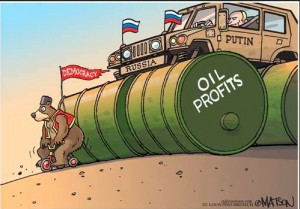
  1. Buffeted by Western sanctions and lower oil prices, Russia has suffered a significant decline in net foreign earnings. Capital is fleeing the country, and corporations and households are looking to switch out of rubles and into dollars and other “hard” currencies. The result has been a sharp fall in both international reserves and the value of the ruble, contributing to a rising threat of domestic financial turmoil.
  2. At the same time, it is only a matter of time until the country’s economy has to deal with an even stronger stagflationary wind. The currency’s sharp depreciation is sure to fuel inflation, while the drop in foreign income will curtail domestic economic activity.
  3. The central bank’s retreat from propping up the ruble highlights the fix the country is in. The authorities’ initial response was to use ample international reserves to counter the impact of sanctions imposed by the West.  They backed this up by intervening in the foreign-exchange and repo markets, which readily exchange securities for cash,  and by raising interest rates.  This moderated what would have been more disorderly pressures on the ruble and an even faster loss of confidence. But the subsequent collapse in oil prices and the pickup in capital flight overwhelmed this strategy, forcing the central bank last week to retreat from its policy and fully float the currency.
  4. The country’s foreign-exchange situation could spin further out of control, at one extreme, or the Russian authorities might respond strongly with higher interest rates and spending cuts.  Either approach would risk depressing economic activity even more in the short run. The most likely outcome is somewhere in between — some interest-rate increases and the use of controls to try to buy time by limiting dollar use and channeling more foreign exchange to the government.
  5. While Russia’s creditworthiness is under significant pressure, with international reserves still above $400 billion, the country’s debt-servicing capacity isn’t exhausted, provided the authorities can better manage the movement from rubles into dollars. Yet even then, it is probably only a matter of time until the country loses its investment-grade credit rating, raising its borrowing costs and narrowing further its creditor base. The situation will be acute for companies and banks whose balance-sheet positioning requires them to pay more rubles to obtain the dollars needed to meet their foreign obligations.
  6. The negative spillover effects of Russia’s financial turmoil are a lot less than they were in 1998. While some Western banks and investors still have notable exposures, quite a few responded to Western sanctions in the last few months by reducing their holdings and preparing for further turmoil.
  7. President Vladimir Putin, whose popularity surged when he acted in Ukraine earlier this year, faces one of two choices:  He can moderate Russia’s involvement in Ukraine as a means of relaxing Western sanctions. Or he can press even harder in Ukraine to distract attention at home away from the economy but risk another round of sanctions and countersanctions that would aggravate the economic and financial turmoil in Russia, and potentially tip Europe into recession.  The market implications of the two courses are polar opposites.

Aggravated by lower oil prices, the recent financial turmoil reflects the geopolitical tensions and Russia’s decision to favor regional adventures over internal economic and financial stability. The sovereign analysis that the vast majority of investors use isn’t often comprehensive enough to easily and effectively capture this reality.
Russian Economy

Corruption in Iran

Sooner rather than later, Iran will open up to the Western worlld.  The following reports on economic problems in the country  that particulary impact women and children.

If Iranian President Hassan Rouhani were to battle poverty as he said he would, he must address the corruption that resulted from efforts to evade sanctions.

The Statistical Center of Iran released a report last month showing the average expediture for an  urban household is about 10,925,000 rials ($336), much lower than 25 million rials ($780) estimated by independent economists..

Thirty-six years after the “anti-capitalist” revolution, Islamic leaders have failed to ensure the fair distribution of wealth and equality of opportunity. In Iran, 7 million people now live in absolute poverty and their food security is at risk. At the other end, 5 million are superich with wealth comparable to that of the richest Americans, as Labor Minister Ali Rabiee has put it.

Fighting poverty has been a focal point for President Hassan Rouhani since he took office last summer. In his Oct. 22 speech in the northwestern city of Zanjan, the president reiterated there was “no evil worse than unemployment and poverty.”

Officials predict that unemployment will become a major issue in a few years when about 4 million unskilled university graduates join the 4 million unemployed.  According to the latest data available, in the last fiscal year, almost one-fourth (24%) of Iranian households did not have even one employed member. The figure was 10% back in 1992-93, indicating that many families have lost a reliable income source since 21 years ago.

In the past year, measures taken by Rouhani’s economic team have helped curb inflation and end two years of negative growth, but observers believe the moderate president will face grave challenges in reducing poverty as the lucrative parts of the economy are mainly controlled by either the government or semi-private entities that have close links with power circles.

So far, Rouhani has adopted a three-part policy to assist the most vulnerable population in the short run, earn the trust of the private sector in the middle term and achieve sustainable economic development in the long run, with each requiring a separate strategy.   Iranian Economy

Lining Up for Food Supplies in Teheran


Why Did Obama Nominate Loretta Lynch to the Post of US AG?

The Attorney General in Waiting for Senate confirmation has treated big banks with kid gloves in the past. As a lawyer, her clinets were often white collar criminals from the financial industry.  She was involved in LIBOR, many issues involving subprime mortgages and also security ratings agencies.

Lynch basically got her first six years of white collar criminal defense experience working at the firm that is currently responsible for keeping the bankers behind the great subprime mortgage grift out of jail. The firm is also defending the financial institutions that jacked up interest rates on everything from student loans to home loans out of greedy self-interest. They even defended the agencies that knowingly rated worthless mortgage-backed securities as AAA, setting up millions to lose their retirement savings in a snap.

After six years of exemplary work at this law firm, Lynch walked through the revolving door to the U.S. Attorney’s office in the Eastern district of New York, which plays a major part in investigating financial crimes.   She was chief of the office’s Long Island division by 1998, and was tapped as U.S. Attorney by June of 1999, where she remained until 2001. Then, Lynch walked back through the revolving door to return to defending white collar criminals.

From 2003 to 2005, Lynch sat on the board of the New York Federal Reserve, working directly under future US Treasury secretary Geithner.

Unless some unforesenn issue arises, Lynch will survive her senate confirmation hearing. Senator Dick Durbin once referred to his chamber as overly subservient to the big banks, saying,  “They own the place.”  It is well to remember that Hillary Cinton, the presumptive democratic Presidential nominee got to know the same bankers in her husband’s administration that have continued in the Obama administration, are connected to Lynch and of course Mrs.Clinton’s favoirte Wall Street bank, Goldman Sachs.

Banks

Women’s Media Awards in US

The women’s media center recently gave out their 2014 awards. Included was Ursula M. Burns, chairman and chief executive officer of Xerox Corporation.  She was presented with the Carol Jenkins Visible and Powerful Media Award.

Burns is an interesting woman executive.  “As I’ve progressed in my career, I’ve come to appreciate — and really value — the other attributes that define a company’s success beyond the P&L: great leadership, long-term financial strength, ethical business practices, evolving business strategies, sound governance, powerful brands, values-based decision-making.”

She talks about creating jobs and not thinking about how they can be eliminated.  \At a mst powerful women summit, she noted:  “As long as I’ve been alive discussing this, and even before, this concept of having it all — that’s not the point,” she said. Pick the places where you want to be great, focus your energies there, and then go do it, she added. Understand “you’re not going to be great at everything, and then relax.”

What is her deepest regret.  She wishes she had had more children.  (She has two).

xerox_ceo_ursula_burns_by_prestegui-d4negnn

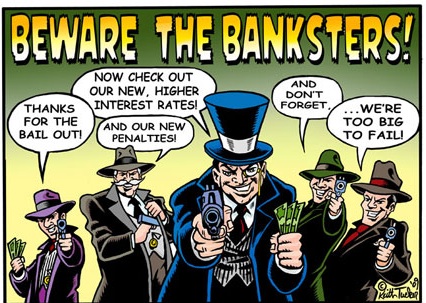
Too Big To Fail Means Too Big to Jail

The Attorney General of New York State remarked:  “I am concerned that the size of some of these institutions becomes so large that it does become difficult for us to prosecute them when we are hit with indications that if you do prosecute, if you do bring a criminal charge, it will have a negative impact on the national economy, perhaps even the world economy. And I think that is a function of the fact that some of these institutions have become too large. Again, I’m not talking about HSBC; this is just a more general comment. I think it has an inhibiting influence—impact on our ability to bring resolutions that I think would be more appropriate.

What were the banks doing?  Mortgage lenders  would go out into neighborhoods, and during this boom period, they were giving mortgages to anybody and everybody with a pulse, essentially. They were especially low-income neighborhoods. They were offering these very advantageous loans to people, whether they could afford the houses or not. They were buying huge masses of these loans.  They were called like “liar’s loans,” or stated income where no one even checked whether the person had the income to actually pay it off.

Investigative journalist Matt Taibbi writes: Tthese settlements, they always come up with a big number, but the number is always actually—when you actually look at the accounting, it turns out to be smaller than they announce. In the case of the Chase settlement, the number they announced was $13 billion. But there’s a couple of really important factors here. One is that $7 billion of that—it’s $7 billion, right?—was tax-deductible, which means that all of us, American citizens, anybody who pays taxes, actually picked up the check for about $2.4 billion worth of the settlement. So we paid part of that settlement, which is crazy. I mean, the ordinary person, if we get a speeding ticket, we can’t deduct that when we go to pay our taxes. But these people cratered the world economy, and they get to write a tax deduction for it.

Bankers who condcut business this way are careful not to do anything illegal, although their activities are often immoral, unethical and wrong.

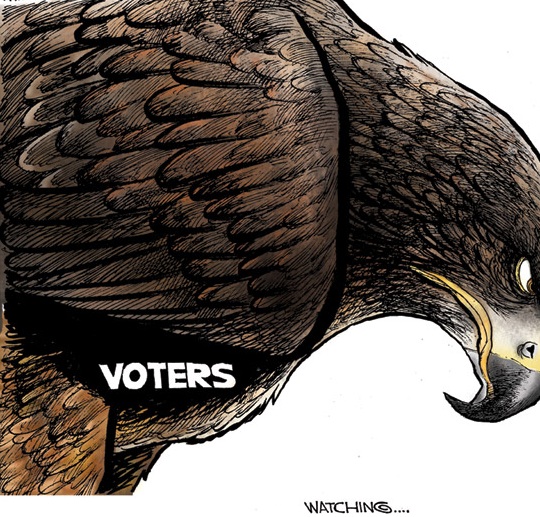
In most developed countries there are laws on the books which prevent bankers from conducting fradulent business.  These laws are often not enforced.  If we are goiing to clean up corrupt business practices of banks, we must enforce the laws on the books.   Banks have to be treated as a special form of business.  They deal in other people’s money and be watched like hawks by public officals and citizens alike.

Watching Bankers


Mexico Retreats

US Elections and Women’s Role

Post election polls in the US suggest that races which focused on the sex of the candidate did not help the candidate much.  This does not come as a surprise.  It is always the economy and economic matters that drive governance issues.  In the US, post ‘great recession’ issues linger.  Foremost among them are jobs and matching preparedness with available jobs.  Because training people for the workforce is in part the job of education, we will have to wait until the education system catches up with the job market to make better matches between available jobs and available workers.

To this end, W-T-W.org Women and FInanace has proposed a 20-year infrastructure program, at the same time mending the country’s delapidated roads, bridges and educating the workforce for jobs in the new economy.

Women are more interested in families and children than men are.  We are focusing on women’s role in this new and important effort.

The recent election in the US shows that “it’s the economy,” is a battle cry for both sexes.  Women may hae a unique and potentially powerful approach to economic issues.

Women Advocates

Infrastructure and Energy in Russia

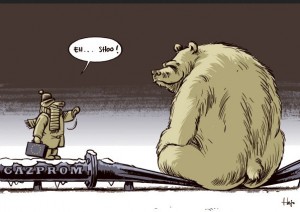
Russia possesses 18 percent of the world’s reserves in gas, 13 percent in petrol; 70 percent of its export revenues and 30 percent of its gross domestic product (GDP) are based on hydrocarbons. And 20 percent of its gas is exported to Europe. But with the price of oil now below $90, standing at $80.54 a barrel (West Texas Intermediate) and at $85.68 (Brent Crude), coupled with a drop of 1.3 percent of Russian GDP in 2013 and with zero growth forecasted, it is clear that “the old system no longer functions,” said Tatiana Mitrova.

Russia grew at 6 percent until 2009 and then fell to 0.2 percent this year, per International Monetary Fund (IMF) data. Russia’s gas production stands at 600 billion cubic meters, which is in decline. Novatek’s production is up 1,000 percent and Rosneft is in expansion. But internal Russian market demand is in decline.

In theory Russia could be a gas hub, but its storage facilities are insufficient. Sanctions have cut off investment funds.  The Russian people know little about the sanctions.  Within the governmnet, however, there is a move to open markets in China.

States like South Africa and Iran grew stronger after sanctions.. Russia is surrounded and its people may be ready to change their priorities.  Russian energy businesses may learn to be more attentive to this shift and are prepared to turn inward and also toward China.  Infrastrcture and Energy in Russia

 Gazprom

Fair International Tax Competition?

Wolfgang Schuble writes;  We are witnessing profound changes in the way that the world economy works. As a result of the growing pace and intensity of globalization and digitization, more and more economic processes have an international dimension. As a consequence, an increasing number of businesses are adapting their structures to domestic and foreign legal systems and taxation laws.

Thanks to technical advances in the digital economy, companies can serve markets without having to be physically present in them. At the same time, sources of income have become more mobile: There is an increasing focus on intangible assets and mobile investment income that can easily be “optimized” from a tax point of view and transferred abroad.

Tax legislation has not kept pace with these developments. Most of the tax-allocation principles that apply today date back to a time when doing business internationally primarily meant transporting goods across a border to a neighboring country.  Rules that were devised in the 1920s and 1930s are no longer suitable. They need to be adapted to the economic reality of digital services.

In the absence of workable rules, states are losing revenue that they urgently need in order to fulfill their responsibilities. At the same time, the issue of fair taxation is becoming more and more pressing, because the number of taxpayers who make an adequate contribution to financing public goods and services is decreasing.

The resulting tensions between national fiscal sovereignty and the borderless scope of today’s business activities can be resolved only through international dialogue and uniform global standards. Within the European Union, permitting groups of states to forge ahead with joint solutions to issues that can be addressed only multilaterally has worked well in the past. If such measures prove successful, other states follow.

This approach can also serve as a global governance model for resolving international problems. In today’s world, even large states cannot establish and enforce international frameworks on their own. Groups of countries still can. This has been demonstrated in the context of financial-market regulation; it is starting to become clear with regard to the regulatory framework for the digital economy; and it is now being confirmed in the area of taxation.

The Seventh Meeting of the Global Forum on Transparency and Exchange of Information for Tax Purposes took place in Berlin this week, bringing together representatives from 122 countries and jurisdictions, as well as the EU. A joint agreement on the automatic exchange of information on financial accounts was signed on Wednesday.

The joint agreement was originally an initiative by Germany, France, Italy, the United Kingdom, and Spain. Roughly 50 early-adopter countries and territories decided to take part, while other countries have indicated their willingness to join.

The agreement is based on the Common Reporting Standard, which was developed by the OECD. Under the CRS, tax authorities receive information from banks and other financial service providers and automatically share it with tax authorities in other countries. In the future, virtually all of the information connected to a bank account will be reported to the tax authorities of the account holder’s country, including the account holder’s name, balance, interest and dividend income, and capital gains.

Various measures are in place to ensure that banks can identify the beneficial owner and notify the relevant tax authorities accordingly. The CRS thus expands the scope of global, cross-border cooperation among national tax authorities. In this way, we can establish a regulatory framework for the age of globalization.

The automatic exchange of information is a pragmatic and effective response to the perceived lack of global governance regarding international tax issues. By making taxation fairer, governments will have a positive impact on people’s acceptance of their tax regimes.

This great success in the fight against international tax evasion would have been unthinkable only a few years ago. Now it is important to continue the efforts of the OECD and the G-20 in the area of corporate taxation. We need to make sure that creative tax planning in the form of profit-shifting and artificial profit reduction is no longer a lucrative business model.

A “beggar-thy-neighbor” taxation policy, by which one country pursues tax policies at the expense of others, is just as dangerous as beggar-thy-neighbor monetary policies based on competitive currency devaluation. It leads to misallocations – and will ultimately reduce prosperity around the world.

That is why we need to agree on uniform international standards in order to achieve fair international tax competition.

International Taxation

Central Bankers as Superstars

Kenneth Rogoff writes:  Why do the comments of major economies’ central bankers command outsize attention nowadays? It is not as if they change interest rates all of the time. Nor have they developed new, more robust models for analyzing the economy. On the contrary, major central banks’ growth and inflation forecasts in the years since the financial crisis have consistently overestimated both growth and inflation – and by wide margins.

There are many good reasons for the attention lavished on monetary policymakers, including the rise of central-bank independence, public acceptance of the need to appoint highly competent technocrats to oversee the money supply, and the deepening of financial markets. And many central bankers have been rightly lauded for their role in preventing a global meltdown during the financial crisis.

Even so, given the numerous uncertainties surrounding macroeconomic forecasts and the effects of policy instruments (not least quantitative easing), many academics find it puzzling that central bankers’ speeches and statements generate so much fanfare. Moreover, central bankers bear a share of the blame for the crisis in the first place, mainly owing to lax regulatory policy.

Many central bankers portray former US Federal Reserve Chairman Alan Greenspan (who served from August 1987 until January 2006) as the culprit, saying that he projected an image of central-bank omnipotence that is not warranted in theory or practice. But this critique is overblown: Greenspan is long gone, but the focus on central-bank pronouncements is greater than ever.

What, then, is going on? I would argue that, in addition to all of the factors listed above, three further considerations should be noted. For starters, the public perception that central bankers are omniscient makes them an attractive whipping boy for politicians. Moreover, the digital revolution in media has elevated the role of business news, one of the few profit centers for print and broadcast journalism in many countries. Central bankers’ pronouncements are of interest to businesspeople – especially in the financial sector – and businesspeople are of interest to advertisers.

Finally, and perhaps least appreciated, is the fact that central-bank policy pronouncements are almost unique in having clear and predictable effects on financial markets, at least in the very short run.

Some economic indicators, such as unemployment or inflation data, are indeed immediately important for central banks, because they may directly concern their mandates, and therefore have rather predictable effects. But much information is simply noise. This makes policy opinions that come straight from the horse’s mouth almost uniquely valuable.

In short, there are many good reasons why central bankers receive so much media focus, including their relative independence and generally solid performance. But there are also other reasons having to do with politicians’ need for scapegoats, the media’s struggle to reinvent itself in the Internet age, and central-bank pronouncements’ predictable short-term effects on financial markets. These other factors have combined to create a bubble around central-bank pronouncements and decisions that grossly exaggerates their economic significance.

Is this a bubble that central bankers should worry about? The answer is clearly yes. The news bubble is of particular concern, because it reinforces the idea that central bankers somehow care disproportionately about financial markets, which is generally not the case.

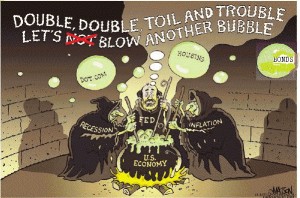
Most central bankers really are targeting growth, inflation, and financial stability, if not necessarily in that order. The political bubble is an inevitable product of central-bank independence, and preventing monetary policy from becoming a target for elected officials requires constant effort. The predictability bubble is perhaps the trickiest to navigate, though my instinct is that less would be more. Exaggerated importance is one kind of bubble that central bankers should always be eager to burst.

Central Bankers