Evaluating China’s Economic Power

Joseph S. Nye writes:

The World Bank recently announced that China’s economy will surpass that of the United States this year, measured according to purchasing power parity (PPP). But this is far from a holistic depiction of China’s global economic standing.

Though PPP can serve some purpose in comparing welfare across countries, it is affected significantly by population size. India, the world’s tenth largest economy measured according to the market exchange rate of the US dollar and the Indian rupee, is the third largest in PPP terms. Moreover, power resources, such as the cost of imported oil or an advanced fighter aircraft engine, are better judged according to the exchange rates of the currencies that must be used to pay for them.

But, even if China’s overall GDP surpasses that of the US (by whatever measure), the two economies will maintain very different structures and levels of sophistication. And China’s per capita income – a more accurate measure of economic sophistication – amounts to only 20% of America’s, and will take decades, at least, to catch up (if it ever does).

Moreover, as Chinese officials and researchers have acknowledged, though China surpassed Germany in 2009 as the world’s largest exporter by volume, it has yet to develop into a truly “strong” trading country, owing to lackluster trade in services and low value-added production.

China’s lagging economic sophistication is also reflected in its financial markets, which are only one-eighth the size of America’s, with foreigners permitted to own only a tiny portion of Chinese debt. Though China has tried to increase its financial clout by encouraging the international use of its currency, renminbi-denominated trade still represents just 9% of the global total, compared to the dollar’s 81% share.

Not even China’s massive foreign-currency reserves – the world’s largest, at nearly $4 trillion – will be adequate to boost its financial leverage, unless the authorities create a deep and open bond market with liberalized interest rates and an easily convertible currency. These reserves do not give China much direct bargaining power over the US, either, given that interdependent relationships depend on asymmetries.

China holds dollars that it receives from its exports to America, while the US, by keeping its market open to Chinese products, helps to generate growth, employment, and stability in China. Yes, China could bring the US economy to its knees by dumping its dollars, but not without taking a serious hit itself.

The differences between China and the US in terms of economic sophistication extend to technology as well. Despite some important achievements, China relies on copying foreign inventions more than domestic innovation for its technological progress.

In the coming decades, China’s GDP growth will slow, as occurs in all economies once they reach a certain level of development – usually the per capita income level, in PPP terms, that China is approaching. After all, China cannot rely on imported technologies and cheap labor to support growth forever. The Harvard economists Lant Pritchett and Lawrence Summers have concluded that regression to the mean would place Chinese growth at 3.9% for the next two decades.

But this straightforward statistical estimate does not account for the serious problems that China must address in the coming years, such as rising inequality between rural and urban areas and between coastal and inland regions. Other major challenges include a bloated and inefficient state sector, environmental degradation, massive internal migration, an inadequate social safety net, corruption, and weak rule of law.

Moreover, China will face increasingly adverse demographic conditions. After enforcing a one-child policy for more than three decades, China’s labor force is set to peak in 2016, with elderly dependents outnumbering children by 2030. This has raised concerns that the population will grow old before it grows rich.

China’s authoritarian political system has demonstrated an impressive ability to meet specific targets, from the construction of high-speed railways to the creation of entire new cities. What China’s government is not yet prepared to do is respond effectively to increasingly loud demands for political participation – if not democracy – that tend to accompany rising per capita GDP. Will political change occur when per capita nominal GDP, now at roughly $7,000, approaches $10,000, as occurred in neighboring South Korea and Taiwan?

It remains to be seen whether China can develop a formula to manage an expanding urban middle class, regional inequality, and, in many places, restive ethnic minorities. Its lagging economic sophistication may complicate matters further. In any case, it means that aggregate GDP, however it is measured, is inadequate to determine when – and whether – China will overtake the US in economic power.


China's Economic Power?

Is Balance Necessary in Global Economies?

Sanjeev Sanyal writes: In recent weeks, there has been a chorus of opinion arguing for a sharp increase in global investment, particularly in infrastructure. Former US Treasury Secretary Lawrence Summers asserted that public investment really is a free lunch, while IMF Managing Director Christine Lagarde has argued that an investment boost is needed if the world economy is to “overcome a new mediocre.”

These comments suggest that the world has been under-investing for many years. In fact, according to International Monetary Fund data, the current overall global investment rate, at 24.5% of world GDP, is near the top of its long-term range. The issue is not a lack of overall investment, but the fact that a disproportionate share of it comes from China.

China’s share of world investment has soared from 4.3% in 1995 to an estimated 25.8% this year. By contrast, the United States’ share, which peaked at 36% in 1985, has fallen to less than 18%. The decline in Japan’s share has been more dramatic, from a peak of 22% in 1993 to just 5.7% in 2013.

China dominates global investment because it saves and invests nearly half of its $10.5 trillion economy. But this investment rate is likely to decline sharply over the next 5-10 years, because the country already boasts new infrastructure, has excess manufacturing capacity in many sectors, and is trying to shift economic activity to services – which require less investment. Moreover, China’s rapidly aging population and declining working-age population will reduce long-term investment demand.

Because the current-account balance is the difference between the investment and savings rates, the decline in investment will generate large surpluses unless savings also decline. And the experience of other aging societies, such as Germany and Japan, suggests that domestic investment falls faster than savings rates.

Thus, China can expect large external surpluses to transform the country from the world’s workshop into its main financier. Indeed, the scale of capital outflows could be so large that long-term capital will remain cheap even after the world’s major central banks tighten monetary policy. How the world absorbs those surpluses will define the next period of global economic expansion.

Emerging markets may be able to take some advantage of this low-cost financing. India would undoubtedly benefit, though it is unlikely to absorb a significant portion of China’s excess savings. India’s share of world investment is only 3.4%; and even a large expansion will not compensate for a small decline in Chinese investment. Furthermore, East Asia’s growth model has been sustained ultimately by mobilizing rising domestic savings and pumping out exports. So, although India might initially absorb some international capital, it might ultimately prefer to build foreign reserves by running small external deficits or even a surplus.

Other emerging countries are also unlikely to absorb much of China’s capital. Notwithstanding its advocacy of public investment spending, even the IMF accepts that a sudden increase in public investment is more likely to cause developing-country indebtedness than growth.

That is why calls by the IMF and others to scale up public infrastructure spending are really aimed at developed countries. Yet this, too, may prove insufficient. Germany’s investment-savings gap is so large that, even if it increases domestic investment, the most we can expect from Europe is that it does not add to the global savings glut.

Only a revival in US infrastructure investment can create a sustained global economic recovery. The US has the necessary scale to absorb China’s surplus, and its inadequate infrastructure provides plenty of avenues for fruitful investment.

Ironically, the IMF’s new investment mantra ultimately leads back to large global imbalances. But, far from decrying this as a major failure of global policy coordination, economists should accept imbalances as the natural state of the world and try to manage the resulting distortions.

Is Helicopter Money the Answer to Deflation in the EU?

John Muellbauer writes:  It is now a near certainty that, by the end of this year, falling energy and commodity prices will push annual inflation in the eurozone below zero – well under the European Central Bank’s target of near 2%. Rather than continue to allow misguided conventional thinking, centered on German economic ideology, to impede effective action, the ECB must pursue quantitative easing (QE) “for the people” – an adaptation of Milton Friedman’s “helicopter drops” strategy – to reverse deflation and get the eurozone back on track.

As it stands, conventional monetary policy has had – and American-style QE will have – little impact on the eurozone’s core countries. This can be explained partly by the fact that, when it comes to credit provision, capital markets do far less of the heavy lifting in the eurozone than in the United States. As a result, bringing down yields on government, corporate, and asset-backed bonds has less impact.

At the same time, the euro exchange rate – the one mechanism whereby current policies could still make a difference – cannot be pushed down much further. In Germany, France, and Italy, higher house prices spur non-owners to save more for the down payment and inspire caution among tenants, who expect future rent hikes. And the housing wealth of existing owners does not translate into significantly higher spending, given the lack of access to home-equity loans and cheap mortgage refinancing. Finally, in countries like Germany, where households’ bank and saving deposits far outweigh their debt, lower interest rates reduce total household spending.

Another factor impeding QE’s impact in the eurozone is low bond yields, which, by increasing measured pension-fund deficits, make some companies reluctant to invest.

US-style QE channels more money toward the wealthy, who have a lower propensity to spend, without providing much to the poorer people who would use it to consume more. In the eurozone, the distribution issue is especially complex, given that institutional differences between countries can give the impression of discrimination among them.

Clearly, the ECB must develop a strategy that works in the eurozone’s unique system.
One simple solution would be to distribute the funds to governments, which could then decide how best to spend them in their countries. But the eurozone’s rule against using the ECB to finance government spending bars this approach.

A more feasible option, therefore, would be to provide all workers and pensioners with social-security numbers (or the local equivalent) with a payment from the ECB, which governments would merely assist in distributing. Another alternative would be to use the electoral register, a public database that the ECB could use independently of governments.

Of the roughly 275 million adults with social-security numbers in the eurozone, some 90% are on the electoral register.  Beyond lifting the eurozone economy out of deflation, such an initiative would have massive political benefits, as it would reduce resentment toward European institutions, especially in struggling countries like Greece and Portugal, where an extra €500 would have a particularly strong impact on spending.

Germany may resist this approach by marshaling arguments about prudence and responsibility. But the fact is that Milton Friedman’s  “helicopter money” would work – and nothing in eurozone law prohibits it.

After years of austerity, infighting, and unemployment, it is time to implement a QE program that delivers what Europe needs.

Helicopter Money

Can You Go Back to the Future?

A core assumption in much of strategic management research is that more accurate forecasts of future competitive actions or the future value of certain business capabilities will lead to strategic success.  Executives have long been exhorted to conduct analyses of internal and external environments and construct scenarios of the future. However, seeing strategy in this way has some serious weaknesses. It assumes that accuracy can be achieved through rigorous analysis and conscientious efforts to overcome individual biases in perception. It also assumes that the process will be relatively frictionless and primarily analytical.

There is an important tension at work here. Because the future is essentially unknowable, leaders must rely on the past for information and insight. Moreover, given that the future is unknown, there are likely to be differences and conflicts within the organization about what that future might hold. Such conflicts can impede progress on the development and execution of new strategies — especially innovative strategies that depart significantly from a company’s current approach to the market.

Studies have pointed to the “abject failure” of most forecasting efforts to attain the desired precision. While strategy researchers tell managers they should project into the future, we tell them little about how to do this.

Strategic Planning

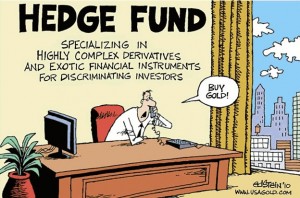
Are Hedge Funds Worth Their Fees?

Cliff Asness, founder of hedge fund AQR Capital Management, doesn’t think hedge funds hedge enough. In his opinion, a hedge fund should be about as long the market as it is short, but most hedge funds end up being mostly long the market and perform like an expensive index fund.

Generaly Asness thinks a 2% fee and 20% on profits, the normal hedge fund charges, as too high.  Some indiividual hedge fund investors are worth it, but most are not.

If a manager is twice as aggressive with your money, Asness said that would at least justify the 2% fee on money under management, as they would be able to manage half the amount of other people’s money. And Asness added that of course there are also managers who do outperform, who do generate real alpha, and these folks are worth “2 and 20.

When CAlPERs pulled out of hedge funds the pendulum may have swung too far.  But it’s probably worth asking exactly what a hedge fund does that you can’t buy elsewhere for less money.
Hedge Funds

Do Women in Finance and Women in Politics Go Hand in Hand

Women candidates kicked ass in the recent US elections. From hog castrator, National Guard lieutenant colonel, and former Hardee’s biscuit-maker Joni Ernst’s rout of Bruce Braley in Iowa, to that funny thing that happened in Utah, where Mia Love, the Mormon daughter of Haitian immigrants, became the first black Republican female elected to Congress.

Like women in business, women in politics may soon become routine and not noteworthy at all.  But there are differences specific to women in both finance and politics.  These are worth noting and do not often appear in resumes for the Miss America contest.

Katie Bennan writes:  1.  Women wait to be asked.  2.  Women tend to be civilzed and graceful (think Elizabeth Warren).  3.  Women are cautious.  4.  Women are more interested in doing the job than getting it.  5.  Women have difficulty asking for money.  6.  Women try to play nice with others.  7.  Women have a better chance of winning when people know them better.

Women Politicians

Does Japan’s Abe Have Allies in the new US Congress?

William Pesek writes:  The Trans-Pacific Partnership trade deal, which has stalled because Japan has been unwilling to open up its auto and agricultural setors, now has a chance to be passed. Devaluation of the yen will probably not be welcomed by the Republic Congress.

Going easy on agriculture will not please Republicans.  This will put Abe in the hot seat with certain constituencies and make his life difficult as he tries to loosen labor markets, get more women in the workforce and strengthen Japan’s corporate governance.

Will the Prime Minister’s own party which is financed by agriculture go along wtih a comprehensive trade pact?

Rice Growing in Japan

No Free Lunch. Eat Bitcoins.

Matt Levine writes, capturing the fundamental spirit of investment and financier:  Trendon Shavers, alias “pirateat40,”1 ran a bitcoin fund called “Bitcoin Savings and Trust.” BCS&T was apparently a Ponzi scheme. We knew that; the Securities and Exchange Commission brought a civil case against him last year, which resulted in a $40 million judgment. But other people knew it before the SEC did. Individual-2, for instance, had a pretty good idea:

In or about early July 2012, SHAVERS and another participant on the Bitcoin Forum (“Individual-2”) made a bet as to whether BCS&T was a Ponzi scheme. Specifically, Individual-2 alleged that SHAVERS was operating BCS&T as a Ponzi scheme. SHAVERS denied that allegation and placed a bet with Individual-2 that BCS&T was not a Ponzi scheme.

That actually happened! They found another person (Individual-1) to serve as escrow agent, they each escrowed 5,000 bitcoins with him, they specified the terms of the bet (if Shavers failed to meet a withdrawal request within 14 days, he would be deemed to be running a Ponzi), and the bet paid off less than two months later. This is how the bitcoin legal system operated:

On or about August 30, 2012, Individual-1 declared Individual-2 the winner of the bet, and wrote:

I hereby declare the bet decided, in favor of [Individual-2] . A withdrawal request made on August 15[,] 2012, is still outstanding as of today, Aug[ust] 30[,] 2012, which triggers default as specified in the contract, via “late by at least 14 calendar days, in disbursing either any regularly-scheduled interest payment, or any withdrawal request, by a valid account holder of [BCS&T]” clause.

In private communication, pirateat40 [i.e., SHAVERS] has agreed with this assessment and conceded the bet.

The appeal of bitcoin is that it doesn’t require trust in people or institutions. You don’t have to believe that people are honest, or that governments will keep them honest. You can just exchange bitcoins with them and trust in the cryptography.

That works great for giving people bitcoins in exchange for drugs or whatever. It works less great for investment management: If you give money to someone to invest for you, and want to get it back, you have to either trust her to give it back or have some enforcement mechanism to make her give it back. In that bet, you can see the bitcoin forum groping toward a bitcoiny solution to that problem, with the carefully specified bet and the escrow agent. It’s not quite pure cryptography,2 but it is a very bitcoiny and libertarian and charming gesture at private regulation.

It did not especially work, though, insofar as Shavers took the bet and nonetheless continued to operate what sure looks like a Ponzi.

The actual pitch was completely impenetrable, just some mumbo-jumbo about bitcoin arbitrage and lending.5 And, similarly, when Shavers shut down his scheme in August 2012, he explained it impenetrably:

The decision was based on the general size and overall time required to manage the transactions. As the fund grew there were larger and larger coin movements which put strain on my reserve accounts and ultimately caused delays on withdraws and the inability to fund orders within my system. On the 14th I made a final attempt to relieve pressure off the system by reducing the rates I offered for deposits. In a perfect world this would allow me to hold more coins in reserve outside the system/ but instead it only exponentially increased the amount of withdrawals overnight causing mass panic from many of my lenders.

c. BCS&T was allegedly primarily in the business of lending Bitcoin to “various investors or lenders” for a fixed period of time. A small percentage (about 10%) was used by SHAVERS to “buy[] and sell[] [B] itcoin [] locally.”

…

g. In or about July 2012, SHAVERS lent about 202,000 Bitcoin to a borrower he identified as “The Big One” and those 202,000 Bitcoin were never returned. SHAVERS has no record or proof that he (SHAVERS) made this loan to “The Big One,” nor does SHAVERS know who “The Big One” is.

h. In or about August 2012, SHAVERS shut down BCS&T, redeemed recent investors, and kept some investor Bitcoin in order “to be able to trade so [he] could make [Bit]coin[] to pay them back.”

700,000 bitcoins were worth around $6.4 million; at the time Shavers shut down BCS&T, they were worth around $9.5 million.     When the SEC got its judgment, they were worth $280 million, though the court went easy on him and only required him to pay $40 million.10 Now they’re worth around $240 million.

  • Don’t do anything with people you meet on Internet forums!
  • Don’t go on Internet forums!
  • Don’t go on the Internet!

Bitcoin Ponzi Scheme

Unemployment Rate Dips in US

Employers added 214,000 jobs in October, fewer than expected, though the unemployment rate fell to 5.8 percent, the lowest since July 2008.

The report showed 31,000 more jobs in August and September, giving the labor market a nine-month streak of more than 200,000 jobs a month, the Bureau of Labor Statistics said Friday, the longest such streak since 1995.

Voters showed Democrats their frustrations with the economy this week, sending a Republican majority to the Senate and giving Speaker John Boehner (R-Ohio) a boost in his membership in the House.

“Over and over again voters have said jobs and the economy are their top priorities,” Republican National Committee Chairman Reince Priebus said in a statement Friday. “The president said his economic policies were on the ballot, and voters clearly believe we can do better. So now is the time to get to work — so we can get more people back to work.”

Construction jobs were up 12,000 in October while manufacturing rose 15,000, good signs for the growing economy.

W-T-W.org, Women and Finance advocates an infratstructure program in the US to provide jobs for those who don’t qualify for current opportunities and to give pollitiicans time to figure out how to match jobs with qualified candidates.

Infrastructure Jobs

Water and Abandoned US Mines

Hundreds of thousands of abandoned mines litter the West: gold, silver, lead, copper. Some are left from the California gold rush; some were abandoned just a few decades ago.

Today, acidic water and heavy metals from mines slowly leach into groundwater, lakes and streams. Corrosive water destroys aquatic ecosystems. Fish – the ones that don’t die – become loaded with arsenic or mercury. People swim in contaminated lakes. They hike over contaminated soil, breathing in dust laced with lead and arsenic. There are about 500,000 abandoned mines in the U.S., contaminating tens of thousands of miles of waterways..

The worst get federal Superfund money for cleanup. The rest are left to the states, private organizations and nonprofit conservation groups to clean up.  The waste site sits untouched, and acid continues to drain into nearby water.

The proposals to encourage clean up have failed for various reasons. Mostly, according to Steve Moyer of the water conservation group Trout Unlimited, it’s that no one really cares.But for locals living near abandoned mines, it is a priority. In the Sierra Nevada, which provides 60 percent of California’s water, mercury from the days of the gold rush co flowing into the Sacramento River. ”

In many cases, what happens when a group tries to clean up contaminated water is that it’ll install a sort of treatment system downstream from where contamination flows in. The system filters the toxic water and releases water that’s, say, 90 percent cleaner. But under the Clean Water Act, the cleanup group is considered responsible for the 10 percent of contamination that’s left. That puts the group at legal risk – it could be considered a polluter under the law.

In 2012, the Environmental Protection Agency issued a clarification of protections for cleanup groups. But Leon Szeptycki, a lawyer at Stanford University specializing in water quality and restoration, said the EPA guidance doesn’t include enough detail.

One of the biggest concerns is how long a group would be on the hook after installing a treatment system, he said. Many good Samaritans are local groups with limited funding.  They may have the money to install a treatment system, but not necessarily to maintain it for decades to come. At what point can the group walk away? Is it liable for poor-quality water if the system breaks down in 10 years?

This uncertainty in the memo leaves organizations hesitant to test the policies. So nothing gets done.

Contamination of the Sacrameno River