Mercenaries Hired by US Problem in Middle East?

To avoid putting American citizens’ boots on the ground against ISIS in the Middle East, private contractors are being hired by the US.  A trial of private contractors who were charged with kiling Iraqi citizens in Baghdad in 2007 has just come to an end.  One man was charged with murder and three others with manslaughter.  Private contractors are often reckless and unaccountable.

Ths cost to the US is estimated at $8.3 million a day.  That comes to $580 million between August 8 and October 16.

Is it time for the US to back out of the MIddle East?  The US does not need Middle Eastern oil any more.

Middle Eastern Oil

JP Morgan Fined by European Commission for Cartel-Like Behavior

The European Commission on fined four major financial institutions 93.9 million euros, or about $120 million, over two types of activity that it deemed as cartel behavior.

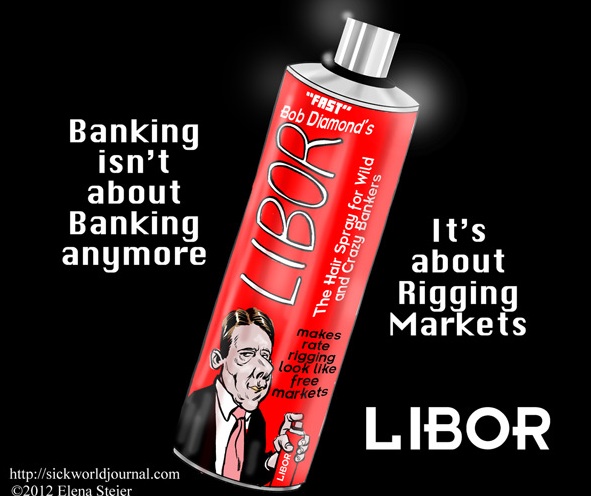
In one case, the European Commission fined JPMorganChase 61.7 million eurosion  for manipulating the Swiss franc Libor benchmark interest rate in an “illegal bilateral cartel” with the Royal Bank of Scotland. R.B.S., however, was granted immunity and avoided a fine of €110 million after it revealed the existence of the cartel to the commission.

“Anti-cartel enforcement is a top priority for the commission and no sector is exempt, including the financial sector,” the European Union said in a statement.

Cartel-Like Behavior

Is Wall Street Silencing Whistleblowers?

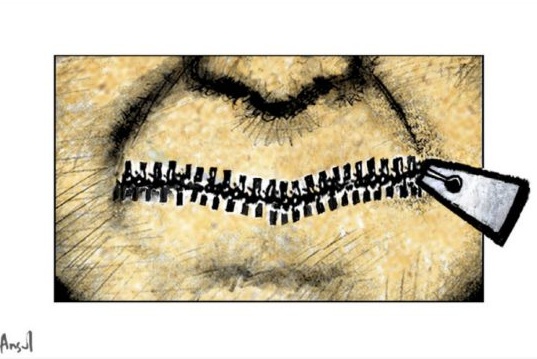
Several House Democrats say they fear Wall Street is using confidentiality agreements to keep people from blowing the whistle on misconduct.  Eight House Democrats sent a letter Monday urging the Securities and Exchange Commission (SEC) to send a “strong message” that such agreements won’t be tolerated and consider “bringing enforcement actions if necessary.” “While there are legitimate reasons for companies to use confidentiality agreements to protect sensitive information, such agreements should be structured as narrowly as possible,” wrote the lawmakers. “Employees should also be clearly informed that these agreements in no way restrict their right to voluntarily report securities law violations to the Commission.”

The 2010 Wall Street Reform Law, commonly referred to as Dodd-Frank, created the Office of the Whistleblower Protection within the SEC to try to encourage people to step forward with information about wrongdoing in the financial sector.  The lawmakers said the office has seen success, and are concerned that those gains could be jeopardized by the confidentiality agreements.

“We are also concerned by a growing body of anecdotal evidence describing retaliation through litigation and on-the-job harassment, which if left unaddressed, will also deter future reporting of securities violations,” they wrote.

Silencing Whistleblowers?

Golf Carts Instead of Infrastructure for a New York County?

Cezary Podkul of ProPublica writes:  A central tenet of government finance is that money borrowed over the long term should be spent on projects that will outlast the debt – things like buildings, bridges or other essential infrastructure.

That’s not what upstate New York’s Niagara County did with much of its money from tobacco bonds.  How Tobacco Settlement Money was Spent in Niagara County

Public Expenditures

Should Germany Spend More?

Germany’s austerity prescriptions for crisis countries are problematic.  These countries are lacking the external lifeline – booming exports – that rescued Germany a decade ago. Instead, they are sinking ever deeper into what is known as debt deflation, when their attempts to reduce indebtedness actually raises the real burden of the debt. To restore their competitiveness, they have to engineer a lower rate of inflation than Germany’s, so that their goods are cheaper. That’s tough given German inflation is only 0.8%.

And restoring competitiveness by deflation is especially painful. To actually reduce their indebtedness, the countries need to run current account surpluses and grow their GDP. That requires trade partners who are willing to spend – something that is hard to come by these days.

Certainly Germany is not returning the favor of increased spending that it received during the last decade. Indeed, the German government is adamant about not spending more. The euro crisis has proved too convenient for Germany, providing super-low interest rates and a euro exchange rate that has allowed the country to shift its notorious surpluses elsewhere. But Germany will be the biggest loser if the euro comes apart. Hopefully its leaders will wake up from their austerity-propels-growth dreams before it is too late.

German Austerity


European Banks Fail Stress Test?

David Shilpley writes:  The European Central Bank has just published the results of new “stress tests” on European Union banks, hoping to convince financial markets that the banking system is now strong enough to weather another crisis. This latest exercise is a big improvement over previous efforts, which were widely derided as too soft — but it’s still not good enough.

The test was in two parts.  One found that most of the over 130 banks had overvalued their assets.  The second part assessed whether the correct value of the assets kept the banks in a safety zone.  25 failed the test.  8 needed to raise 6.4 billion dollars.

Deutsche Bank raised 8.5 billion in equity this year to help them pass the stress test. Weak institutions, such as Portugal’s Banco Espirito Santo and Austria’s Volksbanken network, are restructuring or shutting down. By strengthening the system and increasing confidence in it, the ECB’s tests might reverse a two-year slump in private-sector lending.

The tests are pretty soft. Economists at Switzerland’s Center for Risk Management at Lausanne put the capital shortfall at 500 billion euros, not the 6.8 billiioin put forward by the ECB.  Of course, the ECB takes over as the euro areas’s supernational bank supervisor on November 4.  If it had been too tough it might have blown the euro back into crisis.

Economists like Anat Admati would rather have the percentage of equity determine a bank’s ability to withstand stress.

How DId the Bank Pass the Stress Test with So LIttle Cash?

How DId the Bank Pass the Stress Test with So LIttle Cash?


Ukraine Election Legitimate?

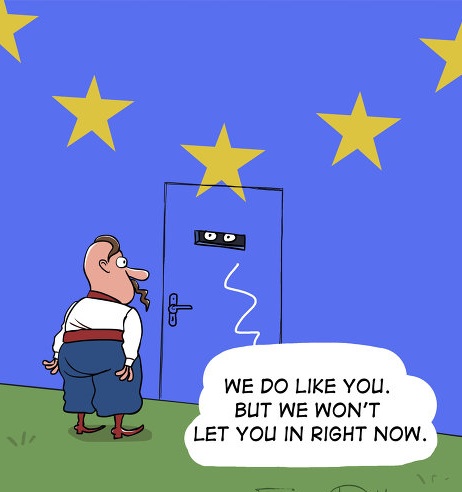
Paul Roderick Gregory writes:   Ukrainians elected a new parliament – the Verkhovna Rada — its 450-seat single-house legislative body. As a consequence of the Euromaidan revolution and Russia’s war on southeastern Ukraine, the parliamentary election was moved up from 2017 to October 2014.

Most signs point to a legitimate election, which will surely be confirmed by an official report of OSCE observers.

The early parliamentary election was necessary to give Ukraine’s representative democracy a chance to reflect Ukraine’s new pro-Western orientation, as emphasized by George Soros, and to respond to the challenges of occupied territory, Russian troops in the country, gas delivery disputes, and continued or expanded aggression from the Russian side. Despite defections from Viktor Yanukovich’s Party of the Regions after his flight from Ukraine, Ukraine President Petro Poroshenko had faced a strong bloc of deputies opposed to reform and against a strong response to Russia’s aggression.

Poroshenko got what he needed. His own bloc and that of Prime Minister Yatsenyuk received 44 percent of the votes. A surprisingly strong showing of the “Self Help” party headed by the pro-Western mayor of Lviv gives him a coalition of 57 percent of the votes – a governing majority in which all members share common policies towards the West and Russia.

Importantly, Poroshenko does not need the two “radical” parties on the ballot in his ruling coalition, which together garnered 12 percent of the vote. Both, however, will enter parliament, and will hold the ruling majority’s feet to the fire if they show weakness towards Russia. The Opposition Party, comprised of deputies from the southeastern provinces, gained only 8 percent of the vote, and former political heavyweight Yulia Tymoshenko’s party got only 6 percent, despite having a war heroine as its figurehead. Voters are telling Tymoshenko that she had her chance and failed.

For the first time in its history, the communist party failed to reach the 5 percent threshold.

Russian propaganda had been gearing up for a stronger showing of the two “radical” parties, which would have admitted one or both to the ruling coalition. Putin’s trolls were ready to scream that neo-Nazis and racial extremists control the Kiev government, but such charges will fall on deaf ears for those who know the true election outcome.

In fact, earlier public opinion polls showed the “Radical Party” headed by Oleh Liashko coming in second place. It is easy to understand his popularity. Liashko organized volunteer battalions and himself participated in the Anti-Terrorist operation in eastern Ukraine. For many Ukrainians, Liashko is the equivalent of the Minutemen of the American Revolution, but when it came time to vote, Ukrainians voted for mainstream parties. Perhaps they understood the propaganda coup for Russia of a Liashko in the ruling coalition.

Already, Western pundits are complaining that the election of a pro-Western parliament will endanger crisis resolution. A Time Magazine correspondent complains that as a result of leaving pro-Russian voters out of the election (their self-appointed leaders chose to boycott), the election will not heal the divide.

We are still awaiting Putin’s reaction. He must make the tough decision whether to recognize the election results – and admit the legitimacy of Ukraine as a sovereign state – or continue his ploy that the government of Ukraine is illegitimate.
Ukraine Elections


Rouseff Edges Out a Victory in Brazil

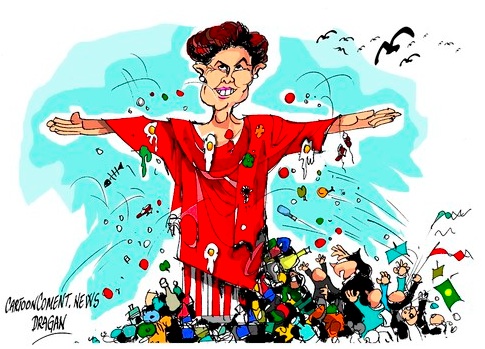
Rouseff is victor in the Brazilian election, but in an almost evenly split vote.  In the past three decades, one three incumbents in Latin American countries have lost.  Rouseff provided generous support to the poor of her country.  In turn, poor areas in the north and northeast of the country voted overwhelmingly for her.  On her watch, unemplyment has been low, wages on the rise and the inequality gap closed somewhat.

Rouseff has been mired in an investigation into bribes by Petrobras, the state-controlled oil giant.  A Congress of 28 parties up from 22 will be unwieldy to manage.  The Petrobras scandal will not go away.  And high inflation and lack of competitiveness will hound Rouseff.  Protests of 2013 against political corruption may rise again.

Rouseff

Should We Factor the Virtual Economy Into GNP?

Bill Davidow writes: Our techniques for measuring economic performance are obsolete. So we reach improper conclusions about the state of the economy.

The economic recovery is probably more robust than we realize. It is possible that the standard of living for many members of the middle class is improving while their incomes shrink. Many economists, policy makers, and politicians think otherwise, because they are using 20th-century methods to analyze our 21st-century economy.

The problem is caused by the fact that we live in two worlds, physical and virtual.

The physical economy is anemic, struggling, biased toward inflation, and shrinking in many developed countries. Almost everything we do in the physical economy is paid for with money. We use dollars to measure most of the activity. If more dollars are spent or earned, we conclude that the economy is growing.

The virtual economy is robust, biased toward deflation, and growing at staggering rates, everywhee.  The Virtual Economy

Virtual Worlds


Japanese Second Tier Car Companies Making a Profit

Conventional wisdom is that you have to sell 6  million cars to make a profit.  In Japan, Mitsubishi, Mazda, Suzuki and Subaru are proving it wrong.

Suzuki has only one big market outside Japan, and that’s India.  They withdrew from a deal with Volkswagen which could have helped it sell small cheap cars in developed counteis.

Mazda wound down an over two decade relationship with Ford as Ford tried to avoid bankruptcy in 2007-8.  Subaru does not like the 16.5% take Toyota holds in it.

The companies don’t have big bucs for r & d, but Mazda has developed SKyActv technology which improves the efficiency of gas and diesel engines.

Mitsubishi belongs to a large industrial group, and each of the companies has a leg up from larger companies.  The domestic market for japanese cars has declined but the cars are doing well abroad.

Japanese Cars