Cash or Virtual Currency for Small Businesses?

Getting rid of cash is an alluring prospect.   First off, cash is filthy. A recent study done by New York University’s Center for Genomics and Systems Biology showed that cash is full of bacteria – including the “bacteria related to pneumonia, food poisoning, gastric ulcers and staph infections.”

Cash is expensive to make. Think of the cost of the machinery upkeep, the materials and more to create each coin and paper dollar. In addition, criminals love cash according to Mashable. And the Federal Bureau of Investigations (FBI) says that bank robberies accounted for $30 million in theft in 2011, a figure that doesn’t include insurance fees or the 100 deaths or injuries that were related to those robberies that year. It might also put a dent in tax evasion, which has costs governments across the world as much as $3.1 billion annually.

Small businesses have more trouble with virtual currrency and the apps, cards and other forms of lectronic currency.  A study by LexisNexis and Javelin Strategy & Research discovered that smaller mobile merchants — small businesses that accept at least one type of payment through either mobile browsers, mobile applications or mobile point-of-sale systems — rely on fewer fraud-prevention solutions, meaning they are often more exposed to deceptive schemes.

Cash or Virtual Money?


Turkey Is Expanding Islamic Banking

Turkey’s government has moved to expand Islamic banking by inviting public banks into the sector. Earlier this month, the largest state-run bank, Ziraat, received approval to establish an Islamic unit, a landmark move in a country where public lenders have so far stayed out of the Islamic finance realm.  In a first for Turkey, a state-run bank is poised to enter the Islamic banking sector, and other major state lenders are expected to follow.

Ziraat Bank got permission to set up a “participation bank” with $300 million in capital. Islamic banks are called “participation banks” in Turkey, a moniker for interest-free banking that refers to participation in profits from certain financial instruments.

Ziraat has nine months to establish the new bank. But a key question remains unanswered: Where will the capital come from? Ziraat is a conventional bank, whereas paying and charging interest is prohibited in Islam. How is a bank that charges and pays interest supposed to create a bank that rejects interest? If Ziraat’s interest-based earnings are considered illicit, how is it going to establish the capital of an interest-free bank?

To resolve the conundrum, the Treasury is reportedly planning to proivde the required caiptal. The Treasury, too, operates on the basis of interest — but perception is what matters. Hence, the Treasury is expected to transfer $300 million to Ziraat, a sum that will first figure in Ziraat’s assets and then become the capital of the prospective participation bank.

The government, seeming quite enthusiastic on the issue, is not expected to stop there. Another state-run lender, Vakifbank, is planning to follow in Ziraat’s steps. Things are likely to be easier for it since Vakifbank’s main shareholder, the Directorate General of Foundations, will provide the capital for the planned participation bank without stumbling over interest snags.

Simultaneously or shortly after, the third state-run bank, Halkbank, is expected to follow suit as the state descends on the sector with all its might.

The government has already submitted a bill to parliament to clear legal hurdles in Vakifbank and Halkbank’s path to Islamic banking.

Faik Oztrak, deputy chairman of the main opposition Republican People’s Party and a former Treasury undersecretary, argued that the state-run banks’ venture into Islamic banking would be a constitutional breach.

How is participation banking different from conventional? In participation banking, the interest, considered illicit in Islam, is replaced with dividends paid to depositors from profits derived through various investment instruments.

In Turkey, participation banks use mostly the “murabaha” and “sukuk” techniques. In murabaha, the bank buys a commodity from a company in the portfolio it has created, adds a margin and then sells it. Clients are informed in advance how much profit they will get and in what time, just as with interest. The earning, however, is called a “profit share” rather than interest. The collected deposits, meanwhile, serve to provide capital support for companies whose commodities are sold.

Sukuk can be described simply as an interest-free bond. Purchasers of sukuk issued by participation banks receive yields under names other than interest. The key difference is that conventional bonds are Treasury guaranteed, while a sukuk certificate is issued on the basis of a tangible material asset.

Islamic banking, based largely on temporary partnerships in company profits, is popular in the Gulf, other parts of the Middle East and Far East.  Participation banks, which debuted in 1985 in Turkey, have total assets of 81.5 billion Turkish lira ($36.9 billion) and 869 branches across the country today. The total financing they have made available to the real economy has exceeded 60 Turkish lira ($27.2 billion).

Globallly more than 700 Islamic banking institutuions, relying mostly on Gulf money, operate in 75 countries, offering 52 financial instruments. Their total assets reached $1.8 trillion as of 2013. The sector is expected to be worth $6.5 trillion in 2020. Observers note that Islamic banking has grown in popularity and expanded quickly since the 2008 global crisis.

Is the Turkish state going to move out of the interest zone completely and shift into the interest-free one? Or is it planning to grow in interest-free banking as well before privatizing entities in both realms?Cartoon of the Month Bank


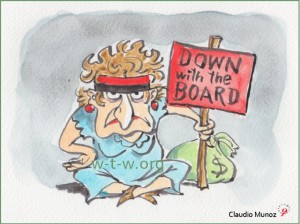
Gender Gap in the Boardroom.

Beth Brooke-Marciniak writes:  As the World Economic Forum’s Gender Gap report reveals how far the world still is from achieving gender parity, I believe that one of the most important places to advocate change is right at the top: boards of directors.

The gender gap in corporate leadership isn’t just a women’s issue. It’s an issue of competitiveness. Simply put, diversity in leadership enhances corporate performance. The evidence abounds. In 2012, EY reviewed 22,000 audits our member firms were performing in four countries on three continents. We found that gender-balanced teams were much more successful than other teams. They don’t just outperform other teams in quality – they also bring back better returns.

Research shows that companies with at least one woman on the board have a higher return on equity, higher earnings and a stronger growth in stock price than companies with all-male boards. Bringing diverse voices to the table improves the solutions we see. Yet the reality is, all too often, women’s voices are not represented.

In the US, for instance, women make up 51% of the population and account for 59% of our graduate school enrollees. Yet according to our research, they represent only 15% of board members of the top S&P 1500 companies.

In our own industry, we see a similar trend. Despite the fact that women have represented about 50% of new certified public accountants (CPAs) in the accounting profession for the past 20 years, only 19% of partners in CPA firms nationwide are women. These numbers are better than at any time in the past, but they’re nowhere near good enough.

So how can companies close the gender gap in leadership roles, and consequently make themselves more competitive?

First, the public sector needs to focus attention on the issue. More than 20 countries have adopted quotas for women on corporate boards. Some have seen dramatic change after having set significant consequences. Norway is the most prominent example. Publicly traded companies there that fall short of a 40% quota can be dissolved by court order. The country went from having 9% representation of women in 2003 to more than 40% in 2012.

However, we view quotas as a “sledgehammer” of last resort. A better approach is when public officials first champion voluntary targets, and companies proactively meet them.

Second, private sector leaders need to commit. Several organizations, sometimes working with executive search firms, have compiled directories of “board-ready” women. This can help to counter suggestions there aren’t enough viable female candidates for leadership and board roles.

Twenty per cent  of the board seats at S&P 1500 companies were held by directors nearing or exceeding the common board retirement age of 72. It will take committed leadership from both genders to ensure that a significant percentage of the new board members are women.

Third, businesses need to be more transparent. In several countries, disclosure standards for listed companies now include requirements to report on gender diversity policies. This gives investors the information they need to hold companies accountable for board diversity.

In the US, investors have used shareholder proposals seeking greater gender and/or ethnic diversity on boards to prompt change in board policies and composition. Of the 26 proposals we tracked in 2013, nearly 75% of the targeted companies changed their board recruitment criteria to include diversity measures.

Finally, and importantly, greater diversity at the top sets a tone of inclusiveness that permeates the business. It can help foster a corporate culture that develops women and supports the careers of future female leaders.
Women on Boards

Child Labor in Switzerland

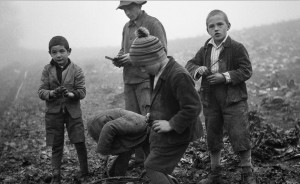
The hills were alive with the sounds of children working.  From the mid 19th century until very recently poor children were removed from Swiss homes and sent to farms to work.  Some children were sent to homes were they clearned house before and after school.

Historians estimate there were hundreds of thousands such children. For one year alone in the 1930s, records show 30,000 children were placed in foster families across Switzerland.

“It’s hard to know precisely how many contract children there were as records were kept locally, and sometimes not at all,” says Loretta Seglias. “Some children were also placed by private organisations, or their own families.”

The extent to which these children were treated as commodities is demonstrated by the fact that there are cases even in the early 20th Century where they were herded into a village square and sold at public auction.

Seglias shows me some photographs. One child looks barely two – surely she couldn’t be a contract child? “She could, she would be brushing floors bringing in the milk. Sometimes they came as babies on to the farms, and the bigger they grew the more work they would do,” Seglias says.

“Children didn’t know what was happening to them, why they were taken away, why they couldn’t go home, see their parents, why they were being abused and no-one believed them,” she says.

“The other thing is the lack of love. Being in a family where you are not part of the family, you are just there for working.” And it left a devastating mark for the rest of the children’s lives. Some have huge psychological problems, difficulties with getting involved with others and their own families. For others it was too much to bear. Some committed suicide after such a childhood.

Social workers did make visits. David Gogniat says his family had no telephone, so when a social worker called a house in the village to announce that she was coming, a white sheet was hung out of a window as a warning to the foster family. On the day of this annual visit David didn’t have to work, and was allowed to have lunch with the family at the table. “That was the only time I was treated as a member of the family… She sat at the table with us and when she asked a question I was too scared to say anything, because I knew if I did the foster family would beat me.”

Today we regard poor children as a social problem.  But the lingering idea that the poor alone are responsible for their plight plagues countries around the world to this day.

Child Labor


Internet Taxes?

Huge crowds in Budapest marched to protest the imposition of an internet tax. The government has drafted a law which would levy a fee on each gigabyte of internet data transferred.  The EU has condemned it as a bad idea that could threaten political freedom.

Protests began in Hungary on Sunday, when demonstrators hurled old computer parts at the Budapest headquarters of Prime Minister Viktor Orban’s ruling Fidesz party.

Under the proposals, internet providers would be made to pay 150 forints (£0.40; €0.50; $0.60) per gigabyte of data traffic. The fee is one of a series of measures proposed by the government to bring down the budget deficit.  The ruling Fidesz party has tried to stem the anger by proposing a 700-forint cap on the tax for individuals and 5,000 forints for businesses.  But opponents believe the tax reflects the increasingly authoritarian style of Mr Orban.

For the first time, the ruling party’s opponents from across the whole political spectrum, from the left to the far right now have a common cause.  Despite divisions within Fidesz, Mr Orban commands broad popularity in Hungary and the party has won three elections this year.  The government criticised US charge d’affaires Andre Goodfriend after he was photographed among the protesters on Sunday.

Internet taxation is being debated around the world.

Protesting Internet Tax

Corruption in Afghanistan?

Siogahn O’Grady writes:   Billions of dollars have been wasted in Afghanistan since the U.S. launched ambitious plans to rebuild the country in 2002, and American watchdog John Sopko has spent the past two years documenting American-led reconstruction failures caused by mismanagement or outright corruption on the part of Afghan officials.

But a report from Sopko, the special inspector general for Afghanistan reconstruction, found that at least one incident of mismanagement — the failed attempt to renovate Pol-i-Charkhi prison, Afghanistan’s largest correctional facility — came at the hands of two State Department employees charged with overseeing the project. And in an unusual role reversal, it was an Afghan national who actually had to fill their shoes after both Americans were suspended from their posts for fraud and mismanagement.

Even though Al-Watan only completed 50 percent of the contracted work, the State Department still paid the company $18.5 million – over 90 percent of the initial agreement.  Though SIGAR recommended the State Department investigate whether the settlement was appropriate, State declined the possibility it was influenced by biased employees.

Al-Watan also managed to break their contract by botching necessary roof repairs. Construction workers used wood roof trusses instead of the metal ones agreed upon in the contract, then covered up the 30-year-old wood trusses with new material instead of replacing them entirely, as they were contracted to do. Sopko’s office was unable to track down any written permission for Al-Watan to replace the metal trusses with wooden ones. He also found that Al-Watan failed to properly connect six costly back-up power generators.

The watchdog laid much of the blame for Al-Watan’s failings at the feet of Kenneth Brophy, a State Department employee who oversaw the work that was completed at the prison. Sopko’s report said that Brophy’s lack of proper oversight meant the work was not always completed responsibly.”   Special Inspector General for Afghanistan Reconstruction

Pol-i-Charkhi prison,

Bears Milked for Bile in Asia

Robert Carmichael writes:  13,000 bears lived in small, cramped cages on ‘bear bile’ farms in China, Vietnam, laso and Myanmar.  They are milked for their bile, , a bitter, greenish-yelow digtive fuied produced by the gallbladder and used in tradiotional sian medicine.

The trafficking of wild-caught bears and bear parts receives less attention than the illicit trade in other exotic animals, such as elephants, rhinos, and tigers. Yet it is big business in Asia: A whole gallbladder can be worth as much as $2,000 in parts of the continent, while bear paws smuggled into China, where they are considered a delicacy, can be sold for more than 20 times what they cost to purchase in Russia. (Few estimates exist for the overall size of the bear trafficking industry in particular, but in 2012 the World Wildlife Fund placed the overall value of the global illicit trade in wildlife as high as $10 billion a year.) And unlike in the case of elephants and rhinos, which are protected by dedicated, sophisticated — and in some cases armed — task squads, bear trafficking takes place nearly unchecked across Asia, from Pakistan to Japan, from Russia to Indonesia, driven by corruption made worse by complacency and an international community that pays it little attention.    Bear Traffic

Bear Bile

How to Make Money in the Commodities Market?

Go figure.  Matt Levine does a dizzy dance explaining that somewhere between 50 and 90 percent of the world’s copper is now in the London Metals Exchange warehouse.  No one knows who it belongs to.  Levine asks: Is the market being cornered.

He goes on to explain the heart of the commodities market.  There are people who really take possession of pork bellies, oil and copper.  And there are people who play with possession.  These are two different markets.

Hedge funds now take possession of oil and hold it on boats until the price goes up.  Pure manipulation.  Obviously when they sell, the market for the commodity is effected.

Whoever is holding the copper in London is holding a percentage of the supply.  In fact, forinstance, what is being held in the LME warefhouse is a tiny portion of the world’s copper.  What makes a difference is the time period when the copper actually needs to be use. Immediate delivery copper will have a higher price.  Long term delivery lower. And so on.

Algoirthms invented by those MIT grads who work in finance are surely being developed not to see who wants how much copper in the future, but how much money can be made right now.  A conundrum.

Pennies from Heaven?

Pennies from Heaven?

China: Bust or Boom

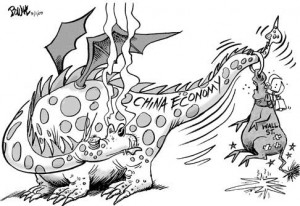
William Pesek writes:   Is China headed for a boom or bust? Depending on whom you read, the world’s most populous nation is on the cusp of either a debt meltdown, or a middle-class expans

I’ve written before about the possibility of China suffering its own Minksky moment– the point when a debt-driven speculative bubble comes to a sudden and nasty end. Yet there’s also evidence the country may be approaching something of a Henry Ford moment, when a manufacturing-based economy matures to point where workers can afford to buy the products they’re making. The reality, as unsatisfying as it may be to those looking for a dramatic headline, is probably somewhere in between.

Authors David Hoffman and Andrew Polk predict Chinese gross domestic product growth will drop below 4 percent in the next decade. At the same time, more optimistic takes from the Asia Society Policy Institute and the Rhium Group argue that financial upgrades are underway in China that could produce a more sustainable growth path. Those who fear a slowing economy might spark riots and instability also have to be heartened by new data that suggest incomes across China — which is what matters most to ordinary Chinese — are rising more than is commonly acknowledged.

For now, the best strategy for outsiders may be to look the other way, as best they can. Instead of obsessing over every tick up or down in China’s GDP growth rate, the investment world needs to give Chinese leaders time and space to implement the reforms they’ve pledged thus far.

There are many ways to take China’s pulse. Economists’ favorite reality-check indicators include HSBC’s purchasing manager’s index, rail-freight traffic, export and import data (which can be confirmed by cross-checking the numbers with trading partners), electricity-use trends and the trajectory of prices of commodities China dominates like iron ore and coal. Even if this is a non-starter, let’s at least encourage Beijing to forgo a growth target next year.

Xi’s challenge was clear last week when the global media convulsed over news China had grown the slowest in five years in the third quarter. Editors and bankers tripped over themselves to urge Beijing to do more to spur growth. This is what’s truly hypocritical: Even though everyone acknowledges that China must stop artificially pumping up its economy, markets panic at the slightest hint GDP is losing altitude — as if China were some giant company that must constantly impress us.

The last thing China should do is embark on a fresh stimulus kick to placate the nail biters: That would result merely in more debt and unproductive investment and even bigger asset bubbles. The world needs a stable China more than it needs a fast-growing one. And on that front, the economy is doing surprisingly well.

China's Economy


US IndianTribe Bans Fracking

Invoking tribal health and cultural survival, the Eastern Band of Cherokee Indians has declared a ban on fracking on its sovereign land in what is today North Carolina.

“The Eastern Band of Cherokees will not permit or authorize any person, corporation or other legal entity to engage in hydraulic fracturing on Tribal trust lands,” reads part of the text of a resolution passed unanimously by the Tribal Council last month and signed into law by Principal Chief Mitchell Hicks on September 10. “The State of North Carolina is without legal authority to permit hydraulic fracturing on Tribal trust lands.”

Tribal officials cited the importance to preservation of the woodland habitats that are the underpinning of tribal health and culture.

“Our tribe has taken a strong stand with the resolution against hydraulic fracturing commonly known as fracking,” said Chief Hicks in a statement from the band. “I signed the resolution because I believe our environmental protection is paramount to the survival of our people.”

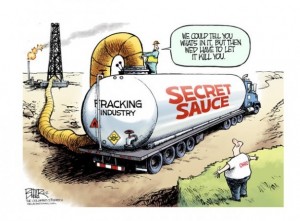
The health effects of fracking that could stem from environmental damage are among the main concerns, according to tribal leaders. Fracking, a nickname for hydraulic fracturing, involves the injection of chemicals mixed with water deep underground to loosen hard-to-extract crude oil and natural gas from between layers of shale. Opponents fear it can damage drinking water, and some evidence has surfaced to indicate that the practice can cause earthquakes.

The tribe is one of many local governments that have adopted resolutions to ban fracking within their boundaries, but given its sovereign status, its measure is the only one with teeth. Until June, there was a statewide moratorium on the controversial practice,

The state legislature lifted that and added a clause that forbid local governments from outlawing the extraction method. The Eastern Band of Cherokee also supports a statewide ban on fracking, the resolution stated.

In the US, both sides on the fracking issue are going to have to measure risk against advantages.  Risk can be minimized through analysis of the water supply and also earthquake faultlines.  The possibility of exiting the MIddle East because the US no longer needs their oil is particularly enticing at this moment.

Fracking