The Rockefeller Fund has joined hundreds of institutions and affluent people are shifting their positions in fossil fuels’ companies. The Rockefellers of course made their original money in fossil fuels so this is an important move.

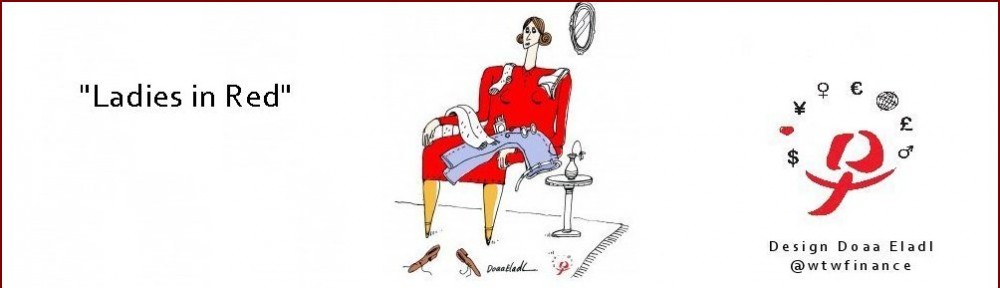
The Rockefeller Fund has joined hundreds of institutions and affluent people are shifting their positions in fossil fuels’ companies. The Rockefellers of course made their original money in fossil fuels so this is an important move.
If the SEC can capture a man doing insider trading by post-it notes, can the big banks be far behind?
The Securities and Exchange Commission charged a Brooklyn man with facilitating a $5.6 million insider trading scheme that typically involved the passing of illegal tips via napkins or post-it notes at Grand Central Terminal.
Earrlier this year, the SEC charged a stockbroker and a law firm managing clerk with insider trading and alleged they were connected by a mutual friend who served as a “middleman” in an effort to keep the two unlinked. In a separate complaint filed today in U.S. District Court for the District of New Jersey, the SEC identifies Frank Tamayo as that middleman. The SEC alleges that Tamayo received material nonpublic information from Steven Metro about 13 impending corporate deals involving clients of the law firm where Metro worked. Tamayo then tipped his stockbroker Vladimir Eydelman, who used the confidential information to illegally trade for himself and for Tamayo and other customers. Tamayo allocated a portion of his ill-gotten profits for eventual payback to Metro for the inside information. Said Robert Cohen, Co-Deputy Chief of the SEC Enforcement Division’s Market Abuse Unit:
As the middleman, Tamayo was the firewall between Metro and Eydelman. Metro had the information, Eydelman did the trading, and Tamayo kept them apart. But they were wrong in believing that this would stop the SEC from detecting their scheme.
In a parallel action, the U.S. Attorney’s Office for the District of New Jersey today announced criminal charges against Tamayo. The U.S. Attorney previously brought criminal actions against Metro and Eydelman. Those criminal cases and the SEC’s civil case against Metro and Eydelman are pending.
According to the SEC’s complaint against Tamayo, the scheme was deliberately structured to avoid detection, enabling Eydelman and Tamayo to profit without connecting the trades to an insider source and also allowing Metro to share in the trading proceeds. For a five-year period, Metro repeatedly accessed confidential information in his law firm’s computer systems and met with Tamayo at bars and coffee shops in New York City to provide tips about firm clients ready to participate in a corporate transaction. Tamayo typically would then connect with Eydelman near the clock at the information booth at Grand Central, where he would show him a post-it note or napkin on which Tamayo wrote the stock ticker symbol of the company to be acquired. Tamayo then chewed up and sometimes even ate the post-it note or napkin to destroy evidence of the tip. Tamayo also conveyed to Eydelman the approximate transaction price and timing of the deal. After Eydelman returned to his office and gathered research about the target company, he would e-mail Tamayo supposed thoughts about why buying the stock made sense. Their intent was to create a paper trail of e-mails to make it appear they were making their trading decisions based on research and analysis rather than inside information.
The SEC’s complaint charges Tamayo with violations of Sections 10(b) and 14(e) of the Securities Exchange Act of 1934 and Rule 10b-5 and 14e-3 as well as Section 17(a) of the Securities Act of 1933.

More than 300,000 people marched in New York for environmentally responsible policies. Recently Christiana Figueres and Guy Ryder have written about the job creating possibilities of green and clean.
In the past, action to combat climate change was viewed largely as running counter to economic growth, with “going green” implying a sacrifice of prosperity for the sake of the environment. Today, we know better. By taking action to mitigate climate change, companies are promoting sustainable growth and creating high-quality employment.
The United States, for example, has added 1.2 million “clean” jobs to the economy since January. Since last year, employment has risen by more than 115% in the solar industry, and jobs related to energy efficiency have increased by over 50%.
In China, more than 1.7 million people are already employed in the renewable-energy sector. And the Global Climate Network that seven million additional jobs could be created if government targets for wind, solar, and hydropower are met. Worldwide, an estimated 5.7 million people were employed directly or indirectly in the global renewable-energy industry in 2012 – a figure that could triple by 2030.
Likewise, India’s Mahatma Gandhi National Rural Employment Guarantee Act aims to ensure livelihood security in rural areas by providing at least 100 days of guaranteed wage employment in a financial year to every household whose adult members volunteer to perform unskilled manual labor. The lion’s share of this work involves projects that can boost environmental resilience, from soil and water conservation to flood protection, reforestation, and small-scale irrigation.
In Brazil, the green program, which offers incentives to poor families to carry out conservation work in local nature reserves, provided monthly payments of $35 to more than 16,600 families in its first year. There are plans to extend the program to 300,000 families, and to add other climate-friendly projects, such as renewable-energy schemes. Colombia and Mexico have introduced similar initiatives.
Achieving a meaningful global climate agreement at next year’s United Nation’s Global Change Conference would substantially boost the potential to create high-quality green jobs. The alternative – continued growth of global CO2 emissions – would not only limit this potential; it would undermine economic output and, according to estimates by the International Labor Organization (ILO), reduce productivity by more than 7%, on average, worldwide.
The fact that two of today’s most pervasive challenges – climate change and unemployment (especially among the young and the unskilled) – can be addressed simultaneously, with mutually reinforcing policies, leaves governments and international institutions with no excuse for inaction. The ILO and the UN climate convention recognize this, but they cannot do it alone.
Wayne Swan writes: One structural reform that could drive global growth is substantial infrastructure investment in developing and developed countries alike. Unfortunately, no G-20 leader has seriously articulated this need, let alone lobbied for a solution. Apart from a World Bank presentation for a possible pilot infrastructure program, there is little to suggest how the 2% target could be met over the medium term.
The G-20’s upcoming meeting in Brisbane, Australia, comes at a time when a precarious global economy requires big decisions to be made. But it is far from clear who will provide the decisive voice needed to set a bold agenda – and then shepherd its implementation. G 20 in Brisbane
not changing you. They’re training you to do something differently, so once you’ve trained yourself, you can stop using the app.
If technology can provide the rewards needed to change your behavior, what happens to your behavior after you stop using the app or program?
There are three kinds of behavior changes:
The behaviors that have the highest chance of changing even after app usage are the second and third. Why? “Because they’re not changing you. They’re training you to do something differently, so once you’ve trained yourself, you can stop using [the app],” says Sundararajan. When it comes to learned behavior (the first one), there’s a greater chance you’ll revert back to your old behavior after using the app.”
If the app only changes your reaction to feedback, such as reprimanding you for checking your social media, then there’s a good chance you’re only changing your behavior because you’re using the app. When it comes to changing, Sundararajan says your best bet is to not put too much stock in the digital and technology.
“Over the last decade, we’ve started to overestimate the power of technology and we reduce the importance of things like community,” he says. “A big part of behavior change has to do with changing the environment that you’re in and changing the interactions that you have with people.”
There’s no pill or app that will stop you from gambling or stop you from checking Facebook every hour. Technology can certainly help you track your progress and remind you when things need to be done, but, at the end of the day, we’re complex people and the only way you can really change is to do it yourself.

An updated tally by ProPublica shows that tobacco bondholders are due $2.6 billion of the $6 billion in this year’s payouts to state and local governments from Big Tobacco.
Each April, cigarette manufacturers pay states billions of dollars to reimburse them for the health-care costs of smoking. About $100 billion has been paid so far, all under a landmark 1998 legal settlement with Big Tobacco. The payments are to go on forever as long as people smoke. Tobacco Cash

Michael Pettis writes: Because the US economy and its financial markets are so large and flexible, and because many other economies have large players – usually the state – whose behavior can drive deep domestic imbalances, it is often the US that responds to events driven abroad. For example after the 1997 Asian external debt crisis, a number of Asian countries began to accumulate US dollar reserves, and this accumulation accelerated in the next decade. It is purely an accounting identity that if other countries become next exporters of capital to the US, they must run current account surpluses (although not necessarily bilateral surpluses, which are in fact unlikely) and the US must run current account deficits (although not necessarily bilateral deficits, of course), and it is also purely an accounting identity that if the US runs a current account deficit, its domestic savings must be lower than its domestic investment.
Every economist knows this, or should know this, and yet to say that the surge in the US current account deficit during the decade before the 2007-8 crisis was a necessary adjustment to Asian reserve accumulation policies of the last decade is considered an extremely political statement. Some economists in the US counter this claim by arguing that the US deficit cannot be caused by Asian reserve accumulation polices because it has bilateral deficits with many countries, or, what is even more absurd, because it has a low savings rate. It is true that in principle the capital-flow imbalances could have been caused by a decision by American households to reduce their savings rates sometime around 1997, which forced someone else – the East Asians, for some reason – to raise their savings rate, but it is hard to explain why excess US demand for foreign savings, and not excess supply of foreign savings, would have been accommodated by declining, not rising, interest rates.
It seems so logical, and yet it has become such a politicized argument in which the balance or payments identities are almost never invoked. I suspect the prejudice that only Americans can act independently, and everyone else must respond, may exist at least in part because most economists have either studied in the US or have studied under US-trained economists, and so without realizing it have developed a US-centric view of the world that cannot posit an alternative world.
Susan B. Glasser writes: There are few women at the top anywhere in America, and it’s a deficit that is especially pronounced in journalism, where women leaders remain outliers, category-defying outliers who almost invariably still face a comeuppance.
Sheryl Sandberg may be a billionaire and a bestseller, but the Facebook COO’s self-help book is not a recipe for success in this or any other field. At least not yet. All of these women in journalism, Abramson perhaps most of all, have leaned in. They paid close attention to those anxiety-producing cover stoirs in the Atlantic about having it all. They looked men in the eye and asked for promotions and raises (well, sorta, kinda, maybe—look what apparently happened when even someone as powerful as Abramson dared to complain. They somehow overcame the stigma of being called bossy as girls, and most of them have balanced both challenging career experiences and raising children at home. They did not lack in confidence—or at least figured out how to project it, even when they weren’t in fact entirely feeling it. In short, these women editors have done most of the things the professional women’s empowerment class recommends.
But still, they were not really able to succeed. They—and I—remained stuck in a trap not of our own making. It’s called editing while female. I said nothing when I worked as an editor and considered myself privileged—if more than occasionally terrified—when I was sent off to cover the war in Afghanistan, and heard the sound of gunfire for the first time while reporting on the battle of Tora Bora. I learned Russian and traveled to Iraq and slept on a hospital roof in Basra with a team of British snipers and co-wrote a book about Vladimir Putin. I edited Roll Call, a newspaper about Congress, in my 20s. I edited the Washington Post Outlook section and Foreign Policy magazine.
I was an optimist, even about the Internet, killer of tradition, and I believed that the bad old days of institutionalized discrimination were mostly behind us. As for the other stuff, the lingering evidence this was not entirely the case, I just avoided it. I didn’t write about how isolated I felt as a young working mom surrounded by older men or how to run a meeting while having a miscarriage. I did not blog about the male editor who told me I shouldn’t worry about having my own slot as a Washington Post foreign correspondent alongside my husband, since I couldn’t possibly hope to be his peer as a journalist anyway. Even when I became a department head and discovered that I was paid less than all of the other senior editors at the Post, I said nothing, because after all, I was younger and I was a woman and I didn’t want it to be about that. And besides, speaking up would mean being judged. And inevitably being found wanting.

Netfix streaming will be available in Germany, France, Belgium, Switzerland, Austria and Luxembourg.
There are a couple of question marks however behind Netflix’ European push. While Americans are used to shelling out big bucks for cable TV, Europeans, and Germans in particular, have proven hesitant to pay for TV content in the past. In Germany, where a reasonably large selection of public and private television stations is available for free (apart from a monthly fee mandatory to everyone owning a TV set), pay TV has long been a money-burning business.
Sky Deutschland, Germany’s only relevant pay TV provider, currently has 3.8 million subscribers and that number would likely be considerably lower if it weren’t for Sky’s extensive live sports coverage.
Another major problem for Netflix is one that the company shortsightedly created itself: having sold exclusive distribution rights for its hit series “House of Cards” to Sky Deutschland and Canal+ in Germany and France, respectively, Netflix will not be able to rely on the star power of Kevin Spacey to attract customers in the two most important markets it’s entering tomorrow.
Ron Paul writes: On November 30th, voters in Switzerland will head to the polls to vote in a referendum on gold. On the ballot is a measure to prohibit the Swiss National Bank (SNB) from further gold sales, to repatriate Swiss-owned gold to Switzerland, and to mandate that gold make up at least 20 percent of the SNB’s assets.
Arising from popular sentiment similar to movements in the United States, Germany, and the Netherlands, this referendum is an attempt to bring more oversight and accountability to the SNB, Switzerland’s central bank.
The Swiss referendum is driven by an undercurrent of dissatisfaction with the conduct not only of Swiss monetary policy, but also of Swiss banking policy. Switzerland may be a small nation, but it is a nation proud of its independence and its history of standing up to tyranny. The famous legend of William Tell embodies the essence of the Swiss national character. But no tyrannical regime in history has bullied Switzerland as much as the United States government has in recent years.
The Swiss tradition of bank secrecy is legendary. The reality, however, is that Swiss bank secrecy is dead. Countries such as the United States have been unwilling to keep government spending in check, but they are running out of ways to fund that spending. Further taxation of their populations is politically difficult, massive issuance of government debt has saturated bond markets, and so the easy target is smaller countries such as Switzerland which have gained the reputation of being “tax havens.”
Remember that tax haven is just a term for a country that allows people to keep more of their own money than the US or EU does, and doesn’t attempt to plunder either its citizens or its foreign account-holders. But the past several years have seen a concerted attempt by the US and EU to crack down on these smaller countries, using their enormous financial clout to compel them to hand over account details so that they can extract more tax revenue.
On the monetary policy front, the SNB sold about 60 percent of Switzerland’s gold reserves during the 2000s. The SNB has also in recent years established a currency peg, with 1.2 Swiss francs equal to one euro. The peg’s effects have already manifested themselves in the form of a growing real estate bubble, as housing prices have risen dangerously.
Switzerland… is ruled by a group of elites who are more concerned with their own status… than with the good of the country. Given the action by the European Central Bank (ECB) to engage in further quantitative easing, the SNB’s continuance of this dangerous and foolhardy policy means that it will continue tying its monetary policy to that of the EU and be forced to import more inflation into Switzerland.
Just like the US and the EU, Switzerland at the federal level is ruled by a group of elites who are more concerned with their own status, well-being, and international reputation than with the good of the country. The gold referendum, if it is successful, will be a slap in the face to those elites.
