Apple’s Problems in China

Apple probably never thought it would face its stiffest challenge in China, the country from where it assembles iPhones, iPads and their accessories.

One of the myths about China that has largely exploded in recent years is its upstream proficiency in producing hi-tech exports. As the world’s largest producer of hi-tech exports, the Chinese industry had acquired the reputation of being broad-based and technologically balanced. Barbie dolls, stuffed toys, alarm clocks, leather shoe-uppers and other consumer non-durables apart, it was taken to be equally proficient in producing finished electronic and computer hardware. Research on supply chains has revealed China’s contribution to manufacturing hi-tech items to be essentially at the downstream processing end. Large chunks of semi-conductor and electronic intermediates imported from the neighbourhood are efficiently processed by disciplined cheap labour in numerous Chinese SMEs. These final products are recorded at the point of shipment as hi-tech items by the Chinese customs.

While the role of processing, as the major contributor to manufacturing of hi-tech items by China might have been unknown to many, global electronic brands were always aware of this particular characteristic of the Chinese economy. And they lost no chance of exploiting it to the hilt. Apple is one of the biggest examples.

It is widely known that parts and components of Apple iPhones and iPads, along with their accessories, are sourced extensively from the region for final assembling in China. This low-value added operation supervised by the Apple’s electronic and design manufacturing Taiwanese contractor Foxconn (who also coordinates similar sourcing and assembling functions for Blackberry, Kindle and Playstation) has been a key determinant of Apple’s ability to supply large volumes. The role of China and its assembling skills in the Apple’s success, therefore, is undisputed.

From being a key player in the growth of Apple, China is now increasingly turning to being a major competitor. Nothing reflects this better than the startling growth of the Chinese smartphone manufacturer Xiaomi. It is hardly surprising that Xiaomi has already acquired giant-killing reputation by being labeled the ‘iPhone killer’ and ‘Apple of China’.

Xiaomi’s success is due to a couple of basics. Apple products don’t come cheap and target the high end of the market. In India, for example, the tax-inclusive retail prices of the latest range of iPhones would be at least $600. For a market where several other smartphones are available within the price band of $225-300, Apple’s pricing strategy is clearly off.

iPhone in China

What if the Scots Say Yes to Separating?

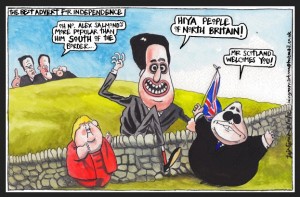
Countries don’t break up every day, particularly those as large and prosperous as the United Kingdom of Great Britain and Northern Ireland.  But it is possible that, two weeks from now, the headline writers will be calling it the “Disunited Kingdom” if the Scots vote for independence in a referendum on September 18th.

For much of the year, markets have been ignoring the vote, largely because the No side has been consistently ahead. But the latest polls have been narrowing, putting the No vote just six points in front – within a plausible margin for error (remember all those 2012 polls showing Romney heading for the White House). Even a narrow No victory might be unsettling, implying the likelihood of a further vote in a few years’ time. So the markets are having to contemplate what the financial consequences might be; sterling recently reached a five month low against the dollar.

The issues, for those non-Britons who have not been following the debate, are fourfold. What currency will the Scots adopt? The Yes campaign says they will keep the pound, the Westminster parties say this is out of the question (essentially this would recreate the euro problem, in which monetary union would exist without political union.  The EU could insist, as it does with other new nations, that the Scots agree eventually to join the euro. The pro-independence group says EU spokesmen are wrong (Scots are already in the EU so would not be be new members) and that the English parties are bluffing. An independent Scotland can call the bluff of the rest of the UK by taking a hard line on the second big issue – the allocation of national debt. How should this debt be apportioned among the rump UK countries? By population? By GDP? If Westminster plays hard ball, the Scots could walk away altogether (although this sounds a bit like a bluff as well; the consequences for the new state would be stark, in the short term).

Both of these issues are big areas of uncertainty that will cause market concern if the Yes campaign wins. The remaining two financial issues are probably less market-sensitive but are still significant. How will the Scots manage their finances without the public spending support of the rest of the country?  Or as the pro-independence campaign would put it, how will the rest of the UK survive without the revenue support provided by Scottish oil? There could be some long and complex negotiations on these two issues.

Such negotiations may be made even more difficult by the implications for the Westminster parliament. Scotland contributes 59 of the 650 MPs, of which 40 are Labour, 11 LibDem, 6 Scottish Nationalist, 1 independent and only 1 Conservative.

So how would the markets react to independence? The immediate reaction would probably be to sell sterling.  UK government bonds (gilts) would probably weaken as well. For a start, it is not clear how the debt split would be practically acheived.

Then there is the banking sector. Some of Britain’s biggest banks are Scottish-based. Will English depositors be happy to hold their money in a foreign bank (the Icelandic example is not a good one)? Mr David Owen thinks that some banks will quickly move their domicile to London.

Scotch Independence?

The State of Sanctions Against Russia

EU officials huddled Friday, Sept. 5, in Brussels to finalize the fourth round of sanctions on key Russian economic sectors, including finance, energy, and defense, while U.S. President Barack Obama said that the United States is working to “deepen and broaden” existing sanctions meant to ratchet up financial pressure on Russia.

The EU was poised to expand its earlier sanctions that banned major Russian banks and energy firms from global capital markets.  The latest sanctions, for example, would target Rosneft, Russia’s big oil company. Europe would also aim at the export of sensitive technologies, such as those used for oil exploration offshore and in the Arctic, two priority areas for a Russian state anxious to boost its oil and gas production to compensate for declining output at aging fields.

A last-minute cease-fire agreement may have forestalled Europe’s latest steps to bring pressure to bear on Russia, which it says is responsible for the armed violence in eastern Ukraine. Many observers view the cease-fire skeptically because it does not address the underlying drivers of the conflict between Kiev and Moscow. But European officials said they are willing to give the plan, drafted by Russian President Vladimir Putin, a chance to end five months of sporadic fighting.

More broadly, will Western sanctions, which threaten to choke off much-needed financing for big Russian banks and energy companies,  trigger tough reprisals from Putin?

Putin has long threatened to wield the energy weapon to cow European countries, which are heavily reliant on imports of Russian oil and natural gas, and he threatened to shut off gas exports to Ukraine in May. The energy weapon will become more powerful for Russia as temperatures drop.  Russia’s dominant role in a handful of other key sectors, such as critical metals, could also give it leverage to inflict targeted pain on major U.S. and European manufacturers.

Russian metal exports are a particular vulnerability. Russia is the biggest global supplier of key titanium components used by aircraft manufacturers such as Boeing and Airbus, for example. Reprisals from Moscow could complicate production of a major and lucrative Western exports.

Boeing has been stockpiling Russian titanium parts since March out of concern that the Ukraine crisis might disrupt supplies, the Wall Street Journal reported Aug 7.

The Federal Reserve said airplane-makers in the Pacific Northwest were concerned about metal supplies, in its survey of local economic conditions published eight times a year.  Although titanium is perhaps the most vulnerable supply, nickel and palladium could also be targeted.  Because supply chains often weave through several different companies from raw material to component part to finished product, there may be unrealized dependencies that aren’t revealed until the supply is halted.

Europe’s deepest fear, and Putin’s ultimate ace in the hole, would be to run a reliable play and halt natural gas exports to Europe, as it did in the winters of 2006 and 2009. Europe gets about 40 percent of its gas supplies from Russia.

Cutting off energy flows is a double-edged sword. About half of Russia’s revenues come from energy exports, and Europe is gas giant Gazprom’s biggest export destination. What’s more, Europe has braced itself for the worst.

“Europe could probably sit out a supply disruption for about two months, but then countries like Romania, Bulgaria, Hungary, and Greece would be in trouble again,” said Tim Boersma, a European-gas expert at the Brookings Institution.

Throughout the Ukrainian crisis, Russian officials have promised to keep energy exports flowing to Europe: They want to ensure the $100 million a day in revenue and maintain Russia’s reputation as a dependable energy supplier. But Europe could suffer even if Gazprom and Putin play ball. That’s because Ukraine is in the middle.

About half of Europe-bound Russian gas passes through the country; Russia shut off gas exports to Kiev this spring. As colder temperatures arrive, Ukrainian officials may have no choice but to tap into gas supplies meant for other European countries downstream in order to keep their citizens from freezing, as appears to have happened in 2006 and 2009.

A Result of Russian Sanctions?

What Happens When a US City Goes Bankrupt?

Detroit is the largest city ever to seek bankruptcy protection, so its bankruptcy is seen as a potential model for other American cities now teetering on the edge.  But Detroit is really a model for how wealthier and whiter Americans escape the costs of public goods they’d otherwise share with poorer and darker Americans.

Judge Steven W. Rhodes of the U.S. Bankruptcy Court for the Eastern District of Michigan is now weighing Detroit’s plan to shed $7 billion of its debts and restore some $1.5 billion of city services by requiring various groups of creditors to make sacrifices.  Among those being asked to sacrifice are Detroit’s former city employees, now dependent on pensions and healthcare benefits the city years before agreed to pay. Also investors who bought $1.4 billion worth of bonds the city issued in 2005.

Both groups claim the plan unfairly burdens them. Under it, the 2005 investors emerge with little or nothing, and Detroit’s retirees have their pensions cut 4.5 percent, lose some health benefits, and do without cost-of-living increases.

No one knows whether Judge Rhodes will accept or reject the plan. But one thing is for certain. A very large and prosperous group close by won’t sacrifice a cent: They’re the mostly-white citizens of neighboring Oakland County.  Oakland County is the fourth wealthiest county in the United States, of counties with a million or more residents.

In fact, Greater Detroit, including its suburbs, ranks among the top financial centers, top four centers of high technology employment, and second largest source of engineering and architectural talent in America.

The median household in the County earned over $65,000 last year. The median household in Birmingham, Michigan, just across Detroit’s border, earned more than $94,000. In nearby Bloomfield Hills, still within the Detroit metropolitan area, the median was close to $105,000.-

Detroit’s upscale suburbs also have excellent schools, rapid-response security, and resplendent parks.

Forty years ago, Detroit had a mixture of wealthy, middle class, and poor. But then its middle class and white residents began fleeing to the suburbs. Between 2000 and 2010, the city lost a quarter of its population.

By the time it declared bankruptcy, Detroit was almost entirely poor. Its median household income was $26,000. More than half of its children were impoverished.

That left it with depressed property values, abandoned neighborhoods, empty buildings, and dilapidated schools. Forty percent of its streetlights don’t work. More than half its parks closed within the last five years.

Earlier this year, monthly water bills in Detroit were running 50 percent higher than the national average, and officials began shutting off the water to 150,000 households who couldn’t pay the bills.

Buried within the bankruptcy of Detroit is a fundamental political and moral question: Who are “we,” and what are our obligations to one another?  Are Detroit, its public employees, poor residents, and bondholders the only ones who should sacrifice when “Detroit” can’t pay its bills? Or does the relevant sphere of responsibility include Detroit’s affluent suburbs — to which many of the city’s wealthier resident fled as the city declined, along with the banks that serve them?

Judge Rhodes won’t address these questions. But as Americans continue to segregate by income into places becoming either wealthier or poorer, the rest of us will have to answer questions like these.

 What is a City?

Taxis For Women and Driven by Women in NY

If you’re a woman looking for a taxi in New York and you prefer to be driven by another female, there’s a new livery service that will be right up your street. Launching Sept. 16 in New York City, Westchester County, and Long Island, SheTaxis—or SheRides in New York City—will make female drivers available exclusively for women riders.  The goal is to accommodate women who prefer the company of drivers of the same gender, or may feel uncomfortable being driven by men. The service will take ride requests through an app and dispatch drivers wearing hot-pink scarves made of pashmina. The app will be available through Apple initially and eventually via Android devices. Stella Mateo, who is starting the service, says it also will help more women join the male-dominated taxi business.

Tar Sands Debate in US

While world politics will change significantly if the US can become energy independent, fierce battles over how to access energy continue.  The US federal government has quietly approved major tar sands transportation projects with unstudied environmental effects — managing to circumvent the executive branch’s impact analysis that paralyzed development of the Keystone XL pipeline and bolstered activists’ claims that the project is dangerous and damaging to the environment.  The Keystone pipeline has become a household name. The controversy caused by Canadian pipeline company TransCanada’s project, which would bring hundreds of thousands of barrels of oil from Canada’s tar sands to the U.S. each day, has ignited an environmental movement across the country, but the U.S. has approved other cross-border tar sands transportation projects with little fanfare.  Projects include TransCanada competitor Enbridge to build a facility in Illinois to transport crude oil from the tar sands via train, which was approved by the Federal Energy Regulatory Commission (FERC) last week. The decision came just weeks after the State Department approved an Enbridge pipeline project that would cross Canada through the Minnesota border and help bring millions more barrels of oil to the U.S. each year. The project was approved without a public review process or an environmental-impact assessment.

Environmental activists say the two approvals show that the tar sands industry is intent on getting tar sands oil to the U.S. regardless of whether Keystone is approved. And the approvals may show the industry has taken a lesson from the current Keystone debacle about how to move tar sands oil without public relations headaches.  Pipelines that cross an international border need to go through an often-lengthy review process, and that is what has stalled TransCanada’s Keystone plans, as President Obama delays a decision on whether to approve the pipeline.

The Keystone XL pipeline would move as many as 830,000 barrels of oil from Alberta, Canada, to Nebraska, where it would then be transferred to other pipelines that snake their way down to Gulf Coast oil refineries in Texas and Louisiana. Environmentalists say the project would guarantee the further development of the tar sands in Canada — a previously pristine area that has been extensively mined for oil that’s particularly carbon-intensive to process.

Last Friday, FERC approved plans for an Enbridge rail facility in Flanagan, Illinois, that would help transport up to 140,000 barrels of tar sands oil per day across the Canadian border to the states. That pipeline connects to another pipeline in Cushing, Oklahoma, which brings the oil down to refineries in the Gulf where it can be turned into usable fuels, or sometimes sold for export to other countries.  Like many debates in the US, the tradeoffs in certain decisions are not made clear.

Tar Sands

Women as EU Commissioners

It is a truth universally acknowledged that Juncker must give decent portfolios to at least some of the eight women that have been nominated to the college in addition to Federica Mogherini, the foreign policy chief.  Elżbieta Bieńkowska, Kristalina Georgieva, Cecilia Malmström and Margrethe Vestager have deserved reputations for being very competent.  Also, Juncker has to reward those member states that opted to nominate women as he struggled to reach nine women out of 28. Romania switched to Corina Creţu, the Czech Republic put forward Vĕra Jourová, and Belgium eventually nominated Marianne Thyssen. Juncker has to decide whether to reward all women or to discriminate among them by, for example, ignoring the claims of Alenka Bratušek, ex-prime minister of Slovenia.

Juncker also faces issues of political persuasion.  How does he accommodate liberals and what policy does he endorse by an appointment.  Lobbyists wonder about Juncker’s approach to climate change, or to EU enlargement, or to manufacturing industry and will be reading much into his choice of commissioners, and his decisions to merge or abolish dossiers.

At the moment, the relationships between Catherine Ashton, the current high representative, and the other commissioners who have foreign policy portfolios – neighborhood, development, humanitarian aid, trade – could hardly be described as smooth.  will Juncker make an attempt to re-shape the structure of the Commission to tie in Mogherini with the other commissioners?

Women on the Commission

Companies Do Better with Women on Boards

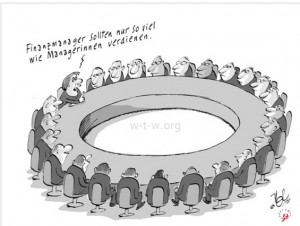
Companies with at least one female director had better returns for six straight years. Which raises the question: If the financial argument for gender diversity is so compelling, then why aren’t companies recruiting more women to their boards? Or, to put it more broadly, why do public companies need an incentive to do something that is clearly in their own interest?

One solution to this dearth of women may be demographic. As more women graduate from college — in most advanced economies, their graduation rate is now higher then men’s — eventually more women will find their way to boardrooms and corner offices. Except that this isn’t necessarily true. By 2035, studies show, women will still be underrepresented.

In Silicon Valley, again, the shortage is even more acute. Only 20 percent of computer-science grads are women, down from 37 percent in 1985. The proportion of women in computer jobs declined to 27 percent in 2011 from 37 percent in 1990. Overall, women make up almost half the workforce. Yet they aren’t choosing careers in science, technology, engineering and math.

Women on Corporate Boards

Impact of Agglomeration on Innovation: Silicon Valley

The Philadelphia Federal Reserve reports:  Over the past two decades, research in this field has particularly surged.  Substantial data is now available to better study these questions. It also surely has some connection to the growth of the knowledge economy, the fascination with Silicon Valley and related clusters, and similar popular themes. Particularly encouraging is the extensive set of connections being made from economic geography to adjacent fields such as labor economics, entrepreneurial finance, and business management.

Much, however, remains to be accomplished. With the handful of important exceptions reviewed previously, we still have not opened the black box of how clusters operate.  Better empirical guidance about the microinteractions within clusters with respect to innovation will allow us to differentiate among models and build stronger theoretical frameworks. Fortunately, the data are within reach to do so. Many employer–employee data sets are being linked to information on innovation (e.g., inventor identifiers), and these data sets often allow precise spatial coordinates of firms. This should prove a powerful lever for seeing further inside local areas, and it is likely that the line of work will increasingly draw upon network theory.

We also need better insight into the long-term nature of agglomeration and innovation—the life cycles of innovative places. This is true within countries—innovation cores have shifted between Detroit, Boston, Silicon Valley, etc., and will continue to do so—but also true across countries. How does the rise of Bangalore impact Boston? Does the development of global innovation centers in rapidly emerging countries complement or substitute for those in advanced economies? The study of agglomeration and innovation is exciting because we are starting to make some progress at understanding the local and global nature of these phenomena.

What can local policymakers do to foster agglomeration and innovation in their cities. This is a big and difficult question, and we are right to be cautious that we do not have all the answers. However, governments have spent billions of dollars on this, and many will continue to fund “be the next Silicon Valley” initiatives. This is true in advanced economies, in nations currently looking to transition from resource-dependent to a knowledge-based economy, in developing countries looking to leapfrog growth stages, and everywhere in between. Economists must continue to provide insight on these critical matters, and ideally our insights will get sharper faster.   Agglomeration and Innovation

 Silicon Alley

LIBOR Reform?

Federal Reserve Governor Jerome H. Powell on Libor:  My hope is that governments, market participants, and end users can work together to build a stronger foundation for the reference interest rates that are so critical to our financial system. Implementation of these measures is clearly in the interest of U.S. financial stability. I also hope and expect that individual financial institutions will understand that it is also in their private interests. Reference rates are one of the foundations of the financial system, and it is in the interest of everyone, from the residential mortgage holder to the financial institutions that heavily use these rates, that those foundations have integrity and be well constructed and resistant to manipulation.  The problems with LIBOR have undermined the public’s trust in the financial system. In light of the need to regain that trust, I am certain that our reform efforts will meet with the active cooperation of financial institutions in carrying forward these reforms. Reforming London Interbank Overnight Rate 

Libor Reform?