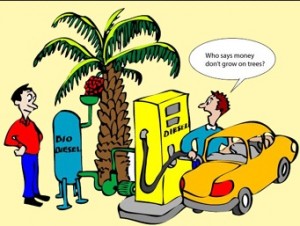
Robert Rapier writes: Despite optimistic federal mandates that required the addition of advanced biofuels to the fuel supply, commercialization has been slow to develop. Ethanol produced from cellulose was initially envisioned as a likely candidate for making a major contribution to the mandates, but project delays, overruns, and bankruptcy in the case of the first company to produce a qualifying batch of cellulosic ethanol have all tempered the initial enthusiasm. A different pathway called fast pyrolysis that results in drop-in fuels as the final product after upgrading has emerged as a contender, but this pathway has also struggled to gain a foothold. The Future of Biofuels
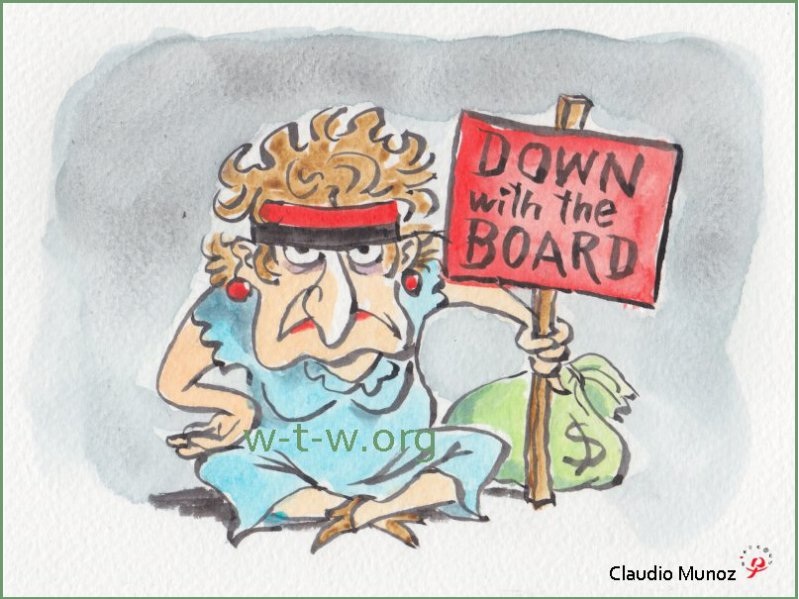
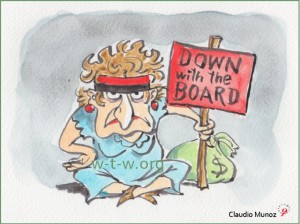
Contribution of Women on Boards
As we introduce the new and re-newed women on the EU Commission, we decided to visit the continuing contributions of Morten Huse to our understanding of the subject of women on boards. The EU Commission has much in common with a corporate board.
Morten Huse collarborating with Sabina Nielsen concludes that Women’s ability to make a contribution to the board may be attributable to their different leadership styles. The presence of women on corporate boards seems to increase board effectiveness through reducing the level of conflict and ensuring high quality of board development activities.
The Contribution of Women on Boards
Table of Silence Dance Event at Lincoln Center New York for 9/11
An Italian artist and an Italian musician joined American choregrapher Jaculyn Buglisi to remember 9/11 and create hope for the future.
Kristalina Georgieva, European Commissioner
Georgieva has a new position as Vice-president for budget and human resources. She describes herself: I have been the European Commissioner for International Cooperation, Humanitarian Aid and Crisis Response.
Before joining the European Commission in February 2010, I have held various positions at the World Bank. I started working there in 1993, initially as Environmental Economist, then Senior Environmental Economist. I continued as Sector Manager on Environment for the East Asia and Pacific Region, and later became the Director in charge of World Bank environmental strategy, policies and lending.
In 2004 my work took me to Moscow, where I was World Bank Director for the Russian Federation, responsible for a large portfolio of World Bank projects in tax administration, customs, education, health, environment and regional development.
In 2007-2008 I held the position of Director for Sustainable Development and, finally I was appointed Vice President and Corporate Secretary of the World Bank Group. At this post, I acted as the interlocutor between the World Bank’s senior management, its Board of Directors and the 186 countries that make up the World Bank Group shareholders.
I have obtained my M. A. in Political Economy and Sociology at the University of National and World Economy in Sofia, Bulgaria. My PhD in Economic Science was granted by the same university, for my dissertation on Environmental Policy. Between 1977 and 1993, I worked as Associate Professor at the University of National and World Economy.
During this period I was also a Research Fellow at the London School of Economics, and spent one year as Visiting Professor at Fiji’s University of the South Pacific and the Australian National University. In 1991 I went to the Massachusetts Institute of Technology where I did post-graduate research in environmental policy, co-led a course on economies in transition, and consulted on environmental policy in Eastern Europe.
I have served as a board member of several educational and environmental organizations. I am currently a member of the Board of Trustees of the University of National and World Economy, Sofia, Bulgaria. I have more than 100 publications on environmental and economic policy topics, including a textbook on microeconomics.
I was born in Sofia in 1953. I am married, and have one child. In addition to my native Bulgarian, I am fluent in English and Russian, and I am learning French.
Low Internet Penetration in India
Dhiraj Nayyar writes: China’s Alibaba is the world’s largest e-commerce platform. In 2013, its online sales totaled $248 billion, more than eBay and Amazon combined. Unsurprisingly, it’s also set to become the world’s most valuable e-commerce company. The firm began a roadshow in the U.S. this week ahead of its highly anticipated initial public offering that would make the company larger than 95 percent of the Standard & Poor’s 500 Index.
By contrast, 20 million Indians spent a meager $2 billion shopping online in 2013. While Flipkart, the country’s closest parallel to Alibaba, isn’t listed on any exchange, a $1 billion injection funds last month suggests the company is worth around $5 billion. That would make it India’s most valuable e-commerce firm, worth about 3 percent of the value of Alibaba.
The reasons for India’s weak e-commerce market are well-known. The biggest challenge is the country’s low Internet penetration level. Around 150 million Indians are online, out of a population of 1.2 billion. That compares to more than 250 million Internet users in the U.S. and over 550 million in China. The penetration of personal computers in India is estimated at just 47 per 1,000 people, lower than other emerging economies like Mexico, Argentina and the Philippines.
India’s Internet security is poor, scaring off online customers; the country has only 6 percent of the number of secure servers that Brazil and South Africa have. Broadband connectivity also continues to lag. Rural Indians, who form a majority of the population, have an Internet penetration rate that’s one-twelfth the level of urban Indians.
Despite those drawbacks, competition in the nascent field of e-commerce is fierce. Flipkart was founded in 2007 by twentysomething entrepreneurs Sachin Bansal and Binny Bansal, who once worked for Amazon. The Seattle-based online retailer itself launched in India in June 2013, though it remains hobbled by regulatory restrictions that require it to source goods from Indian manufacturers. Local Snapdeal and Jabong are expanding as well.
None of these companies has yet returned a profit in India. That could change rapidly, however. If one adds in people with Internet-capable phones, the number of Indians with access to the Internet tops 530 million.
Affordable Chinese-made devices are already transforming the Indian market. Last month, when Xiaomi launched a smartphone that cost only $250, it sold 40,000 units in 4.2 seconds on Flipkart. A year from now, the number of Indians with easy access to e-commerce sites will almost certainly have risen exponentially.
The attraction of buying online for Indians is obvious. Local consumers are highly price-sensitive for most goods — from toothpastes to cars — and the discounts available online are hugely attractive. Flipkart and the others have already adjusted to security fears and the widespread lack of credit cards by offering a cash-on-demand option for deliveries. Same-day service, offered by Amazon, is a novelty in India’s generally slow-moving retail world.
Banking USA Style
Barry Ritholtz writes: The biggest reason so many financial felons escaped justice was that they dumped the cost of their criminal activities on the shareholder (never mind the taxpayer).
Corporate executives theoretically work for the owners of the company, namely, the shareholders. But there is an agency problem in that owners can’t closely manage and object to the actions of these executives. Collective owners, such as mutual funds, seem to have no interest in doing so. What we end up with is a management class that works for itself instead of on behalf of the owners of the publicly traded banks. Many of these executives committed crimes; got big bonuses for doing so; and paid huge fines using shareholder assets (the company cash) to help them avoid prosecution.
Foreclosure fraud: Of all the crimes committed during the financial crisis and in its aftermath, this is one that should have been the easiest to identify and prosecute. Any bank that owns a mortgage with the debtor in default must follow a simple set of legal steps in order to foreclose. The procedure is time consuming, specific to each state’s laws and involves lawyers, so foreclosures are expensive. A simple reality of the rule of law. There are no shortcuts.
Except the banks took many short cuts and did so on purpose and with the goal of improperly expediting the process. They failed to review the documents of the mortgages they were foreclosing on, then told courts they had. They didn’t verify information, but claimed to have done so in sworn affidavits. They hired $8 an hour burger-flippers to “robosign” these documents, pretending the underlying legal work had been done. They knowingly used falsified records, some of which they bought en masse. They were aided by a company called DocX, which had a price list of fabricated documents for use in court. (DocX, by the way, was eventually indicted on charges of mortgage fraud).
After creating phony dossiers on borrowers, the banks signed and notarized affidavits stating they had taken all of the legal steps. In many cases, even the notarizations were fakes. Submitting a falsified notarized affidavit to a court is perjury and fraud.
Of course, the burger-flippers who did the paperwork didn’t think up the whole scheme — someone much higher did. Just one midlevel executive has been convicted at Bank of America, while scores of others have gone untouched.
Mortgage underwriting: Then there are the crimes committed in mortgage underwriting, where defects were knowingly ignored. Maybe the scale of the financial penalties bank agreed to pay had something to do with this inaction. Bank of America, for instance, using shareholder money, paid$16.65 billion to settle charges of fradulent mortgage originations.
Money Laundering: Banks have been laundering staggering sums of money for drug dealers and terrorists. These are deeply offensive, very illegal activities, and deserve not just penalties, but jail time. How much of this dirty money made its way through the banks? Perhaps as much as $1.6 trillion dollars.
• Market manipulation: We haven’t even gotten to the manipulation of markets in violation of U.S and international law.
• Fraud, skimming and bid-rigging: Then there is just good old-fashioned fraud and bid-rigging: State Street Bank was accused to skimming money off pension transactions. BNY Mellon was accused to skimming money for fictitious foreign currency costs.
• Accounting fraud: Executives at banks have been found to cook their books.
Starbucks: Entrepreneurship 101
Mohamed A. El-Erian writes: A recent visit to a hectic Starbucks store near Times Square in New York reminded me of one of the great achievements of real entrepreneurship and inspired innovation: taking an existing technology and turning it into something much more transformational in meeting — and often forming — the demands and needs of customers.
Many pathbreakers in business, such as Amazon, Apple, Google and Microsoft, succeed by creating something completely new. Their impressive deployment of one disruptive technology after another has comprehensively redefined existing industries and created new segments. They have empowered people and enhanced living standards around the world.
Less obvious — and sometimes counterintuitive — are the companies that take an existing activity and turn it into something much more consequential. Think of how Cirque du Soleil has revolutionized the circus experience. And how Starbucks, with more than 21,000 stores in 65 countries, has redefined coffee drinking, not only in the U.S. but also around the world, including Europe where skepticism was most intense. On recent trips to Europe, I couldn’t help but notice the brisk business the company’s increasing number of outlets conduct there (although, admittedly, I tended to stick to the more traditional cafes for my own daily consumption).
Now the challenge for Starbucks is to keep innovating as a dominant player in the industry. From the perspective of an outsider like me, it is succeeding through approaches that intelligently target different client segments. Three stand out.
First, Starbucks is doing more than just expanding and adapting its product line to enhance the experience of the coffee drinkers who constitute its core client base. It is also looking to improve their purchase experience in other ways, for instance reducing client wait times.
Second, it is experimenting with more products to tempt those who use its stores as an ad hoc office during the day.
Third, it is employing user-driven customization to expand its reach among groups such as teenagers and tweens.
Not everyone admires Starbucks. Those who dislike the company and its influence can become quite entrenched in their opposition. One of our local coffee houses actually developed an identity almost synonymous with being anti-Starbucks.
Yet regardless of how you feel about the company, it is hard to ignore how it is constantly innovating on the foundation of an old “technology.” Its approach is instructive for many other industries. Just imagine how many are waiting to be beneficially disrupted by this type of entrepreneurship.
Elzbieta Bienkowska, Polish Representative on EU Commission
Elżbieta Bieńkowska has often stressed: “I am not a politician. I am a technocrat.” As minister for regional development in 2007-13, she made her reputation as an effective manager of European Union funds. But in a reshuffle on 20 November, Prime Minister Donald Tusk put her in the front line, despite her professed dislike for the limelight and party politics.
Poland is favoured with the largest allocation of EU funds of any member state: Foreign Minister Radoslaw Sikorski called it Poland’s “Marshall Plan.” In February 2013, the Polish government secured €105.8 billion from the EU budget for 2014-20. “We don’t accept that it is simply aid for Europe’s poor. It is Europe’s most important driver of growth,” Bienkowska has said.
Bienkowska now heads Poland’s ‘superministry’, the ministry of infrastructure and development, formed from a merger of the regional development and transport ministries that was announced during the November reshuffle.
Yet from the start, determination has been Bienkowska’s strong point. At the age of 29, with a masters in Iranian studies from Kraków’s prestigious Jagiellonian University and two small children at home, she passed the entrance exam for Poland’s National School of Public Administration (KSAP). But she was turned down by the selection committee, who doubted whether she could combine a career with family life.
Over the next decade, she worked in regional administration in Katowice, her native Upper Silesia, south-western Poland, rising to head of the department responsible for managing EU funds. In 2007, she was summoned to Warsaw and offered the position of minister of regional development. It was initially meant to be a temporary position to sort out the pension system.
In Warsaw, Bienkowska soon gained a reputation as an effective manager. Outside working hours, she enjoys attending rock concerts and has been known to stay out until 2am, only to get up at 4.30am to attend an important meeting in Brussels.
1964: Born in Katowice, the capital of Poland’s Silesia region.
1988: Masters in Iranian Studies, Jagiellonian University, Kraków
1996: Completes studies at Poland’s National School of Public Administration
1996-2007: Works at regional administration in Katowice, where she became responsible for EU funds
1998: MBA from Warsaw School of Economics (SGH)
2007: Joins first Tusk cabinet as minister for regional development
2011: Elected to Senate as an independent candidate
2011: Retains regional development portfolio in second Tusk cabinet
2013: Appointed deputy prime minister and head of the new ministry of infrastructure and development
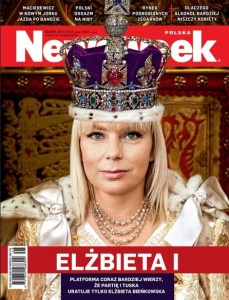
The Polish media has been quick to adopt Bieńkowska. Shortly after the reshuffle, the Polish edition of Newsweek ran a cover story crowning her “Elżbieta I”
At the same time, Bienkowska remains little known for a minister with such great responsibility. In a November poll, two-thirds of respondents did not recognise her – although by the following month, with her new appointment, that figure had shrunk to just below a half of respondents. The tabloid press only recently began writing about her, albeit focusing on her fondness for high heels and perfume. “For six years, she kept a low profile, managing EU funds,” says Smoczynski. “Now Tusk needs her at the forefront, to carry the government’s investment programme fuelled by EU funds for 2014-20.”
Meanwhile, Bienkowska has big ambitions, for Poland if not on a political level. Last week (8 January) Tusk, with Bienkowska seated at his side, announced that Poland will be among the world’s 20 largest economies by 2022, which would enable it to join the G20.
Renewable Energy in the US
Byron Dorgan writes: Contrary to a popular belief, backing a strong renewable-fuels industry is in no way at odds with supporting continued growth in domestic oil production. The new oil-and-gas discoveries and increased production here at home are good news for our country. But so is the work we’ve done to build a renewable-fuels industry, which provides fuel diversity and environmental benefits while strengthening our energy security and national security.
750 Women Needed to Go on Boards in India
More than half the listed companies in India are yet to appoint a single woman director to the board—a legal requirement in India now—and they have less than one month to do so.
Two hundred and forty four companies, which did not have a woman director earlier, have complied with the requirement in the last six months. A fifth of these directorship positions have gone to women belonging to the promoter family.
“These women shall have the same voice as the promoter, defeating the very purpose of genuine (independent) gender diversity,” said Pranav Haldea, managing director of PRIME Database which operates indianboards.com. Even after the recent appointments, women occupy just 7% of the total directorship positions.