Small Business Prospects Improve in US


From their lows of 2006, business defaults peaked in 2008 followed by a three-year period of considerable improvement. They have continued to improve since then and are now at their lowest levels in ten years broadly mirroring the Federal Reserve’s statistics on commercial lending. The drop in default rates is most likely the result of a combination of factors.  Lenders have cleaned up their books so there are fewer defaults from “previous” exposures.

Lenders have tightened standards so new exposures are to stronger businesses that default at a lower rate.  General business conditions have improved and businesses are better positioned to meet their financial obligations.  Borrowers have dropped out of the “traditional” credit markets discouraged that the cumbersome application process would most likely result in a rejection.

  • There are surprising differences in credit quality between businesses of different size.  Solos—sole proprietorships, self-employed and other businesses without employees have the lowest default rate. Ignored from most statistics because of their less than four percent share of total business receipts, they directly impact the lives of over 20 million people and generate nearly a trillion dollars in receipts.
  • E100—businesses employing fewer than 100 and more than 20 have the highest default rate. They are a diverse group, squeezed in the middle, financially independent of the owner/operator, informationally opaque, and too small for special attention by the financial markets.
  • E20’s are the credit quality gems. Employing fewer than 20, they are the true small businesses and largely underserved by the credit markets.
  • E100+ businesses account for the bulk of business employment and receipts and garner the most attention. As a group, their default rate is similar to that of their smaller counterparts—E20’s.
  • There are opportunities for better serving the credit needs of businesses.
  • E20 businesses represent an attractive segment for alternative lenders.
  • Solos deserve another look. Lenders’ traditional approaches might be shutting out a potentially vibrant, growing and profitable segment of borrowers.
  • Small Business Loans


Are the US Markets Broken? Can Transparency and a Functioning Government Help?

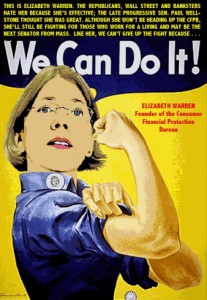
Heather Long writes:  It is a message US Senator Elizabeth Warren has been taking all over the country, and she isn’t afraid to call banks, credit card companies and some employers cheats and tricksters.  “The biggest financial institutions figured out they could make a lot of money by cheating people on mortgages, credit cards and payday loans,” she told a packed auditorium at the Graduate Center of the City University of New York.  The Democrat from Massachusetts even said the market is broken in many regards.  “This is about getting markets to work for real people,” she said.

The biggest applause of the night was on three issues that come up frequently in Warren’s speeches.

1) Financial regulation: Warren was the driving force behind the creation of the Consumer Financial Protection Bureau after the 2008 financial crisis. The agency has returned billions of dollars to Americans who were wronged.  “Traffic works better with traffic lights,” she explained.

In her eyes, a true capitalist system would have transparency so consumers could make informed choices. But in a world of “mice type” with pages and pages of fine print that no one reads or understands, the market breaks down.

2) Reducing student loans: Last summer Warren made headlines for arguing that student loans should have the same interest rates that banks get when they borrow money from the Federal Reserve.  This year she’s pushing to allow people to re-finance their student loans at the historically low rates currently in place.  As she likes to remind people, “Student loans issued from 2007 to 2012 are on target to produce $66 billion in profit for the United States government.”

3) Raising the minimum wage: “No one should work full time and still live in poverty,” Warren said.  She uses her own family story to illustrate how critical it is for workers to make a living wage. Her father had a heart attack when she was 12, and her mother had to go back to work in retail at Sears (SHLD) to support the family. That would be much harder today because a woman working a minimum wage job and trying to support even one child would likely still be in poverty.

Her other big push is for basic worker rights, including allowing workers to talk freely about how much they make and forcing employers that call shift workers in for only a few hours to pay them for at least four hours of work.

“We can’t have a market that functions unless we have a government that functions. That’s the heart of it,”  Warren says.

 Elizabeth Warren


US Spying Operation Unfolds

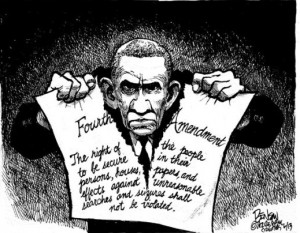
Glenn Greenwald writes: Throughout the last year, the U.S. government has repeatedly insisted that it does not engage in economic and industrial espionage, in an effort to distinguish its own spying from China’s infiltrations of Google, Nortel, and other corporate targets. So critical is this denial to the U.S. government that last August, an NSA spokesperson emailed The Washington Post to say (emphasis in original): “The department does ***not*** engage in economic espionage in any domain, including cyber.”

After that categorical statement to the Post, the NSA was caught spying on plainly financial targets such as the Brazilian oil giant Petrobras; economic summits; international credit card and banking systems; the EU antitrust commissioner investigating Google, Microsoft, and Intel; and the International Monetary Fund and World Bank. In response, the U.S. modified its denial to acknowledge that it does engage in economic spying, but unlike China, the spying is never done to benefit American corporations.   US Spying Operation

Spying USA Style

Bank for International Settlements Should be Heard

Mojmir Hampl writes:  The BIS has a right to be heard. It exists not just to represent central banks, but also to offer ideas and intellectual feedback. Indeed, it serves policymakers well by challenging, debating, and perhaps swaying opinion. Rather than bash the BIS, monetary authorities should be grateful for the informed perspectives that it provides. Central bankers have become public figures who play the press for attention.  This can be dangerous and warrants counter balances.
Bank for International Settlements

BIS

Cold Emails to Important People? Maybe Yes!

Peter Sims writes:  Expect a 50-90% failure rate the first time you cold-email someone – i.e., no response. If you don’t get a reply, don’t worry – it’s hardly as bad as calling someone cold and having them hang up on you.

It’s not hard to guess or find an email address. Email addresses are usually firstname.lastname@company.com or, if it’s an entrepreneur, firstname@company.com. You can always call the main phone number and say you’re trying to email something to the CEO, and they will usually give the address.

You are politely persistent if you email once every two days, but probably should give up after 3 or 4 tries if there’s been no reply.

For busy execs, the weekends are by far the best time to try to get a note to them since they typically have more time to read something on a computer screen, rather than a device. And a surprising number of executives do read all their email – especially the personal notes. (Schultz famously does, and imagine how many messages he must receive.)  Is A Cold Email to an Important Person Worth Your Time

Email!

Can We Tame Our Algorithms?

Dan Shaffer writes:  What an algorithm values may not be at all what a human values. Most algorithms rank efficiency and speed over meaning or ease of use. For example, if a navigation algorithm thinks it can shave a minute off your arrival time, it’ll usually have you veer off onto many side streets instead of staying on a main road, whether or not you’re familiar with the area and irrespective of the difficulty of multiple turns versus driving straight. Sometimes the extra minute isn’t worth it, yet conveying that feeling to an algorithm is impossible.   Taming Algorithms

Algorithms

Can the USFed Do Anything About Jobs in the US?


Nonfarm payrolls increased by a meager 142,000 jobs in August and the unemployment rate fell 0.1 percentage point to 6.1 percent.  How much more should the Federal Reserve do to put people back to work? Can the Fed do anything about this seemingly intractable problem?

An unemployment rate of 6.1 percent doesn’t sound especially woeful — but that’s just one indicator, and it’s not the most revealing. Consider, for example, how far employment among people in their prime working years remains from “normal,” or the level that prevailed before the last recession. As of August, about 76.7 percent of people aged 25 to 54 were employed, according to seasonally unadjusted data from the Bureau of Labor Statistics. That’s a significant improvement over August 2011, when the employment-to-population ratio was at a low of 75 percent (see chart). But it’s still about 3.9 million jobs short of 79.8 percent, the average ratio over the 10 years through 2007.  Cleveland Federal Reserve Job report

Jobs in USA


China’s Sputtering Housing Market Poses Threat to Economy

The Dallas Federal Reserve report suggests that China’s economic slowdown and changing demographics cloud its housing market’s long-term prospects. While urbanization and a lack of alternative investment opportunities provide short-run support, the housing sector’s difficulties imperil China’s financial sector and the global recovery.

China’s Housing Market

China's Housing Market


Draghi Performs QE with ABS

The ECB (European Central Bank) action announced today is not QE (quantitative easing) in the form it has been customarily used. Instead of boosting weakened banks with expanded reserves with the expectation that lending will then be increased, the ECB is injecting money directly into the real (non-financial) economy by purchasing ABS (asset backed securities) and covered bonds. More ‘behind the wall’.

The ECB “will purchase a broad portfolio of simple and transparent securities,” Draghi said at a press conference in Frankfurt today. “Some of our council were in favor of doing more than presented.”

Big step toward QE, although Germany is not quite on board.  People have expected this, but not quite yet.

Draghi Starts QE

Getting More Women in the CEO Supply Chain

Caroline Fairchild writes:  Just 5% of top-level supply chain positions at Fortune 500 companies are filled by women, lagging behind figures in other senior executive roles.

Before taking over as chief executive of General Motors, Mary Barra served as the automaker’s executive vice president of global product development, purchasing, and supply chain. The leap to the top job seems logical, but compared to her peers, Barra stands relatively alone. There just aren’t that many women at the top of the supply chain heap to begin with.

Women account for 37% of students enrolled in university supply chain courses, but only 5% of top-level supply chain positions at Fortune 500 companies are filled by women, according to SCM World, a research firm that studies corporate supply chains. In comparison, women hold 15% of all executive officer positions at Fortune 500 companies.

Getting more women atop supply chain management is a major part of getting more women into the C-suite, says Beth Ford, executive vice president and chief supply chain and operations officer at Land O’Lakes. The role provides an ambitious executive with a window into every business unit, and is increasingly becoming important for innovation and strategy, she added.

“This field has transformed. It is a critical role in the C-suite of any business,” Ford says. “The representation of women in this area is not where it needs to be. At the same time, it could be viewed as tremendously exciting. The opportunities are there for women.”

The dearth of women atop the supply chain may be rooted in the particular demands of the job. Supply chain managers are responsible for planning, purchasing, production, transportation, storage, and distribution of particular products. This results in a work schedule that can require a lot of travel and time in the field, making it a challenging lifestyle choice for women who may be interested in building a family. Still, more and more women are studying the supply chain because of its importance to most businesses, Ford says.

“We will often times see candidates for jobs that are great, but they only want to work in a particular area or city,” she says. “I have a couple sites and regional offices and in order to get the right level of experience you have to be willing to travel.”

Some female executives believe quota policies could be an effective tool to get more women into supply chain roles. Though the tactic is controversial, some women in the field feel that specific targets will help get more women into the industry.

“If you’re going to be measured on something, you tend to deliver on it,” said Sandra Kinmont, head of supply chain academy at Unilever, in a recent SCM World webinar.

To Ford, the number of women working in supply chain jobs will grow if more women take control of their careers. The mother of three joined Land O’Lakes in 2012 after working in a variety of operating and senior leadership positions at companies like PepsiCo and Mobil Oil, now Exxon Mobil. She chalks up a lot of success to her taking an active role in shaping her own career. Too often the conversation is about women being on the receiving end of their accomplishments, Ford says. Instead, she advocates for women to be aggressive and push for the right experiences in their careers.

“Be mindful and own your decisions,” Ford says. “Don’t think of yourself as a receiver of what happens in your life. Be an active steward of your career and make decisions accordingly.”

 Supply Chain