Is Vice President at Goldman Just a Title to Impress Clients?

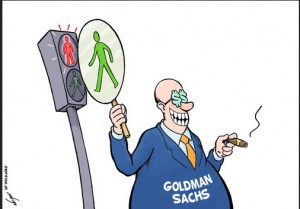
Matt Levine writes on a recent court case involving a vice president who ‘stole’ or ‘took’ Goldman’s ‘proprietary’ or ‘generic’ code from the office.  The banker says he thought the code was generic.  Goldman says that a Vice President’s legal problems are not their concern.  The title is just “too be police.”

From the opinion:  ”


Over a six year period, fifty-three people associated with GSCo were considered for advancement and/or indemnification. Of these fifty-three, Goldman paid the attorney’s fees for fifty-one. Aside from Aleynikov, Goldman refused to pay indemnification and/or advancement for one other person who sought it, also a GSCo vice president. However, of the fifty-one whose fees Goldman paid, fifteen were GSCo vice presidents.

Now the case will go before a jury of twelve people who are to determine:

A jury must determine the interpretive value of Goldman’s extrinsic evidence in resolving the ambiguity in the By-Laws.

Because that is what 12 randomly selected laypeople are particularly good at: determining the interpretive value of extrinsic evidence in resolving ambiguity in corporate documents.

Goldman Sachs, To VP or Not?


Modi and Rajan Push the Indian Economy

Dhiraj Nayyar writes:  This week Indian Prime Minister Narenda Modi and India’s central banker central banker Raghuram Rajan reached symbolically important milestones: Modi has been in office over a hundred days while Rajan has finished his first year as governor of the Reserve Bank of India. Together they bear the burden of huge expectations for a turnaround in India’s moribund economy. Their reputations alone have prompted an early uptick in sentiment. To maintain momentum, though, they need to start acting more like the bold reformers everyone expects them to be.

Reputation can go a long way, of course. In a country where nepotism and connections usually determine who occupies high public office, Modi and Rajan represent a refreshing change. Neither of them are insiders in New Delhi, whose halls of power are as clubby and claustrophobic as Washington’s Beltway. Both are high achievers with undeniably successful track records. Modi won three elections as chief minister of Gujarat, India’s most industrialized state, because of his economic stewardship. Rajan is a prescient academic who became the International Monetary Fund’s chief economist at the tender age of 40. To Indian businessmen, they exude a credibility and competence that is rare at the highest levels of India’s government.

To this point, both men have benefited from improving economic conditions globally and locally. In the months before Rajan took office, emerging market currencies including India’s were battered by hints that the U.S. Federal Reserve would begin to taper its massive quantitative-easing program. By the time Rajan arrived, that fear had largely receded.

The RBI governor can take credit for projecting a sense of confidence and placing his faith in a tight money policy, despite opposition from the incumbent, Congress-led government. The rupee, which had lost 20 percent of its value in six months before he took over, is now stable. Inflation, which had reached double digits, is three percentage points lower.

For his part, Modi benefited from a late rearguard action by the previous government, which in its last year in office tried belatedly to correct skewed macroeconomic indicators, including the fiscal deficit and the current account deficit. That helped drive gross domestic product growth from below 5 percent to 5.7 percent — the highest rate in nine quarters — between April and June. (Modi was inaugurated at the end of May.) Anecdotal evidence suggests that investors, both domestic and foreign, are now slowly loosening their purse strings.

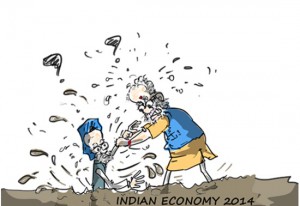
 Indian Economy

Is the EU Facing Facts on the Economy and Putin?

Clive Crook writes:  The EU’s current economic policy is indefensible: The EU has chosen to extend the recession by rejecting available remedies. As far as its foreign and security policy goes, this can barely be said to exist. Europe didn’t make Putin the ruthless outlaw he is, but it provoked him while knowing it was unwilling or unable to deal with the consequences.

Germany’s input to these mistakes has been disproportionate. It isn’t just that the size and strength of Germany’s economy have made Berlin the de facto capital of Europe. It’s also that the errors are characteristically German — postwar German, that is. Germany’s mortal dread of inflation and what can follow has paralyzed Europe’s economic policy; and its overweening desire for commerce with Russia and reluctance to confront threats with force has defanged the EU’s security policy.

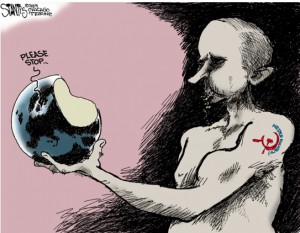
Putin Threat to Europe


Does Putin Care About the Impact of Western Sanctions?

“The West needs to realize that economic and financial measures imposed to date haven’t been effective in deterring Putin’s ambitions in Ukraine — and that even a maximalist financial isolation campaign alone may not be enough to stop Russian adventurism,” Juan Zarate, a former senior Treasury Department official charged with overseeing sanctions for George W. Bush’s administration, said in an email.  Russian Sanctions

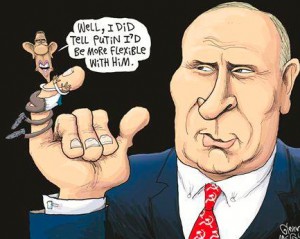
Putin

China Investing Big in Berlin

Chinese companies are making big investments in Germany, eyeing the country’s advanced technology and management, a senior Chinese commerce official said.
“The value and the amount of Chinese investment in Germany are both rising quickly,” said Meng Fanzhuang, minister counselor for commerce at the Chinese embassy in Germany.  Embassy figures show that about 2,300 Chinese companies are investing in German industries – such as finance, aviation, telecommunication and machinery – with a total investment of more than $4 billion.

Apart from setting up traditional trading firms, manufacturing bases and service companies, more Chinese investors are building research and development centers, bolstered by Germany’s outstanding talent reserve and technologies, Meng said.
More Chinese investors are trying to make their ventures fit better into the local business environment. For instance, they dispatch a handful of executives to Germany for decision-making, financial management and other essential tasks, and employ local workers to prime the pump, he said.

Meng said the financial crisis that began in 2008 forced some German companies into difficulties – such as financing or finding the company’s successor – to sell out to or team up with foreign companies, including Chinese ones.  Cao Yi, a media officer with Germany Trade and Invest, a promotional agency set up by the German government, said the Chinese government’s support for companies’ outbound investment is an important catalyst for the steadily increasing Chinese investment in Germany.
Chinese enterprises are also eager to expand their turf and create brand-names in the international market, she said.
“Made-in-Germany is a good label for them,” Cao said, adding that Chinese investors also covet the well-trained German workforce.

China Invests

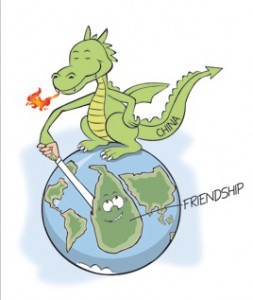
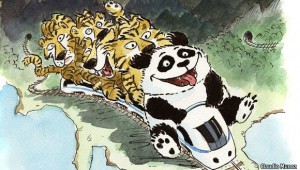
China Lays Cross Border Rails

Zhong Nan writes:  China is negotiating with the governments of Mongolia, Uzbekistan, Kyrgyzstan and Pakistan to build three connective railroads to improve regional trade on the Silk Road economic belt. Huang Shengqiang, head of the China Port Management Office, said China has already opened 25 international airports and land ports as well as 12 special trade areas along the economic belt within the country.
It will continue to build regional freight stations and create more trading platforms with Kyrgyzstan, Pakistan, Mongolia and Nepal, Huang said.

Because of the greater number of cross-border rail lines that have cut down on transport times and freight costs, more Chinese cities have discovered that these links to Central Asia and Europe can help improve regional connectivity and trade on the Silk Road economic belt.  “China will seek diversified trade methods by establishing new international procurement centers, centralized shipment control centers and transfer and import distribution centers. It will also develop a cross-border economic cooperation zone in the Xinjiang Uygur autonomous region to further promote border trade with neighboring markets,” Huang said.

Since 2010, major Chinese cities, including Chengdu, Chongqing, Xi’an, Zhengzhou, Wuhan and Yiwu have began weekly or monthly train services to European and Central Asian destinations, part of China’s efforts to turn its inland resources and labor-rich cities into international trade hubs.  Eighty-six cargo trains carrying 7,450 containers passed through the Alataw Pass railway station on the China-Kazakhstan border between January and July of this year, with trade volume reaching $1 billion, according to customs.

Transport Minister Yang Chuantang said regional connectivity is in the interests of all countries on the Silk Road Economic Belt. Yang added that China is following the Asian Highway Network deal signed in 2004 and the Trans-Asian Railway agreement penned in 2006 to continue its railway investment and develop major entry-exit rail and road projects.  “Countries in Central Asia and Eastern Europe, including Kazakhstan, Turkmenistan, Poland and Belarus, are eager to build new platforms for broader trade and for cultural and technological cooperation with China and other countries along the belt,” said Wang Ming at the National Development and Reform Commission.

Transport of the Future

The End of Secret Corporate Ownership in Delaware?


For years, Senator Carl Levin (D-Michigan) and Senator Charles Grassley (R-Iowa) have sponsored a bi-partisan bill to eliminate anonymous shell corporations only to see their measure go nowhere. This year, their annual Sisyphean effort is getting support from the unlikeliest of places: Delaware.

Pretty odd because Delaware has long been criticized for its welcome embrace of corporate secrecy and, in fact, is one of the targets of the Levin-Grassley bill. The tiny state is perennially at the top of the list of global tax havens and has gained a reputation as place where those with something to hide – embezzlers, arms merchants, money launders, drug dealers and the like – can set up shop, no questions asked. This is thanks to Delaware laws that allow the true owners of a corporate entity to remain a secret.    The End of Shell Corporations in Delaware

The End of the Shell?


EU Considering Boycott of 2018 World Cup

The EU is considering a boycott of the 2018 Russia World Cup as a future sanction against the country’s role in the Ukraine crisis.  Sporting sanctions will not form part of the European Commission’s debate about further action against Rusia today, which is expected to announce a ban on the purchase of Russian government bonds.

However, a number of EU ambassadors have discussed suspending Russia from “high profile international, cultural, economic or sporting events”, according to The Financial Times.

Russia is expected to spend 600bn roubles (£9.7bn) hosting the tournament across 11 cities in four years’ time. In July, world football governing body Fifa issued a statement against any proposed boycott of the tournament and suggested that a World Cup on Russian soil could instead provide a platform for “constructive dialogue” between governments.

FIFA is convinced that, through football, particularly the FIFA World Cup and its international spotlight, we can achieve positive change in the world, but football cannot be seen as a solution for all issues, particularly those related to world politics.

Russian President Vladimir Putin supports this line of thinking, responding to the suggestion of a possible boycott by saying “Fifa has already said football and sport are outside politics and I think that is the right approach”.

However, European football governing body Uefa has denounced Russia for incorporating three Crimean football clubs into their leagues and refused to recognise the move as legitimate. Uefa’s statement came after the Football Federation of Ukraine called upon both Fifa and Uefa to take action.

In the UK, both Labour and the Liberal Democrats have already called upon Russia to be stripped of the tournament, should they continue to be involved with Ukrainian separatists but David Cameron poured cold water on the idea in July.

There is historical precedent for imposing sporting sanctions on Russia, after the US led a boycott of the 1980 Moscow Olympic games in which 65 countries declined an invitation to participate.

Meanwhile markets have reacted positively this morning after Ukrainian president Petro Poroshenko tweeted this morning that he had reached an agreement with Putin for a permanent ceasefire in the Donbass region.

Russian Football

Will Five Women Appointed by Abe to Cabinet Improve Economy?

Taro Aso remains in place as deputy PM and finance minister, while Fumio Kishida stays as foreign minister.  Defense Minister Itsunori Onodera will be replaced by Akinori Eto.  The new line-up was announced by Chief Cabinet Secretary Yoshihide Suga, who also kept his post.

Mr Abe said in a press conference: “Realizing a society where women can shine is a challenge our cabinet has undertaken… I look forward to the wind of change these women will bring.”  He said a “positive economic cycle is kicking off”.

“We’re only halfway through in reforms and we need to deal with new challenges. I reshuffled my cabinet so that we can tackle these challenges boldly and vigorously,” he said, adding that the biggest issue was reviving some regions of Japan. The reshuffle is the first significant rejig since Mr Abe took office in December 2012 after a landslide election win.

Support for his government has since fallen, partly because of the recent rise in consumption tax.  Mr Abe has in the past described women as an “under-used resource” in Japan. Last year he set a goal to increase the percentage of women in leadership positions to 30% by 2020.

Experts also believe that persuading more women to remain in the workforce – either by better accommodating working mothers or by offering better opportunities for promotion in a traditionally male-dominated society – could help ease looming labour shortages caused by Japan’s low birth rate.  In Mr Abe’s previous cabinet, women occupied two of the 18 posts.

Among the new female entrants is Yuko Obuchi, the daughter of former leader Keizo Obuchi, who takes on the economy, trade and industry portfolio, while Midori Matsushima was named justice minister.

What Mr Abe has done is a significant step but the appointments mask a much deeper problem in Japanese society.

Japanese Women to Cabinet


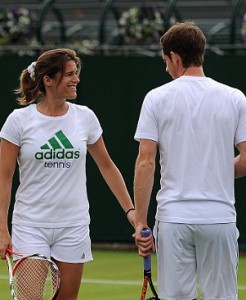
French Woman, Amelie Mauresmo Coaches Andy Murray

It is rare that a woman coaches a man in tennis, although men have most often coached women.  When Andy Murray took on Mauresmo, he opened the doors for different coaching arrangements in the game.  As always with gender issues, the reasons are complicated.  My guess: Mauresmo was a played her turned on herself when she made errors.  Murray does the same thing.  The great tennis teacher Dennis Van der Meer was detoured from a pro career because he had performance anxiety.  He worked particularly well with players who suffered from the same fears.

If Mauresmo succeeds with Murray where Brad Gilbert and Ivan Lendl have failed, can it be that she understands his core problem and can make him take a page from Novak  Djokovic’s book and get angry for a second and then go on?

It is nice to think that if a woman is the right person to do this job, a Wimbledon winner will pick her.

Mauresmo and Murray