China’s Choices

Michael Pettis writes:  The choice, in other words, is not between hard landing and soft landing. China will either choose a “long landing”, in which growth rates drop sharply but in a controlled way such that unemployment remains reasonable even as GDP growth drops to 3% or less, or it will choose what analysts will at first hail as a soft landing – a few years of continued growth of 6-7% – followed by a collapse in growth and soaring unemployment.

A “soft landing” would, in this case, simply be a prelude to a very serious and destabilizing contraction in growth. Rather than hail the soft landing as a signal that Beijing is succeeding in managing the economic adjustment, it should be seen as an indication that Beijing has not been able to implement the reforms that it knows it must implement. A “soft landing” should increase our fear of a subsequent “hard landing”. It is not an alternative.    China Rebalances

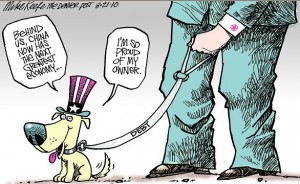
China's Economy


Transparency Intl. Calls for Anti-Corruption Measures in Switzerland

Switzerland must make it much harder for the corrupt to hide behind secret companies if the country wants to keep criminal activity out of its financial system, Transparency International Switzerland said today as it launched the “Unmask the Corrupt” campaign in Switzerland.

Currently, Switzerland does not require the identity of the real, living people who ultimately own, control or benefit from a company. This secrecy makes it easier for corrupt foreign public officials and businesspeople to hide the origin of their stolen money from law enforcement, the public and governments who may seek its return. Transparency International believes that Switzerland must collect this information, and make it accessible to law enforcement. Public registers are the best way to do this not least since banks would be required to consult this register when undertaking due diligence on their clients.

“Switzerland needs to extend the scope of its anti-money laundering legislation in order to prevent the corrupt from hiding the proceeds of crime and corruption on its soil. No longer should the corrupt be able to get away with illicit activities, often linked to international organised crime, with the help of Switzerland,” said Eric Martin, Chair of Transparency International Switzerland.

Transparency International Switzerland’s efforts to unmask the corrupt and throw light on company ownership is part of a broader Transparency International campaign that calls on governments worldwide to halt illicit financial flows stolen through the abuse of power, bribery and secret deals.

“For too long, the corrupt have been allowed to hide their ill-gotten gains in foreign countries. This has to stop now in the interest of all countries and their citizens,” warned Cobus de Swardt, Transparency International’s Managing Director.

In Switzerland, the campaign coincides with the parliamentary debate over a bill regarding the implementation of recommendations made by the Financial Action Task Force (FATF).

The recommendations are currently recognised as the international standard for combating money laundering. The Swiss Parliament should not attempt to dilute the current Federal Bill and should also work towards measures to ensure the effectiveness of essential legislation such as a better protection for whistleblowers and a reinforcement of the Swiss penal code for cases of private corruption.

To stop the corrupt from enjoying their ill-gotten gains, Switzerland must also restrict the size of cash payments when buying luxury goods. The ability to spend large amounts of cash without a regulated financial intermediary greatly increases the risk of money laundering.

To make significant progress in unmasking the corrupt, Transparency International Switzerland calls for urgent steps to be taken in the following areas:

• Registers of beneficial ownership need to be created and made public. Bearer shares should either be abolished or shareholders should be required to register or deposit their shares with a financial intermediary.

More concretely, Transparency International Switzerland states that the transparency of legal entities, including for non-listed stock companies issuing bearer shares, needs to be enhanced. It should be clear who the beneficial owners behind the legal entities are. Whoever buys bearer shares of a non-listed public company should be required to identify him- or herself and report the purchase within one month. Trade registers must publicly disclose beneficial ownership. Transparency International Switzerland also calls for the introduction of a statutory reporting requirement to identify shareholders holding more than 25 per cent of shares or voting rights.

• There should also be a limit for cash payments for real estate and luxury products. In the case of cash payments, real estate agents and luxury good sellers should be required to execute due diligence on their customers before selling them property or goods.

It is well known that cash payments are frequently used for money laundering and play an important role in cross-border crime. Therefore, Transparency International Switzerland is calling for a legal limitation of the sums that can be paid in cash. Payments for real estate or luxury goods exceeding 100,000 francs should be settled through a financial intermediary subject to the Swiss Anti-Money Laundering Provisions.

“Switzerland needs to take responsibility and toughen its anti-money laundering legislation. The world’s financial architecture needs to be made more transparent and offshore financial centres should not allow corporate vehicles to be misused by criminals to hide their identity and stolen wealth behind secret corporate structures while enjoying a life of luxury with impunity paid from taxpayers’ money,” said Martin.
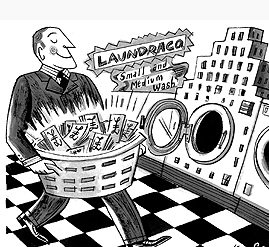

Call to End Money Laundering in Switzerland


Is Growing Octopi A Good New Venture?


The main thing that prevents octopus farming at large scale is that the common octopus – Octopus vulgaris – is tough to feed in captivity, especially when first born.

After hatching, octopuses first exist as tiny organisms known as paralarvae, drifting around the upper ocean in among clouds of plankton which they feed on. It is this stage – before they become fully fledged young adults and descend further into the sea – which is hardest to replicate in aquaculture.  Feeding octopuses adequately during their first two months of life is a challenge.  At an industrial scale, the only possible solution is to take wild juveniles caught at sea and grow them in floating sea cages. Fishermen start with individuals of about 800 grams and grow them until they are more than 2-3kg, supplying them with crustaceans and low value fish over a period of three or four months.

Fishermen cooperatives in north-western Spain grow octopus in sea-cages. They sell them at high season – Christmas and summer – where large creatures can reach €10-12 per kilo, double the usual price. So far, research has allowed small-scale production by artisanal producers in Vigo, Galicia, reaching a production of just ten metric tons per year.

But this system is highly dependent on the success of the initial catches; without a good crop of smaller octopuses to grow in the cages, end results will always be limited. This is why farmed-raised octopus hasn’t had commercial success yet.

Over the past 15 years the Spanish Institute of Oceanography (IEO) in Vigo has carried out important and successful research to overcome the problems with octopus cultivation, and the institute is now focused on rearing octopus across a full life cycle – from hatch to catch. In fact they managed to complete full cultivation across the life cycle of several octopuses in 2001.

This experiment was achieved after using live crustacean larvae known as zoeae as prey along with the commonly used artemia, a brine shrimp. However, it is very difficult to obtain these zoeae in large quantities, making large-scale production prohibitively expensive.

What makes octopuses find larvae so tasty (or at least edible). Once identified, the idea is to ensure the cultured enriched artemia has the same features.

But once the octopus is up to a certain size, there is another step to be solved: the transition between paralarvae and juvenile. This stage is another mortality peak in octopus farms.

Working with other species that don’t have a paralarvae phase would help, such as the Mexican Four-Eyed Octopus – known scientifically as Octopus maya. Like cuttlefish, these octopuses hatch ready for the deep seas, with all the same features as their adult selves. There is still a transition phase of sorts though, when they still need commercial feed pellets to grow adequately.

Octopus maya cultivation represents the most advanced attempts at commercially sound cephalopod aquaculture. But even with this species, it has been necessary to rely on targeting a specialized gourmet-level market. In conclusion, the best octopus farms can’t yet compewith the common wild-captured product.

Developments in feeding products and techniques over the next few years will be key. Once small octopuses can be fed in large numbers, the development of a full undersea farming industry will be much easier.

Octopi as Food?  A Commercial Venture?


Are We In Another Bubble?

The only thing about bubbles that’s surprising is that we are surprised.

Anatomy of Bubbles and Crashes

There is no standard definition of a bubble, but all bubbles look alike because they all go through similar phases.

Stage 1: Displacement  All bubbles start with some basis in reality. Often, it is a new disruptive technology that gets everyone excited, although it doesn’t need to involve technological progress. It could come through a fundamental change in an economy; for example, the opening up of Russia in the 1990s led to the 1998 bubble or in the 2000s interest rates were low and mortgage lenders were able to fund themselves cheaply. In this displacement phase, smart investors notice the changes that are happening and start investing in the industry or country.

Stage 2: Boom  Once a bubble starts, a convincing narrative gains traction and the narrative becomes self-reinforcing. As George Soros observed, fundamental analysis seeks to establish how underlying values are reflected in stock prices, whereas the theory of reflexivity shows how stock prices can influence underlying values. For example, in the 1920s people believed that technology like refrigerators, cars, planes, and the radio would change the world (and they did!). In the 1990s, it was the Internet. One of the keys to any bubble is usually loose credit and lending. To finance all the new consumer goods, in the 1920s installment lending was widely adopted, allowing people to buy more than they would have previously. In the 1990s, Internet companies resorted to vendor financing with cheap money that financial markets were throwing at Internet companies. In the housing boom in the 2000s, rising house prices and looser credit allowed more and more people access to credit. And a new financial innovation called securitization developed in the 1990s as a good way to allocate risk and share good returns was perversely twisted into making subprime mortgages acceptable as safe AAA investments.

Stage 3: Euphoria  In the euphoria phase, everyone becomes aware that they can make money by buying stocks in a certain industry or buying houses in certain places. The early investors have made a lot of money.  Even people who had been on the sidelines start speculating. Shoeshine boys in the 1920s were buying stocks. In the 1990s, doctors and lawyers were day-trading Internet stocks between appointments. In the subprime boom, dozens of channels had programs about people who became house flippers. At the height of the tech bubble, Internet stocks changed hands three times as frequently as other shares.

The euphoria phase of a bubble tends to be steep but so brief that it gives investors almost no chance get out of their positions. As prices rise exponentially, the lopsided speculation leads to a frantic effort of speculators to all sell at the same time.

Stage 4: Crisis  In the crisis phase, the insiders originally involved start to sell. For example, loads of dot-com insiders dumped their stocks while retail investors piled into companies that went bust. In the subprime bubble, CEOs of homebuilding companies, executives of mortgage lenders like Angelo Mozillo, and CEOs of Lehman Brothers like Dick Fuld dumped hundreds of millions of dollars of stock. The selling starts to gain momentum, as speculators realize that they need to sell, too. However, once prices start to fall, the stocks or house prices start to crash. The only way to sell is to offer prices at a much lower level. The bubble bursts, and euphoric buying is replaced by panic selling. The panic selling in a bubble is like the Roadrunner cartoons. The coyote runs over a cliff, keeps running, and suddenly finds that there is nothing under his feet. Crashes are always a reflection of illiquidity in two-sided trading—the inability of sellers to find eager buyers at nearby prices.

Stage 5: Revulsion  Just as prices became wildly out of line during the early stages of a bubble, in the final stage of revulsion, prices overshoot their fundamental values. Where the press used to write only positive stories about the bubble, suddenly journalists uncover fraud, embezzlement, and abuse. Investors who have lost money look for scapegoats and blame others rather than themselves for participating in bubbles. As investors stay away from the bubble, prices can fall to irrationally low levels.

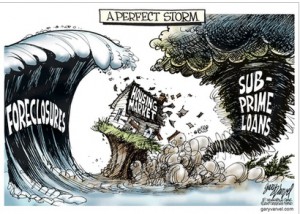
Bubble, bubble, toil and trouble


What Does Slowdown in Chinese Manufacturing Sector Mean?

China’s manufacturing sector slowed in August.  The Chinese government’s official purchasing manager’s index, which measures the health of factory activity, fell for the first time in February.

China’s economy has been slowing for several years, but a sharp correction in the real estate markets in recent months has raised questions about a slump ahead.  Growth targets are not being met.  Beijing has been giving mini-sitmuli, including targeted lending in the agricultural sector and promises of more investment in clean energy, hospitals, environmental protection and public housing.

Measures to step up growth like infrastructure investment are expected.  The campaign to root out corruption is moving slowly.  A China analyst suggests that the anti-corruption campaign is a two-sided coin.  Chinese outsiders and foreigners need to see this effort, but it is difficult to inspire government employees to act quickly when they don’t have the usual incentives.

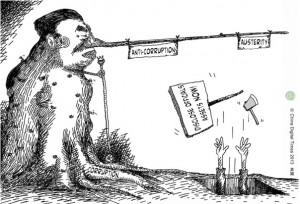
Anti-Corruption in China


Jobs Still a Problem in US

On Labor Day, Peter Schroeder and Vicki Needham write:  Democrats are running out of time for an economic savior.  They have long predicted that an economic turnaround would be the elixir that helps them retain control of the Senate in November.  But with just a handful of big economic reports left before Election Day, the economic picture is largely in place. And while the outlook is bright, voters continue to hold a dim view of their own financial prospects.

“There are still a lot of families playing catch-up,” said Jared Bernstein at the Center for Budget and Policy Priorities. “It’s got to be awfully hard for the typical voter to figure out what Congress had done to help the economy move forward. It’s a lot easier to figure out what they’ve done to screw things up.”

Broadly speaking, the economy has made gains in the last several months. The unemployment rate has held steady or dropped every month for over a year, and new data shows the economy grew this spring at its fastest rate in more than 12 months.

A Wall Street Journal/NBC News poll found 71 percent of people blamed Washington for the economy’s woes, and dissatisfaction mainly fell on incumbents overall, rather than on a particular party.  That poll found roughly half of voters believe the economy is still in a recession, even though the economic decline ended in June 2009.

Similarly, Gallup’s index of economic confidence has remained unchanged for all of 2014. People are actually less confident about the economy now than they were in January, when the unemployment rate was nearly half a percentage point higher.

With just two months to go before the midterm elections, there are just a handful of major economic indicators due before ballots are cast, including a pair of jobs reports.

With so little time left, it appears increasingly unlikely that views will change enough to boost the chances of Democrats, who are trying to escape the gravity of President Obama’s flagging poll numbers.

Some researchers argue the economic recovery has not been felt widely, with the majority of the gains going to people on the top of the income scale.

“While the economy is clearly improving, the benefits of that growth have only recently begun to reach middle class people,” said Bernstein, a former economic adviser for Vice President Biden. “People don’t pay their rent or buy their food with GDP. It’s got to reach their paychecks.”

On Wednesday, the left-leaning Economic Policy Institute reported that in the past year, wages have actually fallen for everyone but the very poorest when taking inflation into consideration. That study found that wages were stagnant or falling at nearly every income and education level. No matter how good the overall economy might be doing, voters notice the size of their paychecks most of all, experts say.

“I don’t think voters will feel good about the economy until real wage growth begins to rise,” said Mark Zandi, chief economist with Moody’s Analytics. “Since most people have jobs, they judge the health of the economy based on whether they are getting a raise that covers the increase in the cost of living.”

Democrats have tried to harness dissatisfaction over wages with a populist campaign message focused on economic inequality, raising the minimum wage and requiring equal pay for women.

While the NBC/WSJ poll found that women in particular were in favor of a Democrat-led Congress, it remains to be seen whether the populist proposals can overcome the broader concerns over the economy.  Many Americans simply have not benefitted from the “recovery.”   It’s about jobs.

Job Lines in US


Are Stocks in Euphoria Territory?


 The Bank of International Settlements, an international finance watchdog that serves as a counter-party for national central banks, has again warned that investors are unprepared for a potential financial crash.  Jaime Caruana, head of BIS,  believes the world economy is as vulnerable to crisis now as it was in 2007, because nobody in stocks seems prepared for the idea that at some point soon central banks will begin raising interest rates again.

Currently, most major central banks — including the Bank of England and the U.S. Federal Reserve — are holding rates at around zero percent. That is boosting stocks, because there is no point in investors keeping their money in savings accounts at such low returns.  An “irrational” bubble is looming again in stocks, Caruana says:  Mr Caruana declined to be drawn on when the bubble will burst. “As Keynes said, markets can stay irrational longer than you can stay solvent,” he said.

Emerging markets have racked up $2 trillion in foreign currency debt since 2008. They are a much larger animal than they were during the East Asia crisis of the late 1990s, so any crisis would do more damage. “The ramifications would be particularly serious if China, home to an outsize financial boom, were to falter,” it said.

And that’s not even the scary part. Look at China, Caruana says, which has had a private credit boom of its own, also fueled by low interest rates (if interest is low, people tend to get further into debt because the cost of the debt is so low). China is unprepared to shed that debt without pain, BIS sources told The Telegraph:

BIS officials doubt privately the whether China can avoid a ‘hard landing’, fearing that the extreme credit growth over the last five years must lead to a financial reckoning. They also doubt whether the aftermath will in the end be easier to deal with in a state-controlled banking system where the Communist Party controls the credit levers.

Mohamed El-Erian, the former PIMCO chief and current chief economic adviser to Allianz sees the world looking much the same way. Stocks are booming in a way that doesn’t reflect the underlying economic fundamentals, he says:  “… unusually sluggish economic growth has not harmed stock market performance as much as would have been expected from traditional models; second, that hyperactive central banks have boosted asset prices using experimental measures, not as an end in itself but as a means of stimulating higher economic activity through the “asset channel”. The result has been a notable gap between a buoyant Wall Street and a struggling Main Street.

However, M&A still isn’t anywhere near where it was in 2000, when it set a record, as a proportion of the entire market. Then, M&A was 10% of the world’s market cap. In 2007, it was 6%. Now, it’s less than 2%. So that bubble still has some room to grow, maybe …

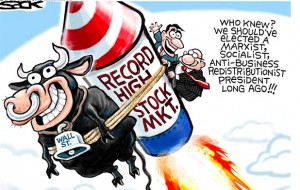
When Will the Rocket Land?


Japan to Double Investment in India in 5 years.

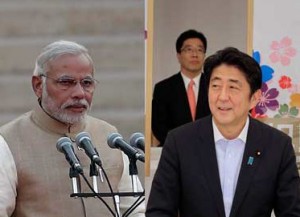
Japanese Prime Minister Shinzo Abe will tell his Indian counterpart Narendra Modi that Japan aims to double its direct investment in India in five years from some US$2 billion last year, the Nikkei business daily reported.

Modi, on his first major foreign visit since a landslide election win in May, arrived for a five-day trip aimed at capitalising on a personal affinity with Abe to bolster security and business ties in the face of an assertive China.

The two leaders are also likely to agree to speed up talks on a nuclear energy pact, the Nikkei said, although hopes of striking a similar accord to one reached with the United States in 2008 had faded in the run-up to the visit.

Japan wants explicit guarantees from India, which has not signed the nuclear non-proliferation treaty, to limit atomic tests and allow closer inspection of its facilities to ensure that spent fuel is not used to make bombs. Japanese firms also want clarity on nuclear disaster compensation, especially in the wake of the March 2011 Fukushima catastrophe.

In a sign of their close ties, the two leaders greeted each other with a bear hug when they met on Saturday in Japan’s ancient capital of Kyoto for an informal dinner. Modi is one of three people that Abe follows on Twitter, while the Indian leader admires Abe’s brand of nationalist politics.

Also under discussion will be a proposal to formalise a ‘two-plus-two’ format for talks bringing together the foreign and defence ministers of both countries, and the possible sale of an amphibious aircraft to the India navy.

India and Japan will also likely agree to hold regular joint training exercises in maritime defense, some of which will involve the United States as well, the Nikkei said.

India, Asia’s third-largest economy after China and Japan, needs faster economic growth to create work for the one million young people who enter the workforce every month.

In early steps, Modi has allowed foreign investors to own 100 percent of railway projects with an eye to drumming up interest in building India’s answer to Japan’s high-speed ‘bullet’ trains. He is also courting Japanese investment in an ambitious industrial “corridor” to run between Delhi and Mumbai.

Japan’s Honda Motor Co Ltd, Suzuki Co Ltd, Sony Corp and Toyota Motor Corp are household names in India. Yet, India accounts for only 1.2 percent of Japan’s total outward foreign direct investment.

Modi and Abe

Is Energy the Real Force Behind Growth in the US?

Lee Adler writes:  Take away energy and the US economy is not doing that well.  In some ways, it’s not growing at all. What growth there is appears entirely due to the energy boom and its ripple effects. Thank goodness for that boom and the technological changes that led to it. Environmentalists may feel differently, but without that growth in energy the US economy would be in even deeper trouble than it is.

Energy's Contribution to the US EconomyEnergy's Impact on US Economy

Draghi’s Views

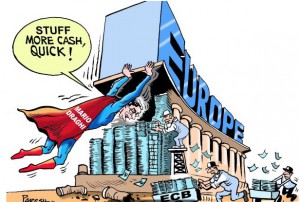
In a recent speech Draghi broke three taboos at once. First, he based his reasoning on the heterodox notion of a policy mix combining monetary and fiscal measures. Second, he explicitly mentioned the aggregate fiscal stance, whereas Europe has always looked at the fiscal situation exclusively on a country-by-country basis. Third, his claim that preventing the ECB from acting as a lender of last resort imposes a high price – making governments vulnerable and reducing their fiscal space – contradicts the tenet that the central bank must not provide support to government borrowing.  Draghi’s View

Draghi?