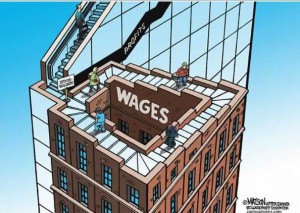
China Backing Small Cultural Companies

China is to lend more support to micro and small cultural companies in financing, taxation and personnel management.  “High costs and financing remain obstacles for small companies, and our guideline encourages banks and other finance institutes to be more generous when granting them loans,” said Liu Yuzhu, assistant minister of culture.

The guideline, jointly released by the ministries of culture, finance, industry and information technology, targets cultural groups with less than 100 staff. Such companies comprise over 80 percent of all cultural enterprises in China.
The document encourages companies to convert disused factories or warehouses into their working bases and organize and participate in public cultural activities.
The ministry is planning a regulation for government departments to purchase cultural products and services from a widened range of companies and organizations to give more commercial opportunities for small companies.

The ministry is exploring a professional title system that will increase salaries and benefits for those working in non-public cultural companies in accordance with their experience and achievements, and thus, enable these groups to attract more talent.
“Micro and small cultural groups enrich our culture, boost creativity and prosperity and increase employment opportunities. They are of crucial importance to social harmony, economic transformation and upgrades,” said Cai Wu, minister of the Ministry of Culture.

With low employment barriers and more artistic freedom, small companies are more astute in understanding people’s spiritual demands, Cai said.  The guideline, echoing a decision by the Communist Party of China last year, offers suggestions on innovation, finance and tax.   “The guideline is only a starting point. Whether these companies can really succeed lies in enforcement of regulations,” Cai added.

Cultural Companies in China

US Infrastructure Spending


Economists at the Federal Reserve Bank of San Francisco look at the impact of intrastructure repair on the economy:  Highway spending in the United States between 2008 and 2011 was flat, despite the serious need for improvements and the big boost to state highway funds from the Recovery Act of 2009. A comparison of how much different states received and spent shows that these federal grants actually boosted highway spending substantially. However, this was offset by pressures to reduce state highway spending due to plummeting tax revenues. In fact, analysis suggests national highway spending would have fallen roughly 20% over this period without federal highway grants from the Recovery Act.  Fueling Road Spending with Federal Stimulus

Infrastructure Repair


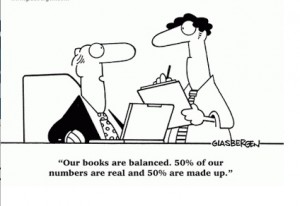
Should Auditors Sign Financial Statements?

An industry group which represents some of the US’s largest investors is urging regulators not to back away from plans to require auditors to sign the financial statements they prepare for companies.

There is an ongoing struggle between the Public Company Accounting Oversight Board, which regulates the accounting industry, and the Securities and Exchange Commission over reforms to auditor disclosure. The PCAOB, and many accounting reformers and investment groups had pushed for this change.

Audit Signatures?


Burger King Latest US Company to Consider Inversion

We continually advocate for a tax code that works for US corporations and US citizens.  Some of our writers have proposed eliminating corporate taxes entirely and taxing only dividends.  Who knows what will work best. But we should have a vigorous and open-minded discussion.


 Burger King Worldwide Inc., the second-largest U.S. burger chain, is in talks to buy Tim Hortons Inc. and move its headquarters to Canada, becoming the latest American company to seek a relocation to a lower-tax country.

Burger King, which is majority-owned by 3G Capital, would create the world’s third-largest fast-food chain by merging with Canada’s bigger seller of coffee and doughnuts, the companies said in a statement. Canada’s corporate tax rate is 26.5 percent, compared with 40 percent in the U.S., according to audit, tax and advisory firm KPMG’s website.

The deal threatens to renew debate over American companies shifting their headquarters internationally in search of a lower corporate tax bill. The trend drew criticism last month from President Barack Obama. His aides vowed that the administration would take action to curtail the practice.

3G Capital will own the majority of the shares of the new company, with the remainder held by other shareholders of Tim Hortons and Burger King, according to the statement. The two chains will operate as stand-alone brands, the companies said.

The combined business would have about $22 billion in sales and more than 18,000 restaurants in 100 countries, according to the statement. The deal is subject to negotiation, and Burger King and Tim Hortons don’t plan to comment further until an agreement is reached or discussions are discontinued.

Between mid-June and late July, when Obama began criticizing deals that cut taxes by relocating outside the U.S., at least five large American companies have announced plans to make such a move, known as an “inversion.” That includes AbbVie Inc. and Medtronic Inc.

Since the start of 2012, at least 21 U.S. companies have announced or completed the deals, comprising almost half the total of 51 such transactions in the past three decades.

Tim Hortons, Canada’s biggest coffee merchant, has about 4,500 restaurants and has been expanding its product lines to boost sales. The Oakville, Ontario-based company’s stock rose 2.8 percent to a record C$68.78 on Aug. 22, the most recent trading day. The restaurant operator posted results this month that beat estimates and said fiscal 2014 profit will top or be at the high end of its target range.

Earlier this month, Burger King reported that revenue fell 6.1 percent to $261.2 million in the second quarter. Same-store sales in the U.S. and Canada rose 0.4 percent. The company has been trying to introduce fewer new items to make its kitchens faster and less complex.

Burger King rose 1 percent to $27.11 at the Aug. 22 close in New York for a gain of 19 percent this year. Its shares rose 4 percent to the equivalent of $28.23 in German trading at 9:44 a.m. Frankfurt time.

The plan to move to Canada follows Burger King’s debut on the New York Stock Exchange in 2012. The chain had been taken private in 2010 by 3G, a New York investment firm, which got $1.4 billion in cash from the public offering and remains the majority shareholder with a 70 percent stake.

U.S. fast-food restaurants are struggling with shaky consumer confidence and steep competition, adding pressure to find ways to alleviate the burden. Burger King has been trying to draw customers with value deals, such as a two-sandwiches- for-$5 offer, as well as some new limited-time fare including chicken fries.

US Companies Invert


Addressing Employment at Jackson Hole

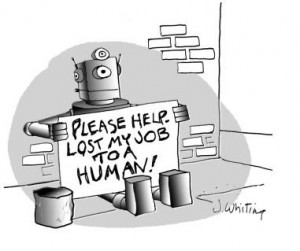
The disappearing middle class has been a topic of much discussion in recent years. David A. Auter, Professor and Associate Department Head, Department of Economics, Massachusetts Institute of Technology is the author of “Polanyi’s Paradox and the Shape of Employment Growth.”  While much has been made of the loss of jobs to automation and robots, Prof. Auter says that data indicates rather than a loss of jobs occurring, a rearrangement of jobs within the economy is taking place.

Auter finds that for Europe and the U.S., growth is occurring in low wage occupations and in high wage occupations while middle wage jobs have been declining over the past couple of decades. He relates this to the relationships between men and machines which he structures in the context of the 1966 proposition of physical scientist, social scientist and philosopher Michael Polanyi that intuitive knowledge is something that transcends learned theory. Following this reasoning he is not surprised to find that the onset of an age of automation and robots is not marked by the obsolescence of human “labor” but actually a redefinition of what that effort is, as reflected by the empirical data.

In 1966, the philosopher Michael Polanyi observed, “We can know more than we can tell… The skill of a driver cannot be replaced by a thorough schooling in the theory of the motorcar; the knowledge I have of my own body differs altogether from the knowledge of its physiology.”

Polanyi’s observation largely predates the computer era, but the paradox he identified-that our tacit knowledge of how the world works often exceeds our explicit understanding-foretells much of the history of computerization over the past five decades. This paper offers a conceptual and empirical overview of this evolution.

The challenges to substituting machines for workers in tasks requiring adaptability, common sense, and creativity remain immense. Contemporary computer science seeks to overcome Polanyi’s paradox by building machines that learn from human examples, thus inferring the rules that we tacitly apply but do not explicitly understand.   David Auter Paper

Jobs

Protests at Jackson Hole

More and more people realize that government fiscal policies impact them.  Protesters, worried that the central bank is about to put its foot on the brakes, have come to the Federal Reserve’s Jackson Hole retreat this year to urge the central bank to hold off and give the economy more time to heal. This is believed to be the first time there ever has been protesters at the event.

“We strongly urge the Federal Reserve to reject the calls to raise interest rates and slow the economy down,” said The Center for Popular Democracy, a coalition of 70 organizations, in a letter to Federal Reserve Chairwoman Janet Yellen and her colleagues.

“Although the stock market has roared back to life, and the wealthiest Americans are richer than ever before, too many of us struggle to secure even basic levels of dignity,” the letter said.

Becky Dernbach, 28, an organizer with Neighborhoods Organizing for Change — an advocacy group for low-income residents in Minneapolis — said she came to Jackson Hole to make sure that the voices of average workers were being heard by the Fed.

Kendra Brooks, 42, a resident of Philadelphia who has an MBA but still found herself out of work even after her unemployment benefits ended, said the American dream has “fizzled” in this economy.  “We are not their [the Fed’s] primary concern. They are more focused on the top end of the [income] scale,” she said.

The activists said the Jackson Hole protest was the start of a new effort to get officials to understand the economy is broken.  The group held a two-hour meeting with Kansas City Fed President Esther George, who has been one of several regional bank presidents advocating for a rate hike sooner rather than later.

Ady Barkan, a staff attorney with the Center for Popular Democracy, said that the group appreciated the meeting but that the two sides had talked past each other.  George told the group that higher rates might not come soon, but said are coming and will balance the economy, he said.

“That is completely wrong,” Barkan said. The way to combat imbalance in the economy is through strong regulation “not throwing people out of work,” he said.

Debate Over Monetary Policy

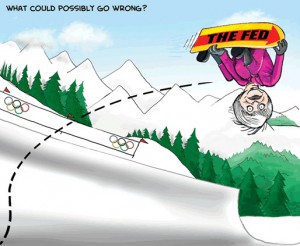
Janet Yellen Begins to Address Employment and Global Instability


Janet Yellen delivered her first keynote address at the annual conference of central bankers in Jackson Hole, Wyoming.

This year’s gathering is focused on “Re-Evaluating Labor Market Dynamics.”  She described the difficulties confronting an assessment of today’s labor market, including the challenges facing an evaluation of the remaining slack in employment. This takes in factors such as the labor participation rate, wage dynamics, involuntary part-time employment and the extent to which the decline in the unemployment rate “somewhat overstates the improvement in overall labor market conditions.”

In linking this analytical discussion to the prospects for monetary policy, she reinforced two messages delivered at Wednesday’s Federal Open Market Committee: A less dovish tilt in the general thinking of Fed officials amid a recovery in the labor market, and significant differences in officials’ thinking when it comes to the details of when and how high to raise interest rates.

Yellen shied away from another issue that is attracting growing attention among economists — namely, the costs and risks of whether “there is likely to be a price paid in terms of financial stability,” as economist Larry Summers recently put it.

Finally, Yellen was silent on the issue of how to navigate the intensifying multispeed policy world of central banking in developed countries. Her main dilemma now is how quickly to ease off the monetary-policy accelerator. This is a stark contrast to the challenge facing European Central Bank President Mario Draghi. He is dealing with the question of when and how to step harder on the accelerator.

With other types of economic stimulus undermined by political polarization and dysfunction, the challenge for central bankers is managing the widening difference in monetary policy and market interest rates (just look at the gap between the 10-year U.S. Treasury note and the comparable-maturity German bund). Much of the burden might be borne by the foreign-exchange markets, potentially restoring an element of volatility that has been contained by central banks. This only adds to concerns about the impact of financial instability on the global economy down the road.

Janet Yellen at Jackson Hole


Argentina’s Default Spawns Creative Thinking

Matt Levine writes:  The phrase “contempt of court” is a little funny. Normally it just means that, if a judge tells you to do something and you don’t do it, the judge can throw you in jail for contempt. If you are Argentina, on the other hand, and you don’t do what New York federal Judge Thomas Griesa tells you to do, he can’t throw you in jail, because you’re way over there in Argentina, and also a country. So it doesn’t do him much good to find you in “contempt of court,” even if you’ve expressed your actual contempt for the court in the form of personal attacks on him in advertisements and press releases and speeches. What to do?  Argentina’s default

Follow the Money

Pay Parity for Women

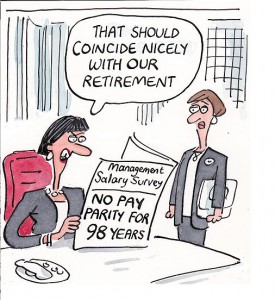
Women get paid less than men in almost all jobs, but when women in low-wage jobs need to take time off work to care for children, they are at an even greater disadvantage.

If all employees got paid the same hourly amount (assuming they’re equally productive on the job), it would go a long way toward closing the gender pay gap, according to Claudia Goldin, a Harvard economist who has analyzed income data across occupations, including a new set of unpublished data on hourly workers that she prepared for the White House Summit on Working Families in June.

Instead, she has found, people in professions like law and finance get paid disproportionately more when they work extra-long hours. At the other end of the spectrum, people in low-wage jobs do not benefit much from working more, but get paid disproportionately less per hour when they work fewer than 40 hours a week. The penalty is similar for men and women — but ends up hurting women more, because they are far more likely to take breaks during their careers or need shorter or predictable hours to handle child care.

Working fewer hours in low-paying jobs, Ms. Goldin said, “can get even nastier, because of the problem that flexibility here is not just the number of hours but whether you even know which hours you’re going to be working.”

While the challenges are different at high-income and low-income jobs, the bottom line is the same: Employees, particularly parents, need some measure of predictability and control over the hours they work; the workplace could be much more equal if they weren’t penalized for not working a straight 40-hour workweek.

Working-class women are much more likely than high-wage ones to leave work altogether when their children are infants and toddlers, according to Ms. Goldin. That is in part because the United States does not mandate paid maternity leave or subsidized child care, so many women cannot afford to keep a job while their children are young.

Once women return to work, they get paid less than men still on the job because they have lost skills during their time off and because they tend to work less than full time. As a result, they are more likely than men to work in hourly jobs instead of higher-paying salary and supervisory ones, and get paid less even for the hours they work.

The problems affect not just parents but also students, people with more than one job and those with other caretaking responsibilities, like for elderly parents. With the rise in part-time workers who want to work full-time and scheduling software that forces workers to be on call all the time, getting a reasonable schedule is even harder.

Women earn less than men in low–wage jobs. They are further penalized for working fewer than 40 hours a week, which they do more often than men in order to take care of children.

Using federal data that includes hourly earnings, Ms. Goldin analyzed eight broad occupation categories that pay near minimum wage, including food preparation, clerical work and service jobs like health aide or housekeeper. Women in the operators occupation, like sewing machine operators or bus drivers, are worst off, earning about 83 cents for every dollar men earn after controlling for hours worked, while female office assistants earn about 96 cents on the dollar, according to her data. While the majority of people in these jobs work 40 hours a week, 32 percent of women and 10.5 percent of men work fewer than 40 hours. That is where the additional pay disparities come in.  The reasons employers pay people who work shorter hours disproportionately less is not entirely clear, Ms. Goldin said, but part of it could be to cover fixed costs like benefits, training and office space for people who aren’t there all the time.

 Pay Parity for Women

Lawrence Summers: Secular Stagnation

Mark Whitehouse writes:  Governments and central banks may have to consider much more aggressive policies to improve the economy’s growth potential and resilience. As sketched out in a new e-book from the Central for Economic Policy Research and elsewhere, these could include investing more in infrastructure and education, raising inflation targets and placing limits on borrowing by requiring more equity in everything from homes to banks.  Lawrence Summers- Secular Stagnation

Stagnation