Nigeria: Launching Pad for Successful Business in Africa

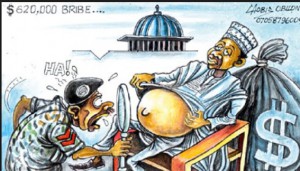
The Economist writes:   2001 MTN, a fledgling telecoms company from South Africa, paid $285m for one of four mobile licences sold at auction by the government of Nigeria. Observers thought its board was bonkers. Nigeria had spent most of the previous four decades under military rule. The country was rich in oil reserves but otherwise desperately poor. Its infrastructure was crumbling. The state phone company had taken a century to amass a few hundred thousand customers from a population of 120m. The business climate was scarcely stable.

MTN took a punt anyway. The firm’s boss called up colleagues from his old days in pay-television and found they had 10m Nigerian customers. He reasoned that if they could afford pay-TV they could stump up for a mobile phone. Within five years MTN had 32m customers. The company now operates across Africa and the Middle East. But Nigeria was its making and remains its biggest single source of profits.   Nigeria, The Launching Pad  

Nigeria's Problems Do Not Inhibit Development


What Will Central Bankers Discuss in Wyoming?

Mohammed A. El-Erian writes:  Minutes released yesterday from the latest policy-making meetings of the U.S. Federal Reserve and the Bank of England confirm that central bankers will have plenty to discuss when they gather for their annual conference in Jackson Hole, Wyoming, starting Friday.

Most important, the minutes illustrated unusual disagreements over how much more central banks can and should do to support economic growth and combat persistent unemployment.

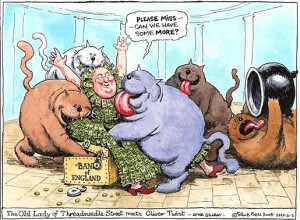
At the Bank of England, two members of the monetary policy committee broke ranks with the majority, favoring an immediate interest-rate increase despite low inflation and no wage growth. In the case of the Fed, officials disagreed not only about how much slack remains in the labor market, but also about how to measure it — both crucial issues in determining how much longer the central bank should keep trying to stimulate economic growth.These issues will be front and center at the Jackson Hole conference, and will probably be the subject of Fed Chair Janet Yellen’s keynote speech Friday. Time is of the essence, because much of the discussion will explore whether central bankers’ moment to change course could be drawing near. As the Fed put it in its minutes, officials “generally agreed that both the recent improvement in the labor market conditions and the cumulative progress over the past year had been greater than anticipated and that labor market conditions had moved noticeably closer to those viewed as normal in the longer run.”

The minutes also displayed a reluctance to talk about an issue that is gaining attention as prices in financial markets become increasingly detached from underlying economic conditions: the trade-off between the immediate gains from stimulus and financial stability. A number of prominent economists are warning that the developed world may have fallen into a low-growth equilibrium known as secular stagnation, in which the extraordinary measures adopted by central banks to achieve more robust growth could ultimately destabilize financial markets. Paraphrasing what Ben Bernanke said in his 2010 speech to the Jackson Hole conference, policy makers will have to consider whether they are near or past the point where the benefits of their actions are harder to justify given rising costs and risks.

Finally, the minutes said little about what the global impact will be if the Bank of England and the Fed start easing off the accelerator at a time when the European Central Bank is likely to intensify its stimulus efforts. If the divergence persists, the further shifts in interest rates and currencies could trigger volatility in financial markets around the world. It’s a topic that definitely should also be on the agenda in Jackson Hole.

Monetary Policy

Women’s Pay


Guardian US and ProPublica readers share their stories of finding out that they were paid less than their male colleagues.

Lilly Ledbetter had worked at Goodyear for years before someone slipped her a note telling her that she was making a lot less money than other men at her seniority level. Others might learn it through gossip, or through a stray pay stub.

Working women all over the US have had their own equal pay awakenings, when they realized their salaries lagged those of others who had the same qualifications. The knowledge can be a shock.

One thing is clear, however: most American women are still not getting paid as much as their male colleagues.

“Women against feminism” – a viral social media campaign that sprang up this month – isn’t purely an American phenomenon.   Juliette, 45, insisted that she too was “sick of being made out to be a victim simply because I am a woman. I chose to have children and be their primary carer. I am not underpaid or a victim.”

Yet her annual pay is £5,000, or $8,473, less than that of the men in her office. Her explanation? It is not discrimination, just an effect of her having a child and needing flexible hours. “It is not a criticism of my abilities and I do not think all women are discriminated against,” she wrote.

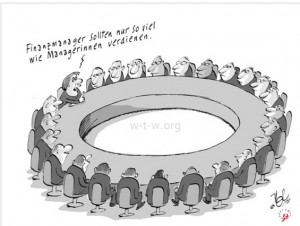
The truth, unfortunately, is that women have been and still are paid less even if they do not take time off to have a child or need flexible hours. They earn, on average, about 77 cents for every dollar a man earns.  In span of a year, they make $11,500 less than their male counterparts.

Being underpaid doesn’t automatically make you a victim. It’s an alert to stop being one. Most women who have discovered unequal pay have stood up for themselves, paving way for other women in their company. Some quit to prove that they deserve to be treated the same as their male co-workers. We all know the statistic that about 57% of men ask for their raises. For women, that number was 7%.

Yet women who do raise the subject of salary find that asking is not enough. Often times, they are told to take it or leave it. Frequently, even when given raises, their new pay still comes short of that of their male coworkers.

While that might be enough to discourage some from trying, women have to keep asking for raises and for higher pay. Why? Because men don’t hesitate to ask.  Unequal pay

Equal Pay?

Equal Pay?

Perils of Consensus Among Economists

Dani Rodrik at Princeton writes:  A consensus among economists can arise for both good and bad reasons. Sometimes a consensus is innocuous enough, as when you hear economists argue that one ignores the role of incentives at one’s peril.

Can anyone really disagree with that? Sometimes it is restricted to a particular episode and is based on evidence accumulated after the fact: Yes, the Soviet economic system was hugely inefficient; yes, the Obama fiscal stimulus of 2009 did reduce unemployment.

But when a consensus forms around the universal applicability of a specific model, the critical assumptions  of which are likely to be violated in many settings, we have a problem.  Consensus Among Economists

No one Notices the Gorilla in the Room

Vocational Training in China

As a migrant worker, Li Weichao spent much of his youth shifting from one temp job to another, living thousands of miles away from his family to perform backbreaking labor for minimal pay.  The hours were long, the travel was tiring and the pay, while better than some, was just enough to get by.

“I used to do manual work on construction sites, making around 300 yuan ($48) a day. I was always worried about finding my next job,” the 26-year-old from Henan province said.
But his recent graduation from vocational school looks to change that. Receiving technical training as a chef, Li recently landed a stable job close to home working at a restaurant in Zhengzhou, capital city of Henan province.  “Since attending vocational training school to receive training, I think the days of worrying about my next job are over,” he says.

As China loosens household registration restrictions to allow migrant workers to receive equal urban welfare, many like Li now seek to settle down in cities.
The household registration system is tied to one’s place of residence and was set up in 1958 to control movement of rural population into cities. The system has prevented the country’s 269 million migrant workers from receiving the same public benefits as city dwellers and is widely believed to hold back urbanization and domestic consumption.
With the restrictions changing as many as 100 million migrant workers are expected to become “real city dwellers” by 2020.  To ensure new residents can find stable jobs to afford city life, cities across the country are focusing on furthering vocational training for migrant workers.

Li’s home province of Henan, the country’s most populated, has a work force of 49 million people. In 2009, Henan launched a province-wide campaign to strengthen the working skills of its residents by offering training programs.
By the end of 2013, the programs helped train a total of 17.8 million people.

Anhui province, another region with a strong work force, also adopted training programs to improve the skill set of its workers. In Anhui, these programs are currently offered not just by government, but schools, private institutions and businesses.

Official statistics show that, since the new training programs, the average monthly income of Anhui’s migrant workers increased to 2,909 yuan – 300 yuan higher than the national average.  However, one survey found that only about 30 percent of China’s migrant workers have undergone vocational training. A lack of technical skills are the main obstacle preventing them from becoming urban and industrial workers, the survey found.
Zhang Junjie, a political advisor from Anhui, has been studying the vocational training of migrant workers for years. His research reveals that most vocational training schools only provide old-fashioned courses such as computer, welding and hairdressing. Such courses are out of touch with the diverse needs of China’s changing job marketplace.
The new programs include training in such skills as auto repair, molding for the manufacturing industry and heavy construction vehicle operation.

According to a national plan on urbanization issued early this year, China will conduct vocational training for 10 million migrant workers a year starting from 2014 to 2020 with the goal of helping develop the nation acquire specific skills.

Auto Repair in China


How Banks Can Really Make Money

Karl-Theoor zu Guttenberg and Richard Werner write: By extending credit, banks actually create 97% of the money supply. Given that a dollar in new bank loans increases the money supply by a dollar, banks are not financial intermediaries; they are money creators.

The growing recognition of banks’ true function will be a game-changer in areas like monetary policy and financial regulation, enabling officials to tackle effectively problems like recurring banking crises, unemployment, and underdevelopment. But it will take time to be fully accepted – not least because it challenges a fundamental tenet of traditional economics. Indeed, according to this new paradigm, savings, while useful, are not an essential prerequisite to investment and thus to economic growth. The United States, which experienced a prolonged period of growth without savings, is a case in point.  How Banks Can Make Money

Bank Loans


Overzealous Prosecutor in Bank of Tokyo Case?

Matt Levine of Bloomberg, a tough and fair-minded appraiser, assesses the meaning of the New York State Department of FInance’s settlement with PriceWaterhouseCoopers in their consultancy on the Bank of Tokyo’s illegal dealings in Iran and Sudan:

Levine writes:  There’s much that is strange about this story of PricewaterhouseCoopers’s consulting work for Bank of Tokyo-Mitsubishi UFJ, starting with the fact that PwC is accused of “lacking the objectivity and integrity expected of consultants but not actually breaking the law.” There are some pretty big assumptions in that sentence! What objectivity and integrity do you expect from consultants?

Bank of Tokyo-Mitsubishi had done some illegal transactions with Iran and Sudan and so forth, and it hired PwC to do a historical transaction review of all those illegal transactions. The idea was that PwC would write a report, and the bank would submit it to the New York Department of Financial Services as part of its plea for leniency for, you know, doing all those illegal transactions. PwC wrote the report, and the bank sent some edits to basically make it sound less bad.   Facts and Non-Facts

A Problem of Tone


Anti-Trust Probes Won’t Deter Investment in China

Li Jiaboa writes:  Antitrust investigations into foreign companies in China will not scare away foreign investors despite the inflow of overseas spending in July hitting a two-year low, an official said on Monday.

“Just a few antitrust probes will never scare away foreign investors,” Shen Danyang, spokesman for the Ministry of Commerce, told reporters.

“As for China stepping up economic restructuring, it’s normal to have some monthly fluctuations in foreign direct investment figures. This doesn’t represent the overall FDI trend and should never be connected with antitrust probes into foreign companies. Groundless speculation is completely unnecessary,” Shen said.


Tthe world

The FDI last year was $117.59 billion.  From January to July, actual FDI flowing into China, excluding the financial sector, dropped by 0.35 percent from a year earlier to $71.14 billion, the ministry said.  For July alone, FDI slumped by 16.95 percent year-on-year to $7.81 billion, the lowest since July 2012, according to the ministry.

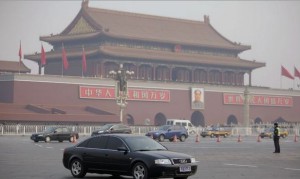
Antitrust authorities have launched a series of investigations into several industries, including technology firms Qualcomm and Microsoft and auto brands such as Audi, BMW and Mercedes Benz.

The EU Chamber of Commerce in China, representing more than 1,800 companies, has voiced concern that foreign companies are being targeted disproportionately.

Shen said: “After the Antitrust Law took effect six years ago, both domestic and foreign companies were investigated. The law treats all enterprises equally, and foreign ones are not targeted.

“The investigations into suspected monopolies aim to build a fair, transparent and orderly market, which is helpful in improving the investment environment. The assumption that some companies or countries are targeted is completely baseless.”

Ma Yu, a senior researcher at the Chinese Academy of International Trade and Economic Cooperation, a ministry think tank, said, “The intensive antitrust probes have somewhat dented the inflow of foreign investment.

“The investigations raised foreign investors’ concerns over China’s policies and investment environment. Restraints on market access to modern services in China are also to blame for the slowed investment inflow.”

Audi in China

Top Angel Investors in US

individual angel investors.

Specifically, we analyzed 2000 individual angel investors and looked at Investor Mosaic factors such as an investor’s stage of entry, past exits, network centrality, and brand, among other things, in order to understand who the top angels really are.

The top-ranked angels included well-known names such as Naval Ravikant, Ashton Kutcher, Tim Ferriss, and David Tisch as well as some lesser-known names as you will see below.  As always, the data in this brief all comes from CB Insights.

The analysis is broken down as follows:

  • Which angels have the best network?
  • Which angels have the highest investment follow-on rate?
  • The Top 20 Rankings
  • What sectors & industries are the top angels focused on?
  • Where are top angel investors investing – geographically?

Top Angels in Investment

 Angel Investors