EU Supports Food Producers Impacted by Sanctions on Russia

The European Commission today (18 August) announced that it will provide support for European food producers who have been affected by Russia’s ban on imports of agricultural products.

A total of €125 million will be available to producers, allowing the removal of some surplus products from the market, which are then distributed free, with farmers being compensated. The aim is to keep prices relatively stable. The measures will apply until the end of November.

Russia announced an import ban on food products from the EU and the US on 7 August in response to the sanctions imposed on it because of its actions in Ukraine. Since then, many producers have been faced with a surplus and have seen prices fall dramatically.

Dacian Cioloș, the European commissioner for agriculture, said that the money, which is made available through emergency measures as part of the Common Agricultural Policy (CAP) will reduce the overall supply of several fruits and vegetables. “Acting early will provide an efficient support to the price paid to producers on the internal market, help the market adjust and be cost-effective,” he said.

Farmers’ group Copa-Cogeca, which had written to Cioloș calling for a quick and effective response, welcomed today’s “swift action”.

Distribution of the money will take place through producers’ organisations, but will be available for producers that are not members of such organisations. The following products are affected: tomatoes, carrots, white cabbage, peppers, cauliflowers, cucumbers, gherkins, mushrooms, apples, pears, red fruits, grapes, and kiwi fruit.

An estimation of the volume of food concerned could not be given, the Commission said. According to a Commission spokesperson it depends on the prices per product and the evolution of the market.

Russia is the EU’s largest export market for food and agricultural products, and exports of the goods banned by Russia represent about 7% of EU exports. Agriculture ministers from the EU’s member states will meet on September 5th to discuss the food ban.

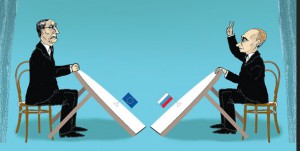
EU and Russia


Labor Unrest After IT Layoffs

Labor unrest is expected to spread following massive layoffs at several IT giants, with experts calling on multinationals to take the issue seriously.

Cisco Systems has announced a plan for global job cuts, while thousands of Microsoft employees in China are trying to negotiate a deal for better compensation following layoffs.

“Labor disputes involving overseas information technology companies are set to grow for the next two years at least as the Chinese economy slows,” Zhang Zhiru, a labor rights expert at Shenzhen Chunfeng Labor Disputes Services Center, said on Thursday.

He said that although most of the IT companies are willing to provide compensation higher than that provided for under Chinese law, this does not mean they have done a perfect job.

“The law only sets a minimum level. Companies with better financial power should definitely pay more (in layoff compensation) if employees need this,” Zhang said.

Cisco, the world’s largest telecom equipment maker, plans to cut up to 6,000 employees globally. It did not say how many employees will lose their jobs in China, one of the world’s biggest IT consumers.

Microsoft’s biggest cut in the company’s history could cost at least 4,000 jobs in China, according to a person familiar with the issue. Most of the cuts will come at three Nokia facilities the company acquired months ago.

More than 500 employees at a Microsoft handset development site in Beijing handed in a signed request last week calling for direct talks with management of the company.

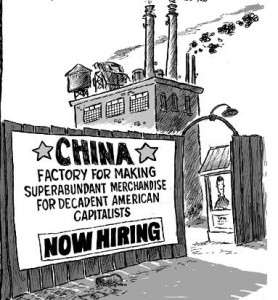
American IT Companies Lay Off Employees in China


Fed Reserve of Kansas in Jackson Hole

Here are the questions the financial press will be asking:

Why is the job market improving so steadily when output growth is slow and erratic? How low can the unemployment rate go before officials need to worry about wage pressure and inflation? Can the long-term unemployed be drawn back into the workforce in a more vibrant economy? Is workforce productivity waning?  Jackson Hole 2014

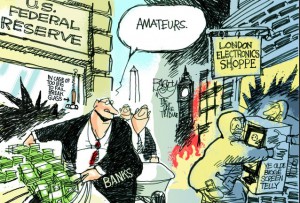
US Federal Reserve

Chinese Investors Want to Buy US Chip Maker

US digital imaging chipmaker OmniVision Technologies Inc said it received a buyout proposal from a group of Chinese investors, including a State-owned firm.

The proposed buyout values OmniVision at about $1.7 billion, but would almost certainly face scrutiny from the Committee on Foreign Investment in the United States if the Santa Clara, California-based company accepts it.

Attempts by Chinese firms to buy US technology companies in the past have faced immense scrutiny, especially due to cybersecurity concerns and fears of transfer of technology that could be used for military purposes.


“I think any Chinese investment in the US is going to be looked at carefully,” said Tim Keeler, a partner at law firm Mayer Brown LLP. OmniVision makes chips for smartphones and tablets including Apple’s iPhones.

CFIUS, an interagency group chaired by the Treasury secretary, reviews deals that could bring US businesses under foreign ownership and is required by law to assess any transaction involving a State-owned firm.

The Chinese investment group, led by Hua Capital Management Ltd, includes State-owned Shanghai Pudong Science and Technology Investment Co Ltd.

Jim Lewis, a technology expert at Washington-based think tank Center for Strategic and International Studies, said the deal was likely to face greater scrutiny because China has been looking to buy chip-making technology.

Chinese State-owned investment firms have offered to buy several US-listed chipmakers in the past year, such as Montage Technology Group, Spreadtrum Communications Inc and RDA Microelectronics Inc.

However, equity analysts at Robert W. Baird and Oppenheimer & Co said they did not believe OmniVision had technology that might raise security concerns. OmniVision’s competition includes Sony, Samsung Electronics Co and Himax Technologies Inc.

The company has a design center and a testing facility in China and generates 80 percent of its revenue from the country.

The company is gaining market share against its key competitors in the Chinese smartphone market, helped by strong demand for image sensors and the lower cost of its products, Baird analysts wrote in a note last month.

The proposed offer price of $29 per share represents a premium of 17.9 percent to the stock’s Wednesday close. OmniVision shares touched a near three-year high of $28.34 on the Nasdaq. The company said it was evaluating the proposal and that JP Morgan Securities was its financial adviser.

China Invests in US Companies

US Mayors Report Widening Wage Gap

Jobs gained during the economic recovery from the Great Recession pay an average 23% less than the jobs lost during the recession according to a new report released today by The U.S. Conference of Mayors (USCM) under the leadership of President Sacramento Mayor Kevin Johnson. The annual wage in sectors where jobs were lost during the downturn was $61,637, but new jobs gained through the second quarter of 2014 showed average wages of only $47,171. This wage gap represents $93 billion in lost wages.  US Conference of Mayors Press Release

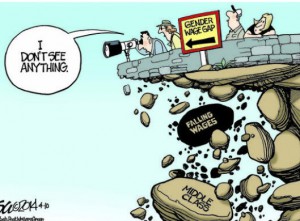
Wage Gap

Are Sanctions Against Russia Working?

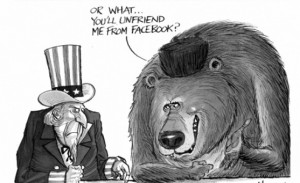
Marcel Fratzcher writes:  With the crisis in Ukraine intensifying, the United States and the European Union are locked in a battle of wills – and sanctions – with Russia. Indeed, in retaliation for the intensification of Western financial sanctions, Russia has announced a ban on food and agricultural imports from the US and the EU. But the real threat to the West lies in the potential impact of a financial crisis sparked by its own sanctions against Russia.

Consider Russia’s 1998 financial crisis. In August of that year, then-President Boris Yeltsin declared, “There will be no devaluation – that is firm and definite.” Three days later, the ruble was devalued, and Russian financial markets went into a tailspin. With capital pouring out of the country, the Russian government was forced to restructure its debt, and the economy entered a deep recession.

Though Russia was relatively insignificant financially, its crisis had far-reaching consequences. Among the worst affected was Argentina; the Russian crisis exacerbated a decline in investors’ confidence in emerging markets that culminated in Argentina’s sovereign default less than four years later. Even the US and Europe were not immune, with the collapse of the major hedge fund Long-Term Capital Management (LTCM) fueling anxiety about the viability of many other financial institutions.

Today’s financial dramas bear a striking resemblance to this experience. Argentina has technically defaulted; American and European financial institutions and markets are jittery; and Russia is promising that the sanctions it faces will have no impact on its economy.

The most obvious similarity is Russian President Vladimir Putin’s assertions that his country can weather any and all Western sanctions. That may be wishful thinking. In fact, barring most major Russian banks from operating freely in Western capital markets could affect the entire Russian economy, not just the banks themselves. And the central bank’s decisioin to raise interest rates to buttress the ruble may lead to much tighter credit conditions for companies and households, pushing the Russian economy into recession this year and next.

The problem with financial sanctions is that no one knows precisely how they will unfold – especially in an economy as large as Russia’s. If they prove to be more effective than intended, they will pose a serious threat to global financial stability.

Europe’s banks have extended almost €200 billion ($268 billion) in loans to Russian institutions and firms, and hold a significant share of Russia’s euro-denominated assets, making them especially vulnerable. Having just emerged from a deep recession, financial disruptions could easily cause Europe to slide back into recession.

Compounding the problem, no one truly understands the precise connections among Russian and European institutions and markets. The collapse of LTCM in 1998 was completely unexpected. Is Europe today prepared to deal with a similar failure of an important financial institution?

The financial sanctions on Russia are not targeted, temporary, or fully credible. If they affect Russia’s entire economy, hitting ordinary citizens the hardest, popular support for Putin’s regime may solidify further. Of course, an economic slowdown could erode Putin’s popular support, which is based on the gains in living standards made under his leadership. In that case, Putin’s response could be even more damaging.

Another problem is that implementing sanctions that cannot be reversed quickly removes the incentive for Russia to return to the negotiating table, especially because the threat of an escalation of financial sanctions lacks credibility, given the risk to European and US financial stability.

Once these sanctions begin to bite, no one can say who will be hurt – or how badly. And, as Russia’s experience in 1998, and Argentina’s after 2002, demonstrated, the process of restoring confidence among market participants is a long and painful one.

These concerns do not mean that the US and the EU should not impose sanctions on Russia for its illegal annexation of Crimea and continuing efforts to destabilize eastern Ukraine. But sanctions that hit the real side of the Russian economy – such as energy, natural resources, and the military – could provide a better solution. Though such sanctions may not work as quickly, they would be targeted, temporary, and credible, enabling the US and Europe to control – and adjust – the impact on the Russian leadership and economy.

In any case, US and European leaders must recognize that all sanctions will have costs – many of them unexpected – for both sides. If they are not willing to risk global financial stability in an unpredictable game of chicken with Putin, perhaps it would be wise to re-think the composition of the sanctions that they impose.

Sanctions

Gap in Math and Science between Men and Women

The question of “Who is Minding the Gap?” is particularly timely and relevant to our national science, technology, engineering, and mathematics (STEM) higher education reform efforts because the retention and persistence of an ever increasing number of women in STEM at the baccalaureate level is heavily dependent upon the number of women faculty represented at all professorial levels in STEM fields. Recent literature supports this notion and suggests that a critical mass of women faculty in postsecondary STEM education is necessary to adequately support the needs of women undergraduate students. In fact, Bettinger and Long (2005) have shown that one of the greatest influences on and determinants of success in STEM disciplines for women students is access to same-gender role models. Additionally, O’Neill (2002) reports that same-gender and same-race mentoring often involves stronger psychosocial support that may yield better career outcomes.   Who is Minding the Gap

Math?