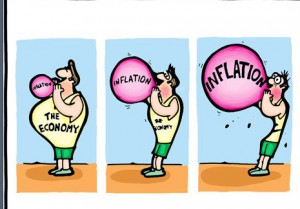
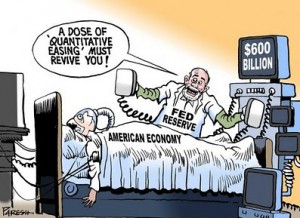
Japan has failed to stimulate its economy by this method. The US has tried and failed to push up inflation and wages. We will see what they do this week. Some think the Fed has no more tools to deploy against the sluggish economy.
Japan has failed to stimulate its economy by this method. The US has tried and failed to push up inflation and wages. We will see what they do this week. Some think the Fed has no more tools to deploy against the sluggish economy.
Our analyst and commentator Lloyd McAulay writes: Discussion of the increase in economic inequality became noticeably more frequent recently. The best selling Thomas Piketty book on “Capital” has prompted much of the discussion. A main technique for reducing inequality has been through the tax code. This article discusses the personal income tax code with reference to the United States. Other articles will discuss the business tax code, the inheritance tax, an asset tax (which is proposed by Piketty) and non-tax matters, such as the minimum wage, relevant to income inequality. I do not know enough to be sure of the thresholds or even of the rates set forth in the following. But with that caveat, I can structure an approach and assume thresholds. The biggest unknown is the amount of income that is now free of taxes or , like capital gains, subject to reduced tax rates.
1. A No Tax Threshold of $60K. I suggest a family income of up to $60,000.00 as the starting point for income tax. This means no income tax on the first $60K of any family’s income. I think in our amazingly prosperous economy, that those who are in the lower half of income should pay no income tax. Remember that they pay Social Security, sales tax and those taxes, such as corporate and real estate, that are part of the cost of doing business and thus incorporated in the price of goods and services. My $60K suggestion recognizes that median family income is about $55K. I up that threshold by about 10% to cover the fact that I propose no deductions for anything, including charitable contributions, mortgage interest, local income tax, and medical expenses. The $60K threshold might be affected by what is collected by items 2 and 3 below. We should consider a single rate structure for individuals and do away with head of household and married filing jointly forms. This would reduce the threshold under which no taxes are paid.
2. All Income Fully Taxable. This is just what it says. I urge no special treatment for dividends, capital gains, local bond interest, inheritance and other so-called “unearned” income. The $60K threshold means some unearned income would not be taxed anyhow. How much tax this approach produces affects the threshold and the tax rate.
This unearned income should be subject to withholding. Since I treat dividends as fully taxable personal income, I would treat them as a corporate expense.
3. No Deductions. The $60K can be looked at as including a modest standard deduction since median family income is probably under $55K. Eliminating deductions is tough to achieve politically. This proposal eliminates a vast amount
of so called tax compliance. There will be no deduction for charitable giving, mortgage interest or medical care. I have read that there are 300 items now covered by deductions and special tax treatment.
4. No Charitable Deductions. One advantage is that it gets the government out of the business of deciding what is a charity. Why is the Metropolitan Museum a charity and Bartlett Farms not? Why is it a charitable act for MOMA to show films and it is not for Loews to show films?
5. Inherited Income. All inherited income should be treated like any other income and taxed at the rate which applies to the individual getting that income. This means no separate estate tax. Briefly: employ an inheritance tax and not an estate tax.
6. A “sort of” Flat Rate. On income over $60 thousand and up to about $2 million, I suggest a flat rate at an amount to cover tax requirements. I wildly guess that this will mean a rate below 40%. It is a function of how much is pulled in by taxing all income. There may be some trade-off between threshold and this rate. Because the
threshold is high, this kind of flat rate becomes what is called “progressive”. (i.e. mathematically progressive). If the “flat” rate is 40%, a person earning $120K, would pay $24K (0.4 times 60K); an overall rate of 20%.
7. A Millionaire Rate. The amount over $2 million, could be taxed at a maximum feasible rate. Going over 50% probably results in too much tax avoidance. This is hard to gauge. The federal rate should take into account state and city rates so that the tax payer’s top dollar rate for all three income taxes will not exceed 50%.
8. Increase the Ceiling for paying S.S. Tax. The S.S. tax and Medicare tax should extend to all income up to where the millionaire rate kicks in. These taxes are essentially a flat tax rate component of income tax.
9. Negative Income Tax. Keep this tax for the lowest earned-income group. It is also called the earned income tax credit.
The above would reduce the tax code enormously . It would reduce efforts now made that distort economic decisions in order to gain legal tax advantage.
Policy Considerations that are relevant to the above:
1. Those who benefit most should pay for that governance structure which protects the benefit.
2. There is an aesthetic, ethical and even moral impulse against great inequality.
3. It is efficient and thus good for the economy to have a simple system.
4. It aids public acceptance for the system to be simple. I suspect that the personal income tax code could be written in a few pages.
5. It rewards work by low income workers.

Two years ago, in something like a quirky, B2B Craigslist hookup, Heinz, Ford, Coca-Cola, Nike, and Procter & Gamble found one another. Since then, the five companies have been exploring ways to replace conventional, petrochemical-based plastic with materials derived completely from plant matter.
This week, Ford announced that it and Heinz have made a good bit of progress, as they’ve worked to turn the latter’s tomato waste into the former’s bioplastics. Ford says that tomato skins, for example, may ultimately be used to create plastic for wiring brackets, panels, or storage bins. (Still no word on the seeds and stems, which, as any college student can tell you, are problematic.)
Ellen Lee, a plastics research technical specialist with the automaker, says that “Our goal is to develop a strong, lightweight material that meets our vehicle requirements, while at the same time reducing our overall environmental impact.”
Which is great, but it avoids any mention of economic imperatives. Despite the hazards involved in producing and employing plastics derived from petrochemicals, companies keep doing so because it’s cheap. Recycling old materials and creating new ones from waste takes time and considerably more money — at least in the initial phases. That’s a deterrent to managers and shareholders focused on the bottom line.
There are also limits to the safety and effectiveness of these new materials. Plant-derived products may be fine for building storage bins, but no one’s found a way to use them as substitutes for sheetmetal. (Though that hasn’t kept some from trying.) Shifting to aluminum car bodies can lessen the environmental impact of auto manufacturing, since aluminum is easily recycled, but the dream of a fully recycled or bio-based car is a long way off.
And sadly, future technology isn’t necessarily much cleaner. As eco-friendly as battery electric and fuel cell vehicles may seem, they still require a lot of resources — not just mined metals that create car batteries, but also electricity that’s often generated from “dirty” sources.
Like global warming, education, the obesity epidemic, and countless other contemporary problems, greening cars can’t be done in one fell swoop. It’s death – or in this case, success – by a thousand cuts. Kudos to Ford and Heinz for taking a stab at it.

In the interest of developing electric cars, Elon Musk will give you his patents if you want them. The chief executive of Tesla Motors, the electric car company, will let competitors use its patents, numbering several hundred, without the fear of triggering a lawsuit. In a blog post Thursday, Mr. Musk notes his reasoning for a decision that would ordinarily leave patent lawyers scratching their heads.
Namely, that “annual new vehicle production is approaching 100 million per year and the global fleet is approximately 2 billion cars,” he says in the post. “It is impossible for Tesla to build electric cars fast enough to address the carbon crisis.”
This decision goes along with the company’s stated goal: showing that an electric car can be every bit as utilitarian and cool as a gasoline-fueled car. Musk says patents hinder progress and stand in the way of companies developing electric cars. “Tesla Motors was created to accelerate the advent of sustainable transport,” he says in the post. “If we clear a path to the creation of compelling electric vehicles, but then lay intellectual property landmines behind us to inhibit others, we are acting in a manner contrary to that goal.”
Because so few companies are producing electric cars, Musk is confident that others’ use of its technology will not hurt the Palo Alto-based company. In his view, the competition is not other electric car manufacturers, but rather “the enormous flood of gasoline cars pouring out of the world’s factories every day.”
At major auto manufacturers, the amount of electric cars produced, or cars that burn no hydrocarbons, totals less than one percent. By opening up its patents, Musk hopes to reverse this trend. Granted, he recognizes that things won’t change overnight. Rather, the move comes more as a symbolic gesture to begin moving an industry toward a spirit of greater cooperation in an effort to begin producing more zero-emission vehicles.
“Technology leadership is not defined by patents, which history has repeatedly shown to be small protection indeed against a determined competitor, but rather by the ability of a company to attract and motivate the world’s most talented engineers,” Musk says in the post. “We believe that applying the open source philosophy to our patents will strengthen rather than diminish Tesla’s position in this regard.”
Musk noted that Tesla will continue to secure patents for its future products so that other companies don’t take the idea and patent it themselves, according to Forbes. Still, future patents will also be available for free.

Now FInland. A visiting senior official of the Communist Party of China (CPC) Thursday urged Chinese and Finnish small and medium-sized enterprises to carry out more active cooperation.
“Finnish SMEs have unique advantage in technology innovation,” said Liu Yunshan, a member of the Standing Committee of the Political Bureau of the CPC Central Committee, at a meeting with Finnish Prime Minister Jyrki Katainen.
“We should encourage the small and medium-sized companies from the two countries to carry out more active cooperation, so as to fill in the content of a brand new partnership between China and Finland, and promote bilateral relations,” said Liu. China has been Finland’s biggest trading partner in Asia for 11 years, and Finland has become China’s important technology partner in Europe.
Last year Finnish President Sauli Niinisto visited China and agreed with his Chinese counterpart Xi Jinping on the establishment of a future-oriented cooperative partnership.
To further implement the consensus, Liu eyed an expanded cooperation between the two countries on culture creativity, high-end service, clean energy, as well as efficiency and environmental protection.
Liu’s suggestion was echoed by Katainen, who stressed that it will be an important part of the overall cooperation to increase the SME’s motivation.
Although the two countries have differences, the prime minister said, they are facing similar challenges. The two sides should enhance cooperation in education, scientific research and environmental technologies, added Katainen.

Nazareth didn’t hesitate to do just that: W wrote that the college promptly let her know that she was no longer welcome. “The institution has decided to withdraw its offer of employment to you,” the terse reply concluded. “We wish you the best in finding a suitable position.”
What had W done wrong? Perhaps nothing, at least according to the advice to “lean in” that women have become accustomed to hearing. “This is how I thought negotiating worked,” W wrote. “I just thought there was no harm in asking.” (It’s entirely possible that there were factors at play not covered in the leaked correspondence—a Nazareth representative told me that the college was unable to comment on a personnel issue.)
In a survey of graduating professional students, Linda Babcock, of Carnegie Mellon University, found that only seven per cent of women attempted to negotiate their initial offers, while fifty-seven per cent of the men did so. We see those dire statistics and think that women are, in a sense, self-sabotaging. They don’t ask for the same compensation and benefits as men, so they can’t rightly be expected to receive them. But is it really the case that the disadvantage stems from not asking? Sheryl Sandberg, the chief operating officer of Facebook, acknowledges the difficulties of negotiation, but nonetheless urges women to push forward (“I negotiated hard,” she writes) and to do what they would do if they weren’t afraid. But, had W spoken to psychologists who study the role of gender in negotiation alongside more popularly rendered edicts from women at the top of their fields, she might have been less surprised at the outcome.
Hannah Riley Bowles, a senior lecturer at Harvard’s Kennedy School of Government and the director of the Women and Power program, has been studying gender effects on negotiation through laboratory studies, case studies, and extensive interviews with executives and employees in diverse fields. She’s repeatedly found evidence that our implicit gender perceptions mean that the advice that women stand up for themselves and assert their position strongly in negotiations may not have the intended effect. It may even backfire.
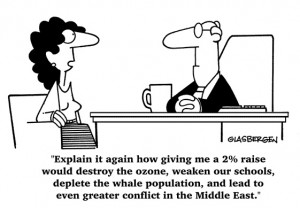
Bowles and collaborators from Carnegie Mellon found that people penalized women who initiated negotiations for higher compensation more than they did men. The effect held whether they saw the negotiation on video or read about it on paper, whether they viewed it from a disinterested third-party perspective or imagined themselves as senior managers in a corporation evaluating an internal candidate. Even women penalized the women who initiated the conversation, though they also penalized the men who did so. They just didn’t seem to like seeing someone ask for more money. In a follow-up study, Bowles asked participants whether they themselves would negotiate in the given scenario—that is, they were now the job candidate and not the evaluating manager. The women, for the most part, said no. They were nervous that the conversation would turn against them. “Women are more reticent to negotiate than men, for good reason,” Bowles says.
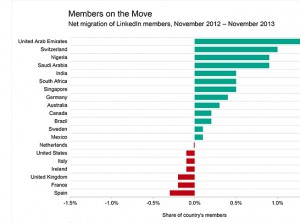
Mohammed bin Rashid Al Maktoum is Vice President and Prime Minister of the United Arab Emirates and Ruler of Dubai writes:
The basic ingredient is opportunity. Talent flows naturally to countries that create an environment for economic growth; that make life easy for enterprise; that attract and welcome investment; and that nurture a culture of achievement. Skills are attracted to challenge and possibility.
Opportunity on this scale is becoming a scarce commodity in many parts of the West. But this is not the case in the developing world – at least among countries with the appetite and determination to deploy strong governance and continually raise their competitiveness.
Second, quality of life matters greatly. A generation ago, many talented individuals would consider working outside the West a “hardship posting.” Today, standards of living in the UAE, for example, are among the highest in the world. We have shown that the business of reversing brain drain is also the business of creating a better life for citizens and residents. Building happiness is, after all, the primary business of good government everywhere.
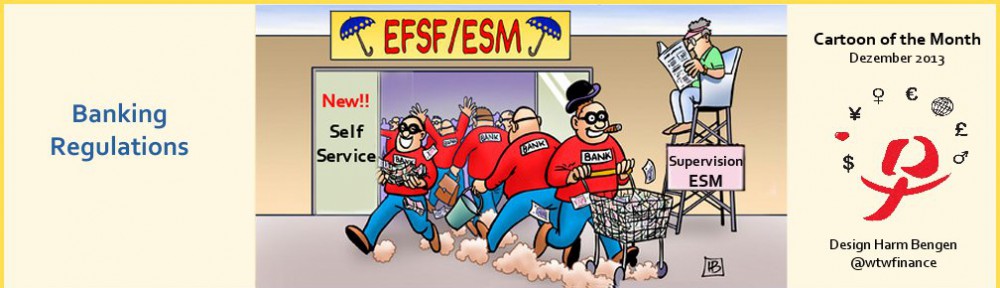
Barry Eichengreen argues: Central banks should focus on developing more effective macro-prudential instruments. They should widen the regulatory perimeter – that is, they should work to bring nonbank financial institutions under their regulatory umbrella. They should use the resulting instruments and powers preemptively. And they should adjust monetary policy to address potential financial risks as a last resort, not as their first line of defense.
A recent study evaluated which cities in the US offered the best opportunities for working women. In the top fifteen, women’s salaries were equsl to men’s and sometimes even better than men’s. The businesses which provided jobs in the cities were centered on heatlth care and education. If a company had headquarters in a city, they might be a prominent factor, forinstance Boeing in Kent, Wasshington and the government in Washington, D..C.
Over and over again What stands out in the list is the cost of rent/housing in relation to salaries earned. Only Washington, DC., was able to overcome a high cost of living and gain a place at the top of the list.
The growth of the city is also determinative. Albuquerque, NM, Auroroa, CO and Austin TX all get on the list driven by growth.

China’s taxation authorities announced on Wednesday that buyers of distributed photovoltaic (PV) power should invoice for purchases, a move to reduce the tax burden on PV power producers and promote green energy.
The buyers, mainly companies of the State Grid, will be required to invoice power generators from July 1 to make PV power transactions easier, said the State Administration of Taxation.
The move reverses the current practice and will boost the installation of building-integrated PV power projects, as most producers are individuals and non-enterprise entities and always experience difficulties with invoicing.
Electric power companies will also be allowed to collect value-added taxes on behalf of the authorities from PV power producers with monthly revenue exceeding 20,000 yuan ($3,252).
Distributed PV power generation projects were mainly adopted by hospitals, schools, government offices and communities, which were allowed to sell their extra electricity after self consumption.
China added 800MW distributed solar PV capacity in 2013, bringing the total number to 3.1GW.
