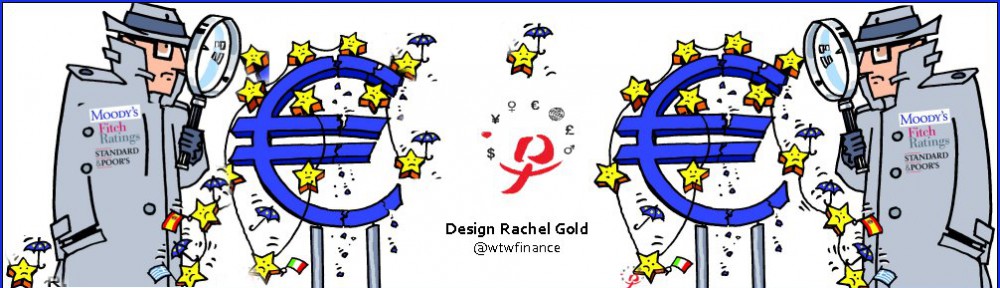
EU Investigates Unfair Advantages to Apple, Starbucks and Fiat

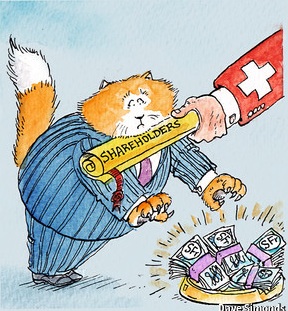
The European Union’s antitrust regulator has launched an investigation into tax deals that Apple, Starbucks and Fiat struck with some European countries, the start of a wider push to keep multinationals from taking advantage of loopholes.  EU antitrust commissioner Joaquin Almunia said Wednesday a preliminary probe by his office has found the arrangements are improper, though the companies as well as the countries involved — Ireland, the Netherlands and Luxembourg — must be given a chance to respond.

“We have reason to believe at this stage that indeed in these specific cases the national authorities have (failed) to tax part of these multinationals’ profits,” Almunia said at a press conference in Brussels.

Apple has a deal with tax authorities in Ireland, Starbucks has one in the Netherlands and Fiat’s financing arm has one in Luxembourg as part of their strategy to minimize the taxes they pay.

Almunia said that while such agreements are permissible in theory, they would be improper if they give the companies an advantage over competitors who can’t benefit from the same deal.  “Aggressive” tax planning by multinationals erodes countries’ tax bases.  Nine other countries are under preliminary investigation.

The countries named Wednesday have been criticized — Ireland for its low tax rates, the Netherlands and Luxembourg as homes for shell companies, and all three for a lack of transparency.

Three investigations involve ‘transfer pricing’ — where a company allows one part of its operations to charge another for goods or services in one country in order to shift profits where it wants.

For instance, if Starbucks were to sell its coffee beans to subsidiaries around Europe at a higher than market price, that would increase profits in the Netherlands and decrease them elsewhere. If it receives a tax break in the Netherlands, it would have an unfair competitive advantage.

The Commission said transfer pricing is permissible if the prices a company charges its subsidiaries conform to market rates.

Picking Your Most Favorable Country

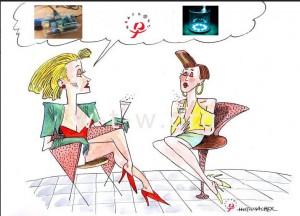
Women Have Always Been in Hi Tech!

Melissa Pandika reports:  Amid the calls to “lean in” and endless head-scratching over how technology companies can recruit and retain women, the statistics — and their refusal to budge — are sober reminders that tech still has a gender problem. Women head only 3 percent of startups and represent only 20 percent of software developers.

But imagine launching a tech company as a woman in the 1960s, when tech companies — let alone female programmers — were virtually unheard of.

That’s exactly what Dame Stephanie “Steve” Shirley did when she founded “freelance programmers,” one of the U.K.’s first software startups, which was also managed and operated almost entirely by women. And no, that’s not a typo; Shirley wittily printed the company’s name in all lowercase because it had no capital — literally. Yet in 1996, it went public for hundreds of millions of pounds on the London Stock Exchange.

Born Vera Buchthal, Shirley fled Nazi Germany in 1939, when she was just 5 years old. Her biological parents put her on a train to England as part of Kindertransport, a rescue mission to place 10,000 Jewish children refugees in British foster care. Her foster parents renamed her Stephanie.

“The fact that I nearly died in the Holocaust means that I’m very motivated to make sure … that my life was worth saving,” Shirley said in a short documentary produced by Google. She added, “I had built a determination that I was not going to let other people define me.”

Shirley fulfilled her promise from the outset, developing a knack for numbers at her all-girls school, which didn’t teach math or science. She eventually transferred to a boys’ school for the math instruction she craved.

She began working at the Post Office Research Station in London in 1951, the lone woman among roughly 2,000 male employees. She worked on trans-Atlantic telephone cables and developing the first electronic telephone calls, among other projects. In the evenings, she studied for her bachelor’s degree in mathematics at Sir John’s College.

In the late 1950s, Shirley landed a software developer position with computer manufacturer ICL, where she “became besotted … with the computing industry,” she said in the Google documentary. She loved how mathematicians, scientists and engineers alike exchanged ideas over coffee in the company canteen. “We were not in little silos,” she said.

But a few years later, Shirley hit the glass ceiling: “No matter what I tried to do there, I was getting blocked.” So she founded freelance programmers in 1962 with the ethos of providing jobs for women with children. During phone calls with clients, Shirley drowned out the sound of her baby with a tape recording of someone clicking on a typewriter.

The startup offered consulting services in programming techniques, creating standards that were used to develop and test software. They also applied statistical techniques to determine the time required to complete various projects for clients ranging from British Railways to Mars Chocolate.

Obstacles abounded. No one responded to the letters she wrote offering her consulting and programming services; her husband suggested signing them with her family nickname: Steve. “Things began to take off,” she said. Later she traded skirts for gray suits when a minister of state pinched her buttocks while she was trying to sell him an IT contract.

Shirley’s company grew to about 300 programmers. All except three were women, until the U.K.’s Sex Discrimination Act of 1975 required her to hire more men.

When her company peaked in the 1980s — after being renamed F.I. Group — she was worth £150 million.  After retiring in 1993, Shirley devoted her life to philanthropy, donating most of her money to autism research foundations and upholding her childhood pledge to make the most of her second chance at life.

 Women in Hi Tech

People’s Bank of China Lowers Reserve Requirements

PBOC will cut the reserve requirement ratio (RRR) by 0.5 percentage points for banks engaged in proportionate lending to agricultural and small firms. The cut will take effect from June 16, said a statement released by the People’s Bank of China (PBOC), the central bank.

In the west, reserve requirements have been fodder for regulators trying to make banks more stable.  China’s use of the reserve requirement to help sectors of the economy is probably a much better use of reserves, which at Basel levels don’t do much good anyway.

Change in banks’ cash reserves in China are aimed at boosting agriculture.  The statement provided the details following a cabinet decision late last month to launch narrow-based RRR cuts for banks engaged in lending to agriculture-related businesses and small and micro-sized companies, in efforts to enhance financial support to the real economy.

Banks eligible for the cut include those whose new loans to agriculture-related entities accounted for at least half of their total new lending in the last fiscal year; banks whose outstanding loans to agriculture-related entities accounted for at least 30 percent of their total outstanding loans in the last fiscal year will also be qualified for the cut, the statement said. The same rule applies to banks engaged in lending to small and micro-sized companies, according to the central bank.
“According to the standard, the targeted RRR cut will cover around two-thirds of city commercial banks, 80 percent of rural commercial banks above county level as well as 90 percent of rural cooperative banks above county level,” said the statement.

Meanwhile, the central bank will cut the RRR for finance companies, financial leasing firms, and automobile finance enterprises by 0.5 percentage points. The cut is aimed to improve the capital use efficiency of these companies and boost consumption, the statement said.

The central bank noted that the cut will not apply to county-level rural commercial banks and rural cooperative banks, who had their RRR reduced on April 25.
Zhang Zhiwei, an economist with Nomura Securities, said in a research note that the cut is estimated to inject 95 billion yuan ($15.45 billion) of liquidity to the economy.
“Combining this measure and other liquidity injection actions through the re-lending facility and the RRR cut on April 25, we estimate the PBOC will inject 545 billion yuan of liquidity into the economy by the end of June,” Zhang said.
Even though the announcement marks the second targeted RRR cut within two months, the central bank said this did not mean a change to the country’s fundamental monetary policy.

“The PBOC will continue to implement a prudent monetary policy, maintain reasonable liquidity, as well as reasonable growth in both monetary credit and social financing,” the central bank statement said.
It added that the directive RRR cut could boost credit structure, and such a monetary policy tool will also help with the nation’s economic restructuring efforts.

Banking Reserves

Dirty Money in the Seychelles


Seychelles, a thousand miles from anywhere, is an offshore magnet for money launderers and tax dodgers. A look at this corruption-haunted archipelago shows how the offshore secrecy system has grown — and where it’s going.

In the fall of 2012, two strangers from Africa showed up in Seychelles, an emerald-green archipelago in the Indian Ocean nearly a thousand miles east of Somalia. Unlike Prince William and Kate Middleton and other A-list celebrities who favor Seychelles as a getaway, these visitors didn’t come to enjoy the islands’ natural beauty and luxury accommodations. They were there, they said, to conduct business in Seychelles’ bustling offshore financial center.

Eventually they made their way to the offices of Zen Offshore, one of dozens of firms on the islands that set up hard-to-trace “shell companies” for clients around the world. They explained that they represented an individual who served as a “liaison officer between the Zimbabwean government and the rich diamond mines.”

For anyone who understands the nexus of corruption and money laundering in resource-rich, economically poor countries, this statement should have raised suspicions. But before they could go further, a Zen Offshore representative cut them off.

“Yep, we don’t want to know that,” he said, chuckling. “If we have knowledge of that, we have to put it forwards. So I haven’t heard a word you said in the last couple of minutes.”

The operative went on to explain how the pair could set up a company in Seychelles and hide the identity of who was really behind it by creating a labyrinthine ownership structure, putting “a company inside a company inside a company.”

The Seychellois company would be controlled by a company in Dominica, which would be controlled by a company in Belize, and so on. Anyone trying to discover the real owner would never be able to follow the paper trail around the world.

“It’s just impossible,” the Zen Offshore man said. “No one is going to try and chase that sort of information.”

The islands are a  magnet for Arab princes, Chinese investors, pirates, fugitives, mercenaries, mobsters — and outlanders who want to hide their money or disguise their business activi

Thanks to its offshore industry, Seychelles, an island nation with a population smaller than Davenport, Iowa, maintains a Zelig-like presence in the annals of international corruption and money laundering. Where there’s an odor of financial scandal, there’s often a good chance Seychelles is involved.

Dirty Money


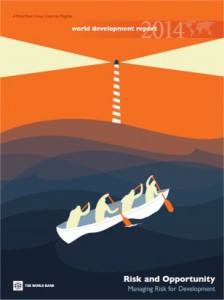
WDR 2014, Risk and Opportunity: Managing Risk for Development

The World Development Report  WDR 2014 examines WDR
how improving risk management can lead to larger gains in development and poverty reduction. It will argue that improving risk management is crucial to reduce the negative impacts of shocks and hazards, but also to enable people to pursue new opportunities for growth and prosperity. Risk management is also a shared responsibility that requires the active participation of different economic and social systems, as well as the State.
WDR 2014_Complete_Report

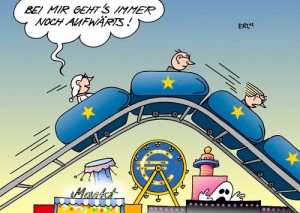
Here it's going uphill Cartoon ERL

Here it’s going uphill
Cartoon ERL

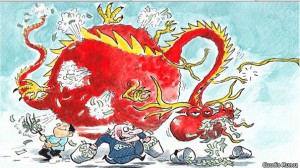
Chinese IPOs Wow Wall Street

Another Chinese company will go public on the New York Stock Exchange this week, and data show that the 10 biggest Chinese companies to list in the US in the last 12 months have seen an average return of 44 percent since their first day of trading. And that compared with 25 percent for all US IPOs of more than $100 million in the same period, Bloomberg News reported on Monday. In that time, the Chinese returns have outpaced all global counterparts, Bloomberg said.

Josef Schuster, founder of Ipox Schuster LLC, a Chicago-based independent financial-services firm specializing in global IPOs, said that US markets provide a better trading infrastructure and a favorable pricing environment for Chinese firms, among other added benefits.  “It’s eventually up to the firm where to list but a listing in the US can surely add to the novelty of a Chinese company and may help the marketing appeal,” Schuster told China Daily.
IPOs and Chinese firms in particular are taking advantage of a “big window of opportunity,” he said. And many of these deals help drive interest in “hot sectors,” like e-commerce and consumer-related industries.

Of the 16 Chinese companies that have listed in the US this year, 12 are involved in the Internet technology and web services industry.
Francis Gaskins, the director of research for financial industry website equities.com, said one of the main attractions for a Chinese company to list in the US is “broader exposure to US institutions”.
“Chinese IPOs have done pretty well in the US market because they have very good top line revenue increases,” Gaskins said on Monday in an interview with China Daily. “The first thing to look at for a Chinese company is do they have a good branding position.”
Zhaopin Ltd, a Beijing-based Chinese jobs website operator, is scheduled to go public this week at the NYSE.
Many of the Chinese companies listing in the US in the last year have seen solid returns.
E-commerce firm JD.com and Weibo Corp are two of better-known Chinese companies to list in the US in 2014.
JD.com, the largest direct seller of online goods in China, raised $1.78 billion in its IPO on the Nasdaq Stock Market in May, the biggest IPO by a Chinese company in the US, to date.
Weibo, a popular Chinese micro blog commonly referred to as “China’s version of Twitter,” netted $285.6 million during its first day on Nasdaq in April.
Since listing in the US, JD’s shares have produced a return of 49.6 percent, while Weibo’s stock has gone up a more modest 10 percent.
Some other companies that have had solid returns include: Autohome Inc, a car-information website that has gained 110 percent since a December IPO, and online classified ads provider 58.com Inc, which has climbed 140 percent since its IPO in October.
All of those listings pale in comparison to the proposed IPO for Alibaba Group Holding Ltd. A US listing for Alibaba, China’s largest online marketplace and No 1 e-commerce firm, could exceed $20 billion, according to some estimates.

Chinese IPOs

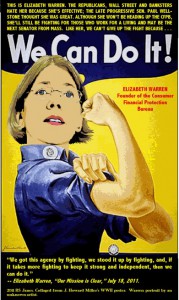
Meet Elizabeth Warren, Warrior


U.S. Sen. Elizabeth Warren talks real pocketbook issues, as in, why yours is empty.

And she means what she says, writes Margery Eagan in the Boston Herald.  In barely a year in the Senate, she’s turned into a Robin Hood for the “hammered” middle class, her endlessly repeated line. But are you in the middle class? Then you know: You are hammered. Can’t afford to retire. Can’t afford the mortgage, taxes, car repairs, college. If you’ve just finished college you can’t afford to move from mom’s basement. Why? The four-figure college loan payments you owe each month.

This is not how it’s supposed to be if you work hard and play by the rules in America. But this is how it is.

Who’s talking about this mess nonstop?

Elizabeth Warren.

The rich keep getting richer, she says, while the poor get poorer and the middle class, let me repeat, gets “hammered.” The banks that were too big to fail in 2008 are even bigger now. Soon we’ll get taxed to bail them out, again.

Rant about EBT cards all you want. If every one disappeared tomorrow, you’d still be hammered. The real money’s in big corporations and on Wall Street. And they own most of our pols. “Meet the Woman who Stood Up to Wall Street.” So reads a huge headline in a fawning article about Warren in young ladies’ favorite sex-tip magazine, “Cosmopolitan.” That’s the magazine that featured a near-nude young Scott Brown, the penny stock investor — whoops! — whom Warren vanquished. Now “Cosmo” features a fetching young Warren in thigh-hugging jeans and details her rise from divorced mother to the country’s most powerful financial reformer.

Has she reformed anything yet? No.

Is she making progress? Yes — from trashing federal regulators for refusing to regulate banks to crusading for a higher minimum wage. Just yesterday, President Obama praised her for introducing a bill that would let college graduates refinance loans at lower rates. Because it’d be paid for by ending a tax break for millionaires, it will likely fail in a Republican House that takes care of millionaires instead of the “hammered.”

But since it’s finally dawning on the “hammered” millions that the system is indeed rigged, Warren, eventually, could prevail. Says Marty Walsh adviser Michael Goldman, “For politicians, the hardest thing to get is the perception that you actually, deep down, believe in what you’re saying.”

Apparently more and more of us not only believe Warren believes what she says. We also believe she’s right.

Warren works step by step on individual issues.  She is graceful, calm and forceful. Watch her take down the big boys with a cool insistence.  Is she ready for the big time?  Maybe yes, maybe no.  Interestingly, Mrs. Clinton is bringing what she knows about global politics to the front of her speeches.  Is this what Americans are thinking about?

With Thomas Piketty

Taking down Timothy Geithner

Warren


Astronomical Salaries for Health Insurance Salaries in the US

The Center for Public Integrity reports:

If health insurance companies announce big premium increases on policies for 2015, I hope regulators, lawmakers and the media will look closely at whether they are justified, especially in light of recent disclosures of better-than-expected profits in 2013, rosy outlooks for the rest of this year and soaring CEO compensation.

Almost all of the publicly traded health insurers reported big increases in revenue and profits last year. The big winners have been the top executives of those companies, led by Mark Bertolini, CEO of Aetna, the nation’s third largest health insurer. Bertolini’s total compensation of $30.7 million in 2013 was 131 percent higher than in 2012.

If the stock prices of these firms keep growing at the current pace, Bertolini and his peers can expect to be rewarded even more handsomely this year, especially if they can hike premiums high enough to satisfy shareholders.

According to Health Plan Week, a trade publication, the CEOs of the 11 largest for-profit companies were rewarded with compensation packages last year totaling more than $125 million.

Over the past several weeks, several of them have told shareholders and Wall Street financial analysts that their companies likely will have higher profits at the end of this year than they expected, despite having to pay more medical claims as a result of the new Obamacare customers they picked up.

Those announcements have been music to the ears of shareholders, who are considerably wealthier today than they were this time last year.

Of those 11 companies (Aetna, Centene, Cigna, Health Net, Humana, Molina, Triple-S Management Corp., UnitedHealth Group, Universal American, Wellcare, and WellPoint) nine saw their stocks close near 52-week highs this past Friday.

The biggest gainer has been Humana, one of the largest operators of Medicare Advantage plans, whose share price has increased more than 53 percent over the past year.

The increases have been equally impressive at most of the other big companies. Aetna’s share price is up 31 percent, Cigna’s 32 percent. United’s is up 28 percent. And WellPoint’s is up 39 percent.

But it is the CEO compensation that has been the most eye-popping, especially at two of the publicly traded companies that specialize in managing Medicaid enrollees in several states: Centene and Molina.

Centene’s CEO Micheal Neidorff saw his compensation increase 71 percent last year, from $8.5 million to $14.5 million. Even more impressive was the 140 percent raise Molina’s J. Mario Molina got. His compensation jumped from $4.95 million in 2012 to $11.9 million in 2013.


The question we continue to ask is: Should the salaries of CEOs in publicly-held companies be capped?  Would this help inequality?

Executive Pay

Chinese and Italian Alliance on SMEs

The Bank of China signed an agreement with the Milan-based Italy China Foundation to create a platform of services aimed at enhancing collaboration between the two countries’ small- and medium-sized companies (SMEs).
The platform will offer all kind of assistance including increasing mutual knowledge and helping companies in the difficult task of searching solid partners, Bank of China’s officials said in a conference held in Italy’s business capital Milan to present the project.

“SMEs from Italy and China are complementary to each other,” but have difficulties in finding each other and need valid instruments, SMEs Department Director at the Bank of China Head Office Wang Jian highlighted.  For example, Wang said, the strong points of Chinese SMEs, such as a more comfortable investment environment in terms of labor costs, can combine with Italian SMEs’ excellent technological skills with a win-win perspective.
“Traditionally, Bank of China would provide loans to big companies,” but following the fast development of China’s economy, “its services today are focused on SMEs,” Wang explained to Xinhua.

Currently some 99 percent of Bank of China’s clients are SMEs, he underlined.
Italian firms rarely chose to enter the Chinese market alone, and many of them have failed in their mission, Italy China Foundation President Cesare Romiti noted.
“Together with Bank of China, we will assist companies in their internationalization path, helping them to build solid development projects, starting from identifying strategic partnerships and business partners,” he said.
A delegation of Chinese SMEs in different sectors including food, textile and green technologies took part in the conference, which was also attended by local authorities including Chairman of Aspen Institute Italia and former economy minister Giulio Tremonti.

Italy and China