What Women Want – When It Comes To Money

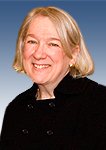
Larke Reimer, Westpac’s director of women’s markets.Larke Reimer

Women tend to take longer to make decisions when it comes to money and are more likely to a make a call based on trust and relationships than price alone, says a top female banker. Larke Riemer, whose role Westpac in Australia is to keep its 2.5 million female customers happy, says catering for women is not about having pink credit cards.
Riemer says women want to have access to the same information as men when it comes to money. “It’s about treating them the same and with respect.”
But she says financial institutions also need to understand that men and women think differently and those differences need to be supported.
What women want – when it comes to money
What women want - when it comes to moneyRiemer will speak at a global conference at Oxford University in London this week on the profitability of empowering women in business.

Barclay’s Fined for Manipulating Gold Prices

Unrepentant after Libor, Barclay’s has continued to make money however they can regardless of the law.  Anthony Jenkins, Barclay’s CEO, says the high risk, high reward culture has to change. There is nothing new under the sun.  On 27 July 2012, the Financial Times published an article by a former trader that stated that Libor manipulation had been common since at least 1991.

Banks arrive at the gold fix through matching buy and sell orders during a twice-daily telephone call. Miners, jewellers and central and commercial banks use the price fix to trade gold.  FCA report.

The FCA and several other regulators, including Bafin in Germany and the U.S. Commodity Futures Trading Commission, have indicated they are looking at the gold fix.  In years gone by, seats at the gold and silver fixing tables were a mark of distinction for a bank. But now, most banks do not want to be involved.

“A firm’s lack of controls and a trader’s disregard for a customer’s interests have allowed the financial services industry’s reputation to be sullied again,” said Tracey McDermott, the FCA’s Director of Enforcement and Financial Crime.

Gold Price Manipulation


Drug Dealing on Bitcoin Sites

Our correspondent Andreas Frank writes:  Steven Sadler, 40, pleaded guilty to using the online black market Silk Road to sell a swath of illegal drugs in a Seattle federal courtroom on Thursday. With the help of his one-time girlfriend, Jenna White, Sadler used the Silk Road name “Nod” to peddled 3,721 grams of cocaine, 1,375 grams of heroin, and 119 grams of methamphetamine, according to court documents.

When law enforcement raided his home on July 31 of last year, Sadler had more than a kilogram each of cocaine and of heroin, and more than 400 grams of methamphetamine.

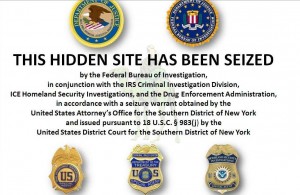
After operating for the better part of three years, the FBI shut down Silk Road and arrested its alleged owner, Ross Ulbricht, last October. Investigators say the site had hundreds of thousands of users and facilitated millions of illicit transactions.

Sadler’s guilty plea is the third from a high-profile Silk Road dealer within the last four weeks. On April 24, Cornelis Jan Slomp, a 22-year-old from the Netherlands, accepted guilt for being “the world’s largest drug-trafficking vendor on Silk Road,” as prosecutors put it. Slomp used the nickname “SuperTrips,” and he primarily sold MDMA and ecstasy pills. On May 13,Angel William Quinones, 34, a partner multi-millionaire Dutch drug dealer Cornelis Jan “SuperTrips” Slomp pleaded guilty.

Unlike Slomp, Sadler’s plea agreement does not indicate that he is expected to cooperate with law enforcement in any other Silk Road investigations. Sadler has, however, already spent months helping federal investigators build a case against Silk Road’s owner, who used the pseudonym “Dread Pirate Roberts.”

For Sadler’s guilty plea, the government agreed to drop four of the five counts on the indictment, leaving him with just one count of conspiracy to distribute heroin, methamphetamine and cocaine. Sadler faces anywhere from five to 40 years in prison and a fine of up to $5 million. His sentencing is scheduled for Sept. 4.

Silk Road Seized

A Bank for People Under 21

The Young American Bank of Denver, Colorado was founded to address the problem of financial illiteracy.  These bankers believe that it is never too early to start teaching children about money.  They provide savings accounts, certificated of deposit, checking accounts, ATM cards, debit cards, internet banking, credit cards and business loans.

These are all delivered with a rich program to explain what each financial instrument it, and to help children prepare to launch in the world.  Summer classes, camps and personal finance programs gets kids on their way to financial literacy.  Their Saturday “money matters” classes are free.

Young Americans Bank is a for-profit entity, but their financial programs are non-profits.  Is this an idea that has traction?

Young People Banking

Young People Banking

Can We Prepare for the Digital Economy ?

Michael Spence discusses the new world.

The world we are entering is one in which the most powerful global flows will be ideas and digital capital, not goods, services, and traditional capital. Adapting to this will require shifts in mindsets, policies, investments (especially in human capital), and quite possibly models of employment and distribution. No one knows fully how all of this will play out. But attempting to understand where the technological forces and trends are leading us is a good place to start.

No, you were not downloaded. You were born.

No, you were not downloaded. You were born.

How International Crime Networks Connect

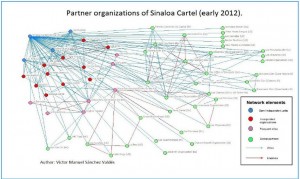
Our correspondent Andreas Frank reports:  The multi-billon dollar illicit trade of commodities (from cocaine to blood diamonds, weapons and human beings) has many complexities, from creating or extracting the product to moving the product to international markets to delivering payments.

The return cycle is equally complex, including the types of payments used to acquire the commodities, from cash to weapons and other goods the seller may need. This cycle relies on a specific group of individuals who act as facilitators in connecting different facets of the criminal and/or terrorist networks of state and non-state actors.

In order for transnational criminal pipelines and networks to function, different parts of the network need to communicate with each other and be able to supply mutually beneficial services and commodities to each other.

  • The fixers, or links, between different parts of the network, provide this vital service connecting different facets of the criminal and/or terrorist networks of state and non-state actors.
  • Local fixers, often members of the local elites and/or entrenched diaspora communities, help move the illicit product from production in conflict zones, criminalized states or territories not governed by the state, to the internal market.
  • Super fixers, those with broader international connections, can then move the product to the international market and provide some financial services. However, they rely on shadow facilitators to acquire the more complex and sophisticated equipment, often weapons or high technology components that are not readily accessible through normal market channels.

How International Crime Networks ConnectThe shadow facilitators usually deal with more than one criminal or terrorist network, providing rare and valuable services to multiple actors who may even be in conflict with each other. As the Viktor Bout case shows, if one provides good enough services that are highly specialized, one can arm multiple sides of the same conflict and greatly increase one’s profits in the process.

Because shadow facilitators’ international contacts and structures are so specialized, difficult to replace and operate for multiple groups, targeting them by law enforcement and intelligence communities should be a high priority. The Drug Enforcement Administration (DEA), in particular, has focused on this group. The high profile cases of the Viktor Bout and Monzer al-Kassar, two of the world’s most elusive and powerful brokers in recent decades, show that operations can be undertaken and prosecuted successfully.

The impact in both cases was significant. Viktor Bout’s arrest and conviction crippled and grounded an air fleet that was supplying weapons, across Africa, including Somalia, and seeking inroads into Latin America. The cost of replacing items outside that network was possible but costly both financially and in time.

Almost four years after his arrest (he was convicted in November 2011) no one has successfully put the pieces of the enterprise back together. In the Al-Kassar case, the network also collapsed. In both cases, there are indications that other individuals have picked up pieces of the network, but in neither case has capacity emerged to offer anything like the full range of services these two super facilitators did.

However, much of the conventional strategy for combating Transnational Organized Crime (TOC) relies on conceiving of illicit networks as hierarchical organizations with a strong top-down structure. Rather than focusing on the links (individuals providing specific services) mutual usefulness to each other of different small, relatively flat networks that overlap and rely on many of the same specialists, the focus remains on kingpins.

Targeting fixers is not a silver bullet but is one of the most efficient methods for weakening and disrupting illicit networks.

How International Crime Networks Connect


Class Action Lawsuit Awards Parents for Apps Their Kids Charge

Time Online reports that for fifteen minutes after a parent has signed off from their Itunes account, anyone can go online and charge to that account.  Kids have been doing this the world over.  In January Apple agree to reimburse over 24 million dollars to parents whose children, unattended, shopped in the Apple Store.

Time notes that children should gain experience with money in the real world, so that they can grasp the issues of charging to their parents’ account.

Computer Shopping


How the Swiss Outmaneuvered the DOJ, IRS, and the Fed

American papers are full of Credit Suisse’s guilty plea to criminal charges. Our correspondent Andreas Frank looks at the real situation.  Credit Swiss was spared from going out of business by the intervention of the Swiss government with a trade-off deal and the alleged specter of an incalculable systemic risk for the world’s financial system triggered by the bank’s failure which could cause a cascading effect on other banks.

The survival of Credit Swiss was mainly the result of political deals. This could explain the Swiss government’s ostensibly mute reaction to the Credit Swiss guilty plea for aiding and abetting tax evasion.

In a press release the Swiss Federal Council concluded “that the “agreement allows the legal disputes to be resolved without a formal indictment and is binding on both parties.” “What is also particularly important is that there will be no licence withdrawals with this solution and the use of emergency legislation is not an issue.”

Finance Minister Eveline Widmer-Schlumpf said the terms of the deal were acceptable as they did not require the Swiss government to violate its national banking secrecy laws. “It is important that a solution has been found within the scope of the Swiss legal system,” she told a news conference.

As part of the deal, Credit Suisse will not have to reveal client names or put in a position where it could be forced to violate Switzerland’s bank secrecy laws. To allow that, the Swiss government would have had to pass an emergency law, Widmer-Schlumpf said.

What really happened:  Because the US can not sign treaties with Switzerland which are in violation with Swiss law, they cannot demand the names of account holders.  Nor can they explore the names of the holders of  beneficial accounts.  Switzerland has emerged as the world’s largest trading hub, although they do not have ports, have no commodity sources and do not have a large industrial base.  Why has Switzerland gone to the top of the list.  It offers a high degree of secrecy.  It offers a high degree of secrecy despite the plea of Credit Suisse.  Secretive commodities investors are amassing physical assets like oil wells, oil and gas pipelines and offshore drilling projects in the US.

It is the lack of transparency that the Credit Suisse settlement overlooked. Now the consequences of secrecy will spread, potentially causing even greater harm in the US.

Swiss Law

The Future of the Indian Economy

Gita Gopinath and Iqbal Dhaliwal write about an economic roadmap for India:  Asked about how he was going to address the sluggish economy, incoming prime minister Narenda Modi simply said, “Our GDP should grow.”

The authors argue these five facts hold the key to India’s economy:

1.  When the capital stock, including the infrastructure, is deficient, invest in it.

2.  Nurture industrial growth, which has languished far behind China’s.

3.  Improve the ease of doing business in India, which is in a precipitous fall on the world scales.

4.  Fiscal disciplne requires that India, as an emerging nation, make a commitment to keeping fiscal deficits in check.

5.  Improve learning and boost preventive health care.

A tall order, but Modi seems committed to helping India take its place in the world markets.

Jumpstarting the Indian Economy