Italy Scores High on the Green Spectrum

Despite a sluggish economy, Italy compares favorably with its neighbors in its support of green policies and businesses, Italy’s Greenreport writes.

Italy imports and consumes less material.  In Germany consumption decreased by 6 % and productivity increased by 21%. in Italy there are the most visible progress of the entire European Union: the absolute consumption decreased by 23 % , resource productivity grew by 35 % .  Italy is the European leader in the recycling industry , in particular for the recycling of ferrous metals, plastics , textiles . Also on total waste , excluding only those mineral and vegetable , 37 million tons were sent for recycling, making Italy the second European country in recyclingjust behind Germany and well above countries such as France or Great Britain .

In the field of solid waste management, Italy is not doing so well.

But on the energy front , in 2012 the gross primary energy consumption fell to the equivalent of 178 million tons of oil.  The consumption of natural gas and oil each covering about 35% of consumption comes from renewable sources , while 15% of energy needs. In 2013 continues the descent of national energy consumption and the data available so far confirm another contraction equal to 2-3 % of electricity consumption and fuel . This is the direct effect of the strong growth of renewable energy , resulting in a corresponding reduction in oil and gas , and the increased energy efficiency of the processes of production and consumption.

What is striking in Italy is the overlap of two phenomena.  The first is the product of urban policies that have supported and encouraged housing developments , unknown to mass tourism , expansion of industrial areas ; second , unauthorized building , is a national phenomenon all Italian . According to the Cresme between 1982 and 2012 have been carried over 1,300,000 illegal homes ( approximately 15-20 % of the building ) . But as for organic farming in Italy on 8 , 5 % of agricultural land has been converted or in conversion of the total utilized agricultural area against 6, 1 % of those Germans.

Mobility . For the first time in 2013, the rate of car ownership (ie cars per inhabitant) is not growing, even though Italy remains the top in Europe with 610 cars per 1,000 inhabitants, compared to 525 483 in Germany or the European average. Positive signals come instead from annual sales of bicycles and the success of bike sharing and car sharing. In Italy in 2012 were sold 1,606,000 bikes against 3.966 million in Germany. But as for the bike sharing programs are active in 102 Italian cities against 47 of the German ones .

What we need is a green new deal for the Development of a new economy based on resource savings , efficiency , research and innovation , social cohesion , acceptance , enhancement of quality agriculture . The next European Parliament will have to face problems no longer essential and draw a new profile in Europe , overcoming the ideological choices of austerity , reviewing the same setting of the EU budget and building conditions to ensure green construction.

Greening of Italy

Women Staying Away From Jobs in the Finance Sector

A new report by YouGuv prepared for Bank of American finds that only one in three women even consider working in the “male dominated”  financial world. 1000 girls aged 16-20

A “lack of information from teachers” (21 per cent) and a perceived “sexist culture” (19 per cent) came second and third. The survey was carried out by YouGov for Bank of America Merrill Lynch and North London Collegiate School.

Almost half believed work-life balance would be better in industries other than finance, compared with just 22 per cent who disagreed. This is despite efforts by financial institutions to provide a supportive working environment, including mentoring programmes aimed at women, workshops for those returning from maternity leave and various diversity and inclusion policies.
In 2013, girls’ schools dominated GCSE and A-level league tables but just 19 per cent of applications for financial services graduate jobs came from women. Employers are trying to increase the percentage by recruiting young women before they go to university.
The report urges the financial services sector and education establishments to work together to encourage more young women to consider a career in the field. Just three out of 10 young women said financial careers had been discussed with them at school.

Young Women in Banking

A New Silk Road?

Ana Palacio writes:  

The unraveling of Ukraine has brought to the fore three major foreign policy challenges for the West: the danger of isolating Russia, the conundrum of China’s aloofness, and the pervasive lack of fresh ideas. Surmounting them will require a concerted drive to enhance cooperation and build trust among countries with disparate political systems and national interests. Chinese President Xi Jinping’s Silk Road economic belt could contribute to such an effort.
Europe and the United States’ response to the crisis in Ukraine has failed in two respects. First and foremost, it has been anemic, projecting an image of weakness that undermines its ability to reverse Russia’s annexation of Crimea, which has been tacitly accepted, or counter its aggressive behavior toward eastern Ukraine. At the same time, the use of targeted sanctions and diplomatic snubs has contributed to Russia’s international isolation, undercutting the long-term goal of building a functional relationship.

Russia Isolated


Young Leaders Meet in Abuja before WEF

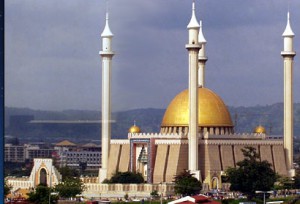
Over 100 of Africa’s most accomplished young leaders and change-makers met in Abuja prior to the start of World Economic Forum on Africa to share ideas on how they can improve life in their home cities and countries.

Meeting under the theme BOLD Solutions, participants to SHAPE Africa – the annual meeting of Forum’s Global Shapers community – developed a website (www.chibokgirls.com) to tell the story of the kidnapped Nigerian girls to support the efforts of the authorities and the community to bring them home.

Other solutions include the development of: a Global Shaper farm network; an Africa-wide social media initiative to track the multifaceted effects of investing in people; an eco-funding platform, which will rally multinationals to donate funding to entrepreneurs; and the creation of a Global Shapers Business Network, which will act as a common marketplace for African Shapers.

The Global Shapers Community is an international network of young, dynamic and socially engaged leaders between the ages of 20 and 30. The community consists of over 73 Hubs across Africa, with at least one in every country.

In addition to the Global Shapers, Ngozi Okonjo-Iweala, Coordinating Minister for the Economy and Minister of Finance of Nigeria, Jubril Adewale Tinubu, Group Chief Executive of Oando, and Elsie Kanza, Head of Africa at the World Economic Forum, participated in SHAPE Africa. All three offered support and advice to the Global Shapers on how to bring their mission forward.

Abuja

How Big is the Chinese Economy, Compared to the US?

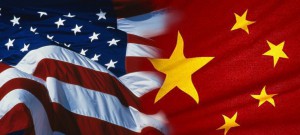
Jeffrey Frankel writes:  When we talk about an economy’s size or power, we are talking about a broad range of questions – and a broad range of interlocutors. From the viewpoint of multinational corporations, how big is the Chinese market? From the viewpoint of global financial markets, will the RMB challenge the dollar as an international currency? From the viewpoint of the International Monetary Fund and other multilateral agencies, how much money can China contribute, and how much voting power should it get in return? From the viewpoint of countries with rival claims in the South China Sea, how many ships can its military buy?
For these questions, and most others involving total economic heft, the indicator to use is GDP at market exchange rates, because what we want to know is how much the renminbi can buy on world markets, not how many haircuts or other local goods it can buy back home. And the answer to that question is that China can buy more than any other country in the world – except the US.

US v China

Chinese E-Commerce Giant Files for Public Offering

Alibaba officially filed plans to offer shares in the US.  Alibaba appears to be very profitable, but did not show the revenue for Alibaba’s main marketplaces, how much the company makes from advertising or who will serve as the company’s new directors after the IPO.

The IPO reflects the growing ambitions in China and abroad of Alibaba, which was founded in 1999 in the eastern city of Hangzhou by a former English teacher named Jack Ma. Alibaba’s first business was a site to connect Chinese suppliers with Western buyers.

The filing showed the company had 231 million active buyers in 2013. A total of $248 billion was spent on Alibaba’s three retail sites in China last year, roughly equivalent to the annual economic output of Finland.

The payment processing Alipay, however, isn’t owned directly by Alibaba, but is instead controlled by a company 46%-owned by Alibaba founder Mr. Ma, according to filings from April. That structure is controversial, since it puts ownership of a company crucial to Alibaba’s business outside of Alibaba’s direct control.

The filing also revealed details about Alibaba’s lesser-known business renting computing time to other companies. Alibaba said this cloud-computing unit recorded $90 million in revenue in the final nine months of 2013.

But the filing said nothing about other questions on the minds of investors, particularly the breakdown of revenue among Alibaba’s primary sites: Taobao, a sprawling marketplace with more than eight million sellers, and Tmall, a destination for Western brands like Apple Inc., Nike Inc.and Gap Inc.   Together, those sites account for roughly 80% of all Chinese online shopping transactions, which stood at 1.84 trillion yuan ($296 billion) last year, according to research firm iResearch.

.Alibaba

Productivity Development Policies in Latin America

Andres Velasco writes: Productivity has been stagnant in Latin America for a half century.

What is to be done? The conventional prescription includes improving education (especially the technical kind), modernizing labor markets, reducing bureaucratic red tape, and facilitating foreign investment and technology transfer. To this standard tool kit the Inter-American Development Bank (IADB) now adds PDPs, which can be “horizontal” or “vertical.”

Horizontal policies are relatively uncontroversial.  But they have problems.  Rebuilding infrastructure may provide engineers who can build a road over a mountain but are not expert in a superhighway.  A lab built to certify beef can’t pass on fruit and vegetables.

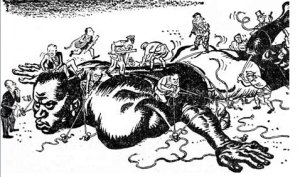
This is where the controversial vertical policies come in.  But if you pick an industry to support, you are not just picking winners, you are making them.  This may be necessary, but it is important to insure transparency and to provide checks and balances.

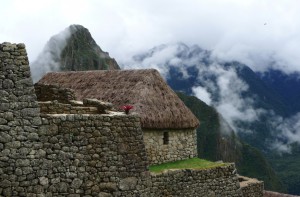
Mountain Roads

No Banker Too Big To Jail

US Department of Justice:

The U.S. Justice Department is pursuing criminal investigations of financial institutions that could result in action in the coming weeks and months, U.S. Attorney General Eric Holder said in a video, adding that no company was “too big to jail.”

The comments, made in a video posted on the Justice Department’s website on Monday, came as federal prosecutors push two banks, BNP Paribas SA and Credit Suisse AG , to plead guilty to criminal charges to resolve investigations into sanctions and tax violations, respectively, according to people familiar with the probes.

While Holder did not name any banks, he said he is personally monitoring the ongoing investigations into financial institutions and is “resolved to seeing them through.”

Too Big to Jail