Baron Roy writes: To protect the Irrawaddy Delta which was devastated by cyclone Nargis, the new government in Myanmar has banned the export of raw timber. Teak forests are in the north and the delta in the south, but they are in the same ecosystem.
Until now Myanmar was the only country in the world that exported raw teak from natural forests rather than plantations. Most of it was done illegally by private loggers who enjoyed passive government support. Between 2000 and 2013, some 72 per cent of logs exported from the country was said to be illegally shipped. In some areas in the north, wide swathes of forests are being cleared to make room for oil palm and rubber plantations. While 49 per cent of the total land area is marked as forested and primary forests are said to occupy 10 per cent of it, substantial given Myanmar’s sheer size, over 18 per cent of the total forest area has been lost since 1990.
Does the Right Have an Argument Against Piketty
Bradford de Long sums it up this way: (1) the return on wealth varies inversely with the wealth-to-annual-income ratio so strongly that, paradoxically, the more wealth the rich have, the lower their share of total income. Thus, their economic, political, and sociocultural influence is weaker as well. (2) Not bound to the karmic wheel of earning, getting, and spending on necessities and conveniences the rich can take the long and/or heterodox view of things and create, say, great art. Ie, the sculptor R. Seward Johnson and tenor and music teacher Paul Sperry (both heirs). (3) A new industrial revolution that will create more low-hanging fruit for the masses to pick and become rich. (4) The limits of the data [Piketty] presents and the grandiosity of the conclusions he draws…borders on schizophrenia. (5) The George W. Bush argument: Piketty is French and so….

Disagreements with Piketty focus on different 10-20 %s of his arguments and overall he is being accepted by everyone.
Women CEOs Get the Axe More Quickly than Men
New studies reveal that this fact has nothing to do with ability. Women are treated as exotic outsiders, brought to the helm when board members are feeling adventurous (mainly out of necessity). They have to prove their worth in situations that powerful men suspect may be hopeless.
This is not evidence of male superiority on the job, but of the so-called glass cliff theory. According to this, women and other “occupational minorities,” such as people with a different skin color, tend to get appointed to top jobs when a company needs saving. When these women fail — and in a crisis, the probability of failure is higher — boardrooms fall back on tradition. They replace the women with white men who have lots of industry experience.
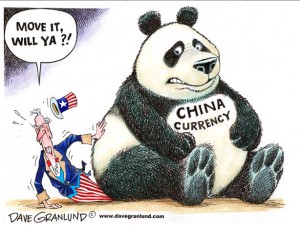
The Renminbi and US China Relations
Stephen S. Roach writes: The renminbi, China’s currency, has been weakening in recent months and the US immediately cries foul: manipulation, competitive devaluation and impoverishing nations with whom they trade.
Roach argues that in the face of high unemployment in the US and job insecurity, politicians point to the Chinese component of the US trade deficit. He further argues that the US savings problem is one fundamental cause of these imbalances, and until we face this problem square on, we should not be hollering at the Chinese.
Teaching Computer Code in Kindergarten
The Israelis led the way. The New Zealand, some German states and Australia. The UK is coming on now, and the US, maybe.
Digital technology is now so ubiquitous that many think a rounded education requires a grounding in this subject just as much as in biology, chemistry or physics. That is one reason that the pendulum is swinging back towards teaching coding. Employers’ moans are another. The shortage of skilled programmers is clear from the high salaries they command. The shallower the pool of people who know the basics, the smaller the number of potential tech entrepreneurs. According to Judith Gal-Ezer of the Open University of Israel, who was part of the team that put computer science on the country’s high-school curriculum, a growing share of jobs in developed countries require “computational thinking”: the ability to formulate problems in such a way that they can be tackled by computers. But bosses complain that workers lack such skills—and politicians are listening. Mr Schmidt’s public criticism is credited with prodding Britain’s government into action.
Italian High School Students Learn to Identify Corruption in Society
Students investigated crimes in their municipalities and were able to understand how the illegalities are addressed and experienced by ordinary citizens. This “Laboratory of legality and corruption ” was not just a study, but also data collection and analysis that starts from their home towns. people they meet or with whom they will deal as they grow up. The field study consisted of the questionnaires , and through qualitative analysis, and also conversations with the interviewees.
Throughout the initiative , students were tracked by experts. Alberto Vannucci , a political scientist and professor at the University of Pisa, Mario Palazzi deputy public prosecutor at the Prosecutor’s Office of Rome and the colleague the Attorney Latin Daria Monsurrrò , the lawyer Guido Lombardi and the journalist of La Repubblica, Federica Angeli showed how corruption and bribery are presented by the press.
Five small Atlases of Corruption were prepared and will be distributed and stored as archive material. This is because the students prepared such accurate and precise material. These students know how to fight corruption, because they know how to amass the facts. The corrupt few cannot thrive in a society where everyone understands what’s at stake.
Widow of YES Bank’s Co-Founder Cut Off
The banks argues that banking is not a family business and financial family sucessors do not automatically become part of the bank’s ‘promoter’ group. Madhu Kapur wanted to be able to appoint directors. It is difficult to tell whether or not the fact that she is a woman plays into the interpretation of ‘regulations.’
Madhu is the legal heir of Ashok Kapur and according to the bank’s articles of association, inherits the rights of a co-promoter. She should be allowed to nominate directors on YES Bank’s board. Unfortunately, the bank is not willing to recognise her rights and settle the dispute. So, she will wait for the court’s verdict.
Quantitative Easing Worldwide?
Raghuram Rajan, Governor of the Reserve Bank of India, writes: As the world struggles to recover from the global economic crisis, the unconventional monetary policies that many advanced countries adopted seem to have gained widespread acceptance. In those economies, however, where debt overhangs, policy is uncertain, or the need for structural reform constrains domestic demand, there is a legitimate question as to whether these policies’ domestic benefits have offset their damaging spillovers to other economies. More problematic, the disregard for spillovers could put the global economy on a dangerous path of unconventional monetary tit for tat. To ensure stable and sustainable economic growth, world leaders must re-examine the international rules of the monetary game, with advanced and emerging economies alike adopting more mutually beneficial monetary policies.
To be sure, there is a role for unconventional policies like quantitative easing (QE); when markets are broken or grossly dysfunctional, central bankers need to think innovatively. Indeed, much of what was done immediately after the collapse of US investment bank Lehman Brothers in 2008 was exactly right, though central bankers had no guidebook. But problems arise when these policies are extended beyond repairing markets; the domestic benefits are at best unclear when economies are deeply damaged or need serious reform, while the spillovers from such policies fuel currency and asset-price volatility in both the home economy and emerging countries.
Officials at multilateral institutions have not questioned these unconventional monetary policies, and have largely been enthusiastic about them. This approach carries fundamental risks: a breakdown of the rules of the game and the fact that source countries’ are unwillingto take spillovers into account causes unintended collateral damage in recipient countries.
Central banks could recognize adverse spillovers explicitly and minimize them. The threat posed by competitive monetary easing matters to everyone. In a world with weak aggregate demand, countries are engaging in a futile competition for a greater share of it. In the process, they are creating financial-sector and cross-border risks that will become increasingly apparent as countries exit their unconventional policies. The first step to prescribing the right medicine is to recognize the cause of the illness. And, when it comes to what is ailing the global economy, extreme monetary easing has been more cause than cure. The sooner we recognize that, the stronger and more sustainable the global economic recovery will be.
US Sanctions Against India for IPR Violations?
Arvind Subramanian reporting: With the Office of the US Trade Representative (USTR) reported to be considering a downgrade of India, trade ties between the two countries are even rockier than usual. Worse, the decision could be announced soon after a newly elected Indian government takes office in May, potentially starting a new relationship on a very sour note.
Big Pharma in the US seems to be pressing for this downgrade. It’s odd, because it is highly unlikely that the pharmaceutical industry in India is capable of violating Big Pharma’s patents.
This is the wrong time to naming India as a Priority Foreign Country. Let a new government come into power, and then start a new dialogue on broader trade issues.
Lobbying to Head the IMF Has Begun
N Sundaresha Subramanian reporting:
The International Monetary Fund (IMF) does not need a new chief – at least for the next two years. However, the race to be the successor for IMF Managing Director Christian Lagarde has quietly begun. On Thursday, the Singapore government announced that deputy Prime Minister Tharman Shanmugaratnam would take over as chairman of the Economic Development Board (EDB)’s International Advisory Council (IAC) from May 1. Tharman, also the finance minister, will replace Deputy Prime Minister Teo Chee Hean, who has served as the council’s chairman since 2007.
Tharman’s appointment to the post, which will see him more active in the international arena and lift his impressive profile further, is seen as a step towards the race to Washington DC headquarters of IMF. The IAC has chiefs of multinationals such as Philips, Shell and Glaxo. Anand Mahindra, managing director of Mahindra group CEO, Ajay Banga, MasterCard, are members of IAC.
However, the buzz on Tharman’s candidature was created by economist and UK House of Lords member Lord Meghnad Desai, who argued it was time for a non-European to take charge of the IMF. “Mr Tharman is an IMF insider, the chairman of International Monetary and Financial Committee… Mr Tharman is Singapore’s deputy prime minister and a previous chief Monetary Authority of Singapore. He is a member of prestigious Group of Thirty. You cannot get a better CV than that.”
Desai’s pointed out that the IMF has not been as alive to problems of the majority of its members as it should have been. He also hoped that a non-European like Tharman would be in a position to give the US some “stiff talking”.
In the run-up to the 2011 appointment of Lagarde, OMFIF had endorsed the candidature of Zeti Akhtar Aziz, the governor of Malaysian central bank, for the post. However, Aziz herself did not show much interest.
Tharman was appointed chairman of the International Monetary and Financial Committee, the policy steering committee of the IMF, in March 2011. He was also admitted to the Group of Thirty, also known as The Consultative Group on International Economic and Monetary Affairs, in June 2008.