A Technologically-Driven Revolution in Finance?

Mohamed A. El-Erian writes suggestively about the impact of technological innovation on finance.  Noting that journalism, the media and entertainment have been revolutionized by technology, he looks at some areas that may be dramatically changed by technology.

Bitcoins have “attracted attention from specialists, regulators, and, slowly but surely, the public. But the crypto-currency phenomenon is far from the only example, and it is certainly not the most consequential one. Its impact, both actual and potential, is relatively limited when compared to ongoing attempts to enhance and democratize lending, borrowing, investing, and payments and settlements.”

El-Erian points to technology entrepreneurs who understand the power of online/social media innovation to disrupt components of traditional finance, and are now leading efforts that include behavioral scientists and finance experts.

Think:  Internet driven lending clubs,  peer-to-peer initiatives in consuer financial services, digital wallets and mobile transfers.

Mobile transfers


Is Something to be Learned from the Search for Malaysian Flight 370?

Garth Evans argues that the search has demonstrated the capacity of unlikely countries who are neighbors to cooperate.  He particularly notes the relationship between Australia, the launching pad for the search, and China, the nation in which most of the passengers lived.  A total of 26 countries have been involved.  Many countries have been at each other’s throats recently — China, Japan, and the US.  These countries come to the table suspicious of each other’s motives.  An important trade deal between Australia and China has advanced.  Evans suggests that Australia might invest in some ping detectors and Bluefins instead of planning more sophisticated ways to destroy each other.

China, Australia and the US


Elizabeth Warren Gets It: Bankers Aren’t Too Big to Jail

Joshua Green reports;

Initially, Warren appeared to follow the Hillary Clinton’s script in the Senate. But at a Banking Committee hearing on Wall Street oversight, it was clear that Warren’s convictions were not going to be muffled like Clinton’s. The hearing was a typically somnolent affair until her turn came to question the regulators testifying before the committee. Warren devoted the five minutes allotted her to the seemingly abstruse topic of banking settlements, such as the $1.9 billion fine the British megabank HSBC (HBC) agreed to pay the Justice Department after it was accused of laundering money for drug cartels (among other things).

In a short preamble, Warren admonished the regulators for not being more aggressive in taking big banks to trial, explaining how this harms the public interest. “If a party is unwilling to go to trial, either because they’re too timid or because they lack resources,” she said, “the consequence is they have a lot less leverage in all the settlements that occur.”

She continued: “We face some very special issues with big financial institutions. If they can break the law and drag in billions in profits, and then turn around and settle, paying out of those profits—they don’t have much incentive to follow the law. It’s also the case that every time there’s a settlement and not a trial, it means that we didn’t have those days and days and days of testimony about what those financial institutions have been up to.”

Warren was interrupted by applause from the gallery—something seldom heard at Banking Committee hearings. But her most effective line came afterward, in the question she posed to the regulators: “Can you identify when you last took [one of] the Wall Street banks to trial?”

Amazingly, none could. And the excuses proffered as to why they couldn’t reinforced Warren’s claim that banks that are “too big to fail” have also become “too big for trial.” “We have not had to do it as a practical matter to achieve our supervisory goals,” stammered Thomas J. Curry, the comptroller of the currency.

Eventually the Senate will have to legislate. And the next big fight may well be over whether to break up the big banks. An unlikely coalition of politicians and regulators on the left and right who favor this option has lately begun to take shape.

Too Big to Jail

The Next Step for Fiscal Policy in the EU?

Hans-Werner Sinn, Professor of Economics and Public Finance at the University of Munich discusses run up in public debt in the EU.  The euro crisis shows how policymakers stumbled along, trying to put out fires without keeping an eye on where their chosen path was leading them. Currently, markets remain calm, but this is only the beginning of a new phase of the crisis, during which Europe will become mired in debt.

The new phase of the crisis is one of enhanced moral hazard, stemming from a run-up in debt. With investment risks largely collectivized by the bailout measures instituted by the ECB and the eurozone’s member governments, investors are once again accepting low yields, and borrowers are seizing the new opportunities.

View/Create comment on this paragraph There is nothing surprising about this: When a decision-maker can claim full credit for a policy’s benefits and collectivize the costs, he will pursue the policy sooner, more quickly, and to a larger extent than he would if he had to bear the costs alone. What is remarkable is how matter-of-factly Europe’s transgressors succeed in cloaking themselves with the mantle of a new social breakthrough.
CommentsView/Create comment on this paragraph One only needs to look at the United States to see how dangerous – and indeed unsustainable – the eurozone’s path has become. When one of the US states runs up too much debt, creditors become jittery and austerity measures are introduced to avert the risk of bankruptcy – as has happened in the past few years in California, Illinois, and Minnesota.  But all of that occurs while the debt/GDP ratio is still minimal and clearly below 10%, because creditors know that no one will come to their aid. The Federal Reserve will not buy their government bonds, and the federal authorities will not issue any guarantees.  In Europe, by contrast, easy access to the local printing presses before and after the foundation of the ECB, together with the new fiscal rescue mechanisms, ensure that investors start to become nervous only when debt ratios are 10-20 times as high. As a result, the debt level rises until it spirals out of control.

Printing Money

Dark Money Colors Political Campaigns in US

Pro Publica reports:

To see how easy it is for a dark money group to ignore the Internal Revenue Service, look no further than the loftily named Government Integrity Fund.

The Fund, an Ohio nonprofit, spent more than $1 million in 2012 on TV ads attacking Ohio Sen. Sherrod Brown and praising his Republican opponent, Josh Mandel. The group spent most of its money on politics — even though IRS rules say nonprofits like the Fund aren’t allowed to do that.

The Fund’s return highlights the ways such nonprofits, known as dark money groups because they are not required to disclose their donors, can skirt IRS rules designed to limit their political activities. Such groups are playing an increasingly prominent role in elections, spending more than $256 million on election activity in 2012.

Dark money groups can spend money on politics as long as they can persuade the IRS that their primary purpose is social welfare. This can lead to quite creative accounting on tax forms, with groups describing ads that should qualify as political under IRS rules as “education” or “issue advocacy.”

Unraveling what the Government Integrity Fund spent in 2012 wasn’t possible until recently because the group didn’t file its tax return until January of this year, when it was two months overdue. The long wait highlights one of the major problems with regulating dark money groups and their spending: The IRS typically doesn’t look at these groups until a tax return is filed, often more than a year after an election has been decided.

Even with the return in hand, several aspects of its operations remain confusing.

In one spot, the group says $4.6 million of its $5.2 million in expenditures were made as grants “and similar amounts paid.” But it doesn’t identify which groups received the grants, as the IRS requires, or what the “similar amounts paid” might have gone toward. At the end of the form, the group says only $1.1 million went toward grants — again, without saying who received the grants — with the rest of the $4.6 million going to its sister super PAC and what it classifies as “public education.”

The group offers no details on what the $1.5 million attributed to education included — mathematically, though, it would have to include the ads it bought related to the Brown-Mandel race.

Experts scoffed at the idea that the ads qualified as education.

“There’s no way you can claim these are education. If this is public education, then everything is public education,” said Donald Tobin, a law professor at Ohio State University who specializes in the intersection of tax and campaign finance law. “These are clearly designed to be political ads to benefit or oppose a candidate. And that’s not social welfare activity.”

It’s an open question how vigorously the IRS, which doesn’t comment on individual taxpayers like the Fund, will pursue groups for irregularities. The agency has revoked the nonprofit status of only one social welfare nonprofit, a liberal group, and its affiliates since the Supreme Court’s Citizens United decision in 2010 paved the way for dark money groups to pour hundreds of millions of dollars into outside election ads.

Experts on nonprofits say the IRS has taken an even more hands-off approach since top officials admitted the agency had targeted applications from conservative groups for extra scrutiny, sparking a scandal and investigations.
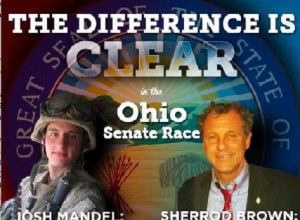
Dark Money Supported Mandel


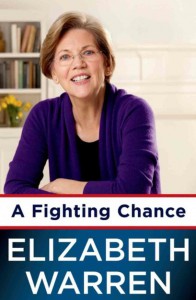
Elizabeth Warren: A Fighting Chance

Is this a platform for a Presidential campaign, public policy or both?

Elizabeth Warren’s new book advocates for the disappearing middle class in America.

An unlikely political star tells the inspiring story of the two-decade journey that taught her how Washington really works–and really doesn’t As a child in small-town Oklahoma, Elizabeth Warren yearned to go to college and then become an elementary school teacher–an ambitious goal, given her family’s modest means. Early marriage and motherhood seemed to put even that dream out of reach, but fifteen years later she was a distinguished law professor with a deep understanding of why people go bankrupt. Then came the phone call that changed her life: could she come to Washington DC to help advise Congress on rewriting the bankruptcy laws? Thus began an impolite education into the bare-knuckled, often dysfunctional ways of Washington. She fought for better bankruptcy laws for ten years and lost. She tried to hold the federal government accountable during the financial crisis but became a target of the big banks. She came up with the idea for a new agency designed to protect consumers from predatory bankers and was denied the opportunity to run it. Finally, at age 62, she decided to run for elective office and won the most competitive–and watched–Senate race in the country. In this passionate, funny, rabble-rousing book, Warren shows why she has chosen to fight tooth and nail for the middle class–and why she has become a hero to all those who believe that America’s government can and must do better for working families.

Elizabeth Warren

The Office and the Worker: How We Got Cubed

Cubed is Nikil Saval’s detailed cultural history of how the office grew to become the definitive 20th century workplace, Saval presents a description of the stylish office worker, courtesy of Walt Whitman circa 1856.* At that time, nonmanual labor accounted for a minority of jobs in the country, and those who did spend their days in an office were often the source of derision. Whitman, for one, described office workers as “a slender and round-shouldered generation, of minute leg, chalky face, and hollow chest … trig and prim in great glow of shiny boots, clean shirts—sometimes, just now, of extraordinary patterns, as if overrun with bugs!—tight pantaloons, straps, which seem coming little into fashion again, startling cravats, and hair all soaked and ‘slickery’ with sickening oils.”

To start, Saval explains, many offices took a cue from the factory and lined desks up in long rows. Then, in the early 20th century, two innovations emerged that would get recycled and reinterpreted in various ways over the next century. The first arrived courtesy of Frederick Taylor, a consultant and theorist who made it his goal to remove all inefficiencies from the office and argued for an extreme division of labor to replace what was the more fluid work style of the old clerks, who worked in small offices of four or five people and were responsible for a wide variety of tasks. Taylor created the position of the manager. As Saval writes:

By separating knowledge from the basic work process … the ideology of Taylorism all but ensured a workplace divided against itself, both in space and in practice, with a group of managers controlling how work was done and their workers merely performing that work.

Even as some offices today, particularly those in the tech industry, have attempted to move toward nonhierarchical models that recognize the benefit of idle, creative time, most still employ a version of this hierarchical, efficiency-driven system.

An office with 130 workers has one long desk for everyone.  Only the boss’s section is messy.

History of Work from Ape to Cubed

China Tries to Cut Production Overcapacity

The Chinese government may be serious about curbing overcapacity, but if so, the power industry has yet to get the word.

China added more new power generation last year than the total capacity of the United Kingdom or South Korea, according to figures from Bloomberg New Energy Finance, cited by Britain’s The Guardian newspaper.

On the bright side, China installed a record amount of new solar power capacity, more than any other country in the world, but it also added more than three times as much in new coal-fired generation, The Guardian said.

The addition may be justified if China succeeds in taking older, dirtier coal-fired plants offline in the future, Scissors said, but the capacity numbers suggest that the shutdowns have not taken place yet.

Scissors said the central government is also likely to meet with resistance from state-owned enterprises (SOEs) that have been told to close inefficient plants, which provide employment and enjoy local support.

“The SOEs always want another SOE to contract,” he said.

The question of compliance brings the issue back to shadow banking and estimates of economic growth.

Financed off the books

Since state-owned banks have been barred from lending to overcapacity industries, further operations can only be financed off the books.

“That way, it makes the local government happy because they’re continuing to lend, and it makes the national government happy because it’s not on the books,” Scissors said.

The combination of seemingly contradictory data, the overcapacity campaign and the forces behind shadow banking may indicate that China’s economy is actually growing faster than the 7.7-percent GDP growth rate.

“If there’s more off-book activity, that would suggest a strengthening economy,” said Scissors.

The theory may leave world markets increasingly in the dark as they react to economic reports from China, but it could help to explain some of the seeming contradictions in recent data, as well as the increase in urban smog.

Chinese Manufacturing

An Economist Looks at Music’s Insights Into Society

Harvard Magazine reports on an address by Jacques Attali:

Music is deeply entwined with modes of production and can predict major societal transformations, argued Attali, who is also a musician and occasional conductor. Consider, for instance, the invention of gramophones and other recording devices in the late nineteenth century, which allowed music to be mass-produced. Previously, the economic model of music had centered on concerts, with musical performance bought and sold as a commercial product. By contrast, said Attali, recordings transformed the role of music in society: with all records the same price, the value of music derived instead from arbitrary rankings and measures of popularity. “The price of records cannot be their differentiation,” he observed. “That was the beginning of the end of the market economy.”

Music not only reflects but predicts social transformation, he asserted, and in 1977, he duly made forecasts of his own. His main prediction of a new human phase of composition, in which individuals create and enjoy their own music and “production melds with consumption,” has been borne out by the rise of social media and digital music. Building on that prediction on Monday, he declared, “Music is more and more a mixture. If you look at the role of DJs, there is no distinguishing who is what…It is the beginning of the end of property rights.” In place of recordings, he predicted a return to live performance. “People will continue to pay a very high price for concerts, but they will not pay anything, anymore, for records,” he said. “The real thing that people will pay for is time.”

In conclusion, Attali sketched several competing visions of the future. He warned against what he termed “ethnomodernity”—a resurgence of nationalism, both in music and in politics, that would impede the progress of globalization—and likewise cautioned against a “retromodernity” born out of nostalgia for times past. He ended by articulating his hope for a form of modernity built on altruism and onwhat he described as the economy of the gift: “sharing music…making music with others, learning the joy of making the other happy.”

Music Shared


One World Against Racketeering

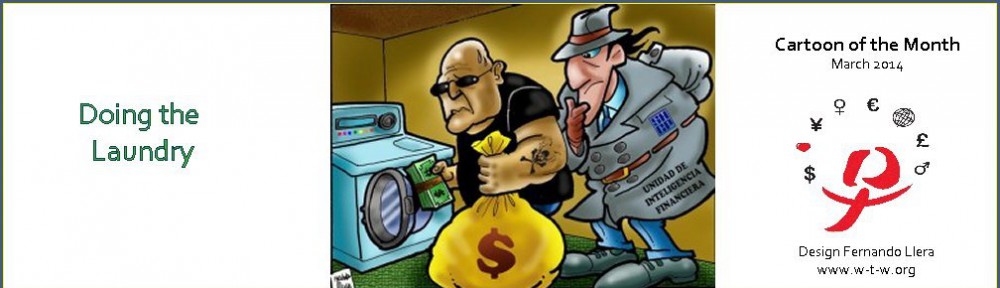
Our correspondent Andreas Frank notes a ruling by the US Court of Appeals in the cast of the European Union against RJ Reynolds, a tobacco company.  The lower court threw out the case because the racketeering was done in Europe.  The appeals court found: the alleged scheme began with the smuggling of illegal narcotics into Europe by Colombian and Russian crime groups, with euro-denominated proceeds from the sale of those drugs then “laundered” by money brokers.

Importers would allegedly use these proceeds later to buy RJ Reynolds cigarettes via wholesalers, with payments and shipments shielded from government scrutiny. Brokers using funds derived from the importers would then allegedly repeat the cycle.

The EU accused the RJ Reynolds entities of essentially directing the scheme from the United States, using U.S. mails and wires and frequent travel by employees to Colombia.

In dismissing the case, Garaufis said RICO did not apply because the scheme was centered on foreign crime groups operating outside the country.

Judge Leval in the Appeals Court said that standard could create “illogical” results, such as immunizing people from RICO liability for murders and kidnappings in the United States simply because they were done in conjunction with a foreign enterprise.  “Surely the presumption against extraterritorial application of United States laws does not command giving foreigners carte blanche to violate the laws of the United States in the United States,” he wrote.

“We conclude that RICO applies extraterritorially if, and only if, liability or guilt could attach to extraterritorial conduct under the relevant RICO predicate,” Leval added.
The 2nd Circuit took more than two years to decide the case, having heard oral arguments on February 24, 2012.

RJReynolds Smashed