Bitcoin Site Silk Road Indictments

Our correspondent Andreas Frank writes:  Prominent bitcoin entrepreneur Charlie Shrem has been indicted by a federal grand jury in New York on charges of funneling cash to the illicit online marketplace Silk Road.

Shrem, known as one of the digital currency’s most visible promoters, is accused of conspiring with a Florida man, Robert Faiella, to sell more than $1 million in bitcoins to the users of Silk Road despite knowing that it would be spent on illegal uses like drug trafficking

The indictment came after plea bargaining talks with federal prosecutors in Manhattan ended. Shrem, the former vice chairman of the Bitcoin Foundation, and Robert Faiella, who the U.S. said operated an underground Bitcoin exchange called “BTCKing,” are accused of engaging in a scheme to sell Bitcoins to users of Silk Road for illegal purchases.

Shrem, who was also the chief executive officer of a Bitcoin exchange company called BitInstant, and Faiella were first arrested in January and have been free on bond. They’re charged with two counts of operating an unlicensed money transmitting business, money laundering conspiracy and willfully failing to file suspicious activity reports with banking authorities, according to the indictment.

The case is the latest to be brought by Manhattan U.S. Attorney Preet Bharara’s office stemming from a probe of Silk Road, a sprawling and anonymous black market bazaar. Ross William Ulbricht was charged in October with running Silk Road under the alias “Dread Pirate Roberts,” and in December, Bharara charged three more former Silk Road employees with helping run the website. All have pleaded not guilty.

Shrem and Faiella face as long as 20 years in prison if convicted of the most serious charge of conspiracy.

Bitcoins

Is Art a Good Investment?

It depends who paints the painting.  The artist or his impersonator.

The United States has indicted a forger and his accomplices for fraud and evasion of taxes.  The hundred year old Knoedler Gallery in New York closed as part of this disclosure.  One humorous piece of the proceedings is the statement that the artists copied — Jackson Pollock, Mark Rothko and Barnett Newman, were easy to copy.

“The defendants earned more than $33 million from the scheme to create and sell the Fake Works. To conceal the illegal nature and origin of the proceeds from the scheme, Jose Carlos Bergantinos Diaz and Jesus Angel Bergantinos Diaz, the defendants, and Rosales worked together to launder the proceeds by transferring the proceeds through foreign and domestic bank accounts that they controlled.

In addition, as set forth below, to increase the amount of proceeds he kept from the unlawful scheme, Jose Carlos Bergantinos Diaz, the defendant, unlawfully impeded and obstructed the Internal Revenue Service (‘IRS’) by hiding millions of dollars in his unlawful income from the IRS and by knowingly failing to report the existence of the foreign bank accounts that he controlled or maintained an interest in, as required by law.

Finally, in an effort to hide his role in the unlawful scheme, Pei Shen Qian, the defendant, lied to agents of the Federal Bureau of Investigation about his role in the fraud. In particular, during an interview with FBI agents investigating the scheme, Qian falsely claimed, among other things, that he did not recognize Rosales’s name; that Qian was unfamiliar with the names of certain artists (including artists whose names Qian had repeatedly and fraudulently signed on paintings QIAN created, in order to trick purchasers into believing those artists had created the paintings); and that Qian had never attempted to create paintings mimicking the style of certain abstract expressionist artists.”

Is it or Isn't It?

Lawsky Gets Tough

The New York State Financial Services chief understands that even fines that seem humungous to the ordinary citizen are for financial institutions just “the cost of doing business.”  Unless some of these financial officers go to jail, business is going to continue as usual.   But Lawsky has his eyes wide open.

  • At the center of New York Department of Financial Services chief Ben Lawsky’s concerns are Ocwen’s relationship with Altisource Portfolio Solutions and its home-auction website subsidiary Hubzu.
  • “Hubzu appears to be charging auction fees on Ocwen-serviced properties that are up to three times the fees charged to non-Ocwen customers,” writes Lawsky’s office. In other words, when Ocwen chooses Hubzu to market a property, the fee is 4.5%, but when Hubzu competes for business in the open market, it’s 1.5%.
  • “The relationship between Ocwen, Altisource Portfolio, and Hubzu raises significant concerns regarding self-dealing. In particular, it creates questions about whether those companies are charging inflated fees through conflicted business relationships, and thereby negatively impacting homeowners and mortgage investors.
  • Speaking Thursday on the Home Loan Servicing Solutions earnings call, Ocwen boss Bill Erbey says Lawsky’s hold on the purchase of $2.7B in MSRs from Wells Fargo has put a freeze on all MSR deals in the market.      Lawsky

In Italy, Aid for Small Businesses in Tough Times

The association of micro Italian COMITAS in Salerno created the ” ATM Anti-Crisis ” to  provide assistance to small entrepreneurs and artisans in trouble.  Times are tough in Italy.  Now a day passes without an entrepreneur, crushed by the economic crisis, taking his life.  Over the past four years in Italy for economic causes suicides increased by 30%. This real emergency is addressed by providing useful tools tools to craftsmen and owners of small businesses.

Through the ” ATM Anti-crisis ” a staff of lawyers , accountants and experts give assistance to entrepreneurs in Salerno on several fronts : tax collection folders , with Treasury debt , late payments by the PA , banks, and usurious interest rates.  All situations where the business owners are harassed or when their rights are violated are now reported in a criminal court.

” Small business owners are left on their own – says the president of Comitas , Francis Drums.   With this ATM Anticrisi we not only offer practical help, but also a support community.

Salerno

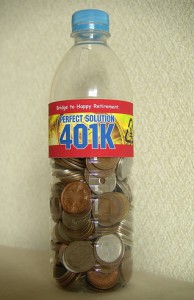
Automatic Enrollment in Savings Plans?

Monkeys and humans save at the same rate.  I.e., they don’t.  So it has been suggested that enrollment in companies’ 401K plans be automatic.  (You can elect out).

Approximately 30 percent of eligible workers do not participate in their employer’s 401(k)-type plan. Studies suggest that automatic enrollment plans could reduce this rate to less than 15 percent, significantly increasing retirement savings. Whether you already have a 401(k) plan or are considering starting one, automatic enrollment 401(k) plans offer many advantages.

An automatic enrollment 401(k) plan:

  • Helps attract and keep talented employees.
  • Increases plan participation among both rank-and-file employees and owners/managers.
  • Allows for salary deferrals into certain plan investments if employees do not select their own investments.
  • Simplifies selection of investments appropriate for long-term retirement savings for participants.
  • Helps employees begin saving for their future.
  • Offers significant tax advantages (including deduction of employer contributions and deferred taxation on contributions and earnings until distribution).                  Savings

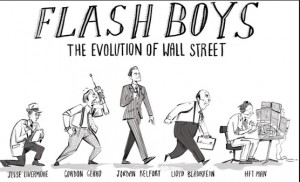
French Tax High Speed Trades. Should the US?

There are pros and cons to the French high-frequency tax, but some variation may be desirable.  A properly-structured high-frequency tax would cap the value of speed—to end the race to spend billions to save milliseconds.  It also would charge traders to tease information out of investors.  But it should exempt participants who contribute beneficially to the markets–like market makers that are registered with an appropriate national securities exchange.  Taxing may be easier to effect in the US than getting the SEC to act.

Flash Boys Evolution

Vietnamese Business Women Blend Old and New

Lily Leung reports that Vietnamese-American business women blend old tradition and new ways.  

Gia Ly darts in through the doors of her family’s Westminster, Calif., restaurant and hawk-eyes the tables and corners—all with a few screen swipes and finger pinches on her iPhone.  Ly is navigating a virtual tour she set up to promote her family’s businesses, Zen Vegetarian Restaurant and Crepe Corner, as she sits right outside. Winds whip three flags—Californian, American and former Vietnamese—flying in front of the establishments.

“In Little Saigon, mom-and-pop owners don’t think of marketing dollars, or how to compete with larger restaurants. This will help them with [Google] ranking and indexing,” said Ly, who contracts with the search giant to sell similar tours to small businesses.

The 34-year-old businesswoman epitomizes Southern California’s modern Vietnamese–American female entrepreneur, one who oftentimes straddles two worlds. In this case, Zen, which she co-owns with her immigrant parents, shows her allegiance to her cultural roots, and her work with the online tours reveals more corporate, go-getter chops.

Women like Ly are among the so-called “1.5 generation,” an in-between group that immigrated to the U.S. when they were younger but have adopted both Vietnamese and American traditions.

This generation tends to take on more leadership roles and is more involved in the community, said Linda Vo, associate professor for Asian–American studies at University of California–Irvine.

“You’re seeing that in the Vietnamese–American Chamber of Commerce,” Vo said. “It’s a new kind of generation. [Before,] they weren’t that active in doing outreach outside of ethnic businesses.”

As the first woman to chair the Fountain Valley, Calif.-based Vietnamese–American Chamber of Commerce (her first term started this year), Ly symbolizes the growing presence and changing dynamics of female business ownership in the Southern California Vietnamese community, the largest outside of Vietnam.

While research on this topic is limited, anecdotal evidence suggests a rise in Vietnamese–American women who are going beyond the traditional business models such as restaurants and nail salons to launch startups in less-traditional fields, including marketing and finance.

In their native country, wealth is on the rise, from the minting of Vietnam’s first billionaire to the increasing presence of women in boardrooms. Behind China, it’s the fastest-growing economy in Asia.

An index of companies in Vietnam currently led by female CEOs has almost tripled in the past five years, gaining about twice as much as the nation’s benchmark VN Index, according to data compiled by Paris-based Intelligent Financial Research & Consulting and Bloomberg.

Women in general are outpacing men in college education, which can translate to higher earnings and more opportunities. There are more than 620,000 businesses owned by Asian–American women in the U.S., an 80 percent jump since 2002, based on numbers from the Center for American Progress, a public policy think tank in Washington.

Mix in the enduring influence of family legacy and the effects of the Vietnam War, and many in Little Saigon aren’t surprised to see women there making strides professionally.

“Women are a kind of rock, the pillar, the foundation,” said Dr. Tam Nguyen, who recently handed the reins of Vietnamese–American Chamber of Commerce to Ly. “Even though the war is over, some things continue.”

Following the fall of Saigon, Vietnamese refugees fled to the U.S. in waves. Lacking language skills but possessing technical ones, many families started their own businesses.

Within such ventures, mothers typically ran the finances and day-to-day operations while raising children, as their husbands served as the face and name of the businesses, said Nguyen, whose family owns and runs Advance Beauty College, which has two locations.  As the war continued, many women found themselves in provider roles as the men helped the U.S. military effort or were imprisoned in Vietnam.

Fountain Valley entrepreneur Bele Nguyen said her mother’s struggles made an indelible impression on how she does business.  Her mother became the family breadwinner when her father was captured and jailed after serving as an American war ally. To make ends meet, she would buy and sell scrap textiles and tailored clothes.


Vietnamese Business Women

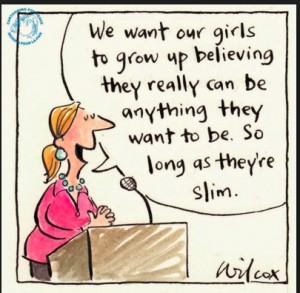
Is the Image of Women in Finance Improving?

Karen Firestone reports:

Financial institutions portray women today as competent and self-confident, and often feature attractive, middle-aged advisors talking to couples in which the woman is similarly well dressed and clearly attentive. According to Dr. Emma Firestone, who has studied the audience perception and response to images and words in media and entertainment, from a cognitive perspective, “It makes sense for advertisers to present women as strong, well-educated consumers. This is appealing to women who see an attractive self-image reflected back at them, and to men, who are flattered by the idea that smart, self-possessed, and financially secure women are their own life partners.” Men are much more likely today, than decades ago, to be comfortable with and appreciate their spouses as full partners in their own financial decision-making – at the same time, imagery of supportive female financial advisors plays into comforting stereotypes of the woman-as-helpmeet, perhaps humanizing an industry consumers view as confusing or even threatening.

However, there is a trapdoor in this picture. The rise in strong feminine images in financial advertising also coincides with some very negative portrayals of men in the industry: the testosterone-driven traders and gamblers who led us over the financial cliff in 2008.  As Christine Lagarde, Director of the International Monetary Fund stated only partly in jest, if the firm had been called “Lehman Sisters” there might not have been the same resulting devastation to world economies. Extensive research suggests that if financial firms had fewer men, those firms would have taken on less risk. Both headlines and Hollywood have also focused on the antics of a few particularly macho financial executives.  It may be that today’s financial firms are trying to portray a “feminized” face to distance themselves from stereotypes like these.

Women on Wall Street

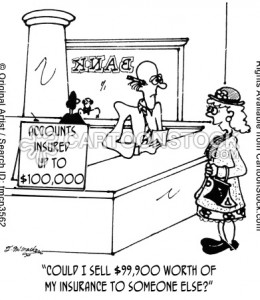
IMF Suggests Bank Deposit Insurance in China?

James A. Dorn reports:  The International Monetary Fund (IMF) has recommended that China institute deposit insurance before embarking on interest rate liberalization and opening its capital markets. Higher rates on deposits may encourage more risk taking by banks and some of the lending/investments may go sour. The IMF sees deposit insurance as a way to prevent bank runs.

That logic may be true, but deposit insurance also encourages banks to take more risk, because ultimately taxpayers will have to make depositors whole if a bank fails. Most banks in China are already state owned and have an implicit guarantee that the government will not let them go bankrupt. Deposit insurance may help smaller private banks compete against the giant state banks. But the real problem is not the lack of deposit insurance; it is the lack of private ownership and responsibility that permeates China’s financial sector.

Introducing deposit insurance is a double-edged sword: it may help protect depositors but it also increases risk taking and could be costly to taxpayers. China’s move toward liberalizing interest rates does not require government deposit insurance; it requires a genuine rule of law that safeguards personal and economic freedom, and holds those who make unwise investment/lending decisions responsible.

W-T-W.org notes: In the US, insuring depositors (among other protections)  has led bankers to take unreasonable risks and caused the expenditure of a great deal of taxpayer money.  Bankers go scot free.

Deposit Insurance