Maria Contreras-Sweet, the founder and board chairman of a Latino-owned community bank in Los Angeles, will be the new head of the US Small Business Administration. Good news for small business entrepreneurs and especially Latinos. New Head of SBA
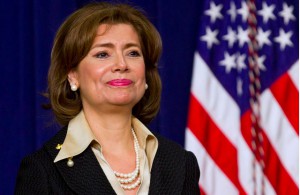

Maria Contreras-Sweet, the founder and board chairman of a Latino-owned community bank in Los Angeles, will be the new head of the US Small Business Administration. Good news for small business entrepreneurs and especially Latinos. New Head of SBA
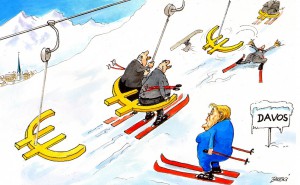
When people gather from around the world to discuss important issues it is good But Davos is still skewed to the rich and the powerful. Women are left out. Davos Attendance The risks targeted by the WEF are yesterday’s news. WEF Identifies Risks that have Already Arrived
Women Leaders and Gender Parity
Measuring and monitoring the gender gap
Generating Insights to Close the Gender Gap
Engaging Leaders to Close the Gender Gap
Promoting the Participation of Women Leaders
Capital is no longer the only decisive factor of production in today’s global economy: a business or an economy’s competitive advantage is increasingly determined by innovative ideas or immaterial services, and is less dependent on tangible assets. We are rapidly moving from capitalism to “talentism”. In such a world, gender parity can no longer be treated as superfluous. Women make up a half of potential human capital available in any economy. The efficient use of this talent pool is a key driver of competitiveness.
The Women Leaders and Gender Parity Programme is committed to promoting women’s leadership and gender parity across the globe by using the following four approaches:
Women Leaders and Gender Parity
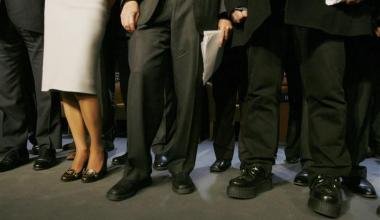
Why finding women at Davos will be harder this year.Women delegates  will be even tougher to find at Davos this year, even though the World Economic Forum WEF is maintaining its quota system to ensure a higher percentage of female representation.
Why finding women at Davos will be harder this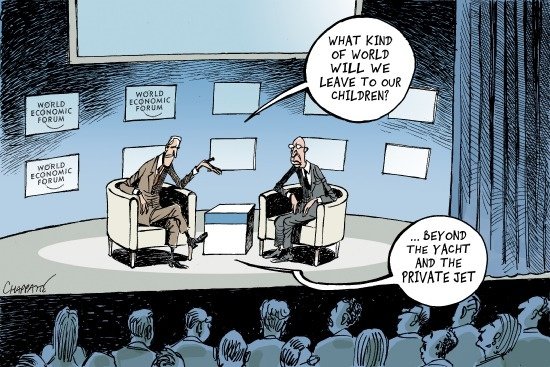
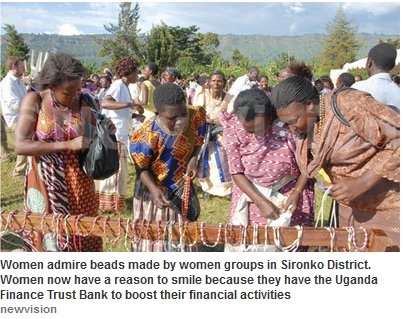
Women admire beads made by women groups in Sironko District. Women now have a reason to smile because they have the Uganda Finance Trust Bank to boost their financial activities.
It all started with a group of women. Driven by the dream of financial freedom, they carried the hopes of other women and many low income people in Uganda that someday a small microfinance institution would usher many into a life of plenty. Inspite of the wars that had rocked the country in the 1970’s, cultural prejudices and relatively low incomes, they still trudged on toward their goal.
At the 1975 International Women’s Conference in Mexico, the decade between the years of 1975-1985 had been dedicated to the empowerment of women, but nine years later, little had changed for women in Uganda. In the year 1984, single women could not open personal accounts in most commercial banks. Married women on the other hand, could open a savings account, but only after their spouse agreed to it.
First womens commercial bank launched in Uganda
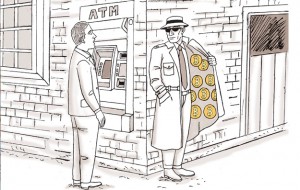
In our continuing discussion of what money is (and are bitcoins money) resident guru Lloyd McAulay weighs in with these thoughts:
When a government prints money to the point where we can not rely on it, then the “money” no longer performs the money function and those affected find another money to use as much as possible (USDs or Zimbabwean dollars in Zimbabwe and Euros in Greece). Those affected might forego the convenience of paper and use gold as the medium of exchange.
If one is willing to accept the assurance of the Bitcoins program, then Bitcoins does function as money. If not, then not. Bitcoins are not yet money for me.
Most governments will replace worn out or defaced money. What happens if something goes wrong with Bitcoins? Can something go wrong?
Attached Empirical Measures in the Federal Reserve an analysis of money.
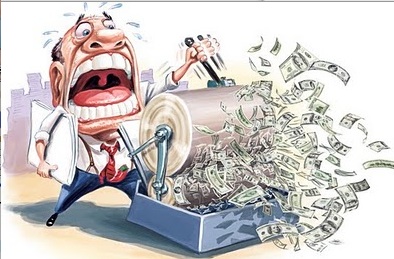
The big online retailer Overstock.com now accepts payment in Bitcoin. That’s good news for lovers of liberty because Bitcoins give us an alternative to government-controlled money. Bitcoins are a currency created by anonymous, private tech nerds, not by government.
Governments don’t like competition, and our government sometimes bans competing currencies. But as more of us use Bitcoins, and more businesses accept payment in Bitcoin, it becomes harder for government to dismiss the currency as illegitimate, or ban it. Bitcoin Revolution
What should we make of Edward Snowden, Bradley (now Chelsea) Manning, and Julian Assange? Their names are known across the globe, yet the actions that made them famous have also driven them to lives of intense isolation—in hiding, in prison, or in a foreign embassy. They have been lionized as heroes and condemned as traitors. Snowden, a former contractor for the National Security Agency (NSA), and Manning, a low-level army intelligence analyst, are responsible for the two largest unauthorized disclosures of classified information in the nation’s history. Whistleblowers- Saints or Sinners
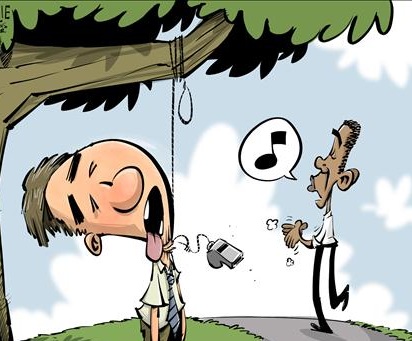
Are secret courts enough?
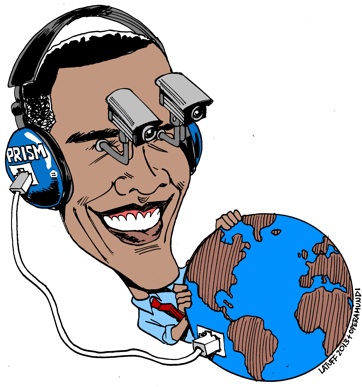
President Barack Obama today unveiled what his administration called the biggest reforms to U.S. surveillance programs since he took office.
Obama said he was ordering changes that will end the bulk collection of metadata “as it currently exists, and establish a mechanism that preserves the capabilities we need without the government holding this bulk metadata.”
Obama said that intelligence analysts now will need approval from secret courts to go into phone records routinely stored by the National Security Agency.
The President also called on Congress to authorize a new panel of outside advocates to participate in “significant cases” before the secret court that handles intelligence collection issues
“Unless there is a compelling national security purpose,” Obama said, the U.S. won’t monitor the communications of foreign leaders.
Here comes a book which argues, quite to the contrary of conventional wisdom that we need even bigger banks.
IF ANY good has come out of the financial crisis that reached its peak in late 2008 it has been a plethora of useful books. These have ranged from “Too Big to Fail”, Andrew Ross Sorkin’s fly-on-the-wall account of the efforts by the Federal Reserve and America’s Treasury Department to save the banking system, to the more recent analytical work of Anat Admati and Martin Hellwig in “The Bankers’ New Clothes”. A common theme of many of these books has been that big banks are dangerous, regulations are worryingly lax and bankers are self-serving maniacs who need to be curbed. Is there a flip side of the coin? Banks- Do We Need Too Big To Fails