Education in the US: Progress?

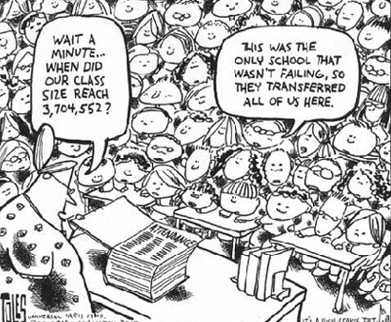
The US is an anti-intellectual country.  You can’t discuss the pleasure of learning although good teachers can not help but convey enthusiasm.  We are focused on two main goals.  One is to get everyone up to speed at a practical and necessary level in mathematics (or arithmetic) and reading.  This goal is commendable, although not at the sacrifice of enriched classrooms full of books and charts and maps.

The second part of education is tied to the job market.  There are plenty of jobs in the US, despite high unemployment figures.  But the jobs that go begging are for engineers, and at the very least symbol manipulators.  In Germany, companies train their employees.   It is politically incorrect to say in the US that any student should not go to college.  Yet any one who has taught knows that it’s easy to assess who is not going to benefit.  To charge our already overburdened educational system with leveling the playing field at the core and preparing the mass of students for the jobs of the present and future is really too much to ask.  The ensuing chaos reported in the Economist was predictable.    Education and the Core in the US

Education- USA

Handling Journalism in China

Report from our China correspondent Donna Charbone:

Michael Forsythe, the former Bloomberg News reporter who was dismissed amidst controversy surrounding his unpublished article exposing financial corruption within the Chinese government, has now joined The New York Times.

The Hong Kong-based reporter left Bloomberg in November 2013 after he’d written a story about financial ties between Wang Jianlin, China’s richest man, and the CCP.

The story was allegedly killed by Bloomberg’s editor-in-chief Matt Winkler, who had feared that it could get the news agency kicked out of China during an especially anxious time for foreign journalists facing expulsion from the country. The New York Times ran a story about the cancellation, and Forsythe was soon after placed on suspension indefinitely.

In 2012, the award-winning journalist published a piece exposing Xi Jinping’s family wealth and connections which caused sales of Bloomberg terminals in China to slow. It was also the story that led to Bloomberg’s website being blocked in China.

In the same year, the New York Times published a story on the secret wealth of China’s elite which likewise landed their publication on the wrong side of the Great Fire Wall and led to revenue losses of up to 3 million USD so far.

Last week, The Washington Post reported that New York Times reporter Austin Ramzy, a former Time Magazine journalist who had been working out of China for the past six years, was not given press accreditation after the months-long standoff between foreign journalists and the Chinese government, although most other Bloomberg and New York Times reporters were issued renewed visas.

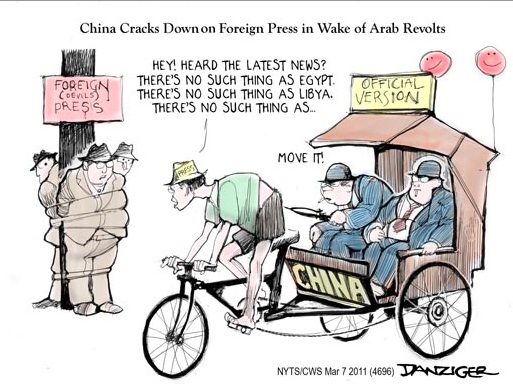
Press Suppression in China

How to be a Muslim Woman and an Entrepreneur

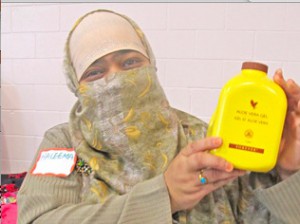
One of the biggest hurdles I went through was from the Muslim community. One of the biggest obstacles was trying to get through to my community is that a woman can be something other than what is defined for her.  Our community is a long way from practicing the empowering guidance that our faith teaches us. Islam teaches an individual to be independent, powerful, strong on a moral, political, intellectual level. But we’ve missed a lot of it in our lives.   Muslim Women Entrepreneurs

Muslim Women Entrepreneurs How to be an entrepreneur for the Muslim woman

Illegal Drugs Flooding Asia

Andreas Frank, expert on crime and money laundering notes:  The UNODC sounded the alarm over record seizures of methamphetamine, with the drug flooding streets and clubs in Asia and enticing a new generation of users.

Methamphetamine remains the top illicit drug threat in East and Southeast Asia, according to a new UNODC report. Seizures of methamphetamine in both pill and crystalline forms reached record highs there in 2012, with 227 million methamphetamine pills seized – a 60 per cent increase from 2011 and a more-than seven-fold increase since 2008 – along with 11.6 metric tonnes of crystalline methamphetamine, a 12 per cent rise from 2011.

The report says that methamphetamine is now the first or second most used illicit drug in 13 of the 15 Asia Pacific countries surveyed. The use of methamphetamine increased in Cambodia, China, Japan, Lao People’s Democratic Republic, Myanmar, the Republic of Korea, Thailand and Viet Nam.

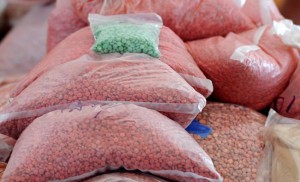
Methamphetamine can be ingested, smoked, snorted and injected. In its pill form – known in Thailand as “yaba”, which means “crazy medicine” – it is used both as a party drug and pick-me-up for low paid workers with long hours.

Those concerned with the problem in the region note the ease with which one can get addicted to yaba, which is especially popular among young working males.

“They’ve been unaware of what they’re taking. They think it’s a nice little pretty pink pill and it’s harmless because it’s a pill and pills are good. So they get into it,” an UNODC official said.

In Thailand the use of methamphetamine has become a major public health issue, said Kelley, with signs that traffickers are pushing “promotional sales” of the more potent crystal meth to develop the market.

Thailand saw a 63 percent increase in people admitted for treatment for yaba last year, to 245,920. The number of those given help for crystal meth, while still smaller at 16,500, was more than double the previous year.

Drug use among young people aged 15 to 24, manual labourers and farmers has “increased significantly”, according to the UNODC report.

The UN estimates that heroin and methamphetamine generate sales of at least $30 billion in Southeast Asia and China annually. Methamphetamine is thought to account for around $16.5 billion of that – a sum that exceeds the annual economic output of Cambodia.

The drug is still mostly made in isolated mobile laboratories hidden in the forests of Shan State in eastern Myanmar, which is also the second-largest global source of opium after Afghanistan.

However in 2012 at least one major “fairly sophisticated large lab” was discovered with quantities of meth suggesting “industrial production”. Some well-organised groups had financing from outside the country – with Myanmar’s meth labs relying on precursor chemicals smuggled from China and India.

Authorities across the region also face regulatory challenges in combating the trade. In particular, authorities struggle to oversee the chemical and pharmaceutical industries which make or acquire the ingredients needed to manufacture the drugs.

According to UNODC, diversion of precursor chemicals from the pharmaceutical industry and diversion of pharmaceutical products, particularly out of South Asia – India and to some extent, Bangladesh – feed into the drug production cycle. The illicit drugs are generating billions of dollars in the region. The money is then laundered through banks and property markets in Asia, according to specialists in the region.

Corruption in law enforcement and the judiciary is also speeding the spread of meth across Asia. The graft is permeating through professions not normally associated with trans-national organized crime.

There are many cases within this region of medical supply companies diverting pharmaceuticals knowingly into this meth production, from hospitals or from doctors’ medical supplies. So there’s obviously corruption there, as well.

Frank-cs

Frank-cs.org
UNODC / UNODC Regional ATS Report

Amphetamines in Asia

Is Women’s Equality a Myth?

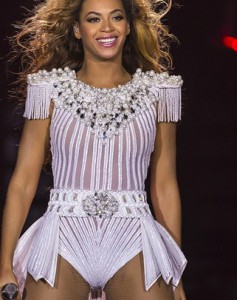
Leading entertainer Beyonce says so in an article on Maria Shriver’s new Report.

Gender Equality Is a Myth!
01.12.2014

By Beyoncé Knowles-Carter

We need to stop buying into the myth about gender equality. It isn’t a reality yet. Today, women make up half of the U.S. workforce, but the average working woman earns only 77 percent of what the average working man makes. But unless women and men both say this is unacceptable, things will not change. Men have to demand that their wives, daughters, mothers, and sisters earn more—commensurate with their qualifications and not their gender. Equality will be achieved when men and women are granted equal pay and equal respect.

IF WOMEN RECEIVED PAY EQUAL TO THEIR MALE COUNTERPARTS, THE U.S. ECONOMY WOULD PRODUCE $447.6 BILLION IN ADDITIONAL INCOME.


 Humanity requires both men and women, and we are equally important and need one another. So why are we viewed as less than equal? These old attitudes are drilled into us from the very beginning. We have to teach our boys the rules of equality and respect, so that as they grow up, gender equality becomes a natural way of life. And we have to teach our girls that they can reach as high as humanly possible.

We have a lot of work to do, but we can get there if we work together. Women are more than 50 percent of the population and more than 50 percent of voters. We must demand that we all receive 100 percent of the opportunities.  The Shriver Report available for free until January 15 at amazon.com

Beyonce

Broken Age Video Game Released to Kickstarter Backers

Tim Schafer, developer of the game, says he went to Kickstarter because he was tired of dealing with big corporations.  A sign of the future?

Schafer announced that Broken Age, Act 1 will be made available on Jan. 14 to those who backed the game on Kickstarter. Backers will be able to download the game from Steam.

Broken Age made a lot of headlines in 2012 with its extremely successful Kickstarter campaign, surpassing its initial goal of $400,000 with a total of $3.3 million from 87,142 backers.

Singapore’s Role in Offshore Assets

Singapore is Asia’s largest private banking center with offshore assets of about $850 billion, Boston Consulting Group data shows. Singapore is the second largest offshore center trailing only Switzerland which remains the world’s largest offshore financial center with about $2.2 tn of assets.

Switzerland is expected to remain the largest single offshore center globally, with about 25 percent of total offshore wealth by the end of 2017, compared with 26 percent in 2012. Singapore, in second place, is expected to increase its share from 10 percent to around 12 percent, according to the BCG report.

According to research on global financial trends from WealthInsight, Singapore will overtake Switzerland to become the world’s biggest offshore wealth centre by 2020,

Is the DOJ asking the obvious question: What makes Singapore attractive for offshore asset investments?

Singapore Offshore Assets

More about on :
Corruption Reports
Offshore Assets and Disclosure

Offshore Assets Comply With US Tax Law?

What makes Singapore an attractive place to park your offshore assets?

The Department of Justice is tight-lipped about countries beyond Switzerland on their radar to  disclose offshore asset deposits.  We have reported that Singapore is the second largest recipient of these deposits.  Nothing in the Department of Justice reports suggests that Singapore is being closely examined. Here is a description of the Assistant Attorney in charge of this enterprise. Kathyrn Keneally

Singapore BanksMore about on :
Corruption Reports
Offshore Assets and Disclosure

Singapore No. 2 in Offshore Deposits

Expert Andreas Frank calls our attention to new laws which appear to insist on disclosure and punish hidden assets, but may not.  He writes:

Singapore is Asia’s largest private banking center with offshore assets of about $850 billion, Boston Consulting Group data shows. Singapore is the second largest offshore center trailing only Switzerland which remains the world’s largest offshore financial center with about $2.2 tn of assets.

Switzerland is expected to remain the largest single offshore center globally, with about 25 percent of total offshore wealth by the end of 2017, compared with 26 percent in 2012. Singapore, in second place, is expected to increase its share from 10 percent to around 12 percent, according to the BCG report.

According to research on global financial trends from WealthInsight, Singapore will overtake Switzerland to become the world’s biggest offshore wealth centre by 2020,

The global private banking industry has total assets under management of $19.3 trillion, of which $8.3 trillion – or 42 per cent – is offshore and Switzerland currently holds $2.8 trillion of cash, the organisation says. By 2016, however, Switzerland’s figure is predicted to drop below $2.0 billion, WealthInsight predicts.

Switzerland holds 14.5 per cent of the global wealth industry’s AuM, second only to the US; offshore wealth – $2.1 trillion – makes up the vast majority of this money. Switzerland’s bank secrecy laws have come under relentless international assault from governments trying to halt an exodus of tax revenues. The impact on Switzerland from any shift in its status will be significant: more than 80 per cent of funds held in the country are for foreign clients.


The fight against money laundering, terrorist finance, tax evasion and organized crime has turned into a propaganda war. The OECD reported in December reported that 34 countries had failed to sign the OECD’s recommendation.

Against this background, it does not come as a surprise that the Monetary Authority of Singapore has released an inaugural “National Risk Assessment Report (NRA)” on money laundering and terrorist financing risks in Singapore which calls for tighter controls to combat money laundering and terrorist financing.

Based on the official data, there were 70 money laundering convictions under the Corruption Drug Trafficking and Other Serious Crimes (Confiscation of Benefits) Act from 2009 to 2011. There were seven such convictions under the Moneylenders Act in 2011.

As for terrorist financing, there were a number of cases that were investigated, but there has not been any prosecution to date, as most cases involved terrorists who were self-financed.

The report noted that for pawnbrokers, money laundering and terrorist financing risks arise when debt repayment is made using illicit funds or stolen goods are pawned. The pawnbroking industry had total loans outstanding at over S$1 billion in 2012, the study showed. The number of pawn shops in the city increased to 191 that year from 114 in 2008.

For corporate service providers – firms that provide company incorporation and directorship services – these “may be abused by criminals to set up complex and opaque structures for illicit purposes”.

Other sectors identified as vulnerable to money laundering and terrorist financing risk are banks, casinos, remittance agents, money changers, internet-based stored value facility holders and online payment firms like Paypal and Alipay. Singapore authorities are closely monitoring virtual currencies such as Bitcoins that may be used for illegal activities and will consider regulation if needed, according to the report.

Remittance agents, who accept funds for transfer to individuals outside Singapore, and money changers operate in “cash-intensive” industries and offer greater risks of money laundering or terrorism financing, according to today’s report.

Total outward remittance from Singapore amounted to S$24.1 billion in 2012, while inward remittances were S$995 million, the government said in the study. Volumes in the money-changing business that year were S$36.8 billion. The implementation of controls in these industries isn’t as robust as in banks and MAS will ensure “enforcement efforts are further stepped up,” according to the report.

According to a joint statement by the Ministry of Home Affairs, the Ministry of Finance, and the Monetary Authority of Singapore, “relevant government agencies will be strengthening the legislative and supervisory framework through the year to address the risks in these sectors more effectively”.

“Singapore’s openness as an international transport hub and financial center exposes it to inherent cross-border” money laundering or terrorism financing risks, according to the study. MAS “has put in place a robust preventive regime. Nonetheless, there are areas for further enhancement.”

Singapore’s central bank is stepping up its anti-money laundering rules in line with global regulations following U.S. authorities’ investigation of several Swiss banks for their dealings on behalf of American clients. MAS made it a crime last July for clients to use financial institutions to evade tax.    Singapore Approaches OffShore Asssets

More about on :
Corruption Reports
Offshore Assets and Disclosure

Source:
Frank-cs.org Frank-cs


Alcoa Pays $384m To Settle Alba Bribery Charges

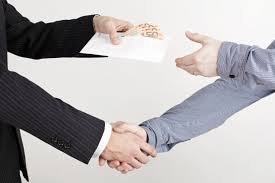
Alcoa Inc., the largest U.S. aluminum producer, agreed to pay $384 million to settle BriberyU.S. allegations that one of its units bribed members of Bahrain’s royal family and officials at a state-owned company to win business.
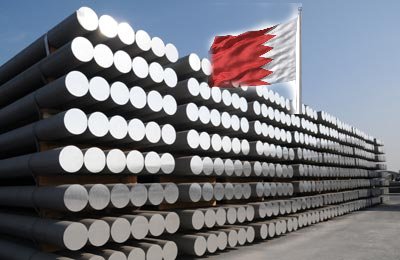
Alcoa World Alumina LLC, a majority-owned unit that supplies the raw material used by smelters to make aluminum, will plead guilty to one count of violating the anti-bribery provisions of the Foreign Corrupt Practices Act in a 2004 transaction, the Department of Justice said in a statement today.

As admitted in the charging documents, in 2004, Alcoa World Alumina corruptly secured a long-term alumina supply agreement with Alba by agreeing to purportedly sell over 1.5 million metric tons of alumina to Alba through offshore shell companies owned by Consultant A. The sham distributorship permitted Consultant A to mark up the price of alumina by approximately $188 million from 2005 to 2009, the duration of the corrupt supply agreement. Court filings allege that Consultant A used the mark-up to pay tens of millions in corrupt kickbacks to Bahraini government officials, including senior members of Bahrain’s Royal Family. To conceal the illicit payments, Consultant A and the government officials used various offshore bank accounts, including accounts held under aliases, at several major financial institutions around the world, including in Guernsey, Luxembourg, Liechtenstein and Switzerland.

“As the beneficiary of a long-running bribery scheme perpetrated by a closely controlled subsidiary, Alcoa is liable and must be held responsible,” George Canellos, co-director of the SEC Enforcement Division, said in the agency’s statement.

The company took a $62 million charge in the second quarter of 2013 on a proposed settlement with the Justice Department over the matter. It said at the time that the SEC had rejected a proposed settlement for the allegations.

Alcoa World Alumina is a unit of a joint venture that is 60 percent owned by Alcoa and 40 percent owned by Alumina Ltd. The venture was formed in 1994, according to Alumina.
Alcoa Pays $384m To Settle Alba Bribery Charges
SEC Alcoa PressRelease
Alcoa Cease and Desist Order
US Alcoa PressRelease

Bahraini state-controlled aluminium smelter