Burden of American Corporate Taxes

Schumpeter has an interesting discussion in the Economist about businesses that pride themselves on contributing to the common good and yet work hard to avoid taxes. He writes; Pfizer has always prided itself on its commitment to corporate social responsibility (CSR). It is particularly proud of the work that it does with NGOs and “other global health stakeholders” to strengthen and improve health-care systems.

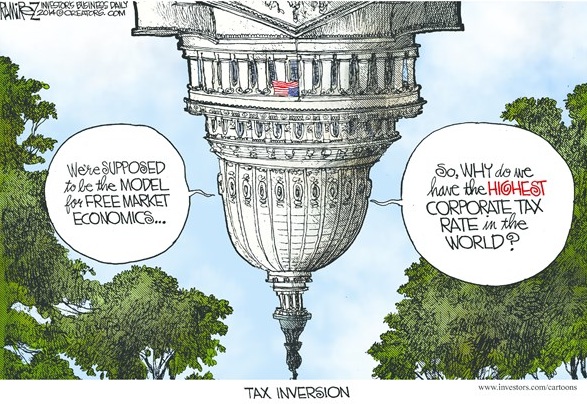
This has not deterred it from seeking a gargantuan “tax inversion”. The company intends, as part of a $160 billion takeover of Allergan, to shift its tax domicile from America to Ireland, where Allergan is domiciled, and where corporate-income taxes are considerably lower. Pfizer’s shareholders no doubt rejoiced: in 2014 the company would have saved $1 billion of the $3.1 billion it paid to the US Treasury.

A paper in the January issue of the Accounting Review suggests that Pfizer is far from unusual in trying to perform this pro-CSR, anti-tax straddle. David Guenther of the University of Oregon’s Lundquist College of Business and his co-authors compared the effective tax rates paid by a sample of American firms between 2002 and 2011 with a measure of those companies’ CSR programmes compiled by MSCI, an index provider. It found that the companies which do the most CSR also make the most strenuous efforts to avoid paying tax—and that those with a high CSR score also spend more lobbying on tax.

Surely CSR depends on the idea that firms have an obligation to society, not just to shareholders? And surely the most basic obligation to society is to pay the taxes that support the poor and vulnerable?

Mr Guenther and his colleagues suggest two more intriguing explanations. The first is that companies intentionally embrace CSR for exactly the same reason they try to reduce their taxes—to maximize their profits.  Starbucks recognised how much damage its British operation had done to its reputation when the extent of its tax planning was exposed in 2012, and promised to pay around £10m (then $16m) a year in each of the following two years.

The second possible explanation is that companies regard CSR and taxes as substitutes for each other: the less you pay in taxes, the more you have left over for good works.

Rival theories reflect conflicting ideas on what counts as a socially responsible company. The view put forward by various international bodies that seek to set standards for corporate behaviour, and accepted by many big European firms, is that responsible firms should pay a fair share of taxes while privately sponsoring some do-gooding on top of this.

Many CEOs, particularly in America, say the best way for companies to contribute to the common good is to succeed as businesses. Furthermore, they argue, the more money they can keep from the government’s clutches, the more they can invest in new plants (which create jobs in the short term) or research (which creates jobs in the longer term). And the more money they will have left over for good causes as well.

The CEO school of corporate responsibility has something going for it. Such bosses are right to argue that a business’s main contribution to society is to provide jobs and income. They are also right to argue for tax harmonisation: America has only itself to blame if firms revolt against its high corporate-tax rate.
Business Taxes


Entrepreneur Alert: Big Banks Back in Small Business Loans?

Big Banks Getting Back in the Business of Making Loans to Small Businesses in US?

Here’s good news for entrepreneurs: Big banks are becoming a tad more generous with small-business loans.

Major banks and institutional lenders have been approving small-business loans at higher rates, while the pace is holding steady at alternative lenders, according to a report this week from Biz2Credit, an online marketplace for small-business loans.

At banks with more than $10 billion in assets and at institutional lenders — including credit funds, insurance companies and nonbank financial institutions — approval rates on small-business loan applications climbed in June, to their highest level since Biz2Credit began tracking them in 2011, the report says.

On the other hand, approval rates at alternative lenders and credit unions were mostly flat. The report was based on an analysis of 1,000 loan applications on the Biz2Credit platform.

“We’ve come a long way,” Biz2Credit Chief Executive Rohit Arora said in a statement. “These are the best numbers for big bank lending since the recession. … It is a good time for entrepreneurs in search of capital.”

This trend is significant because big banks and lenders pulled back from the small-business market during the financial crisis. Alternative lenders stepped in to fill the void in small-business financing, helping create a vibrant, growing market.

That market has started to draw the attention of traditional banks, but Sam Hodges, founder of alternative lender Funding Circle, says big financing companies are, for the most part, still wary of lending to small businesses.


Molly Otter, chief investment officer at Lighter Capital, another alternative lender, says the Biz2Credit report paints an upbeat picture.

“Banks becoming more aggressive in their approvals — I think that is great for business owners.  The more options they have,  the better off their business is going to be, and banks are currently the cheapest form of debt there is.”

  • Big banks approved 22.1% of small-business loan requests in June, up slightly from May and the eighth consecutive monthly increase. By comparison, at the lowest point in June 2011, big banks approved only 8.9% of small-business loan applications.
  • Institutional lenders approved 61.4% of small-business loan applications, which is slightly higher than the rate at alternative lenders. Arora says institutional lenders are now mainstream players in small-business loans and are replacing cash advance companies, whose interest rates he calls “simply too high.”
  • Credit unions approved 43% of small-business loans applications, flat from the previous month. While considered a good option for lower-cost loans, credit unions “continue to lag in small business lending,” Arora says.

Scalebacks in British Business Spending

Scalebacks in British business spending.

Worries about the eurozone and shaky prospects for the wider global economy have dented confidence among bosses of the UK’s biggest companies, according to a survey.

There is growing uncertainty among business leaders over the UK’s planned referendum on EU membership, with support for staying in the bloc waning significantly over the past six months.

Confidence back to 2012 levels

CFO optimism was at its lowest level since the second quarter of 2012, Deloitte said.

Almost a third of the 137 CFOs surveyed, or 30%, said they were less optimistic about the prospects for their companies compared with three months ago. That was up from 20% feeling more downbeat when asked six months earlier. Just 12% said they were more optimistic in the latest poll, down from 36% six months earlier.

As a result, risk appetite was also down and the pace of hiring and capital spending was likely to slow in coming months, said Deloitte’s chief economist Ian Stewart.

Growth prospects

Growth prospects
 Illustration: Deloitte

Finance chiefs were broadly optimistic about the UK’s economic prospects in 2016 as well as for the US, the world’s largest economy. But despite stronger than expected growth in the euro area last year, CFOs remained pessimistic about prospects for the region. Levels of confidence about growth in the single currency bloc were lower than for emerging market economies.

The survey also signalled a drop in support among business leaders for the UK to remain in the EU ahead of a referendum on the issue.

Attitudes to EU membership
 Illustration: Deloitte

Deloitte asked CFOs whether it was in the interests of British business for the UK to remain a member of the EU. In the latest survey, 62% agreed that continued membership was beneficial, down from 74% when the question was asked six months earlier. There was also an increase in the number of those saying that UK business would benefit from leaving, to 6% now compared with just 2% before.

Just over a quarter, or 28%, said their decision depended on the outcome of the prime minister’s renegotiation of UK membership, up from 23% six months earlier. The remaining 4% said they were uncertain of their position.

After almost seven years of interest rates being held at a record low of 0,5%, a potential increase from Bank of England policymakers in coming months represents yet another uncertainty for businesses as they enter 2016.

With low oil prices helping to keep inflation low, financial markets do not point to a rate rise until late 2016 or early 2017.


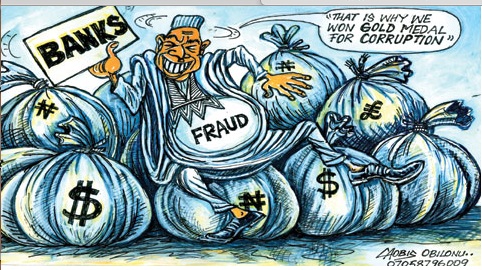
Can Lagarde Demand Clean up in Nigeria and Cameroon?

Alexis Akwagyiram writes:  Nigerian President Muhammadu Buhari, elected on a pledge to tackle corruption, holds talks with the International Monetary Fund as the country seeks to spend its way out of an economic crisis fuelled by plunging oil prices.

The meeting suggests an acknowledgement of Buhari’s efforts to revive Africa’s largest economy. He was elected in March after a campaign in which he promised to clamp down on the endemic corruption that has left many Nigerians mired in poverty despite the country’s enormous energy wealth.

He then announced a record budget for 2016, forecasting a doubling of the deficit to 2.2 trillion naira ($11 billion) and a tripling of capital expenditure intended to help the country adjust to the downturn in oil, which has lost around two-thirds of its value since mid-2014.

It has foreign currency reserves worth around $30 billion, and plans to borrow as much as 900 billion naira abroad to fund the deficit, which is equivalent to 2.16 percent of gross domestic product, Buhari said. Some 984 billion naira would be borrowed at home.

Nigeria relies on crude exports for more than half of state revenues and is Africa’s top oil producer. It is also facing an insurgency by Islamist group Boko Haram, which has killed thousands and displaced more than two million people in the remote northeast and raised concern among potential investors.

Lagarde will also visit neighbouring Cameroon, where she will meet President Paul Biya and his economic team. The government of the central African country that exports coffee, cocoa and oil tabled a 2016 budget of 4,200 billion CFA francs ($6.9 billion) in December.

Cameroon is part of an 8,700-strong task force including troops from Chad, Niger, Nigeria and Benin that has pledged to destroy Boko Haram, which though based mainly in Nigeria has become a major threat to regional security.

Lagarde will also meet Finance Ministers from the six member countries of the Economic and Monetary Community of Central Africa (CEMAC).

“The country (Cameroun) and the entire CEMAC region are confronted with the twin shocks of the oil-price slump and a surge in disruptions related to security,” Lagarde said.

Nigeria


India Lucks out on Capturing CO2

India lucks out on climate change

India is blessed with an extraordinary geological feature that may provide a natural solution to the problem of climate change, according to some geologists. India has indeed an additional option, some geologists believe. This consists of capturing the CO2 coming out of coal-fired power plants and injecting it below the Deccan Traps for permanent storage. Deccan Traps – a thick pile of solidified lava from volcanic eruptions 65 million years ago – occupies about a third of peninsular India and is the world’s largest continental flood-basalt province outside Siberia. The trap cover varies in thickness from a few hundred to a few thousand metres and, below this, lie thick sedimentary rocks. The idea is to pump the CO2 through the porous sedimentary rocks and use the basalt layer above as a “cap” to stop the gas escaping.

Deccan Traps

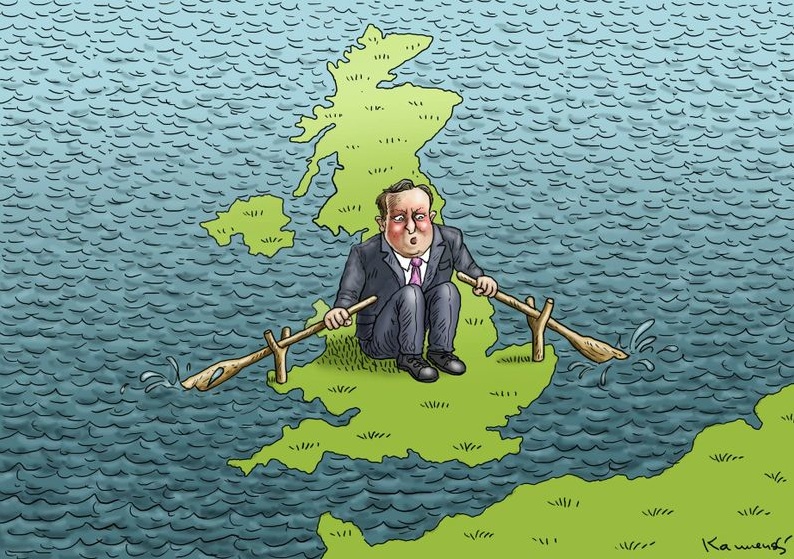
Brexit Raises Questions about the Requirements for EU Membership?

Does Brexit mean the beginning of the end of the EU?

Since the EU’s conception after World War II, the UK has stood on the sidelines: its attitude towards Brussels standoffish and, at times, downright hostile. From the Schengen project to the Euro, the island nation has negotiated numerous exceptions and opt-outs from joint European endeavours.

Initially the strongest opposition to the EU came from left-wingers. At a 1975 party conference, two thirds of Labour members, including current Labour leader Jeremy Corbyn, voted to leave. For them, the EEC was too cosy and too capitalist…a juggernaut that had rolled over Britain’s jobs, welfare state and sovereignty in the name of free trade.

However, those allegiances changed when Margaret Thatcher came to power. European integration was moving beyond economics and dipping its collective toe into the water of political and social issues. For the Iron Lady, Brussels had overstepped its remit.

Today, many of Thatcher’s Conservatives are calling for Britain to wrest back powers from Brussels, or leave the EU altogether. They claim most of Britain’s concerns can be dealt with more efficiently at home, and even believe a “Brexit” would reduce demands on the country’s social security system: despite the fact that most EU migrants living in the UK work, and therefore pay tax. Whatever the arguments for and against, a referendum on EU membership is now a certainty, and will likely take place in the summer of 2016.

How did we get here? It’s been a long time since Charles DeGaulle kept Britain out of the EU.  Britain has not joined the Euro and has articulated clear frustration and disappointment in EU leaders.  Now is perhaps the time to ask why the EU does not punish Poland for violating its rules?  Or to ask why pressure is not brought to bear on Romania and Hungary which are led by dictators?  Is it time to ask which nations can form an effective union and perhaps kick some members out?  Brexit’s exit would be self-inflicted.

Image by Marian Kaminsky

Image by Marian Kaminsky

Will Globalization Resume at A Brisk Pace?

Will globalization resume as economies get back on track?

Timothy Taylor writes:  Have we reached “peak trade,” so that the the era of rising globalization has ended? Or is the leveling out of the world trade/world GDP ratio just a pause, before globalization starts growing again?

The answer is yes, for reasons that underlie the thrust to globalization.  Moving value cross international borders gets easier all the time.  Communications technology facilitates movement, and coordinates activities.  Direct buying of information-related goods is easy.

Soon consumers and firms will buy goods from all over the world and order goods and services casually from other countries.   Globalization

https://www.w-t-w.org/en/liza-donnelly/

Mexican Mayor Pays High Price for Fighting Crime

The mayor of a Mexican city was shot to death one day after taking office.  She had announced that she was going to frontally attack Mexico’s drug cartels.

Gunmen opened fire on Mayor Gisela Mota on Saturday at her house in the city of Temixco, said the government of Morelos state, where Temixco is located.Two presumed assailants were killed and three others detained following a pursuit, said Morelos security commissioner Jesus Alberto Capella. He said the suspects fired on federal police and soldiers from a vehicle.

On his Twitter account, Morelos Governor Graco Ramirez attributed Mota’s killing to organised crime, without citing a particular drug cartel or gang.

Cartels seeking to control communities and towns have often targeted local officials and mayors in Mexico.

Mota’s leftist Democratic Revolution Party released a statement describing her as “a strong and brave woman who on taking office as mayor, declared that her fight against crime would be frontal and direct.”

Temixco is a city of about 100,000 people neighboring Cuernavaca, a resort and industrial city which has been suffering kidnappings and extortion linked to organised crime groups.

Though Cuernavaca is the capital of Morelos, Temixco is the seat of several state institutions including the Public Security Commission, which coordinates state and local police forces. Morelos also neighbours drug cartel-plagued Guerrero state.

Mota, who had been a federal congresswoman in her early thirties, was sworn into office on New Year’s Day. She was killed the following day.

Morelos Governor Ramirez vowed there “would be no impunity” in her killing and promised that state officials would not cede to what he described as a “challenge from criminals.”

Federal and state forces are deployed in Cuernavaca and municipalities near the Guerrero state border in what is called operation “Delta.”

Capella did not provide more details about the attack on Mota, but said that when the suspects were detained, authorities found a 9-millimeter gun, an Uzi, ski masks and an SUV with Mexico State license plates.

Morelos Attorney General Javier Perez Duron said the detained suspects have been tied to other crimes, but declined to provide more details.


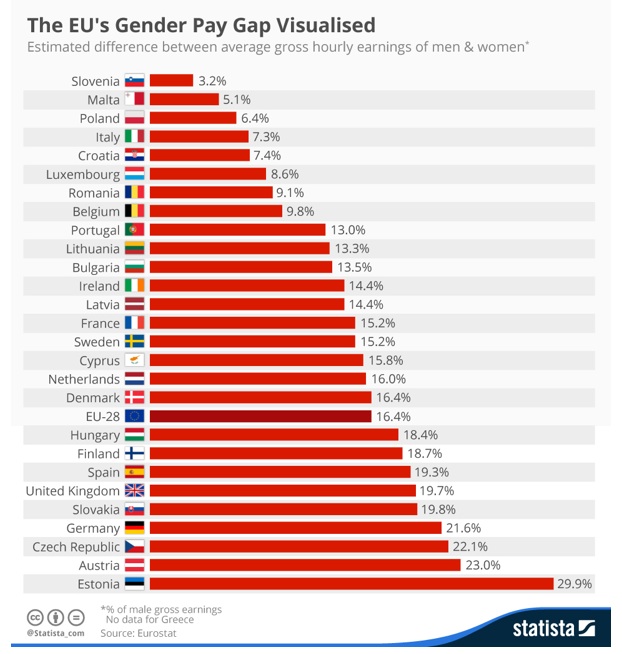
EU Women Still Earn Less than Men

For the economy as a whole, women’s gross hourly earnings were on average 16.4 percent below those of men in 2013. The gap was most pronounced in Estonia where there was a 30 percent difference in what men and women make per hour. Spain, the United Kingdom and Germany also found themselves at the wrong end of the table. Slovenia has the narrowest gender gap when it comes to pay at just 3.2 percent.

EU's Gender Pay Gap

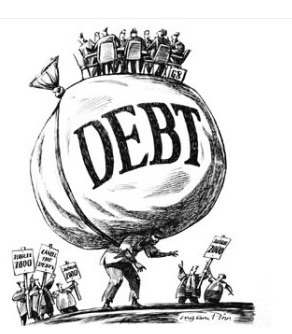
Sovereign Debt: Nothing New Under the Sun

Carmen Reinhart writes:  When it comes to sovereign debt, the term “default” is often misunderstood. It almost never entails the complete and permanent repudiation of the entire stock of debt. indeed, even some Czarist-era Russian bonds were eventually (if only partly) repaid after the 1917 revolution.

Like so many other features of the global economy, debt accumulation and default tends to occur in cycles.

The most recent default cycle includes the emerging-market debt crises of the 1980s and 1990s. Most countries resolved their external-debt problems by the mid-1990s, but a substantial share of countries in the lowest-income group remain in chronic arrears with their official creditors.

Such arrears are often swept under the rug, possibly because they tend to involve low-income debtors and relatively small dollar amounts.

Global economic conditions – such as commodity-price fluctuations and changes in interest rates by major economic powers such as the United States or China – play a major role in precipitating sovereign-debt crises. Peaks and troughs in the international capital-flow cycle are especially dangerous.

For some sovereigns, the main problem stems from internal debt dynamics.

Greece’s situation is all too familiar.  Greece defaulted on its obligations to the IMF. That makes Greece the first – and, so far, the only – advanced economy ever to do so.

But, as is so often the case, what happened was not a complete default so much as a step toward a new deal. Greece’s European partners eventually agreed to provide additional financial support, in exchange for a pledge from Greek Prime Minister Alexis Tsipras’s government to implement difficult structural reforms and deep budget cuts. Unfortunately, it seems that these measures did not so much resolve the Greek debt crisis as delay it.

Another economy in serious danger is the Commonwealth of Puerto Rico, which urgently needs a comprehensive restructuring of its $73 billion in sovereign debt. Recent agreements to restructure some debt are just the beginning; in fact, they are not even adequate to rule out an outright default.

Some of the biggest risks lie in the emerging economies, which are suffering primarily from a sea change in the global economic environment. During China’s infrastructure boom, it was importing huge volumes of commodities, pushing up their prices and, in turn, growth in the world’s commodity exporters, including large emerging economies like Brazil. Add to that increased lending from China and huge capital inflows propelled by low US interest rates, and the emerging economies were thriving. The global economic crisis of 2008-2009 disrupted, but did not derail, this rapid growth, and emerging economies enjoyed an unusually crisis-free decade until early 2013.

But the US Federal Reserve’s move to increase interest rates, together with slowing growth (and, in turn, investment) in China and collapsing oil and commodity prices, has brought the capital inflow bonanza to a halt.

From a historical perspective, the emerging economies seem to be headed toward a major crisis. Of course, they may prove more resilient than their predecessors. But we shouldn’t count on it.

Sovereign Debt