Should Central Banks Prick Bubbles?

Should the central banks take pre-emptive strikes against bubbles?

Howard Davies writes: It makes sense to vary banks’ capital requirements according to the financial cycle. When credit expansion is rapid, it may be appropriate to increase banks’ capital requirements as a hedge against the heightened risk of a subsequent contraction. This increase would be above what microprudential supervision – assessing the risks to individual institutions – might dictate. In this way, the new Basel rules allow for requiring banks to maintain a so-called countercyclical buffer of extra capital.

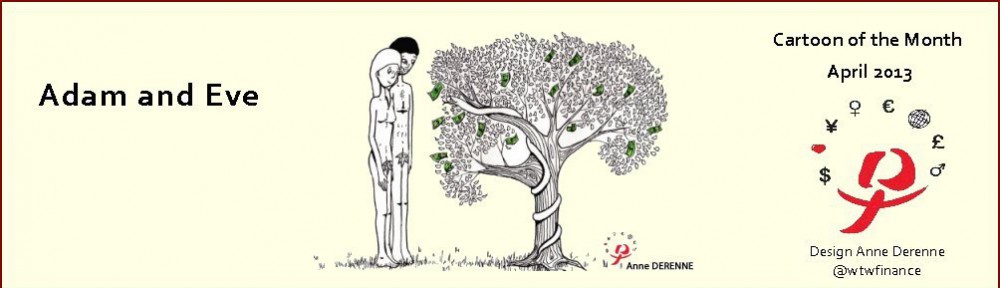
But if the idea of the countercyclical buffer is now generally accepted, what of the “nuclear option” to prick a bubble: Is it justifiable to increase interest rates in response to a credit boom, even though the inflation rate might still be below target? And should central banks be given a specific financial-stability objective, separate from an inflation target?  Pricking Bubbles

Pricking Bubbles?


Instituting Carbon Pricing?

Carbon pricing will be a critical piece in global warming control.

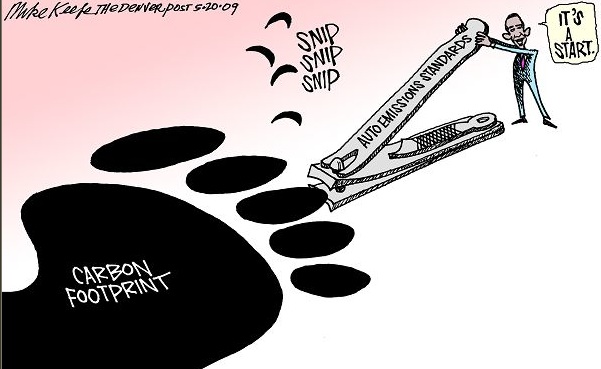
Christine Lagarde and Jim Young Kim write:  Carbon pricing policies are already being implemented by some 40 national governments, including that of China, the world’s largest emitter, and 23 cities, states, and regions that are putting a price on carbon. Many other governments also are reforming energy prices, and more than 400 companies report using a voluntary, internal carbon price. That makes sense. Top companies must effectively manage exposure to climate risk in order to generate higher profits and ensure more stable earnings.  Carbon Pricing

 Carbon

Entrepreneur Alert: Lifting Iran Sanctions

President Barack Obama ordered the US government to take steps towards lifting sanctions on Iran, in accordance with the historic nuclear deal struck between six world powers and Tehran.

Obama’s directive comes 90 days after the UN Security Council endorsed the accord signed in Vienna in July, a milestone referred to as “Adoption Day.”

“I hereby direct you to take all necessary steps to give effect to the US commitments with respect to sanctions,” Obama said in a memorandum addressed to the US secretaries of state, energy, commerce and the treasury.

The measures will take effect upon confirmation by the Secretary of State that Iran has met its commitments under the so-called Joint Comprehensive Plan of Action (JCPOA), as the accord is known, Obama said.

“This is an important day for all of us and a critical first step in the process of ensuring that Iran’s nuclear program will be exclusively for peaceful purposes,” Secretary of State John Kerry added in a statement.

But no sanctions will be lifted immediately — full relief will come not on “adoption day” but on “implementation day,” the point when the IAEA is able to certify that Iran has fully complied with its end of the bargain.

Under the deal with world powers, Iran will dramatically reduce its uranium enrichment program, surrender or dilute most of its highly enriched fuel and open its nuclear sites to inspectors from the IAEA, the UN nuclear watchdog.

In return, the United States, Europe and other countries will rescind a raft of economic sanctions imposed on Iran because of fears that its nuclear research program concealed plans to develop an atomic bomb.

The European Union’s foreign policy chief Federica Mogherini and Iranian Foreign Minister Mohammad Javad Zarif were also set to make statements on the lifting of crippling sanctions on Tehran.

Tehran has said it hopes “implementation day” will come quickly, in less than two months, but Washington envisages a longer timeframe.

“For us it’s important that it’s done right, not that it’s done quickly,” a senior administration official told reporters. “We cannot imagine less than two months.”

Is the World Bank Relevant?

Hovering over the annual International Monetary Fund/World Bank meeting in Lima, Peru, were the China-inspired Asian Infrastructure Investment Bank (AIIB) and New Development Bank (or “BRICS Development Bank,” as it was originally called). Will these new institutions behave like the World Bank or the more conventionally “bank-like” European Investment Bank (EIB)? Above all, will they be vehicles to promote – or, paradoxically, constrain – China’s interests?

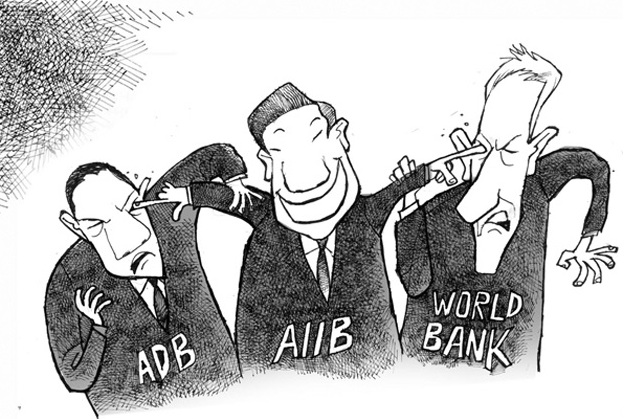
Devesh Kapur writes”  The reality is that over the next decade, these new institutions will not be huge lenders. The paid-in capital of each is $10 billion; so, even with an equity-to-loan ratio of 20% (the current floor for the World Bank), each will be able to lend only about $50 billion  – not chump change, but hardly a game changer – unless they “crowd in” substantial private investment. What matters is that the larger emerging markets are putting substantial capital into institutions that will be dominated by China – an indication of how frustrated they are with the World Bank and the IMF.

In the 2015 financial year, the EIB lent more than twice the amount provided by the Bank, but with one-sixth the staff. Whether measured by flows (loan disbursements) or stock (loans outstanding), the World Bank is massively over-staffed.

When the Bank was formed, the key governance mechanism was a resident Board of Directors that reported to a Board of Governors.  Over time, new offices proliferated.

Most of this bureaucratic growth was the result of pressure from developed countries.

The Bank’s extreme risk-averse culture reflects a rational response to critics who make a huge fuss about every project or program failure. Critics who take failures in commercial projects in stride find the Bank sloth-like compared with the private sector and become indignant when its projects fail. Yet, instead of making the case that risk is intrinsic to economic development and developing a risk-balanced portfolio of projects (and loans priced accordingly), the Bank pretends that it can be infallible. As a result, the best has become the enemy of the good.

Risk aversion has gone hand in hand with skewed institutional priorities, as is evident in the Bank’s budget. In the 2015 financial year, $623 million was allocated to “Client Engagement,” while nearly 1.5 times that amount, or $931.6 million, went to “Institutional, Governance & Administration” (the remaining $600 million, for “Program and Practice Management,” is ostensibly for supporting lending operations). Expenses for the Executive Board alone were $87 million. The Bank loudly proclaims the virtues of research – and then spends almost as much – $44 million – on “External and Corporate Relations.”  The Future of the World Bank

Future of World Bank

Entrepreneur Alert: Arctic Openings

 At a recent meeting of the Arctic Council the President of Iceland pointed out the many opportunities opening up in the Arctic as one of the few positive outcomes of global warming.  The council, founded in 1996, brings together eight nations with land above the Arctic Circle – Canada, Denmark, Finland, Iceland, Norway, Russia, Sweden and the US.

Climate change has countries as far away as India also paying attention to the Arctic – and seeking observer status in the council. Melting polar ice is making mineral and oil resources easier to exploit, setting off a scramble for access. The US Geological Survey estimated in 2008 that some 22% of the world’s undiscovered oil and natural gas deposits were located above the Arctic Circle.

The warming climate also opens shipping routes that were once mostly inaccessible. The northern sea route would cut the distance between Shanghai and Europe by several thousands of miles, saving time and money.

China is courting Nordic countries, signing a trade agreement with Iceland and several commercial agreements with Denmark.

Greenland, a self-governing part of Denmark, is considering awarding mine exploration licenses to companies this year for a $2bn (£1.3bn) project north-east of the capital Nuuk.

One of those companies is London Mining, which would join a Chinese mining company in the project that could supply China with 15 million tonnes of iron ore a year.

China is one of 14 countries that have applied for observer status in the council, along with Japan, South Korea, India and others. Several European countries such as France and the Netherlands are already observers.

It is unclear whether the eight members will be able to reach a decision by the end of their meeting in Kiruna, which will also mark the transfer of the council chairmanship from Sweden to Canada for the next two years. The US takes over in 2015.

Arctic Opportunities?


Should US Eliminate Corporate Taxes?

Along the rocky road to globalization, US corporations get taxed twice as much as corporations in other countries.  If they’re going to be competitive in business worldwide, they can’t pay disproportionate taxes.  Some people argue that taxing corporations and dividends is double taxation and perhaps we should limit the tax to dividends, and eliminate the corporate tax.  In any case, we should probably modify our tax code to bring it in better conformity with other countries around the world.

US Tax Havens

International Economy Needs Everyone’s House in Order

Complaints from the IMF/World Bank meetings in Peru.

Nick Asheshov writes:  The IMF/World Bank AGM meetings were deeply confused. The muddle  came not from the third world, the usual suspects, much less from Peru,  but from the IMF itself together with the big shot central banks, led by the Fed in Washington, The European Central Bank in Frankfurt, the Bank of England and their equivalents in China and Japan.

It quickly became clear that the international financial system, which is run by the directors and staff of the Fund, is not only dangerously unstable but that there is worse to come.  The world economy, said Christine Lagarde, the Fund’s managing director, is barely growing, at only 3.1% — Fundspeak for 2.3%.

Mme. Lagarde could have added that economic growth is not actually her job.  Her job, the task of the International Monetary Fund, is to provide financial stability, which is, as we all understand it, the stepping stone for a successful economy.   No stability, no growth.

Instead Mme. Lagarde and others talked of the importance of increasing jobs and pay for women, for income equality, for more old age pensions and social inclusion, climate change and indigenous rights.

There was no talk, or  hardly any, about exchange rates, nor even interest rates.  Mme Lagarde and her crew  are paid to control exchange rates. Dollars, euros, yen, renmunbi, pesos, reales, fluctuate today as dramatically as, and more unpredictably than, oil, gold and silver.  Indeed, it is often the volatile currencies that push and pull the prices of commodities and most other things besides. Tails wagging  the dogs.   Carpet weavers in Kazakhstan and quinoa farmers on the Altiplano see their  fortunes zoom or doom if  the Fed in D.C. increases, or not, $ interest rates by a quarter  point..

This is exactly how it should not be.  The Fund was set up 70 years ago at the end of WWII to say Never Again to the disastrous competitive devaluations and desperate inflations and deflations that followed World War I.  It was these crashing swings and roundabouts that set the scene for  the Great Depression and World War II.

The IMF’s job was to keep European, and later the rest of the world, exchange rates fixed or at least stable.

The Fund never really knew, and as we see still does not know, what to do about exchange rates. Or rather, they always have had a theory but the theory keeps changing.

Fast forward to Lima 2015, with trillions of dollars and the others zooming beyond the control of the IMF, the Fed or anyone else.  Peru has chosen this past couple of years not to devalue the Sol against the euro and the yen, and only slightly against the US dollar.  Meanwhile neighbors like Brazil, Chile and Colombia have strongly  devalued their pesos and reales.

Peru has over the past two years burned $24bn of its reserves to stabilize, as the Central Bank puts it, its currency and, one is to suppose, the economy.  But the economy has slowed over the past 12 months to a whisker over 2%.  Certainly the IMF and the other experts provided no ideas, much less clear guidance.

Until the United States, Europe and Japan put their houses in order, which is their constant advice to third world backsliders, there is not much  the rest of us can do.

Is the House in Order?

Did Germany Buy the Right to Host a World Cup?

The public trust is being challenged at every turn.  Now it turns out Germany probably bought the privelege of hosting the 2006 World Cup.

In what could turn out to be the greatest crisis in German football since the Bundesliga bribery scandal of the 1970s, SPIEGEL has learned that the decision to award the 2006 World Cup to Germany was likely bought in the form of bribes. The German bidding committee set up a slush fund that was filled secretly by then-Adidas CEO Robert Louis-Dreyfus to the tune of 10.3 million Swiss francs, which at the time was worth 13 million deutsche marks.

It appears that both Franz Beckenbauer, the German football hero who headed the bidding committee, and Wolfgang Niersbach, the current head of the German Football Federation (DFB), and other high-ranking football officials were aware of the fund by 2005 at the latest.

Acting in a private capacity, Louis-Dreyfus — who was, at the time, chairman of Adidas, the sporting apparel and supplies company that equips the German national team — lent the money to the German bidding committee prior to the decision to award the World Cup to Germany on July 6, 2000. The loan never appeared in the bidding committee’s budget or later, once the tournament had been awarded to Germany, in that of the Organizing Committee (OK).

A year and a half prior to the World Cup, Louis-Dreyfus called in the loan, which by then had a value of €6.7 million. Officials at OK, of which Beckenbauer had become president and Niersbach vice president, began looking for a way in 2005 to pay back the illicit funds in an inconspicuous manner.

Internal documents show that a cover was created with the help of global football organizing body FIFA to facilitate the payment. Using the cover, the Germans made a €6.7 million contribution for a gala FIFA Opening Ceremony that had been planned at Berlin’s Olympic Stadium but was later cancelled. The money had been paid into a FIFA bank account in Geneva. From there, FIFA allegedly promptly transferred the money to a Zurich account belonging to Louis-Dreyfus.

It appears that the loan was used to secure the four votes belonging to Asian representatives on the 24-person FIFA Executive Committee. The four Asians joined European representatives on the executive committee in casting their ballots for the tournament to be awarded to Germany in the July 2000 vote. After Charles Dempsey of New Zeeland unexpectedly abstained from casting his vote, Germany prevailed and landed the right to host the World Cup in a 12:11 vote.

german-soccer-fan-14206593.

Supporting TPP?

The rocky road to globaliation.  Should we support the TPP?

Jeffrey Frankel writes: Agreement among negotiators from 12 Pacific Rim countries on the Trans-Pacific Partnership (TPP) represents a triumph over long odds. Tremendous political obstacles, both domestic and international, had to be overcome to conclude the deal. And now critics of the TPP’s ratification, particularly in the United States, should read the agreement with an open mind.

Many of the issues surrounding the TPP have been framed, at least in US political terms, as left versus right. The left’s unremitting hostility to the deal – often on the grounds that the US Congress was kept in the dark about its content during negotiations – carried two dangers. A worthwhile effort could have been blocked, or President Barack Obama’s Democratic administration could have been compelled to be more generous to American corporations, in order to pick up needed votes from Republicans. In fact, those concerned about labor rights and the environment risked hurting their own cause. By seeming to say that they would not support the TPP under any conditions, Obama had little incentive to pursue their demands.

Seen in this light, the TPP that has emerged is a pleasant surprise. The agreement gives pharmaceutical firms, tobacco companies, and other corporations substantially less than they had asked for – so much so that US Senator Orrin Hatch and some other Republicans now threaten to oppose ratification. Likewise, the deal gives environmentalists more than they had bothered to ask for.

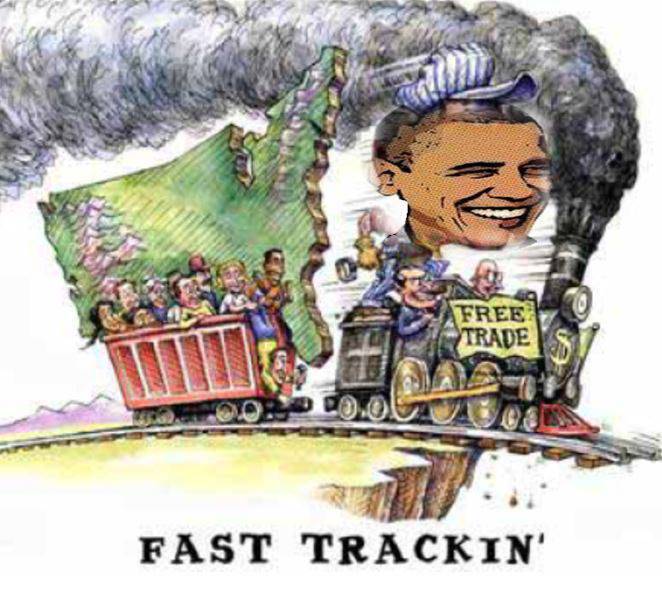
Perhaps some of these outcomes were the result of hard bargaining by other trading partners (such as Australia). Regardless, the TPP’s critics should now read the specifics that they have so long said they wanted to see and reconsider their opposition to the deal.Supporting TPP

TPP Support?

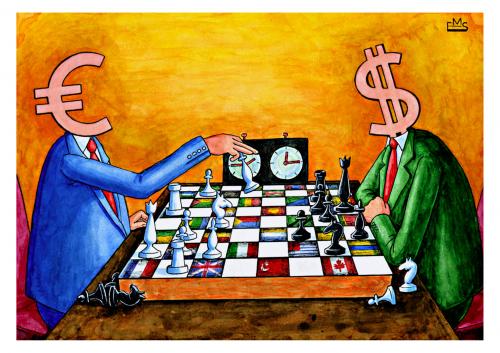
Are Currency Unions Viable?

The ongoing economic problems in the euro zone have led to more and more economists coming out in favour of significant reform or dissolution. Rolf Weder atÖkonomenstimme argues for an alternative, while public radio Deutschlandfunkreports that the German media reports views of Berlin and Brussels as objective truths without alternative.

The euro’s success has piqued the world’s interest in currency unions. The Gulf Cooperation Council is planning to establish one by 2010, the South African Development Community by 2018 and plans for an Asian currency union have circulated for years. Peter Kenen and Ellen Meade have a new book that surveys the prospects for regional monetary integration around the globe.

All this is about joining. What about quitting? Barry Eichengreen recently argued on Vox that euro adoption is irreversible since trying to quit would trigger ‘the mother of all financial crises’ in the leaver. But the Euro area is not the only currency union in the world. Since the end of the Second World War, 69 countries, territories, or other entities have left currency unions; 61 have remained continuously within currency unions. Does history have any lessons regarding potential departures from currency unions?   Exit from Currency Unions

checkmate_453855