Engaging Women in Finance

From the International Monetary Fund:

  • Countries need to make plans now for implementing the post-2015 agenda
  • Increasing access to finance—particularly for women—will be vital
  • Given collective nature of many issues, international cooperation is key

Marueen Burke writes:  Governments must take action at the country level and the collective level to mobilize resources and partner with the private sector if they are to attain the United Nations Sustainable Development Goals, panelists said at a seminar.

“You really have to approach it in a comprehensive way,” noted Joseph Stiglitz of Columbia University. As such, he said, each country ought to have a national dialogue about its own development goals and the interaction between these different goals.

For Magdalena Andersson, Sweden’s Minister of Finance, revenue mobilization was seen as essential.

Akinwumi Adenisa, the newly appointed President the African Development Bank (AfDB), concurred. “Africa needs roughly $100 billion for investment in infrastructure. But right now we have only about $50 billion,” he observed. Multilateral development banks should be doing more to promote risk-sharing instruments that allow the private sector to lend significant amounts without shouldering excessive risk. “Risk sharing is what permits the AfDB to partner with the private sector,” he said.

While panelists agreed that private-public partnerships were a key factor in low-income countries’ development, some also noted that governments did not have to rely solely on external funding sources. “There is a lot of potential revenue in the country that countries could tap,” said IMF Deputy Managing Director Min Zhu, noting that the IMF has devised a new “revenue gap analysis” tool that helps countries understand where the gaps are in their revenue collection.

There are ways of improving the tax efficiency by reducing tax exemptions and broadening the tax base, as Vietnam and Tanzania have done successfully.

Realistically, though, you can’t tax very poor people. Giving potential entrepreneurs access to finance is critical to giving a “leg up” to people in low-income countries.

Claver Gatete, Rwanda’s Minister for Finance and Economic Planning, also zeroed in on the role of governments in ensuring that women are active participants in the economy.

Beyond mobilizing revenue and facilitating the economic participation of women, there is still more to be done, said Tony Elumelu, a successful Nigerian entrepreneur. His country has benefitted from external resources by way of aid and by way of private flows, he said. While aid has helped address some of the continent’s issues, it has not helped significantly alleviate poverty or create jobs.

The answer, he said, is private investment—and preferably partnerships between local investors and international ones.

Zhu noted that the IMF is active in several ways. It has put more resources on the table by allowing low-income countries to borrow up to an additional fifty percent from the IMF’s concessional facilities at an interest rate of zero percent. It is also intensifying its policy dialogue with member countries and strengthening its efforts to help increase their institutional capacity, particularly in the context of the sustainable development goals.

As for the World Bank, Managing Director and Chief Financial Officer Bertrand Badré Badre explained:  “We have to work together. We can create additional resources, we can share innovation, and we have to make things easier for investors.”
Harm Bengen / East Friesland www.w-t-w.org/en/harm-bengen www.harmbengen.de

Harm Bengen / East Friesland
www.w-t-w.org/en/harm-bengen
www.harmbengen.de
US Senator Warren Visits Greece

U.S. Senator Elizabeth Warren from Massachusetts was in Greece on a fact finding mission, accompanied by New Hampshire Senator Jeanne Shaheen.

The trip focused largely on economic issues and the Syrian refugee crisis. Warren spoke of the despair she witnessed first hand on the shores of Greece.

The bottom of the rafts that refugees use to travel from Turkey to Greece are “paper thin.” The life preservers are children’s pool floaties. There are areas where children are being held alone, without their parents, the Democratic senator from Massachusetts told The Boston Globe.

“Think about what it means to live in a world where parents would send young children off on their own because they were [living in an area]regarded as so dangerous,” Warren said.

“The desperation of people fleeing Syria is something you can touch,” she said. “Everything you read about the number of people trying to get out of Syria, who are trying to make it to a place of safety, changes when you see them in person.”

During the trip to Ukraine, Greece, and Germany, the senators visited the Greek island of Lesvos, where they held meetings with Greek and United Nations officials on the shoreline where refugees first arrive from neighboring Turkey.

Warren said refugees were told by traffickers that if they encounter the Greek Coast Guard, they should cut the bottom of the raft with a knife so they begin to sink and the Coast Guard is forced to rescue them.

“Traffickers are getting paid outlandish sums of money to put people in those boats,” Shaheen said. “It’s such a human tragedy, we need to look at what we can do.”

“We met civil engineers, we met PhDs. We met people who in any ordinary time could build a strong future for themselves and for their country. But they have no opportunities in Syria,” Warren said. “We are all deeply concerned about security issues and the importance of vetting people. It’s clear that good procedures are not yet in place. But it’s also clear that there are many people here who could benefit Europe, the United States.”

In addition to the Syrian refugee crisis, the trip is aimed at discussions on the Greek debt crisis and eurozone economic policy. Warren, who has built her political career largely on her policies on the domestic economy, diagnosed some of the issues she sees with the European financial crisis.

“In Greece and Ukraine there are problems with corruption, weakness in the rule of law, the lack of a strong civil society, that completely undermine the economic system,” she said. “I taught commercial law for many years and I understand, it’s not possible to build a strong functional economy without rules . . . most business will follow.

“But instead much of the economy in Greece is run by oligarchs. In Ukraine, 50 percent of the economy is black market now,” she added. “Reforms are urgently needed.”

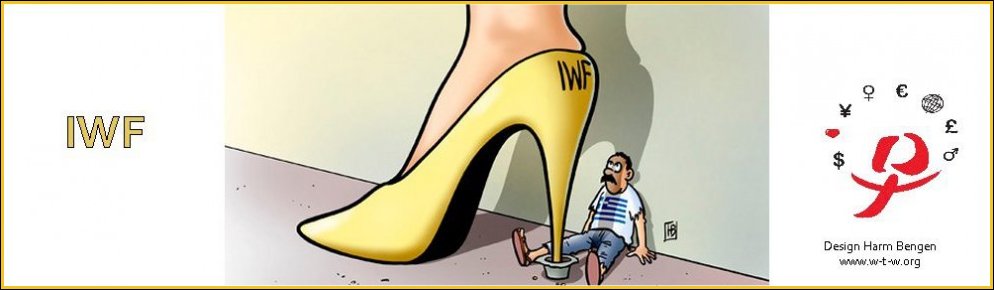
The problems are compounded, in her view, by the austerity measures being pushed by the European Union and the International Monetary Fund. Those measures, she said, “provoke political backlash, making it much harder for the leaders in either country to develop the kind of countermeasures to corruption that they need to develop.”

“My message to the officials in Greece, to the government of Ukraine, is to focus on transparency, of ridding the country of official corruption,” she said. “But my message in Germany was not to undermine those goals by insisting on unrealistic austerity measures that will ultimately make it much more difficult for either country to grow.”

Immigration

Taking on Wall Street in 2016

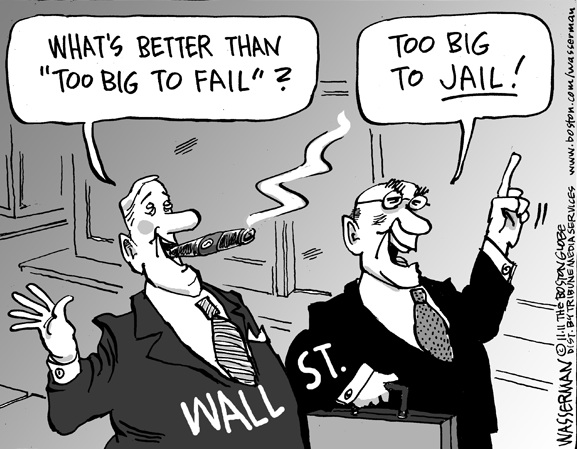
Matt Taibbi writes:  When Bill Clinton took office, it was still illegal in the United States for commercial banks to merge with investment banks and insurance companies. But toward the end of Clinton’s second term, he signed a bill called the Gramm-Leach-Bliley Act that essentially created Too Big to Fail “supermarket” banks like Citigroup.

This isn’t the only reason the financial system is so dangerous now. There’s also the matter of the extreme interconnectedness of the financial services industry. This problem came violently into play in 2008, when the failure of a single idiot investment bank, Lehman Brothers, caused a chain reaction that nearly blew up the whole financial system.

This latter problem was partially a consequence of another Clinton-era law, the Commodity Futures Modernization Act, which deregulated derivatives like swaps that were the agent of many of those chain-reaction losses.

Hillary Clinton has problems with a financial system that became dangerously over-concentrated thanks to multiple laws passed during her husband’s administration.

Mrs. Clinton says:  “Well, my plan is more comprehensive. And, frankly, it’s tougher because of course we have to deal with the problem that the banks are still too big to fail. We can never let the American taxpayer and middle-class families ever have to bail out the kind of speculative behavior that we saw. But we also have to worry about some of the other players: AIG, a big insurance company; Lehman Brothers, an investment bank. There’s this whole area called ‘shadow banking.’ That’s where the experts tell me the next potential problem could come from.”

First, it’s definitive now that Hillary has no intention of reinstating Glass-Steagall.

The second and probably more important observation is about Hillary’s rhetorical choices.

Hillary, like her close advisor Barney Frank, has been pushing an idea that banks aren’t at the root of any financial instability problem. Last night, she pointed a finger instead at “shadow banking,” non-bank actors like AIG, and a dead investment bank in Lehman Brothers. (Interesting she didn’t mention a still-viable investment bank like Goldman, Sachs, which has hosted her expensive speaking engagements.)

This squeamishness about criticizing banks is laughable to people in the industry. But of course, that’s probably the point – that the average voter won’t know how absurd and desperate it is to point to faceless “shadow” financiers as villains when the real bad guys are famed mega-firms that are right out in the open, with their names plastered all over every second city block.

The root of the 2008 crisis lay in a broad criminal fraud scheme, in which huge masses of home loans were given to people who couldn’t afford them. Those loans in turn were bought back up by giant banks and resold to investors who weren’t told how crappy the merchandise was.

The question there is how to make sure companies are small enough that the really corrupt ones can be allowed to implode organically, rather than requiring mass bailouts.

How do you make Too Big to Fail companies smaller and safer? Probably, you just do it. Mrs. Clinton will not.

Too Big to Fail

Incremental Changes in Fed’s Interest Rate?

Vasco Curdia of the San Francisco Federal Reserve Bank writes: To boost economic growth during the financial crisis, the Federal Reserve aggressively cut the target for its benchmark short-term interest rate, known as the federal funds rate, to near zero around the beginning of 2009. Since then the time projected for the rate to return to more normal historical levels has been continually postponed.

To understand the level of the federal funds rate and when it might be normalized it is useful to consider the concept of the natural rate of interest first proposed by Wicksell in 1898 and introduced into modern macroeconomic models by Woodford (2003). The natural rate of interest is the real, or inflation-adjusted, interest rate that is consistent with an economy at full employment and with stable inflation. If the real interest rate is above (below) the natural rate then monetary conditions are tight (loose) and are likely to lead to underutilization (overutilization) of resources and inflation below (above) its target.

Figure 1
Estimated natural rate of interest (annual rate)

Estimated natural rate of interest (annual rate)

Note: Blue shaded areas represent the range of possible estimates with 70% (darker) and 90% (lighter) probability. Gray bar indicates NBER recession dates.

Figure 1 shows that the natural rate declined substantially during the recession and did not start to recover until the end of 2014. Currently, the median estimate is –2.1%, far below its long-run level of about 2.1%. The fall in the natural rate during the recession is explained by low expected productivity growth. With projected low growth, the economy would need less saving and more spending to use resources fully, hence the lower natural rate of interest. During the economic recovery, the natural rate was kept low by weak demand due to a larger propensity to save in the aftermath of the financial crisis.


Figure 2
Interest rate gap and output gap

Interest rate gap and output gap

Note: Gray bar indicates NBER recession dates.

The large decline in the natural interest rate early in the recession (shown in Figure 1) may explain why the Federal Reserve lowered the federal funds rate so fast in 2008 even before the output gap became negative. Interest rate rules that ignore the variation of the natural rate over time—like the one proposed in Taylor (1993)—would not prescribe dropping the federal funds rate so quickly, which would lead to even tighter monetary conditions and a more negative output gap. Therefore, while monetary policy was accommodative relative to the Taylor rule, it was not accommodative enough to prevent the interest rate gap from increasing and output from falling below potential, as shown in Figure 2.

This model projects that, based on historical relationships, the future interest rate will return to normal too quickly, leading to persistently underutilized resources and output below potential even after the interest rate gap closes.

Figure 3
Real-time estimates of the natural interest rate

Real-time estimates of the natural interest rate

The natural rate of interest is expected to remain below its long-run level for some time. This implies that low interest rates over the next few years are consistent with the most efficient use of resources and stable inflation. The analysis also finds that the output gap is expected to remain negative even after the natural rate is close to its long-run level. Additionally, there is considerable uncertainty about both the short-run dynamics as well as what level should be expected in the longer run. All these considerations reinforce the possibility that interest rate normalization will be very gradual.  Vasco Curdia of the SF Federal Reserve writes


Is Slowing Global Growth of Concern?

As the world economy is facing varied challenges including slowing growth,differentiated policies, transition and increasing uncertainties, new strategies are needed tocope with the changing economic situation and boost global economic development.

IMF Managing Director Christine Lagarde has said the world economy is not in a crisis any more, but in a period of change.

She warned policymakers around the world that “no country can go it alone and international cooperation is more needed than ever.”

In the eyes of experts attending the meetings — an important event to estimate the world economic situation, challenges in the period of change may not less than those in the crisis.

Just before the annual meetings, the IMF downgraded its forecast for global economic growththis year to 3.1 percent from the 3.3 percent it forecast in July and the 3.5 percent it projectedin April.

In face of the severe economic situation, Lagarde said, the IMF will pay more attention to economic transition, spillovers of major economies’ policies and global cooperation.

Some economists believe that over the past seven years after the outbreak of the global financial crisis in 2008, money printing served as a main solution to boost the world economy from crisis to recovery.

Meanwhile, emerging economies and developing countries, led by China, have played the role as a major engine for global growth.

However, with the growing transition of the world economy, the old solution to boost globaleconomic development needs to be changed.

During the period of transition, changes in China and the United States, the world’s twolargest economies, will have a global impact.

As a main contributor to the world economic growth in recent years, China’s economictransition has attracted worldwide attention.

Chinese Finance Minister Lou Jiwei has said that the slow growth of emerging economies is relative and China’s 7 percent is still a very high growth rate at the international level.

China’s transition and reform have been widely recognized at the meetings.

Commenting on China’s GDP growth, Lagarde said the country’s slowdown was “predictable and expected.”

“There will be bumps on the road as no transtion can be done smoothly with no disruption or volatility … We welcome China’s transition process coupled with more market-determined exchange rate fluctuations,” she said.

“In China, fiscal, social security and state-owned enterprise reforms are needed to transitionto more domestically-driven growth, which will benefit the global economy over time,” it said.

In addition, the China-proposed Belt and Road initiative, or the Silk Road Economic Belt andthe 21st Century Maritime Silk Road initiative, and the Asian Infrastructure Investment Bank(AIIB) establishment have both attracted more attention as new solutions for boosting globaleconomic growth.

Meanwhile, the United States, whose economic recovery has largely benefited from theposition of the US dollar, a universal money, should bear more global responsibilities and playa bigger role in boosting the world economic growth.

For example, it should work with other developed countries to further broaden public investment to fuel economic growth, so as to provide outside support for developing countries’ structural readjustment.

Moreover, export-dependent countries seeing their revenues falling should accelerate reform and explore new areas for growth.

All in all, both China and the United States, as well as other major economies, should strengthen coordination in their macro-policies and stay away from self-serving trade manipulation for a healthier recovery of the world economy.


Addressing Corruption in Ukraine

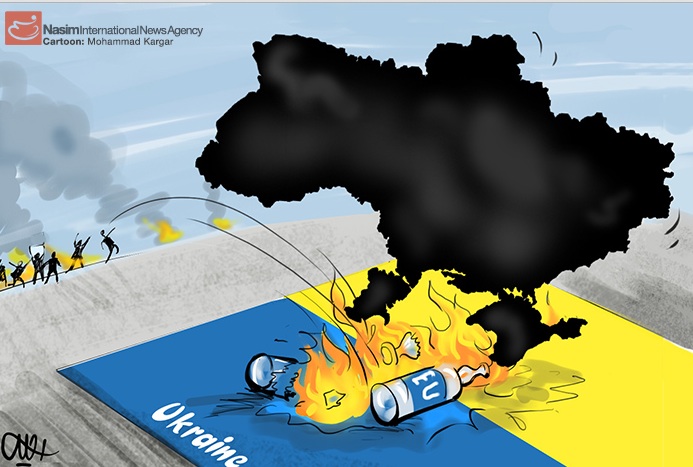
Three U.S. Democratic senators – Elizabeth Warren, Jeanne Shaheen and Richard Durbin have underscored the importance of Ukraine’s fight against corruption.

“When it comes to the issue of Ukraine there is unity between Democrats and Republicans, the Administration and Congress,” Durbin said. Then, referring to the EuroMaidan Revolution that sent Ukrainian President Viktor Yanukovych fleeing last year, the senator said: “We are in solidarity with Ukraine in terms of rebuilding this nation and protecting it from the invasion of the Russians. The spirit of Maidan lives on in terms of reform and change, which was the message of Maidan.”

President Petro Poroshenko and Prime Minister Arseniy Yatsenyuk are received “warmly” in Washington, D.C., while skepticism against the nation’s leaders is growing at home. Durbin said that the leaders have made “real progress” in such areas as energy and reforms.

But corruption in Ukraine is an impediment to better U.S.-Ukraine relations.

“The jury is still out, the questions are still being asked,about real reform when it comes to corruption,” Durbin said. “The people of Ukraine are still looking for modernization and reform when it comes to this issue.”

Warren (Democrat of Massachusetts) said legal reform in Ukraine is essential.

“With weak rule of law, with a system rife with corruption, with a judiciary that is not independent and reliable, it is very difficult to build an economy going forward,” Warren said. A former law professor at Harvard Law School, Warren said that reducing corruption should be a priority in Ukraine.

“The support for this government from within the country and from without depends on real progress toward rooting out corruption,” Warren said. “Many countries around the world had to deal with the issue of corruption and it’s time for a best practices approach here,” Warren said. “It is time to try all measures, as vigorously as possible. And that is for two reasons: one is because some of them won’t be effective, the second is because the government must demonstrate in a very public way that it is committed to rooting out corruption no matter how painful, no matter how difficult.”

Warren said that, while reform is hard, “I also recognize from my time here that the people of Ukraine want reform, that the economy requires reform and that the U.S.A. will stand strong with those who fight for reform.

Durbin, whose state of Illinois has had many public officials who went to prison because of corruption, said that prosecution of lawbreaking politicians is essential.

“In the state of Illinois we have had our share of public corruption,” Durbin said. “We have responded to it by indicting, prosecuting and incarcerating those responsible.”

The U.S. will stand behind Ukraine as long as the dedication to fight corruption is “very clear,” the Illinois senator said.

Shaheen (Democrat of New Hampshire) said that Ukrainians must stop tolerating corruption.

“It’s about how members of the public deal with corruption,” Shaheen said. “Corruption exists everywhere, but if we refuse to tolerate it, then it’s going to be hard to continue to exist.”

Warren said that bringing rule of law will instill confidence in Ukraine’s government.

“Do not give up, this is a very hard fight,” Warren said. “If it were an easy fight, we would have already won…ultimately you will make the government work for you and not the reverse.”

Corruption in Ukraine

Japan Eager for Oil in Iran

Japan is eager to do business with Iran.

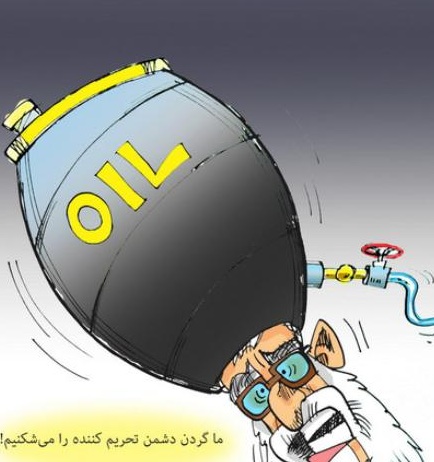
J. Berkshire Miller analyzes Japan’s investment interests in Iran:  One of Japan’s key targets is Iran’s potentially lucrative Azadegan oil fields, near the border with Iraq. According to Iranian government estimates, the Azadegan fields could contain over 30 billion barrels of oil in reserve. Tokyo has been interested in working with Tehran to develop the oil fields for the past two decades and at one point, in 1996, had a nearly 75 percent stake in the southern Azadegan fields through Inpex, a Japanese oil company.”

But don’t call it a complete reset just yet.  While Tokyo is looking to increase its investment footprint in Iran, and indeed its presence in the entire Middle East, it will likely tread carefully so as not to upset relations with arguably its most important ally, the United States:

Tokyo remains sensitive to the lingering problems in the relationship between its key ally, the U.S., and Iran, which are not limited to the nuclear issue. During a meeting with Iran’s foreign minister earlier this year, Japan’s foreign minister, Fumio Kishida, expressed concern about longstanding military ties between Iran and North Korea and requested that Iran sever ‘all military cooperation with North Korea.’

Japan, Iran, Oil

Entrepreneur Alert: Inspired by Money

When we see a dollar bill laying around, we see buying power. But without a numeral printed on each bill, paper money isn’t anything more than a proprietary piece of paper made out of a cotton/linen blend, just like the kind you might find upholstering your furniture.

Commissioned to design a project for the National Bank, London-based designer Angela Mathis decided to deconstruct currency from around the world and turn it into a textile. She then used this textile to upholster a number of custom-designed stools.

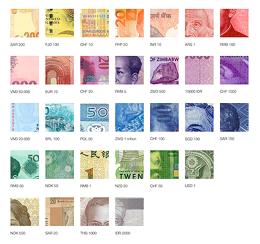
She calls it “Value.” As designed, Value comes in the form of four stools, each upholstered with a potpourri of different-colored currencies, reduced to shreds. Depending on how she combines these currencies—the American dollar, the purple English pound, the brown Indonesian rupees, and the color dense euro—Mathis was able to create different colors, textures, and effects (such as marbling).

This might seem like an extraordinarily wanton (and maybe criminal) destruction of money. Not so. The artist points out that the average life of a note is scarcely more than 18 months, at which point, it is decommissioned. In America, you can actually buy a five-pound bag filled with $10,000 worth of shredded currency for just $45.

This is the sort of currency Mathis used for her project, making it far more affordable than it looks like it would be at first glance. She asked herself: what will happen to all of this cotton and linen when the digitization of currency has made physical bills almost obsolete? Value imagines a world in which currency is routinely repurposed, because it has no inherent value anymore, just material worth

Inspired by Money

Are Women Resistant to Risk Management?

Behavioral experts believe that people are more interested in hearing a story about an investment than in assessing its risk.

Behavior Macro reports:  It doesn’t matter how much you explain to clients the centrality of risk management; they obligingly nod, wait for their turn to speak, and say, “Oh, that’s great.  Now, what do you think about the euro here?”

Clients, like traders, crave stories. They want to believe the people they trust with their money are genetically superior, multilingual polymaths. We managers want to believe this about ourselves, too.

But the truth is that in addition to loving stories, we are all hard-wired to be poor risk managers.

Behavioral studies show that we are risk adverse when it comes to losing money, but we take on much more risk when we are trying to “get back to even.” This is referred to as the reflection effect.

Translated in trading, this means we tend to harvest profits too early, and tend to let our losers run. This is where the famous “I’ll sell it when it gets back to where I bought it” comes from. The reflection effect generates negative payoff asymmetries.

One of the most important risk management tools is doing the opposite: Generating positive payoff asymmetries in your trading. Risking one to make three. Risking two to make five. This is what good traders do, even if they claim their P&L comes from superior intellect. And, of course, if a trade breaks your way, you can use trailing stops and/or other techniques to improve your payoff asymmetries even further.

So, what one really needs to do is set up trades so that winners run and losers are dumped quickly.

Think about the math. If you are risking one to make a minimum of three, and your ideas are right 50% of the time, you will be doing very well. In fact, your batting average could be far less than 50% and you’d still make money. If you regularly take profits quickly, as “everyone’s” would have us do, your batting average needs to be far higher.

Anything that appeals to our instincts to take profits quickly is likely to make us worse traders, not better. And trading is hard enough as it is.

This may seem obvious, but if it were that obvious, no one would ever again say, “You can never go broke taking a profit.” Ever.

Risk?

Central Banks Too Important?

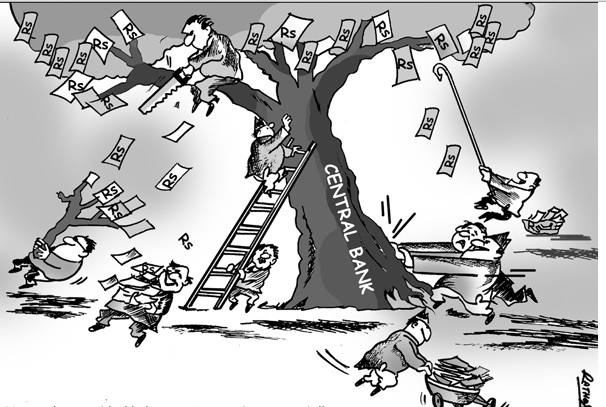
Central Banks have been dictating economic policy world wide for a decade.  is it time to shift gears?

Larry Elliot writes:  Turn those machines back on. So demands the unscrupulous banker, Mortimer Duke, when he finds he and his brother Randolph have been ruined by their speculative scam in the film Trading Places. Having lost all his money betting wrongly on orange juice futures, Mortimer demands that trading be restarted so that he can win it back.

It’s not known whether Christine Lagarde is a secret fan of John Landis movies. As a French citizen, François Truffaut might be more her taste. There is, though, more than a hint of Trading Places about the advice being handed out by Lagarde’s International Monetary Fund to global policymakers.

To Europe and Japan, the message is to print some more money. Keep those machines turned on, in other words. To the US and the UK, there was a warning that raising interest – something central banks in both countries are contemplating – could have nasty spillover effects around the rest of the world. Think long and hard before turning those machines off because you may have to turn them back on again before very long, Lagarde is saying, because the big risk to the global economy is not that six years of unprecedented stimulus has caused inflation but that the recovery is faltering.  Should We Minimize the Role of Central Banks

Central Bank