Venezuela, a Narcocracy?

Mac Margolis writes:   Venezuela is on its way to becoming Latin America’s reigning narcocracy.

Leamsy Salazar Villafana was a former security guard for Diosdado Cabello, president of the Venezuelan National Assembly, widely regarded as Chavismo’s most powerful figure after Maduro himself. After his safe arrival in the U.S., Salazar  told the Spanish daily ABC that his former boss not only moonlighted by trafficking cocaine but doubled as ringleader of Cartelo de Los Soles, the Suns Cartel, a shadowy racket allegedly run by Venezuelan brass.

Salazar said he personally witnessed Cabello dispatch overseas shipments of cocaine, occasionally bundling them onto aircraft owned by the Venezuelan oil company, Petroleos de Venezuela. Cabello’s brother, Jose David Cabello, ran the cartel’s finances, he said, with the aid and cover of Cuban officials.

Tales of drug dealings in Chavismo’s inner circle are hardly new, but Salazar’s defection stung. He used to head security for Chavez himself: a “humble, great marine,” the Comandante once called him. That loyalty won Salazar a job riding shotgun for Cabello after Chavez died in 2013.

If Salazar can back his claims, not only would he nail an alpha Chavista, but he would help narcotics sleuths connect the dots on the potent Caracas connection that is changing the face of international drug trade.

Though never a major drug producer, Venezuela has become a thriving ecosystem for footloose global criminals. Its lawless borders and an unfettered black market make the country an ideal way station to launder drug money and funnel cocaine and marijuana from Venezuela’s drug-producing neighbors and consumers in Europe and the U.S. In recent years, the United Nations International Narcotics Control board has reported an upsurge in airborne cocaine shipments from Venezuela to West Africa and onward to Europe, as well as to Honduras, a major trans-shipment point to the U.S. Last year’s annual report by  the U.S. State Department’s Bureau of International Narcotics and Law Enforcement Affairs put it more baldly: “The vast majority of suspected narcotics trafficking flights departing South America originate from Venezuela.”

In Venezuela, as in Central America, drugs flourish due to a deadly combination of bent officials and feeble government institutions. The Cabello case, however, points to something larger: bent government.  Venezuela’s ranking officials are not just on the take but, as Salazar appears ready to testify, occult partners in charge of thriving drug franchises.

U.S. officials have pursued Venezuelan generals, diplomats and judges on trafficking charges with mixed results. Chavez’s former military intelligence chief, Hugo Carvajal Barrios, was arrested last July in Aruba on charges of running drugs and peddling arms to Colombian insurgents. After brandishing newly-minted diplomatic credentials, and a rescue mission by Venezuelan lawmakers, Carvajal escaped extradition to the U.S. and flew back to Caracas to a hero’s welcome.

Whether Maduro can, or will, do the same for Cabello is another matter.

Yet if Numero Dos faces international criminal charges, Bolivarian spin may not be enough to rescue the revolution from itself.

Drugs in Venezuela

Currency Manipulation and Trade

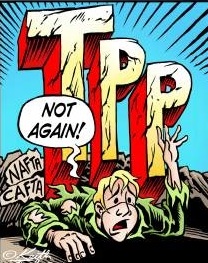
Has currency manipulation had been raised in the TPP talks?  Although Congress has been pushing the administration to bring up currency provisions in the negotiations for years, doing so would significantly alter, and perhaps torpedo, the deal with Japan.

Of course, currency manipulation is difficult to combat with a domestic law — since unlike trade pacts, domestic laws are not agreements with other nations that include internationally binding enforcement mechanisms. The bill would require the Department of Commerce to include currency manipulation subsidies in its calculations of unfair trade practices prohibited under other trade pacts, making it easier for the U.S. government to win trade cases against other countries, and to secure heftier judgments.

Both Republicans and members of the Obama adminsitration stress that they are seeking a “high-standards” agreement that would counter the power of China to weaken global regulations.   Three of the countries involved in the talks — Malaysia, Brunei and Vietnam — are serial human rights abusers.  They simply do not have the institutional infrastructure in place to enforce strong protections.

Is there a strong intellectual property proivision  included in TPP. Those copyright, patent and other provisions, however, are the subject of hot debate, with many tech experts warning they will crimp the development of new digital applications.

By granting pharmaceutical companies long-term monopolies on prescription drugs, moreover, those policies dramatically inflate the cost of medicine. The Indian government, for instance, recently authorized a generic version of a patented cancer medicine for $157 a month.

Doctors Without Borders, a humanitarian group that won the Nobel Peace Prize in 1999, points out the human cost of these provisions.

A fast-track bill would not only apply to TPP talks, but also to another pending deal with the European Union and any other future trade pacts covered by the timeframe of the bill. Any EU deal must include a financial services chapter. European negotiators have pressed U.S. regulators to loosen financial regulations for years in other international forums. Meanwhile, Republicans seeking to roll back the 2010 Dodd-Frank bank reform law have crafted bills to help banks dodge U.S. oversight by substituting weaker European rules and overseers.

Froman, Obama’s representative who worked at Citigroup before joining the Obama administration in 2009, pushed back against Hatch on that issue, saying USTR did not support a bank regulatory chapter in the EU deal.

TPP?

Wall Street and US 2016 Election

Simon Johnson writes:   America’s presidential election is still nearly two years away, and few candidates have formally thrown their hats into the ring. But both Democrats and Republicans are hard at work figuring out what will appeal to voters in their parties’ respective primary elections – and thinking about what will play well to the electorate as a whole in November 2016.

The contrast between the parties at this stage is striking. Potential Republican presidential candidates are arguing among themselves about almost everything, from economics to social issues; it is hard to say which ideas and arguments will end up on top. The Democrats, by contrast, are in agreement on most issues, with one major exception: financial reform and the power of very large banks.

The Democrats’ internal disagreement on this issue is apparent. On Dodd-Frank, Democrats differ on the extent to which they should stick up for their own reforms. In December, the White House agreed to a Republican proposal to repeal a provision of Dodd-Frank that would have limited the risk-taking of the country’s largest banks (in fact, the proposal’s language was drafted by Citigroup).

More recently, however, Obama has threatened to veto any further attempts to roll back financial reform.  He a proposing a small tax on the largest banks’ liabilities, which he hopes will encourage “them to make decisions more consistent with the economy-wide effects of their actions, which would in turn help reduce the probability of major defaults that can have widespread economic costs.”

In contrast, the Center for American Progress report devoted very little space to financial-sector reform.

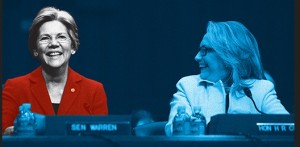
But a serious challenge to all of these views has now emerged, in proposals by Senator Elizabeth Warren, a rising Democratic star who has become increasingly prominent at the national level.  In her view, the authorities need to confront head-on the outsize influence and dangerous structure of America’s largest banks.

Warren’s opponents like to suggest that her ideas are somehow outside the mainstream; in fact, she draws support across the political spectrum.

Warren’s message is simple: remove the implicit government subsidies that support the too-big-to-fail banks. That single move would go a long way toward reducing, if not eliminating, crony capitalism and strengthening market competition in the financial sector.

The big Wall Street banks have enormous influence in Washington, DC, in large part because of their campaign contributions. They also support – directly and indirectly – a vast influence industry, comprising people who pose as independent or moderate commentators, edit the financial press, or produce bespoke “research” at think tanks.

The Democrats need to figure out their policy on Wall Street. In the past, they have simply gone for the campaign contributions, doling out access and influence in exchange. It is now obvious that this is not consistent with defending what remains of Dodd-Frank.

Warren offers a plausible, moderate alternative approach to financial-sector policy that would attract a great deal of support in the general election. Will the Democrats seize the opportunity?  Hillary Clinton is on Wall Street’s payroll.

Who Sides with Wall Street?

Is QE the Answer?

Stephen S. Roasch writes:  Predictably, the European Central Bank has joined the world’s other major monetary authorities in the greatest experiment in the history of central banking. By now, the pattern is all too familiar.  Central banks take the conventional policy rate down to the dreaded “zero bound.”  They then embrace the unconventional approach of quantitative easing (QE).

Unable to cut the price of credit further, central banks shift their focus to expanding its quantity.  For the ECB and the Bank of Japan (BOJ), both of which are facing formidable downside risks to their economies and aggregate price levels, this is not an idle question. For the United States, where the ultimate consequences of QE remain to be seen, the answer is just as consequential.

QE’s impact hinges (1)  transmission (the channels by which monetary policy affects the real economy); (2) traction (the responsiveness of economies to policy actions); and (3) time consistency (the unwavering credibility of the authorities’ promise to reach specified targets like full employment and price stability).

In terms of transmission, the Fed has focused on the so-called wealth effect. First, the balance-sheet expansion of some $3.6 trillion since late 2008 – which far exceeded the $2.5 trillion in nominal GDP growth over the QE period – boosted asset markets. The ECB, however, will have a harder time making the case for wealth effects, largely because equity ownership by individuals (either direct or through their pension accounts) is far lower in Europe than in the US or Japan. For Europe, monetary policy seems more likely to be transmitted through banks, as well as through the currency channel, as a weaker euro – it has fallen some 15% against the dollar over the last year – boosts exports.

The real sticking point for QE relates to traction. The US, where consumption accounts for the bulk of the shortfall in the post-crisis recovery.

Japan’s massive QQE campaign has faced similar traction problems. After expanding its balance sheet to nearly 60% of GDP – double the size of the Fed’s – the BOJ is finding that its campaign to end deflation is increasingly ineffective. Japan has lapsed back into recession, and the BOJ has just cut the inflation target for this year from 1.7% to 1%.

Finally, QE also disappoints in terms of time consistency. The Fed has long qualified its post-QE normalization strategy with a host of data-dependent conditions pertaining to the state of the economy and/or inflation risks. Moreover, it is now relying on ambiguous adjectives to provide guidance to financial markets, having recently shifted from stating that it would maintain low rates for a “considerable” time to ‘paatience’ in determining whether to raise rates.

In the QE era, monetary policy has lost any semblance of discipline and coherence. As Draghi attempts to deliver on his nearly two-and-a-half-year-old commitment, the limits of his promise – like comparable assurances by the Fed and the BOJ – could become glaringly apparent. Like lemmings at the cliff’s edge, central banks seem steeped in denial of the risks they face.

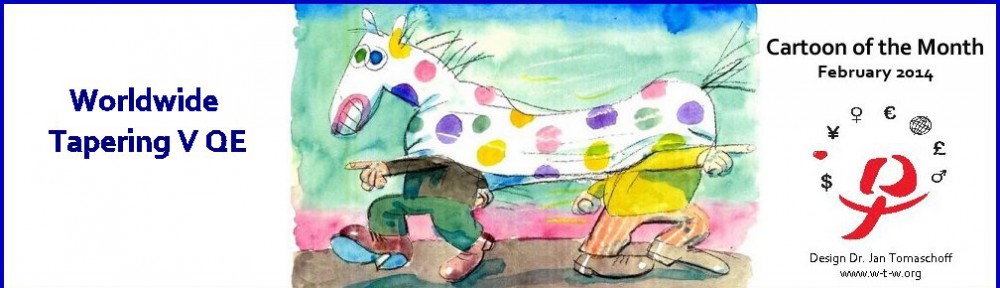
To QE or Not?

Great Recession Haunts Us

J. Bradford DeLong looks at two books on the Great Recession and concludes that we acted incorrectly to solve the problems:

The first book is The Shifts and the Shocks, by the conservative British journalist Martin Wolf, who begins by cataloguing the major shifts that set the stage for the economic disaster that continues to shape the world today. His starting point is the huge rise in wealth among the world’s richest 0.1% and 0.01% and the consequent pressure for people, governments, and companies to take on increasingly unsustainable levels of debt.

The second book: Hall of Mirrors, traces our tepid response to the crisis to the triumph of monetarist economists, the disciples of Milton Friedman, over their Keynesian and Minskyite peers – at least when it comes to interpretations of the causes and consequences of the Great Depression. When the 2008 financial crisis erupted, policymakers tried to apply Friedman’s proposed solutions to the Great Depression. Unfortunately, this turned out to be the wrong thing to do, as the monetarist interpretation of the Great Depression was, to put it bluntly, wrong in significant respects and radically incomplete.    What Caused the Great Recession

Italians Now Credible?

Rob Cox writes:  The Italian presence was hard to miss at Davos, and not just on the official program, where the 40-year-old Renzi was the subject of a special session entitled “Transformational Leadership.”

Chiefs of the country’s top banks, state-oil giant Eni, insurer Generali – even the head of the once-secretive Mediobanca – and their entourages jostled through security lines. Opera tenor Andrea Bocelli kicked off the proceedings. Global brewer SABMiller hosted a “Taste of Italy” reception.

The country’s corporate and political leaders have had good reason to avoid Davos. Italy’s output has shrunk by about a tenth over the last decade. The unemployment rate, especially among young people, exceeds 13 percent. GDP growth is forecast by the International Monetary Fund at a recently slashed 0.4 percent.

Renzi nevertheless took the stage in Davos with some significant reform victories, which Italian executives say could help the economy expand beyond those expectations.

1. Renzi has pushed through labor rules that will allow companies to hire and fire more easily.

2.  Italy’s Senate this week approved an amendment to a new electoral law designed to foster more stability and efficiency in long-dysfunctional Italian politics.

3.  Renzi approved a plan to effectively force the country’s mutually-owned banks, which account for about a fifth of the industry, to privatize. By abolishing a structure that gave every stockholder the same vote notwithstanding the number of shares held,  much-needed consolidation will take shape.

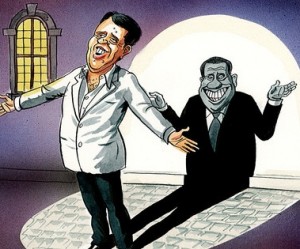
The risk for Renzi is that he is moving so quickly that he splinters the party. To get reforms approved, for instance, the coalition has had to rely on the opposition led by Silvio Berlusconi, whose control of his party, Forza Italia, is also tenuous. With presidential elections on the horizon, the possibility of an all-too-familiar political setback is possible.

“The most important structural reform for Italy is credibility,” he told the WEF delegates. The question is whether they take that message home with them from Davos.

Renzi

Ralph Nader Exposes Credit Suisse

Nader writes:  In May of 2014, financial firm Credit Suisse AG pled guilty to serious criminal charges. The giant bank aided and assisted approximately 22,000 wealthy U.S. taxpayers (whose names Credit Suisse AG escaped having to send to the Justice Department for law enforcement) for over a decade in filing false income tax returns and other documents with the Internal Revenue Service (IRS).

The full extent of these crimes, according to a Department of Justice news release, are as follows: “assisting clients in using sham entities to hide undeclared accounts;” “soliciting IRS forms that falsely stated, under penalties of perjury, that the sham entities were the beneficial owners of the assets in the accounts;” “failing to maintain in the United States records related to the accounts;” “destroying account records sent to the United States for client review;” “using Credit Suisse managers and employees as unregistered investment advisors on undeclared accounts;” “facilitating withdrawals of funds from the undeclared accounts by either providing hand-delivered cash in the United States or using Credit Suisse’s correspondent bank accounts in the United States;” “structuring transfers of funds to evade currency transaction reporting requirements;” and “providing offshore credit and debit cards to repatriate funds in the undeclared accounts.”

These elaborate illegal acts over many years are quite revealing. They show a deliberate willingness by Credit Suisse AG officials to knowingly engage in profitable activities that defrauded the United States Treasury and burdened honest taxpayers.

The Employee Retirement Income Security Act of 1974, or ERISA, was enacted to protect the retirement savings of retirement plan participants. The law, in theory, automatically disqualifies institutions like Credit Suisse AG who have committed serious crimes or pled guilty to serious crimes from serving as a “qualified professional asset manager” (QPAM) of ERISA assets or pension plans.

Unfortunately, the Department of Labor has not adequately enforced this law or its regulations in this area.

The Department of Labor (DOL) already has granted Credit Suisse a temporary waiver to continue conducting their pension management business. On January 15th, the DOL held a public hearing—where I testified— to discuss whether Credit Suisse and its affiliates can continue this troubling trend of avoiding the consequences of their actions indefinitely. Credit Suisse AG is hoping to completely sidestep the mechanisms of justice for their admittedly serious crimes and carry on business as usual—a result that in itself is, unfortunately, business as usual.

This routine ability to evade proper punishment is the root of the issue of so much corporate and Wall Street crime—a slap on the wrist leads to a perpetual cycle of wrongdoing with no end in sight. Their corporate lawyers turn laws into “no-law” laws. Corporate crime pays.

The Department of Labor, which exists to defend workers, now has a unique opportunity to stand proudly at its post and to send a clear message—a firm signal—to other Qualified Professional Asset Managers that if they commit unthinkable criminal violations, they lose the ability to handle pension funds. On the other hand, allowing these institutions to continue to receive permanent waivers would be a clear signal that the DOL will tolerate cutting corners and criminal wrongdoing by powerful financial institutions at the expense of workers, complying taxpayers, democracy, and the rule of law.

Credit Suisse

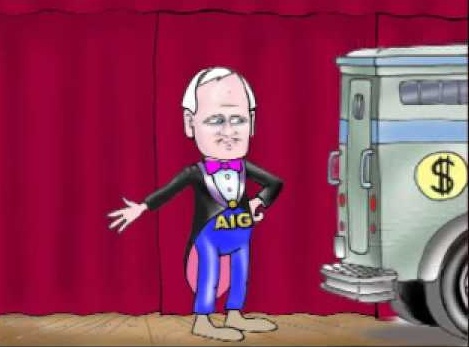
Perjury by US Fed in AIG Case?

An  exchange, this one from Day 1 of the trial, with Q. as David Boies (representing Hank Greenberg of AIG) and A. as Alvarez. Bear in mind that after this testimony was entered into the record, Boies introduced into the record an e-mail dated Saturday September 20 that Morgan Stanley had informed Tim Geithner on September 19, a Friday, that Morgan Stanley would be unable to open the following Monday.

  1. Do you think that Morgan Stanley, on September 14th, 2008, could have continued to operate if you had taken away the primary dealer credit facility and not substituted something equal in its place?… THE WITNESS: – and I don’t know if Morgan Stanley was even borrowing on that day…. Q. Mr. Alvarez, did I hear you say that you didn’t know whether Morgan Stanley was borrowing from the primary dealer credit facility? A. On September 14th I think was your question. Q. Was it borrowing from the primary dealer credit facility at any time in September 2008? A. I don’t know the answer to that… Q. Would it surprise you that that number was as high as $100 billion? A. I just don’t know. Q. While we’re on the subject of Morgan Stanley, there came a time when the Federal Reserve System was apprised that unless Morgan Stanley got federal assistance or additional federal assistance to what they were already getting over a weekend, that Morgan Stanley would not be able to open the following Monday, correct? A. No, I’m not aware of that ever happening…I’m not aware that Morgan Stanley – I’m not aware of that. I don’t know what you’re referring to. Could you be more specific?.. Q. You were the general counsel of the Federal Reserve Board at that time? A. Yes, I was.

Boies later entered into evidence shows that the New York Fed immediately cranked up a team to analyze what to do about Morgan Stanley saying it was toast unless it got a rescue.  Federal Reserve and AIG

AIG Trial

Bank Regulation Under Assault

Mark Roe writes: Last month, the United States Congress succumbed to Citigroup’s lobbying and repealed a key provision of the 2010 Dodd-Frank Wall Street Reform and Consumer Protection Act: the rule that bars banks from trading derivatives. The Dodd-Frank law’s aim was to prevent another financial crisis like that of 2007-2008; the repeal reduces its chances of success.

Derivatives are contracts that derive their value from changes in a market, such as interest rates, foreign-exchange rates, or commodity prices. Banks can use derivatives to hedge risk – say, by ensuring that oil producers to which they lend lock in today’s prices for their product through derivatives contracts, thereby protecting themselves and the bank from price volatility. The borrower is thus more likely to be able to repay the loan, even if its product’s price falls.  It began when farmers looked at the sky and knew they could not rely on weather reports.

But derivatives can also be used for speculative purposes, allowing banks to take on excessive risk.  And this is where the big bucks are being mae today by big players.

The last crisis originated in the real-estate market, following a large and unexpected decline in home prices. It then spread to financial institutions that could not cope with the losses associated with mortgage delinquencies, foreclosures, and the depreciation of housing-related securities. Derivatives exacerbated the crisis, particularly after the portfolio of the bankrupt Lehman Brothers, then the world’s fourth-largest investment bank, was liquidated. The next day, the US government had to extend an $85 billion bailout to American International Group (AIG), the world’s largest insurer, owing to its inability to back up its deteriorating derivatives position. These failures disrupted worldwide derivatives markets, causing financial markets to seize up.

The Dodd-Frank rule that Congress just repealed, known as the “swaps push-out rule,” would have required that most derivatives-trading activities occur outside of government-insured banks. If a bank fails, the government stands behind most deposits. Though it does not formally guarantee anything else, it usually finds it easiest and quickest to bail out the entire bank – including its derivatives facility. If, however, derivatives are no longer embedded in the guaranteed bank, the government could more easily bail out a bank, while leaving the derivatives subsidiary to fend for itself.

This sub rosa government indemnification of major banks’ derivatives portfolios undermines financial stability. If a major bank defaults on its derivative trades, the banks with which it has traded could also fail. If several large, interconnected derivatives-trading banks collapse simultaneously, the financial system could be paralyzed, damaging the real economy – again.

And it is the large banks that are building up their derivatives portfolios the most. Indeed, this is another pernicious, albeit subtle, effect of the sub rosa guarantee of banks’ derivatives portfolios: the knowledge that, if a large bank fails, it will probably receive a government bailout – including for its derivatives desk – spurs traders to focus their dealings on big banks. Smaller independent dealers that the government could allow to fail thus become less appealing.

This explains, at least partly, why a handful of mega-banks in the US – namely, Citibank, Goldman Sachs, Bank of America, and Morgan Stanley – handle the bulk of derivatives trading. That creates a vicious cycle: the bailout option for too-big-to-fail banks concentrates the derivatives market among a few major institutions, increasing further their systemic importance.

The push-out rule sought to break this cycle. By separating derivatives trading from government-insured banks, it would have effectively eliminated the sub rosa subsidy. While the government would still have to back deposits for crisis-stricken banks – even if that meant bailing out the entire institution – it would have had the option of allowing the derivatives trading desks, functioning within separate organizations, to flounder.

This would have helped to undermine the perception that large derivatives dealers are invulnerable, thereby reducing their trading advantage. Mid-size dealers that could fail without causing excessive economic damage would get more business. And the financial sector would become more balanced – and less risky.

Against this background, the repeal of the push-out rule was a mistake.

It is possible that US regulators (and Congress) are so confident in the other steps they have taken to safeguard the financial system that they no longer believe this extra protective layer is necessary. But Citigroup’s success in lobbying for the rule’s repeal could also signal that regulatory efforts to mitigate systemic financial risk have reached the high-water mark in the US. If Citigroup – a poorly managed operation that had to be bailed out in the last crisis – could compel Congress to abandon such a rule, it is reasonable to ask whether the political tides have shifted, and financial regulation will not be tightened further. Perhaps, with each budget bill, Dodd-Frank will be rolled back further.

This outcome is not inevitable. The repeal can – and should induce regulators to reassess their approach. Specifically, they should revisit the consensus that banks will become gradually safer, and their required capital should amount to no more than 10% of their assets. If the banks are successfully lobbying for the right to pursue riskier activities, regulators should consider raising their capital requirements.

Only a few years have passed since the last financial crisis – and its effects are still being felt. Yet US lawmakers are already forgetting its lessons.   Dodd Frank Under Assault

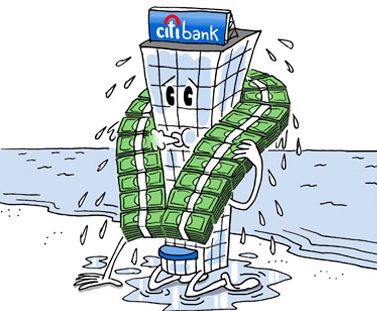
No Sweat for Citibank


Lagarde: Closing the Gender Gap by 25% Could Employ 100 Million Women

Christine Lagarde writes: As 2015 begins, policymakers around the world are faced with three fundamental choices: to strive for economic growth or accept stagnation; to work to improve stability or risk succumbing to fragility; and to cooperate or go it alone.

For starters, growth and jobs are needed to support prosperity and social cohesion in the wake of the Great Recession that began in 2008. Six years after the eruption of the financial crisis, the recovery remains weak and uneven. Global growth is projected at just 3.3% in 2014 and 3.8% in 2015.

To break free from stagnation, we need renewed policy momentum. If the measures agreed by the leaders assembled at the G-20 in November are implemented, they will lift world GDP by more than 2% by 2018 – the equivalent of adding $2 trillion in global income. Furthermore, by 2025, if the laudable – yet not overly ambitious – goal of closing the gender gap by 25% is achieved, 100 million women could have jobs that they didn’t have before.

Sructural reforms and  building new momentum will require pulling all possible levers that can support global demand. Accommodative monetary policy will remain essential for as long as growth remains anemic – though we must pay careful attention to potential spillovers. Fiscal policy should be focused on promoting growth and creating jobs, while maintaining medium-term credibility. And labor-market policies should continue to emphasize training, affordable childcare, and workplace flexibility.

We must consider how we can make our increasingly interconnected world a safer place. Financial integration has risen tenfold since World War II. National economies are so interconnected that shifts in market sentiment tend to cascade globally. It is therefore critical that we complete the agenda on financial-sector reform.

Countries must now implement the reforms and improve the quality of supervision. We also need better rules for nonbanks, stricter monitoring of shadow banks, and improved safeguards and more transparency in the derivatives markets. Progress on closing data gaps in the financial sector is urgently needed as well, so that regulators can properly assess risks to financial stability.

Most important, the culture of the financial sector needs to change. The principal purpose of finance is to provide services to the other parts of the economy, which it cannot do unless it enjoys the confidence of those who depend on those services. Restoring trust should therefore start with an all-out effort to promote and enforce ethical behavior throughout the industry.

The third choice, whether to cooperate or go it alone, is the most critical. Sovereign states are no longer the only actors on the scene. A global network of new stakeholders has emerged, including NGOs and citizen activists – often empowered by social media.

The year 2014 was a tough one. The recovery was slow, a series of dangerous geopolitical risks emerged, and the world was confronted with a devastating Ebola outbreak. This year may be another tough one, but it could also be a good one – a truly multilateral year.

New momentum on global trade could help unlock investment worldwide. The adoption of the IMF reforms by the United States Congress would send a long-overdue signal to rapidly growing emerging economies.

Growth, trade, development, and climate change: 2015 will be a rendezvous of important multilateral initiatives. We cannot afford to see them fail. Let us make the right choices.

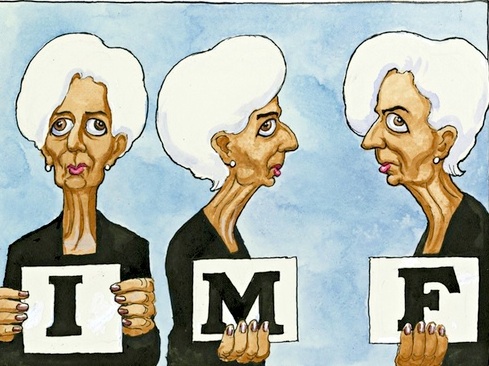
 Lagarde