Hun Sen’s Rule of Cambodia?

Sebastian Strangio writes:  In late November, Cambodia’s government offered the opposition Cambodia National Rescue Party (CNRP) some concessions. One was that the parliament would formally recognize the CNRP’s president, Sam Rainsy, as leader of the opposition, with a “rank equal to the prime minister.”

Most Cambodians know only Hun Sen who marks his 30th anniversary in power. In that time, the Cambodian leader has been one of the world’s great political Houdinis, passing unscathed through repeated cycles of his country’s turbulent history.

Hun Sen now faces perhaps the greatest challenge of his career: to win back Cambodian voters without undermining the tycoons who have bankrolled his long reign. Does an aging strongman have the energy for another rebranding before elections due in 2018? Whatever happens, Cambodia’s singular leader has made it clear he isn’t going anywhere. After the January 2014 garment protest crackdown, Hun Sen showed no remorse for those killed, warning that he would meet further protests with even bigger demonstrations of his own. “If Hun Sen comes out to do something,” he said, “it’s not going to be small.”

Hun Sen’s remarkable career has tracked the tumults of modern Cambodia. Throughout the 1970s Hun Sen fought for those “Khmers Rouges,” or Red Khmers, as Sihanouk dubbed them. After taking power in April 1975, the Khmer Rouge established a network of brutal labor camps in the Cambodian countryside, which led to the death of an estimated 1.7 million Cambodians — nearly a quarter of the population.

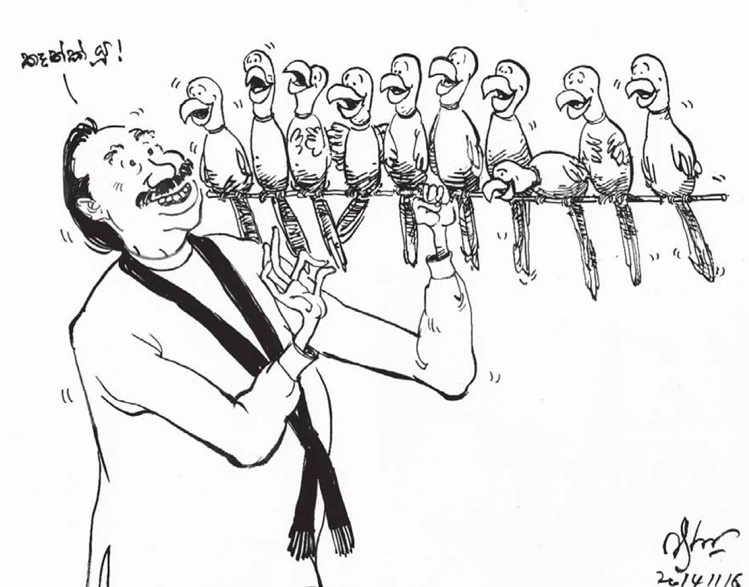
After 2013’s election, Hun Sen promised change. Ministries have been reshuffled; reforms have been launched in education and environmental policy. At the same time, the government has ruled out any possibility of a new administration. After opposition supporters and unions took to the streets in December 2013 calling for Hun Sen’s resignation, security forces fired at striking garment workers on Phnom Penh’s outskirts on Jan. 3, 2014, leaving five dead. Politicians and protesters have since been hauled into court on spurious charges.   Hun Sen of Cambodia

Hun Sen of Cambodia

Guilty Credit Suisse Exempt?

Since the repeal of Glass Steagall in 1999, the US  government has been of the big banks, for the big banks and yes, by the big banks.  Vast sums of money have been obtained by the very few. Many citizens have been hurt. More importantly, instead of helping businesses, small and large, which drive the US economy, these banks now spend most of their time on high risk derivative plays which include owning warehouses to store commodities until their price goes up and manipulating markets.

The tide is slowly turning with the alliance in the Senate of Elizabeth Warren, Sherrod Brown and Jeff Merkley.

While US regulators and the Department of Justice have been reluctant to take American-owned banks to task, propelled by the climate of the times, they have begun to go after foreign banks.

Last spring, after a dramatic session before the Senate Subcommittee on Investigations where Senators McCain and Levin let loose on the top manamagement of Swiss-based Credit Suisse, the Department of Justice followed with the announcement of a plea bargain that at last included the acceptance of a criminal charge of aiding and abetting tax evasion in addition to a large fine.  Most observers had noted up until this point that banks were being fined, but the fines  were ‘the cost of doing business.”  Only criminal indictments would deter their behavior, it was thought.

Criminal indictments have serious consequences.  Credit Suisse managed billions of dollars in pension funds in the US. Under law, a convicted felon can not manage these funds.  Credit Suisse is a convicted felon.  But they quickly applied for an  exemption.

While it is true that the Department of Labor has regularly granted exemptions to banks over the past fifteen years, this time the route to exemption was not going to be smooth.  Congresswoman Maxine Waters, and two other representatives called for a hearing.

Waters said:”Every commenter urged the DOL to enforce the law, and not grant Credit Suisse an exemption, with one exception: Credit Suisse. The Credit Suisse letter actually asks for even greater latitude in pension management. In the face of this comment record, bolstered by letters from senior members of Congress , from committees responsible for banking and pension fund oversight, it will be a miscarriage of the regulatory process if the DOL grants Credit Suisse a pass from this penalty without a hearing. Unfortunately, the DOL habitually grants such exemptions — 23 straight times in previous cases. We hope the comment record changes this streak.”

The hearing is to be held in Washington on January 15th.  The question is: Will the bank lobby or the American people win?  Let us hope that the DOL focuses on what Credit Suisse can do that no other bank can do. (Nothing.)  Why a guilty plea to criminal activity should be over looked?  How pension funds can be protected when the administrator is not governed by American law?  When are we going to scratch firms from the “Too Big To Ban” list?

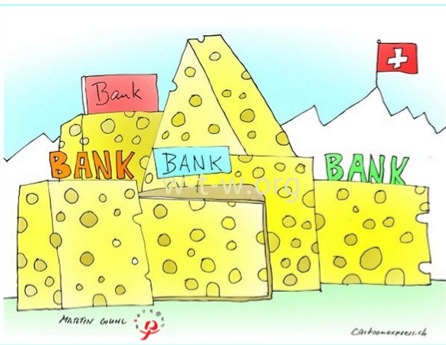
Credit Suisse by Martin Guhl


Fessing Up US Style

What happens when you ‘self-report’ improprieties?   Layne Christensen Company agreed to pay nearly $5 million in fines last year.  They self-reported employees’ bribes offered to help get business in Africa.  The fines were about half what they might have been if the companies themselves had not stepped forward.

Apparently one-third of all cases brought under the Foreign Corrupt Practices Act have been the result of self-disclosure.  Across the globe, self-reporting is becoming more common.  There are now 41 signatories to the 1999 Ant-Bribery Convention.

The Economic Cooperation and Development (OECD) has stated that over the past fifteen years, that most international bribes are paid by large companies with the knowledge of senior management.

Most cases have resulted in settlement rather than convictions.  The wrong-doing was either to blatant to fight in court, or more hopefully, companies have decided to join the fight against corruption.

 Fessing up to Bribery


Sri Lanka: Free Again?

Blommberg editors opine:  Strongman Mahinda Rajapaksa was kicked out in last week’s elections in Sri Lanka.   Another small, strategically vital Asian nation appears to have rejected China’s embrace. Whether the U.S. and India can exploit this opportunity, however, will depend on whether they recognize what’s unique about Sri Lanka.

Voters elected Maithripala Sirisena as president because they had tired of the opacity and perceived cronyism of Rajapaksa’s administration, symbolized in part by multibillion-dollar projects handed out to Chinese companies with little oversight. Elites had begun to fear that Beijing would soon demand more political and military influence as part of its largesse. Yet, unlike Myanmar, which shares a land border with China, such concerns remain somewhat theoretical. Sri Lanka has vast infrastructure needs — and therefore good reason not to reject Chinese money entirely.

If other nations want to compete, they’re going to have to demonstrate they are as willing and able as China to carry out large projects. India is itself seeking Chinese money for infrastructure. At the same time, Japan, Sri Lanka’s largest donor, has shown interest in increasing its investments in the region, and there should be room for Tokyo and New Delhi to combine forces.

Sri Lanka’s has also sidelined the people who have been most directly implicated in past human-rights abuses — including President Rajapaksa and his brother Gotabaya, who served as defense secretary during the last stages of the brutal war against Tamil Tiger insurgents. This should make it easier for the U.S. and India, which has a large and vocal Tamil minority, to work with the new government and eventually strengthen military-to-military ties.   U.N.-led efforts to investigate allegations of Sri Lankan war crimes should continue, but hopefully the new president will be given a chance to promote internal reconciliation and accountability. The campaign to end Sri Lanka’s longstanding culture of impunity will have far higher chances of success if it is led from within, rather than imposed from abroad.

China still has a legitimate interest in expanding its presence in the Indian Ocean, given its dependence on the region’s shipping lanes. By the same token, Sri Lankans could benefit greatly if Beijing’s plans for a “Maritime Silk Road” integrate the infrastructure and economies of the whole region.

Ideally, China will continue to cultivate its interest in Sri Lanka as one investor among several.  Worthwhile public projects should proceed with open bidding and labor and environmental safeguards.  Needlessly provocative actions — such as the docking of Chinese submarines at Sri Lankan ports, which Rajapaksa allowed — should cease.

Sri Lanka

Russia’s Movie Leviathan: Life?

Mascha Gessen writes about Leviathan Russia’s academy award nomination this year.In a recent speech the country’s minister of culture made a reference to Leviathan  without naming it, calling its genre “films about ‘Russia the shithole.’” So why did Russia support its nomination? Vladimir Menshov, the head of the Oscar nominating committee, opposed Leviathan’s candidacy. “It’s a very strong work,” he has said, “but it is difficult…The film is so hopeless!”.Many Russians believe that foreigners, or at least Americans, already see Russian life precisely as vile and desperate, and that this view is unfair. So the vote for Leviathan says,  Go ahead, give your decadent award to a movie that shows Russia the way you Americans view it anyway.How desirable could Oscar recognition be in a country that views itself as being at war with the United States (by proxy of Ukraine)? Two other possible Russian award contenders, pulled their own films out of the nominating process. Konchalovsky explained that he did not want any Hollywood handouts. If Zvyagintsev does get the Academy Award, he will likely be condemned for it at home, by the media and the ministry of culture—in a sad echo of Menshov’s own experience in 1980.In their infinite cynicism, the Russian selectors have probably overestimated Americans’ ability to imagine the depth of Russia’s despair. What keeps the viewer glued to the screen for 141 minutes of unambiguous characters against a sparse landscape are the very fine details and vagaries of Russian misfortune. Just how will things become as bad as they are clearly fated to become?

The viewer does not need to know anything about Russia to follow the drama of the little man fighting the System. Viewers will be able to catch references to recent political events. Graffiti that appears to be part of a newscast says PUSSY RIOT. And at the very end, another reference to the protest-art group comes in an on-screen sermon: “When blasphemy is called a prayer,” says the priest, referring to Pussy Riot’s “Punk Prayer,” a protest in a Moscow cathedral for which three members were sentenced to two years in jail, “that constitutes the destruction of truth.” The film continues the conversation Pussy Riot started in 2012. The group screamed in protest against the symbiosis of church and state, and landed in jail. Now Dmitri, the lawyer, is trying to fight the church-court-state machine with facts. Dmitri does not believe in God, revelations, or confessions of any sort. He places his faith in facts only.

With Kolya in jail, Dmtri goes to see the mayor. He has the facts about the mayor’s own past crimes—and he is certain he can blackmail him into obeying the law. Such is the power of facts. The mayor is indeed scared for a second.

“What do you want?” he asks.

“I want Nikolay to keep what’s his,” says the lawyer.

“Oh, but that is impossible,” responds the bureaucrat, and the clarity of this statement appears to set him at ease.

This scene occurs early on in the movie, and from this moment we know how it will all end. Facts are helpless before Truth—and the Russian Leviathan has a monopoly on the truth.

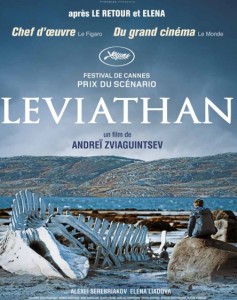
Leviathan

Note. After this article was published, Leviathan  won the G olden Globe award for

Best foreign film of the year.


Is Putin An Economic Problem?

Anders Aslund writes:  The current oil price will force Russia to cut its imports by half – a move that, together with the continuing rise in inflation, will diminish Russians’ living standards considerably. Add to that ever-worsening corruption and a severe liquidity freeze, and a financial meltdown, accompanied by an 8-10% decline in output, appears likely.

Russia’s ability to negotiate its current predicament hinges on its powerful president, Vladimir Putin. But Putin remains unprepared to act. When he finally does acknowledge reality, he will have little room for maneuver.

Putin could withdraw his troops from eastern Ukraine, thereby spurring the United States and Europe to lift economic sanctions against Russia. But this would amount to admitting defeat.

Short of initiating a major war, Putin has few options for driving up oil prices.  Even before the oil-price collapse, crony capitalism had brought growth to a halt – and any serious effort to change the system would destabilize his power base.

In fact, Putin’s leadership approach seems fundamentally incompatible with any solution to Russia’s current economic woes. There is economic expertise among Russian policymakers.  Russia’s key economic institutions boast competent managers. The problem is that policymaking is concentrated in the Kremlin, where economic expertise is lacking.

Putin has usurped authority not just from his more knowledgeable colleagues, but also from the prime minister, who has traditionally served as Russia’s chief economic policymaker. Indeed, since Putin returned to the presidency in 2012, Prime Minister Dmitri Medvedev has been all but irrelevant.

In short, Putin – who is no economic expert – makes all major economic policy decisions in Russia.

In the sensitive currency market, unlike in most other countries, the central bank does not retain the exclusive right to intervene. When the ruble tumbled in December, the finance ministry – which holds almost half of Russia’s foreign reserves, $169 billion, in two sovereign-wealth funds – deemed the central bank’s intervention to be insufficient. So it announced that it would sell $7 billion from its reserves to boost the ruble.

When the exchange rate plummeted again, the Kremlin urged the five largest state-owned exporting companies to exchange a portion of their assets into rubles.

Russia’s fiscal situation, determined by Putin’s arbitrary budget management, is hardly better. Putin’s priorities are clear: first come the military, the security apparatus, and the state administration; second are the major infrastructure projects from which he and his cronies make their fortunes; social expenditures (primarily pensions), needed to maintain popular support, come last. Suddenly, oil revenues are no longer sufficient to cover all three.

If Putin wants to save Russia’s economy from disaster, he must shift his priorities. For starters, he must shelve some of the large, long-term infrastructure projects. Though the decision in December to abandon the South Stream gas pipeline is a step in the right direction, it is far from adequate.

Likewise, Putin should follow Finance Minister Anton Siluanov’s sensible recommendation to cut public expenditure, including on social programs and the military, by 10%.

Russia faces serious – and intensifying – financial problems. But its biggest problem remains its leader, who continues to deny reality while pursuing policies and projects that will only make the situation worse.

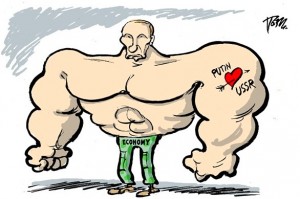
Putin and the Economy

Inadvertent Money Laundering in Iraq?

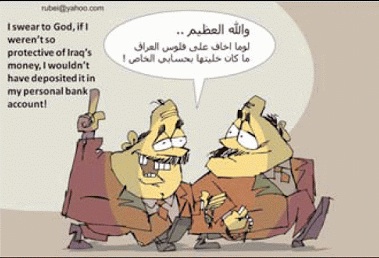
Amina al-Dahabi writes:  A prominent economic official in the Iraqi government said that out of the 33 private Iraqi banks operating in the country, 29 were under investigation on charges of corruption and money laundering.

Money laundering is rampant in the country in the absence of efficient audits by the Central Bank. Based on the report issued by Special Inspector General for Iraq Reconstruction, money laundering through the Central Bank of Iraq has resulted in the loss of over $100 billion in the past 10 years, most of which was transferred into banks in Dubai and Beirut.

The economic adviser to the prime minister, Mazhar Mohammad Saleh,considers this phenomenon to be a major loss in the private financial sector, on which the recovery of Iraq’s economy was based. Saleh said the high number of banks under investigation was due to the government’s absence in private financial administration, and to the weakness of cash credit, pushing banks to look for profit-making operations that are often nonfinancial. He said the audit policy of the Central Bank changed after 2003 from compliance auditing to preventive auditing.

Saleh said the lack of credit ratings in banks led to the decrease of trust in the credit-worthiness of private banks. A third party, a specialized international company, usually conducts such operations, which would later be adopted by the Central Bank.

Former staff members of banks who were trained in both Rafidain and Rasheed banks and who were still working in the private banking sector until recently were laid off from private banks. The new CEOs that took over started meeting the demands of major shareholders leading illegal operations. Inexperiened  CEOS contributed to the charges.

The Banking Act issued by the Central Bank in March 2004 prevents private banks from entering or participating in investment operations and even owning more property than they need.

Banks used capital from unknown sources and thus laundered money that was not subject to taxes. Funds from abroad and others from local unknown sources began entering private banks. The owners of that money even dominated certain departments in banks and controlled the auction sales of US dollars practiced by the Central Bank, while they exploited that money for personal benefits.

Banks also falsified the documents of the money’s destination, in cooperation with influential figures inside and outside Iraq.

Finding out about financial corruption and illegal trading comes too late, as the banks’ audits are received by the Central Bank a month after the initial operations are conducted, and starts auditing these previous operations for another month. This means that two months will have passed since the start of the audit operations and by then, the funds will have probably reached their final destination, which could be anywhere in the world.

To solve this major issue, Souri urges the Central Bank to adopt a comprehensive, technological banking system, which guarantees real-time control of funds and simultaneous access to information, in both the public and private banking sector.

Corruption in Iraq's Banking System


Contributor, Iraq Pulse

Is Opposing Antonio Weiss a Worthy Battle?

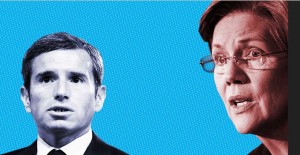
Those nomination of Antonio Weiss to a treasury post has gotten ex tell burned democrats up in arms.  Elizabeth Warren is protesting his nomination.  While having the fox guard the chicken coop is a legitimate question for someone who has spent his career in investment banking,

Bloomberg View suggests suspicions are misplaced.  “The undersecretary for domestic policy oversees capital markets, financial institutions, consumer protections and not-insignificant matters like the national debt. For the last couple of decades, as an investment banker at Lazard in the U.S. and France, Weiss has been in the middle of complex financial deals involving businesses, banks, hedge funds and foreign governments. This is exactly the kind of real-world decision-making experience that will come in handy when interest rates finally start going up again — as they’re expected to this year — and the markets get jittery.”

Senator Elizabeth Warren may legitimately be leery after Congress weakened the Dodd-Frank financial reform law.  But this is probably  case of oveerkill.  Let’s focus on putting teeth in regulations that are on the books, empowering community banks, and splitting off high risk banking operations from tax payer backup.

Antonio Weiss and Elizabeth Warren

Nobelist Stiglitz Blocked from SEC

Dave Michaels reports:  The Nobel laureate economist Joseph Stiglitz who called for a tax on high-frequency trading, has been blocked from a government panel that will advise regulators on issues facing U.S. equity markets.

Democratic Commissioner Luis Aguilar had pushed for Stiglitz, who has said high-frequency trading isn’t good for financial markets and should be curbed, possibly through a tax.

“I think they may not have felt comfortable with somebody who was not in one way or another owned by the industry,” Stiglitz said in a phone interview.

White said Jan. 3 that she will announce the members of the advisory market-structure committee in the coming days — six months after she first proposed the idea together with a blueprint for renewed market oversight. Each of the five commissioners — two Democrats, two Republicans and White, an independent — was allowed to nominate one person to the panel. The commission then had to come to agreement on the final list, which is expected to have more than 15 members.

Stiglitz, 71, wasn’t the only nominee that sparked wrangling. Earlier in the process, SEC Commissioner Michael Piwowar, a Republican, opposed the involvement of TIAA-CREF Chief Executive Officer Roger Ferguson.  Ferguson, whose firm manages hundreds of billions of dollars in retirement savings, is a former Federal Reserve vice chairman. He is married to former SEC Commissioner Annette Nazareth, who now advises some of Wall Street’s biggest banks on regulatory issues.

The panel is expected to include representatives of Wall Street brokerage firms and academic researchers. IEX Corp. Chief Executive Officer Brad Katsuyama and former Senator Ted Kaufman of Delaware are expected to be named to the panel, two people with knowledge of the matter said.

Katsuyama started the IEX trading platform with the aim of leveling the playing field for investors by curbing the pace of buying and selling — eliminating opportunities for the fastest firms to trade in front of slower ones. He has said the government should consider forcing greater transparency of trading venues’ operations.

High-frequency trading, which uses computer algorithms to buy and sell large numbers of shares in fractions of a second, accounts for more than 50 percent of U.S. trading volume.

The dust-up over Stiglitz is emblematic of the frequent conflict among commissioners that has slowed progress on regulatory policy and enforcement matters under White. A recent case against Bank of America Corp. was stalled for three months as commissioners, divided along political lines, fought over additional penalties that could have expelled the bank from the profitable business of raising money for private companies.

A former chief economist of the World Bank  Stiglitz argued in an April speech that high-frequency trading can make markets less efficient while driving other investors to cloak their orders by placing them away from exchanges using dark pools, leading to less transparency.

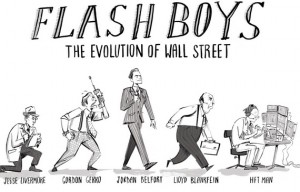
High Speed Trading

US Community Banks Supported?

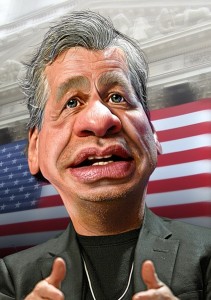
President Obama has nominated a community banker to the board of the Federal Reserve.  This nomination met with favorable comments from Senator Sherrod Brown, Fed board chair Janet Yellen and Frank Keating. It maybe time to take community banking functions away from the big banks, or me at least give them a ,choice between community baking sand investment banking.  Clearly a bank like JP Morgan Chase which only make 20 percent of its money on these functions would prefer to be an investment bank.   Goldman Sachs’ Richard Ramsden today suggests that the JPMorgan Chase that Jamie Dimon has taken years building would be worth more in pieces.  Can a break up be far behind?

The problem wirh break up of course is that the 80 percent of JP Morgan Chase’s acitivities that fall outside community banking might not be covered by tax payer dollars.  At any rate, they should not be.

An interesting side note:  Small banks benefit from regulation.  Is the flip side of this statement also true?

Dimon