Swedish Women Against Putin

Nathalie Rothschild writes: Everywhere one looks on the eastern fringes of Europe, the Russian bear menaces. From Ukraine to Estonia, Russian troops are either engaged in outright warfare or testing the borders of Russia’s neighbors. In Sweden and Finland, Russian planes and vessels are prodding at coastal defenses. Nordic defense officials now speak of a fundamentally altered security environment in the Baltics.

There is a measure of the surreal to these developments and Sweden’s response to them. When in October Swedish forces hunted what was all but certainly a Russian submarine in the Stockholm archipelago, Swedish media dispatched reporters into dinghies, where they breathlessly tried to intuit news in the movement of naval vessels. And when Sverker Göranson, the supreme commander of Sweden’s armed forces, went before the media last month to present concrete evidence that a submarine had violated his country’s territorial waters, a Russian newspaper responded by calling the officer “unmanly.”  Swedish Women and Putin

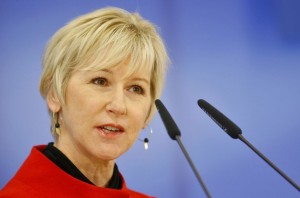
Swedish Foreign Minister Speaks Up

Derivatives Insured by US Taxpayers?

Sen. Elizabeth Warren on Wednesday sought to rally opposition to the $1.1 trillion government funding bill, spearheading a revolt on the left that has put her influence in the Democratic Party to the test.

The Massachusetts Senator pleaded for House Democrats to withhold support for a government funding package due to a provision she said would change the Dodd-Frank financial reform law to let “Wall Street gamble with taxpayer money.”
Her call gave voice to opposition among liberals to provisions tucked in the “cromnibus” deal that they argue would let big banks engage in the same risky trading that toppled the economy in 2008.

With House Republican leaders acknowledging they’ll need Democratic support to get the legislation through, unified opposition from liberals could prove fatal. A vote on the House floor is set for Thursday.

Warren dodged when asked how far she’d go to stop the bill if it reached the Senate with the Dodd-Frank provisions intact, stressing that the House must act first.

“We’re trying to get it out of the House omnibus bill right now,” she said. “That is where all the pressure is.”

Opposition to the funding deal began to surface early Wednesday morning as lawmakers began sorting through the surprise provisions tucked in the more than 1,600-page funding package.

While several controversial policy riders were quickly discovered, it was the change to Dodd-Frank that generated the loudest outcry.

The provision would no longer require that big banks separate trades in financial derivatives from traditional bank accounts, which are backed by the government through the Federal Deposit Insurance Corporation (FDIC). The derivatives played a key role in the financial collapse.

Derivatives

China Battles Captain Kidds

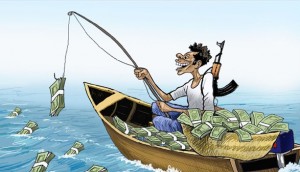
A senior US State Department official praised China’s efforts in global counterpiracy in the waters off Somalia, a busy sea lane where attacks and hijacking of commercial ships worry many nations.

The rise of piracy off the coast of Somalia spurred the creation and passage in 2008 of United Nations Security Council Resolution 1851, which authorizes states to work more closely in the fight against piracy there.

On Nov 12, the Security Council passed a new resolution reaffirming its condemnation of all acts of piracy and robbery at sea off Somalia.

Chinese Ambassador to the UAE Huang Jiemin, on behalf of Chinese Foreign Minister Wang Yi, attended the 17th plenary in Dubai, along with more than 600 representatives from 50 countries, international and regional organizations.

Huang said that participation by the international community in the escort mission in the Gulf of Aden has been fruitful. He noted that while the incidence of attacks by Somalia pirates has declined sharply, international shipping still faces a security threat off Somalia and in the Gulf of Aden.

He called for a comprehensive approach in addressing the problem by boosting the security capacity in Somalia, assisting economic development there and strengthening the capacity of other nations on that part of the Indian Ocean coast.

Thanks to the multinational efforts, the piracy off Somalia, which once cost the world economy an estimated $7 billion a year, has been largely curbed in the past year.

While the number of attacks on ships off Somalia reached 237 in 2011, with 28 of the attacks resulting in vessel hijackings and sailors held hostage for ransom, there has not been a successful raid against a commercial ship there since May 10, 2012, according to Chapman.

In 2013, there were only 15 incidents reported, down from 75 in 2012. No ships today are currently held by Somali pirates, but more than 30 merchant sailors are being held hostage by pirate gangs.

The hostages include 11 Chinese who were hijacked on March 26, 2012, in an Omani-flagged ship, now aground in Somalia. The Global Times in China published a story in late October featuring some family members of the hostages pleading for their release.

The Somali government and some subnational organizations are committed to helping young Somalis find something to do other than joining the pirates.

By October, China’s People’s Liberation Army Navy had sent 18 batches of convoy ships to the area since December 2008. They have provided escort to more than 5,700 Chinese and foreign ships. The mission was carried out at the request of the Somali government and under the authorization of the UN Security Council.

China also opened its embassy in Mogadishu, capital of Somalia, in July after it was closed since 1993, when the East African nation was plunged into civil war. Chinese Vice-Foreign Minister Zhang Ming visited Somalia in October to attend an opening ceremony, also attended by Somali President Hassan Sheikh Mohamud.

So far, 1,400 pirates and suspected pirates are in courts or prison in 21 countries. Chapman described effective prosecution of piracy in affected states as a priority.

The cost of piracy to the global economy is estimated at $18 billion a year, including declines in tourism and fishing since 2006. Pirates off the coast of Somalia and the Horn of Africa have taken in between $339 million and $413 million in ransoms the past seven years, according to a 2013 analysis published by UNODC, the World Bank and Interpol.

Piracy Off the Coast of Somalia


Powered by Translate

Bribes are Turkish

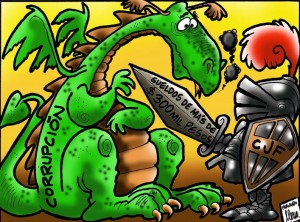
In the Dec. 17-25 corruption investigation in Turkey millions of dollars were in shoeboxes. Sons of some ministers and bureaucrats were detained. But only a few months later, on March 30, 2013, local elections were held and the ruling AKP increased its votes by 5% compared with the previous elections, to 44.19%. Its nearest rival, the Republican People’s Party (CHP)also increased its vote totals.

That was yet another illustration that allegations of corruption and bribery did not mean much to people. But such allegations have been rapidly eroding Turkey’s image abroad. Transparency International released its 2014 Corruption Perception Index that placed Turkey 11 places lower than last year. Anne Koch, the organization’s director for Europe and central Asia said Turkey’s regression from 53rd place to 74th among 175 countries was because of the Dec. 17 operation,  Koch said, “Millions of dollars in shoeboxes, the firing or resignation of ministers, many detentions, led the news on corruption.” She said some countries in Africa and Middle East were better placed than Turkey.

Oya Ozarslan, chairwoman of the Turkey branch of Transparency International, said in Turkey one out of five persons pays bribes to benefit from public services.

A corruption report by the powerful Industry and Business Association (TUSIAD) followed. The report, based on interviews with 801 businesspeople, cited half of the respondents saying there was corruption in Turkey.

TUSIAD Chairman Haluk Dincer said their research by and large matched their predictions. “There is corruption in Turkey and the trend is for further increase,” he said. Dincer said corruption added 10% to production costs.

The Turkish National Assembly established an inquiry commission to investigate the Dec. 17-25 corruption and bribery allegations.

Main opposition CHP leader Kemal Kilicdaroglu bitterly criticized the assembly speaker, who is from the AKP. Kilicdaroglu said, “Since when has the national assembly become the protector of thieves? Your duty is to preserve the reputation of the national assembly.”

At the moment, the investigation is said to be going on, but nothing is being told to the people. Anyway, even if the people were kept informed, nobody would expect an outcome that would have the accused ministers tried in court, because the commission findings must be approved by the assembly quorum. Since AKP has 312 out of 550 parliamentary seats, such an outcome is unlikely.

In short, there were always allegations of corruption in Turkey.  They continue today. Nobody, including top businessmen, think it will ever end. Nature and the scope of corruption may change, but corruption continues to be an unchanging agenda item of the country.

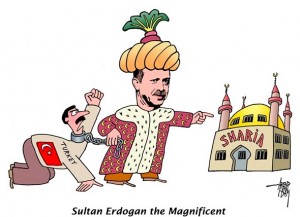
Bribes in Turkey

Embezzled Egyptian Funds

The amendment to Egypt’s Law on Illicit Earnings allows for amicable settlement between the government and the public figures who embezzled public funds. Some see this law as an attempt to recover embezzled funds and introduce a hard currency, which the country’s declining economy needs. Others consider the law a legalization of corruption and a loss to state authority.

Egypt’s judiciary will consider a new reform to allow for amicable settlement between the government and those accused of embezzlement, bringing in recovered funds but also possibly legalizing corruption.
One article states that the accused, who is under the [jurisdiction of the] Illicit Gains Authority, can at any moment reach a settlement with this authority by returning the illicitly gained funds. As a result of the settlement, investigations are stopped and the penal proceedings for the accused are halted, but he is obliged to pay the expenses of the lawsuit and the judges’ fees.”

Saad noted that the new law includes added categories, such as members of the judiciary and its six committees and members of the police force.   Saad said the new law stipulated the complete independence of the Illicit Gains Authority by transferring its subordination from the executive authority, represented by the Minister of Justice, to the Supreme Judicial Council, in addition to allocating a budget for the authority to spend on cases. The law also stated the right of this authority to manage suspicious funds or companies by assigning a financial comptroller to maintain and monitor them. The comptroller would also open a special account for the profits of these funds.

Meanwhile, Ahmad Refaat, former dean of the faculty of law at the University of Cairo, said that he supported the amicable settlement system and that it was applicable in Egypt to cases related to customs smuggling, tax evasion and currency exchange in unofficial rates.

Money has been smuggled abroad, but its destination, route and amount remain unknown. Some states such as Switzerland announced that they froze the acoounts of  Mubarak and some of his men. This move benefits the banks and states where the money is frozen because they do not pay interest on frozen funds, and at the same time, they do not disclose the amount of funds nor do they return them — except if a final judicial decision is issued that pinpoints the smuggled funds and proves they are corrupt with irrefutable evidence. Yet, all of this data is unclear given Egypt’s status quo.

When the committees visited the states, like Switzerland, that had declared freezing the accounts of Mubarak and some of his men, their banks refused to disclose any information about these accounts, because they are bound by the principle of secrecy. An amicable settlement should be applied to funds that were smuggled during Mubarak’s rule, provided that the state’s monitoring institutions play their role in the new phase and close the loopholes that allow leeway for the corrupt.

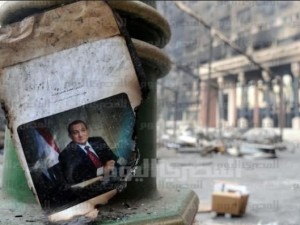
Mubarak's Embezzlement


Did the US Improve Life in Afghanistan?

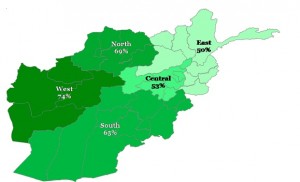
Gallup’s poll on the wellbeing of Afghanistan — a country that has been on the receiving end of substantial investment in U.S. blood and treasure for well over a decade. The results are grim.  (Darkest green areas on the map below are the most damaged).

Afghans’ ratings of their lives declined even further in 2014. More than six in 10 Afghans evaluate their lives poorly enough to be considered ‘suffering’ — the highest figure ever recorded for any country since Gallup started tracking life evaluations in 2005. As in 2013, no Afghans rate their lives highly enough to be considered ‘thriving.'”

The percentage of Afghans who described themselves as thriving was not always zero. In 2010, Gallup found the percentage up to 12 percent, having grown year-over-year since 2008. Not great, obviously, but at least moving in the right direction.

The South was a Taliban stronghold and reports indicate steady Taliban advances and bolder military assaults in the region, which likely contributes to the suffering rates (if not explains them outright). As for Western Afghanistan, it is, as Gallup notes, a bastion for opium addiction.

The NATO mission in Afghanistan ended this year.  After 13 years, the costs and benefits of the U.S. nation-building committment there will certainly be debated for years, if not decades, to come. Most experts in the US State Department did not approve of continuing in the country when the Democrats, Obama and Secretary of State Clinton took over in 2008.

AFghanistan Suffers

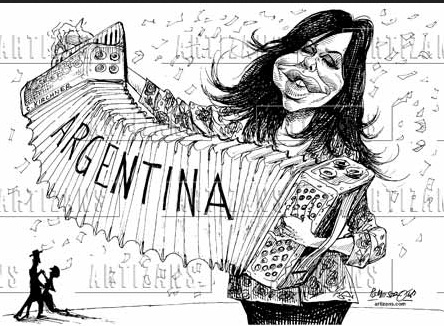
Kirchner Not Singing for Argentina

Cristina Fernanez de Kirchner has a 30% approval rating in Argentina, but people protest corruption, runaway inflation, and crime more than they protest her.  She cannot run again for President net year.

Argentina’s economy has been suffering from a combination of global slowdown, an a series of self-inflicted wounds: exchange controls and debt defaults.

Unemployment rates are higher than the 7% reported.  Inflation has soared to 41 percent this year. In real terms, wages are lower.  Car sales have plummeted.

The threat of social turmoil coninues.  Police officers and school tachers strike.

The next step is a January meeting with creditors.  And after that, the elections in October, where everyone looks better than Kirchner right now.   The popular mayor of Buenos Aires is running.  He is pro market and in favor of a global presence and good trading relatiions with neighbors.

Mrs. Kirchner does not make women leaders look good.

Kirchner

No Bore for Ore in Guinea

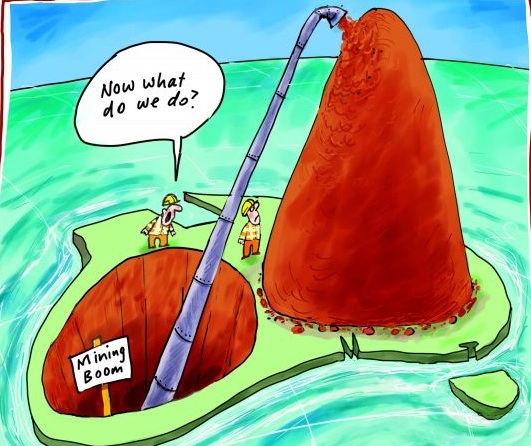
Ebola is not the only problem that Guinea has.  Simandou, a mining project in the country, is mired in problems.    Simandou has Ben called the El Dorado of mine ore.   Its deposits are large enough to fill seven percent of the world demand for a question after of a century..  The ore has unusually high iron content.  The cost for the mine, the railway and a port for shipping is 20 billion dollars.

When a new government was elected in Guinea in 2010, they replaced a long-term corrupt regime that had made many mining deals.  A committee was established to review all past mining contracts,  Brazilian companies Rio Tinto and Vale filed suits against BSG owned by the Steinmetz family trust.  BSG then filed for arbitration wiith Guinea.  Steinmetz also sued Global Witness, backed by George Soros, for not being a journalistic outfit, but instead an advocacy group.

Prospective investors are afraid of the risk.  The legal challenge from Steinmetz is outstanding.  Guinea is not politically stable. And. of course Ebola epidemic continues.

Development of Simandiu ciukd do wonders for an economy whose GDP is $530 per person.  It could generate tens of thousands if jobs and make the country’s agriculture business competitive for export thanks to the new railways.  Success might encourage the mining of otehr minerals like bauxite, graphite and manganese.

Nothing is expected to come out of the ground for at least five years if not ten.  Arbitration cases could drag on for years. Rio is focusing on projects in Australia.  Questionable circumstances  may cost the people of Guinea dearly.

Mining Ore

Turkey and China Flunk Corruption Test

Corruption in China and Turkey has worsened dramatically over the past year according to the latest rankings released by Transparency International (TI).

The annual report showed an increase in corruption in some of the world’s fastest growing economies such as Turkey, China and Angola whose GDPs grew by 4 percent last year.

The anti-corruption NGO added that money laundering was the biggest barrier to economic development among the worst ranking countries.

“What is extremely important for emerging markets and developing countries is the return of laundered money which is sitting, for example, in Germany, in some bank somewhere or has been parked somewhere. These countries could put this money towards their economic development, once they have been able to get rid of their dictators,” explained Edda Mueller, head of TI in Germany, where the NGO has its headquarters.

But she went on to concede that this was easier said than done. “Tracking money laundering and finding where it is being hidden is a very difficult area of investigation and because of this is often neglected. So, a potential criminal drug dealer, if one can catch him, will be punished but not the real criminal cause of money laundering. This is a big problem that we have to address.”

The TI annual report shows perceived levels of corruption in 175 countries, with a 0 being highly corrupt and 100 being highly clean. China ranked 80 in 2013 and has slumped to 100 in 2014.

China’s drop will come as a blow to Chinese President Xi Jinping, who took office in 2012 vowing to root out graft. His anti-corruption office has fired 270,000 cadres.

Turkey dropped to 64th place. The country was struck by a corruption scandal in December last year, the worst since the AK party came to power more than ten years ago.

Denmark retains its title as the least corrupt country, while North Korea and Somalia were jointly named the most corrupt.

Coruption Index

Banksters Galore!

Business culture int he banking industry is favoring, or at least tolerating, fraudulent or unethical behaviors.

That’s what Ernst Fehr told reporters in a telephone interview last week.

Fehr is an economist at the University of Zürich in Switzerland who co-led a study about business behavior.  Fehr’s team conducted a laboratory game with bankers, then repeated it with other types of workers as comparisons. Participants were asked to toss a coin 10 times, unobserved, and report the results. For each toss they knew whether heads or tail would yield a $20 reward. They were told they could keep their winnings if they were more than or equal to those of a randomly selected subject from a pilot study. The results showed the control group reported 51.6% winning tosses and the treatment group – whose banking identity had been emphasized to them – reported 58.2% as wins, giving a misrepresentation rate of 16%. The proportion of subjects cheating was 26%. The same experiments with employees in other sectors – including manufacturing, telecoms and pharmaceuticals – showed they don’t become more dishonest when their professional identity or banking-related information is emphasized.

The U.S. Senate Permanent Subcommittee on Investigations finished up a two-day hearing Friday on whether banks like Goldman Sachs Group Inc, J.PMorgan Chase and Morgan Stanley should be restricted from owning or trading physical commodities such as oil and metals.

The Senate subcommittee has been investigating whether banks’ participation in markets, where they also control infrastructure assets, influence prices and harm consumers. Some lawmakers argue such activity – particularly banks’ ownership of power plants, shipping containers, and metals warehouses – creates the potential for anticompetitive behavior.

Banks don’t own all these hard-asset facilities just because they are profitable businesses to own and run. Banks own them to manipulate prices and markets, which is infinitely more profitable than just owning storage and transportation facilities.

Last week, Sen. Carl Levin (D-MI), chairman of the subcommittee, spent three hours accusing two witnesses from Goldman Sachs of manipulating aluminum markets. He then asked J.P. Morgan Chase and Morgan Stanley why they had tried to hide their supposed “investments” in metals and natural gas from regulators.

Levin’s rhetorical quote of the day was this:

“If you liked what Wall Street did for the housing market, you’ll love what they’re doing for commodities.”

We don’t need to be reminded that bundling mortgages brought down the US economy.

Senate Hearing