Conflict Minerals and Trade

Michael Gibb writes on Conflict Minerals:  “That diamond upon your finger, say how came it yours?” asks Shakespeare’s Cymbeline. “Thou’lt torture me,” responds the villainous Iachimo, “to leave unspoken that which, to be spoke, would torture thee.” The story behind certain parts of the global trade in natural resources today, whether spoken or not, is no less a source of anguish.

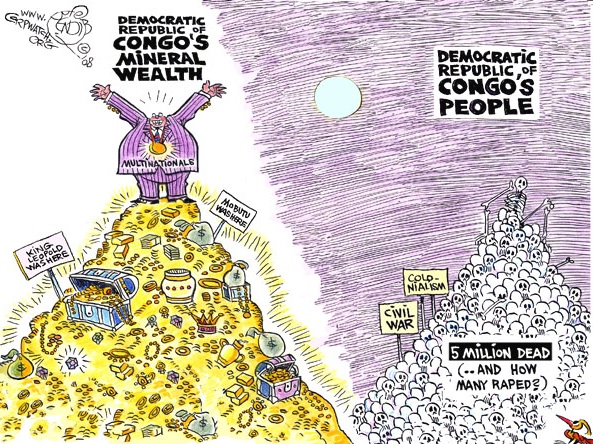
Natural resources should be a major contributor to development in some of the countries that need it most. And yet, in some of world’s poorest and most fragile states, they bring just the opposite. In many of these countries, the trade in natural resources motivates, funds, and prolongs conflict and egregious human-rights abuses. Resources such as diamonds, gold, tungsten, tantalum, and tin are mined, smuggled, and illegally taxed by violent armed groups, and provide off-budget funding to abusive militaries and security services.

Consider just four African countries: Sudan, South Sudan, the Central African Republic, and the Democratic Republic of Congo. Together, these resource-rich countries account for just over 13% of the population of Sub-Saharan Africa, but some 55% of the region’s internally displaced persons (and one in five worldwide) due to conflict. But the problem is global, with similar patterns in parts of countries such as Colombia, Myanmar, and Afghanistan.

The deadly trade in conflict resources is facilitated by supply chains that feed major consumer markets, such as the European Union and the United States, with cash flowing back the other way. Natural resources, such as tin, tantalum, tungsten, and gold – all minerals that have been linked in some parts of the world to conflict and human-rights abuses – are found in our jewelry, cars, mobile phones, games consoles, medical equipment, and countless other everyday products.

There is clear consumer demand for information that will help buyers make sure that their purchases do not implicate them in appalling abuses. But the responsibility to reconcile global commerce with the protection of basic human rights does not fall first and foremost on consumers. Conflict prevention and human-rights protection are primarily the responsibility of states, and it is increasingly recognized that businesses must play their part as well.

Indeed, we are now at a critical point in what has become a global movement to stop irresponsible corporate practices from being viewed as business as usual. Since 2010, companies working in conflict areas have had a global standard at their disposal. The OECD offers guidance on how to source minerals responsibly. Developed in close collaboration with the industry, it offers “detailed recommendations to help companies respect human rights and avoid contributing to conflict through their mineral purchasing decisions and practices.”

The United Nations has also endorsed similar requirements. In 2011, the UN published a set of Guiding Principles on Business and Human Rights, according to which companies whose “operating contexts pose risks of severe human rights impacts should report formally on how they address them.”

In 2013, Dutch researchers surveyed 186 companies listed on European stock exchanges that make use of conflict minerals. More than 80% made no mention on their Web sites of what they had done to avoid funding conflict or human rights abuses. Similarly, the European Commission’s Directorate General for Trade found that only 7% of 153 EU companies refer to a due-diligence policy for conflict minerals in their annual reports or on their Web sites.

The Securities and Exchange Commission requires companies that use tantalum, tin, gold or tungsten in their products to investigate these raw materials’ origin, and to mitigate risks in their supply chains in line with the OECD Guidance if they are found to originate in certain conflict-affected or high-risk areas. The 12 member countries of Africa’s International Conference on the Great Lakes Region have committed to similar mandatory due-diligence requirements.

That is as it should be. Responsible sourcing is a duty, not a choice. And here, the EU is lagging behind. In March, the European Commission proposed a plan under which disclosure would continue to be voluntary, meaning that the minerals that enter the EU would not be subject to mandatory checks.

The proposal is now being reviewed by the European Parliament and the European Council. It is crucial that both institutions seize this opportunity to strengthen the EU’s response by making disclosure and compliance mandatory and extending coverage to include finished and semi-finished products. Better regulating the trade in these resources will not itself bring peace to conflict-affected areas. But funding conflict and human-rights abuses is not an acceptable cost of doing business.
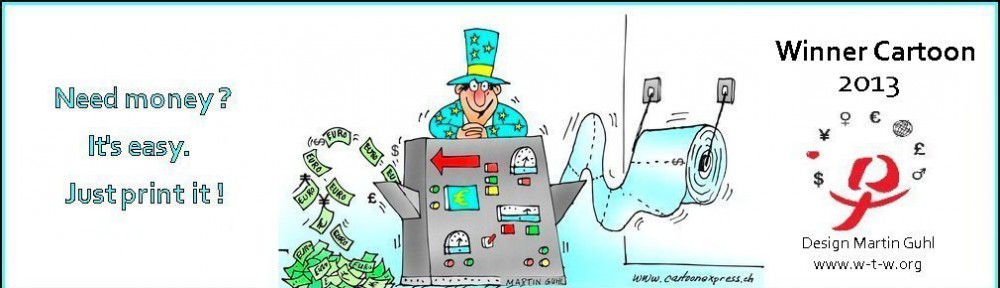
Conflict Minerals

US Regulators Go After Commodities Business

The big guys like JPMorgan Chase are being examined for fraud in the commodities markets.  The U.S. Commodity Futures Trading Commission (CFTC) announced that Paul Greenwood of North Salem, New York, who operated a $1.3 billion investment scam where he and a co-Defendant misappropriated at least $554 million from commodity pool participants, was sentenced to 10 years in federal prison for charges related to his participation in the scam.  Commodities are commanding the attention of US regulators.
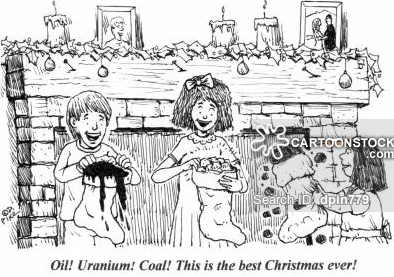
Oil, Uranium, Coal


Xi’s Dream?

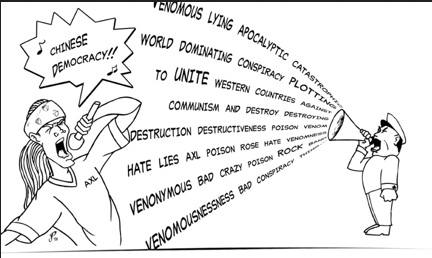
Xi’s dream may not extend across China, writes Joseph Bosco, a former China desk officer in the US Dept. of Defense. Taiwan’s local elections this week and Hong Kong’s public demonstrations send an implicit but clear message to Beijing: These two populations do not want to live under the rule of China’s Communist Party.

The rejection embodied in these events has been building for years in both places. Xi Jinping now must decide whether he should hold firm or find ways to broaden his China Dream to accommodate the democratic aspirations of Hong Kong and Taiwan.

Xi has greater legal latitude and practical opportunity to use force in Hong Kong.  But if Hong Kong’s authorities prove unable to handle larger demonstrations, would Xi risk a Tiananmen-like massacre rather than honor Deng’s home-rule promise?

Taiwan presents a different kind of legal, diplomatic, or military challenge. First of all, a couple dozen governments still recognize the Republic of China. Washington has long provided arms to help Taiwan prepare its own defense, and the Taiwan Relations Act pronounced any threat to Taiwan’s future a matter “of grave concern to the United States,” falling just short of the explicit security commitment contained in the earlier Mutual Defense Treaty.

As a legal counterweight to the Taiwan Relations Act, the National People’s Congress in 2005 adopted the Anti-Secession Law, which threatens war if Taiwan declares independence.

The elections in Taiwan may have convinced Beijing that the possibility of closer political ties is vanishing. If Beijing has indeed determined that possibilities for peaceful unification are “completely exhausted,” as the Anti-Secession Law warns, Beijing may conclude it is now justified in taking military action against Taiwan. Or cooler heads may prevail, pushing China instead to await a more tangible pretext for hostilities. The assessment of America’s role will weigh heavily in Beijing’s deliberations.

Xi is thus left pondering critical dilemmas, not only regarding war and peace, but concerning the very legitimacy of China’s Communist regime. He might want to consider the sound advice Taiwanese President Ma Ying-jeou has been offering Beijing for years: Start following Taiwan’s lead and move along the peaceful path to democracy. With one country, two systems now a dead letter for Taiwan, two countries, one system would be the better answer.

Democracy in China?

Russia: A Failed State?

Ivan Suhkov writes in the Moscow Times:  Crimea symbolizes revenge — in the Soviet, political and negative sense of the word. A more accurate word is “restoration” — a restoration of the state and its rights that were allegedly violated.

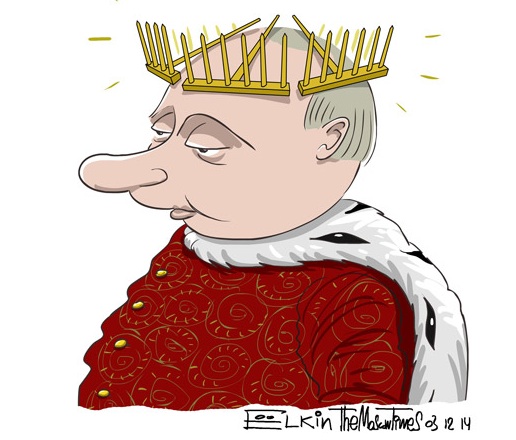
By reinstating the Soviet anthem, imposing a power vertical, giving greater social and political importance to siloviki structures — particularly the secret police — and reintroducing Crimea into the country’s daily weather forecasts, Yeltsin’s successor, Vladimir Putin, has symbolically restored the Soviet Union.

However, advocates of restoration tend to miss one important point: both the Russian Empire and the Soviet Union ended in failure and collapse — the former in 1917, the latter less than a century later in 1991.

The search for a new doctrine did not end unsuccessfully because it never really began.

To appreciate that this process did not begin with the absurd ban on the “falsification of history” or the “new historiography” trumpeted by Culture Minister Vladimir Medinsky, just peruse the preamble of the Russian Constitution.

It speaks of “historically established state unity,” “revering the memory of ancestors who have passed on to us their love for the fatherland” and “reviving the sovereign statehood of Russia.”

On Nov. 19, an Investigative Committee task force teamed up with riot police in an attempt to detain a citizen allegedly involved in the criminal withdrawal of a huge sum of money. The person’s name is not as important as the fact that the police staged the operation in the center of Moscow in broad daylight against the backdrop of an unprecedented level of excitement over the revival of the Russian state.

The police operation was a complete failure.

To better understand the circumstances, note that the figure sought by police is Ramzan Tsitsulayev, whom Chechen leader Ramzan Kadyrov named one year ago as that republic’s envoy to Ukraine. The men who managed to thwart the sting operation were Chechens, and the region where Tsitsulayev is hiding out — and from where he mocks the Moscow police — is, of course, Chechnya.

That is the same republic where Moscow began operations 20 years ago to “restore constitutional order.”

Two weeks ago Moscow police detained and drove off with Magomed Aliyev, a young native of Dagestan who had come to visit his sister.  Aliyev resurfaced at a detention center in Stavropol, a regional center and a sort of outpost of the federal authorities in the North Caucasus. Aliyev was urgently hospitalized on Nov. 26 after he was repeatedly beaten and someone jabbed a pen in his eye.

Regardless of any crime the young man might have committed, the actions of the siloviki far overstep the bounds of legal procedure. It might seem that Stalinist terror and a failed state are at opposite ends of the spectrum. But terror, by definition, is an act that bypasses the rule of law and so indicates the failure of the state.

In one way or another, former Soviet leader Josef Stalin is the focus of many current leaders’ ideas concerning “restoration.” They erroneously quote Churchill — namely, that “Stalin came to power when Russia had only a wooden plow, and left it in possession of atomic weapons.”

It so happens that the world has never had to cope with a failed state holding a nuclear arsenal large enough to destroy all of humanity several times over. The world barely managed to avoid such a threat in 1991, but only with some intense diplomacy, significant financial outlays and a whole lot of nail-biting.

Russian fans of “reconstruction” would like a replay of those times. And despite blithe assurances from the Defense Ministry that the command and control structure of the country’s nuclear arsenal has been fully modernized, there is no guarantee that the final act in this dark drama will end as peacefully as it did the first time.

Putin


Kickbacks Rampant in Brazil

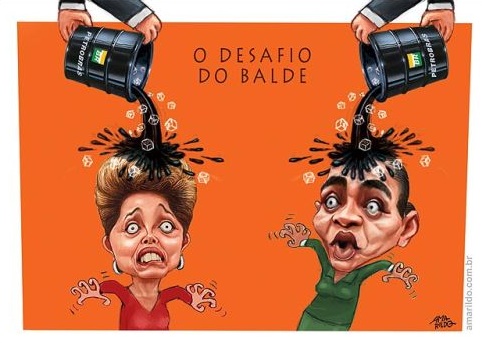
Paulo Roberto Costa, who is himself under investigation for his alleged involvement in a kickback scheme at Petrobras, said such practices happened “all over Brazil”.  He said corruption was an accepted way of doing business there.

The Petrobras scandal is believed to be one of the biggest in Brazil’s history.  Mr Costa was arrested in March.  As part of a plea bargain, he helped uncover a scheme that allegedly used inflated Petrobras contracts to funnel money to parties of the governing coalition.

President Dilma Rousseff, a former Petrobras chair, denies any knowledge of bribery.

Mr Costa said he had given investigators the names of dozens of politicians who received payments in the Petrobras case.  But he said the practice went much further than Petrobras.  “What has been reported occurring at Petrobras happens all over Brazil in contracts for roads, railways, ports, airports, hydroelectric dams,” Mr Costa told the congressional committee.

Prosecutors are investigating a number of other state-run companies and police last month arrested more than 20 executives of some of the country’s largest construction and engineering firms in connection with the probe.

In the wake of the arrests, President Rousseff called the case “symbolic” and said it could change the country forever.  Petrobras is not only the largest but also one of the most internationally recognised firms in Latin America.

Kickbacks in Brazil


Post Brisbane Black and Blues

Ellen Brown writes:  Did the G20 know what they were doing when they whisked into Brisbane, posed for their photo ops, approved some proposals, made a show of roundly disapproving of Russian President Vladimir Putin, and whisked out again. It was all so fast, they may not have known what they were endorsing when they rubber-stamped the Financial Stability Board’s “Adequacy of Loss-Absorbing Capacity of Global Systemically Important Banks in Resolution,” which completely changes the rules of banking.

Deposits are now “just part of commercial banks’ capital structure.” That means they can be “bailed in” or confiscated to save the megabanks from derivative bets gone wrong.

Rather than reining in the massive and risky derivatives casino, the new rules prioritize the payment of banks’ derivatives obligations to each other, ahead of everyone else. That includes not only depositors, public and private, but the pension funds that are the target market for the latest bail-in play, called “bail-inable” bonds.

“Bail in” has been sold as avoiding future government bailouts and eliminating too big to fail (TBTF). But it actually institutionalizes TBTF, since the big banks are kept in business by expropriating the funds of their creditors.

It is a neat solution for bankers and politicians, who don’t want to have to deal with another messy banking crisis and are happy to see it disposed of by statute. But a bail-in could have worse consequences than a bailout for the public. If your taxes go up, you will probably still be able to pay the bills. If your bank account or pension gets wiped out, you could wind up in the street or sharing food with your pets.

In theory, US deposits under $250,000 are protected by federal deposit insurance; but deposit insurance funds in both the US and Europe are woefully underfunded, particularly when derivative claims are factored in.

Kept inviolate and untouched in all this are the banks’ liabilities on their derivative bets, which represent by far the largest exposure of TBTF banks.  tt is estimated that American banks have some $280 trillion in derivatives on their books.

All this fancy footwork is to prevent a run on the TBTF banks, in order to keep their derivatives casino going with our money. Warren Buffett called derivatives “weapons of financial mass destruction,” and many commentators warn that they are a time bomb waiting to explode.  When that happens, our deposits, our pensions, and our public investment funds will all be subject to confiscation in a “bail in.”

Post Brisbane Black and Blues

Putin and the Russian Kleptocracy

Anne Applebaum in the New York Review of Books writes onPutin’s Kleptoccracy.  Who Owns Russia by Karen Dawisha:  The question is asked: Did the failure of reforms, of privatization, bring us to Russia today, or did the ascendancy of Putin and his KGB friends
Instead from the beginning sought to create an authoritarian regime ruled by a close-knit cabal…who used democracy for decoration rather than direction.
This is the remarkable story of one group of unrepentant, single-minded, revanchist KGB officers who were horrified by the collapse of the Soviet Union and the prospect of their own loss of influence.
In league with Russian organized crime, starting at the end of the 1980s, they successfully plotted a return to power. Assisted by the unscrupulous international offshore banking industry, they stole money that belonged to the Russian state, took it abroad for safety, reinvested it in Russia, and then, piece by piece, took over the state themselves. Once in charge, they brought back Soviet methods of political control—the only ones they knew—updated for the modern era. Russian Kleptocracy

Acid Water FInds Acid Judge

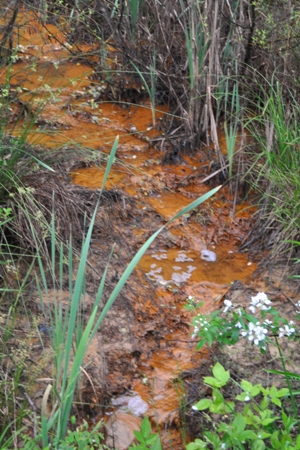
Acidic Mine WaterTwenty-seven hundred coal mine owners have gotten away with dodging nearly $70 million in safety fines in Kentucky.  Miners are injured at much higher rates in delinquent operations.  Seven of the top 10 scofflaws, including West Virginia billionaire Jim Justice, control mines in Eastern Kentucky.

Last week, a ruling by Franklin Circuit Judge Phillip J. Shepherd laid bare the charade that is Kentucky’s enforcement of coal industry compliance with the Clean Water Act. The judge described a state agency that barely even goes through the motions of enforcing the law.  Shepherd rejected a state-proposed settlement with what was one of Eastern Kentucky’s largest producers of surface mined coal before going through bankruptcy, the West Virginia-based Frasure Creek Mining, which still has mining sites under permit in the state. The company for years submitted false water monitoring data. Shepherd concluded there was either a scheme to commit fraud “or incompetence so staggering as to defy belief.”

The Beshear administration’s Cabinet for Energy and Environment chose to handle the 1,520 violations as paperwork errors, so did not investigate “substantive pollution violations” except in a very limited way and even that “tasked the staff significantly,” wrote Shepherd.  “With only a handful of enforcement personnel, and a dwindling number of field inspectors, and with the position of Director of Enforcement unfilled since 2007, it is impossible for the Cabinet to effectively regulate permittees such as Frasure Creek who systematically violate” the Clean Water Act.

No wonder 93 percent of the Big Sandy River, the watershed where Frasure Creek does most of its Kentucky mining, is unfit to support aquatic life mainly because of surface-mining runoff. The cabinet does not even know how many discharge outfalls are associated with the state’s 2,200 coal general permits, Shepherd wrote. Therefore, the cabinet can’t say whether coal companies are self-monitoring water pollution as required by federal law, much less whether they are violating their water pollution limits.

The massive violations were discovered by citizens who threatened to sue. The cabinet agreed to a consent decree under which Frasure Creek would pay $310,000. The cabinet also fought — and lost — all the way to the state Supreme Court to exclude citizens from any involvement in deciding the case. Shepherd ruled the penalties were too small “to deter future violations” and sent “the message that cheating pays. This puts the many companies that comply with the law at a competitive disadvantage.”

Hiring a new lab cost Frasure Creek an extra $30,000 a month. For a while, the company’s quarterly reports appeared to be accurate with many more actual violations reported. Then, as if to prove Shepherd right, Frasure Creek started sending obviously false reports again.

Operators who increase profits by taking shortcuts on safety and health, put lives at risk. Economic dependence on cheap energy from coal is not cheap.  The costs are high — they just get pushed onto someone else, the disabled or dead miners, or Kentuckians who depend on water, ruined by surface mining, that flows from the mountains across the state.


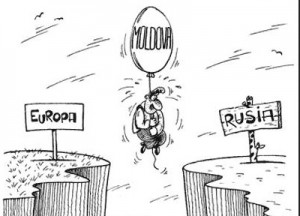
Russia and EU in Tug of War Over Moldova

The EU and Russia are in a tug of war over Moldova.

Two main factors have damaged the pro-western camp in the country.

The country has been subjected to an extraordinary amount of blackmail by Russia.  Russia has banned imports of Moldovan wines, meat, and vegetables. Russia has also threatened to cut off Moldova’s energy supplies.  The new trade accords with the EU should give reformers the impetus to introduce structural changes in the economy, provided there is sufficient political will to do just that. But reforms would take time to kick in.

The government in Chişinau has adopted a tough stance against the Gagauz community. Observers warn that this could alienate the minority even further, and with the support from Moscow, Chişinau could have a major separatist movement on its hands.

Indeed, in a referendum carried out among the Gagauz minority in February 2014, 97.2 percent voted against Moldova’s closer ties with the EU, and 98.4 percent favored Moldova’s integration into the Russian-led Eurasian Customs Union.

The leader of the Gagauz region, Mihail Formuzal, who was a major in the Soviet army, has repeatedly opposed Moldova moving closer to the EU. He has claimed such a development would threaten the autonomy of the Gagauz minority.

With a frozen conflict in Transnistria and Russia’s support for the Gagauz, Moldova’s future stability is not a foregone conclusion. This time around, the EU cannot afford to be caught napping-as it was over Ukraine.

Moldova Torn

Tanzanian Prime Minister Implicated in Fraud

Tanzanian politicians are calling for the resignation of the prime minister, Mizengo Pinda, after a government report implicated him in an energy scandal that resulted in the plunder of more than $120m (£76.5m) from the country’s central bank.

In a dramatic parliamentary session on Wednesday that was disrupted by power outages, Tanzania’s public accounts committee (PAC) revealed that senior officials authorised fraudulent payments to offshore bank accounts under the guise of energy contracts. The state-owned energy provider Tanesco, along with five senior politicians – including the minister for energy and the attorney general – are implicated in the scandal, the PAC said.

Investigators said that Tanesco formed a joint escrow (holding) account in 2006, known as the Tegeta account, with Independent Power Tanzania Limited (IPTL), which is owned by Pan Africa Power (PAP). Funds from this account were transferred to offshore bank accounts held by private businessmen and government officials, the committee said.

Tanzania’s Revenue Authority (TRA) has called for Interpol to investigate the role of Harbinder Singh Sethi, a businessman suspected of organising fraudulent payments, as well as James Rugemalira, who is suspected of siphoning off funds through his stake in IPTL.

Tanzania Energy Scandal