Wall Street Takes Physical Possession of Commodities

Wall Street firms driving up commodity prices.  Machinations by financial firms that have bought up huge swaths of coal mines, aluminum warehouses, or natural gas reserves could be leading to higher prices for consumers and companies that rely on those natural products REPORT-Wall Street Bank Involvement With Physical Commodities alleges.

Furthermore, Wall Street titans may be exposing themselves to huge risks and reaping unfair trading advantages by investing heavily in physical commodities, according to the Senate Permanent Subcommittee on Investigations.

The report’s main author also criticized regulators for allowing financial firms to take increasing stakes in physical commodities, while those institutions also made hefty trades in the financial markets on those products, and called for an overhaul to limits on such activity.

“We simply cannot allow a large, powerful Wall Street bank the power to influence the price of a commodity essential to our economy, especially when that bank is trading in financial products related to that commodity,” said Sen. Carl Levin (D-Mich.).

The two-year investigation focused on three major financial firms that have made significant investments in commodities: Goldman Sachs, JPMorgan, and Morgan Stanley.

For example, in 2012 Goldman owned 1.5 million metric tons of aluminum, equal to roughly one-quarter of the nation’s annual usage of the metal. And Levin focused on Goldman, accusing the firm of orchestrating a “merry-go-round” system aimed at lengthening the lines for providing aluminum, which in turn lead to higher premiums for the metal — costs that could eventually be passed on to consumers.

The report claims that after purchasing aluminum warehouses in Detroit, Goldman approved contracts with warehouse clients where they paid them to load and move metal from one warehouse to another. Those repeated movements slowed down clients attempting to remove their aluminum, slowing its delivery and ultimately driving up the premium for the metal, the report claimed.

In a response to the report, Goldman said that most of the aluminum stored in the facility was not blocked by lengthened lines, and argued that metal movements were independent decisions of clients.

The 396-page report also delves into a host of other investments by financial firms, such as Goldman’s acquisition of a Colombian coalmine that was briefly shuttered due to protests, Morgan Stanley’s investments in jet fuel, and JPMorgan’s buying spree of power plants.  “Imagine if BP had been a bank, the liability resulting from the oil spill could have led to its failure and another round of taxpayer bailouts,” said Sen. John McCain (Ariz.), the top Republican on the panel.

In 2012, a team of Federal Reserve officials looking into commodities activity found that large institutions had a shortfall ranging from $1 billion to $15 billion each in capital and insurance to cover potential catastrophic losses from commodities investments.

The report also said that allowing banks to invest heavily in physical commodities could give them an unfair edge on trading in financial markets tied to those commodities. Firms could receive inside information about what is happening in those markets thanks to those investments, or even be able to sway how markets move by changing conditions at those physical facilities.

The report noted that after Goldman acquired the uranium company Nufcor, it increased trading activity in the company tenfold. Goldman said Wednesday it was in the process of whittling down the company’s operations to minimal levels.

Levin stopped short of specifically saying how regulators should curb physical commodity investments, but said regulators or future Congresses should seriously consider placing stricter limits on the activity.

Banks do face limits on the amount of physical commodities they can invest in, but the report claimed the Fed was relying on an “uncoordinated, incoherent patchwork” of limits on that activity, allowing banks to expand their investments, and also lacked data key to monitoring and policing that type of activity.Wall Street Owns Physical Commodities

78% Vote Against Protecting the Country’s Wealth with Gold

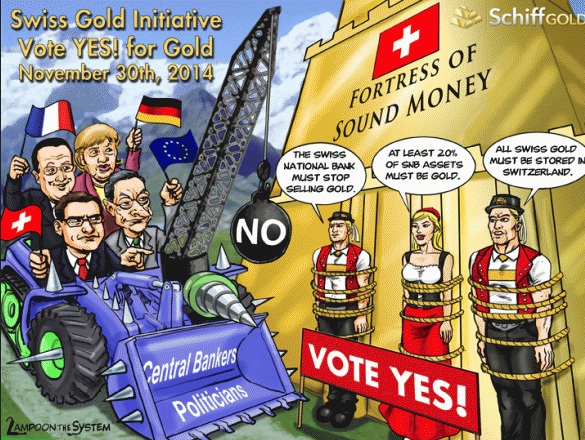
Whether as a result of an unprecedented scare campaign by the Swiss National Bank (most recently reinforced by Citigroup), or due to confidence that Swiss gold is as safe abroad as it is at home, or simply due to good old-fashioned “hanging chads”,  the Swiss population overwhelmingly rejected a referendum to force the Swiss National Bank to hold some 20% of its reserves in gold in a landslide vote, with about 78% voting against what AP politely termed “protecting the country’s wealth by investing in gold.”

The proposal stipulating the Swiss National Bank hold at least 20 percent of its 520-billion-franc ($540 billion) balance sheet in gold was voted down by 78 percent to 22 percent. The initiative “Save Our Swiss Gold” also would have prohibited the SNB from ever selling any of its bullion and required the 30 percent currently stored in Canada and the U.K. to be repatriated.

Gold Referendum Fails

FIFA DeTox?

Futbal is weighed down by corruption. Australians were warned to walk away from any future World Cup hosting bids until FIFA, the global governing body, came clean about the corrupted process that delivered the 2022 games to Qatar.

Australia has been criticized in FIFA summary report.  Australia has been part f the rotten game of cash for hositng rights.  The nation’s reputation has suffered.  Australian taxpayers were billed $46 milion for the bid.

FIFA Corruption

Juncker Won’t be Junked

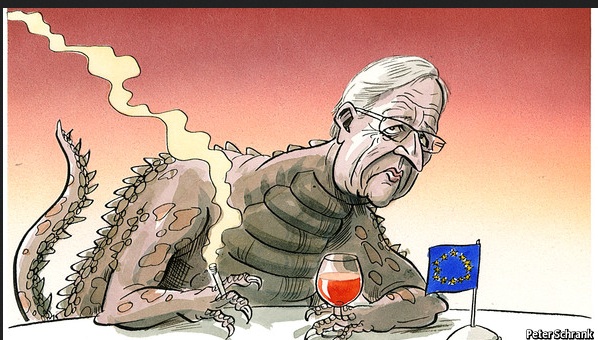
Jean-Claude Juncker, the European Commission’s new president, comfortably survived a no-confidence vote on Thursday that was prompted by news that Luxembourg lured multinational businesses with super-low tax rates during his tenure as its prime minister. The censure motion in the European Parliament was defeated, 461 to 101. But the vote was hardly an auspicious start for Juncker, under fire in his first month in office both over his role when he was Luxembourg’s leader and over a potential conflict of interest as head of a commission examining tax avoidance.

The executive EU Commission,upholds the laws of the 28-nation bloc. The Commission is now investigating several tax schemes offered by Luxembourg to global companies to see whether they broke European Union laws on state aid. Ireland and the Netherlands are also under investigation.

Juncker has said Competition Commissioner Margrethe Vestager will conduct the investigation and that he will not discuss the case with her to avoid being seen as trying to influence the outcome, which would harm his authority.

Juncker has billed his new Commission as “Europe’s last chance” to show citizens the EU can act in their interests.

However, a near-record unemployment rate of 11.5 percent and an economy that has barely grown in seven years have left many EU citizens disillusioned, leading to large victories by Eurosceptic parties in May’s European Parliament election.

Junkcer’s five year term could prove contentious.

Juncker

HSBC Fined for Unregistered Broker-dealer Advice to US Clients

SEC has charged HSBC’s private banking unit with providing unregistered broker-dealer and investment advisory services to
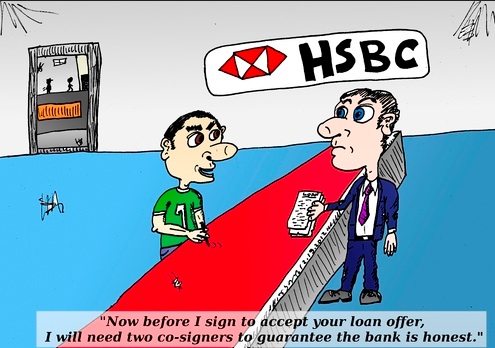
HSBC Private Bank (Suisse) agreed to admit wrongdoing and pay $12.5 million to settle the SEC’s charges. Said Andrew J. Ceresney, Director of the SEC’s Division of Enforcement:

HSBC’s Swiss private banking unit illegally conducted advisory or brokerage business with U.S. customers. HSBC Private Bank’s efforts to prevent registration violations ultimately failed because their compliance initiatives were not effectively implemented or monitored.

According to the SEC’s order instituting settled administrative proceedings, HSBC Private Bank and its predecessors began providing cross-border advisory and brokerage services in the U.S. more than 10 years ago, amassing as many as 368 U.S. client accounts and collecting fees totaling approximately $5.7 million. Personnel traveled to the U.S. on at least 40 occasions to solicit clients, provide investment advice, and induce securities transactions. These relationship managers were not registered to provide such services nor were they affiliated with a registered investment adviser or broker-dealer. The relationship managers also communicated directly with clients in the U.S. through overseas mail and e-mails. In 2010, HSBC Private Bank decided to exit the U.S. cross-border business, and nearly all of its U.S. client accounts were closed or transferred by the end of 2011.

According to the SEC’s order, HSBC Private Bank understood there was a risk of violating the federal securities laws by providing unregistered broker-dealer and investment advisory services to U.S. clients, and the firm undertook certain compliance initiatives in an effort to manage and mitigate the risk. The firm created a dedicated North American desk to consolidate U.S. client accounts among a smaller number of relationship managers and service them in a compliant manner that would not violate U.S. registration requirements. However, relationship managers were reluctant to lose clients by transferring them to the North American desk. HSBC Private Bank’s internal reviews revealed multiple occasions when U.S. accounts that were expected to be closed under certain compliance initiatives remained open.

The SEC’s order finds that HSBC Private Bank willfully violated Section 15(a) of the Securities Exchange Act of 1934 and Section 203(a) of the Investment Advisers Act of 1940. HSBC Private Bank agreed to admit the facts in the SEC’s order, acknowledge that its conduct violated the federal securities laws, and accept a censure and a cease-and-desist order. The firm agreed to pay $5,723,193 in disgorgement, $4,215,543 in prejudgment interest, and a $2.6 million penalty.

HSBC Fined


Should the New York Fed Have Its Wings Clipped?

Mark Roe writes about the role of the NY Fed in the Federal Reserve System.  He questions the Fed’s role in regulation and suggests some changes.

“The New York Fed also has a particularly important role in bank supervision – most of America’s “too big to fail” banks are located in its jurisdiction (and most global banks have a presence there). And the New York Fed has long been the Fed System’s eyes and ears on Wall Street.
Or perhaps it has become the other way around. At least over the past decade, senior New York Fed officials have consistently sided with the interests of very large banks. (To be clear, I also know many Fed officials who are outstanding public servants). Though Wall Street interests have long been well represented on the board of the New York Fed, under Timothy Geithner, its president from 2003 to 2009, the big players became even more powerful – with some rather unfortunate consequences for the rest of us.
In his recent memoir, Stress Test, Geithner says, “I basically restored the New York Fed board to its historic roots as an elite roster of the local financial establishment.” His choices included Dick Fuld, CEO of Lehman Brothers, which failed spectacularly in September 2008, and Stephen Friedman, a Goldman Sachs board member, who resigned as chair of the New York Fed’s board after being accused of inappropriately trading Goldman stock during the financial crisis. Geithner also established a tangled web of connections between the New York Fed and JPMorgan Chase, some of which linger to this day.
Some senior Fed officials become angry when pressed about this reality. But the Fed’s legitimacy – and its ability to make sensible policy – is not boosted by having major banks represented, directly or indirectly, on a board that chooses and oversees a key policymaker.
Now, finally, US politicians on both the left and the right are focusing their attention on a long-overdue reform of the Fed’s governance. One important proposal comes from Senator Jack Reed, a Democrat from Rhode Island, who proposes, quite reasonably, that the president of the New York Fed should be nominated by the president and confirmed by the Senate, just like members of the Board of Governors – or any other important economic policymaker. The president of the New York Fed would also be required to testify before Congress on a regular basis.

Clipping the NY Fed's Wings


To Buy, To Sell, To Hold?

The function of an investment bank is to get people to buy and sell securities, Matt Levine suggests. Should the clients accept the recommendations or question them.

Of course, in order for a security to change hands, one party has to buy and the other has to sell.  Can the same person perform both functions full-heartedly?

The Financial Regulatory Aurhority fined Citibank $15 million for mixed behavior.

For example, at an idea dinner that occurred in July 2011, a CGMI equity research analyst identified a stock as a “short” pick. Before the dinner, however, the analyst had upgraded that stock from Sell to Hold and reiterated his Hold rating on the company in the last report that he published prior to the dinner. Thus, the analyst’s characterization of the company as a “short” pick was inconsistent with his published research on the company at the time. Moreover, the analyst identified other companies, on which he had Hold or Neutral ratings, as “short” picks at six subsequent idea dinners between October 2011 and June 2013. These picks were therefore inconsistent with the ratings identified in the analyst’s published research.

Analysts have to certify in writing that they believe what they are saying.  Is this possible?  To Buy, To Sell or To Hold, That is the Question

Recommendations

UK Backs Down from Challenge EU Cap on Bankers’ Bonuses

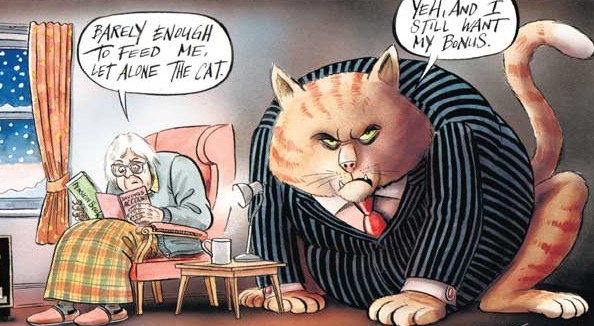
The European Court of Justice found that the rule the limits bankers bonuses to 100 percent of their salaries, or 200 percent if shareholders approve is valid.

Chancellor George Osborne said he had recognised the challenge was “now unlikely to succeed”.  The Treasury had argued that the cap would drive talent out of Europe and inflate basic pay, making it harder for banks to trim costs in lean years.

“I’m not going to spend taxpayers’ money on a legal challenge now unlikely to succeed,” Mr Osborne said.

But he added: “The fact remains these are badly designed rules that are pushing up bankers’ pay not reducing it. These rules may be legal but they are entirely self-defeating, so we need to find another way to end rewards for failure in our banks.”

The cap on the ratio is designed to reduce incentives for bankers to take excessive risks, but critics say it will push up basic pay and banks’ costs.

Mr Osborne also wrote a letter to Bank of England governor Mark Carney, in which he said that although the Treasury was abandoning its challenge, it “should not stop us from pursuing our objective of ensuring a system of remuneration that encourages responsibility instead of undermining it”.

“Ensuring that firms incentivise employees to behave in the right way is essential to restoring public trust in financial markets,” he added.

Mr Carney had himself voiced concerns about the EU measure, saying it had the “undesirable side-effect of limiting the scope for remuneration to be cut back”.

Bankers' Bonuses

Petrobras Arrests in Brazil

Police have arrested 18 in investigation of corruption at Petrobras, he state-owned oil company.  A former direvctor and several members of a constrution company and engineering companies that did business with Petrobras were arrested.

They had made deals to inflate the cost of contracts and divert monies to poitical parties including the Worker’s Party of President Dilma Rousseff.

In the US there are investigations into some securities of Petrobras that are traded in New York

Arrests of Petrobras Officials

One Tax?

Kaj Leers writes:  Amid the furor of a tax avoidance scandal, the new chairman of the European Commission has come out in favor of a pan-European corporate tax. With public anger over corporate tax avoidance increasing, the idea may at last have legs – in large part, ironically, thanks to the chairman’s former role.

Luxembourg was the linchpin for tax rulings – in some quarters known as “comfort letters” – that helped companies secure billions of dollars in tax savings. Having served for 25 years as Luxembourg’s prime minister and its finance minister, Jean-Claude Juncker’s fingerprints are all over this activity.

The Common Consolidated Corporate Tax Base plan is still a political non-starter: It faces profound political opposition by member states.

The European Union was created to prevent open conflict. Under the surface, though, economic wars between the member states rage on. Europe’s smaller countries in particular are constantly jostling for the attention of companies they hope will bring jobs.

A number of impressive tax avoidance schemes have brought public embarrassment to a number of governments. Companies such as Starbucks and Google, but also government-owned organisations such as the Dutch national railways company Nederlandse Spoorwegen, have made use of morally odious bilateral tax treaties and tax rulings. This while any civilian caught avoiding the tax man faces often faces harsh sentences and public persecution.

The origins of these tax schemes were benign: They were meant to draw jobs and investment. They became “Double Irish with a Dutch Sandwich.”

Public support for the fiscal arms race has rapidly waned since the onset of Europe’s financial crisis, and governments have started to ask companies who use arcane fiscal constructs to explain their actions.

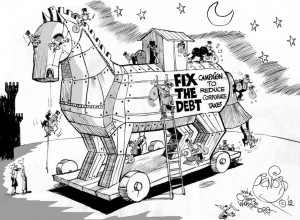
If national corporate taxes are scrapped and replaced by a uniform European tax rate, the very reason for the fiscal arms race ceases to exist. Politicians who have thus far said that countries should compete on the quality of education and infrastructure can finally put their money where their mouth is and dispense with the shady tax breaks.

 Is One Tax the Fix?