Should We Separate Manipulation of Money and Money in Banking?

American, Swiss and British bankers banded together to fine their countries banks $4.3 billion for manpulating benchmarks used in the trading of currencies.  More fines may be in the pipeline.

Unfortuantely for the citizens of these countries, the fines are only the cost of doing businesss for JPMorgan Chase, Citigroup and Bank of America.

How do we get banks to change their ways?  The US Fed is now talking about jailing rogue bankers.  But the entire system may be rogue.

Is it possible to divide the banking and investment function of nstitutions now called ‘banks.”    Can we return to banks that take in deposits which are insured, loan money to companies that are a reasonable risk and be satisfied with 10% earnings on depostied money?  The other piece of the business would be called ‘inestment banking’, and operate as far as possible from the needs of ordinary citizens.

Jail may no longer be enouogh, especially when the targets are mid level officers and not the people at the top who tolerate unreasonable risk.

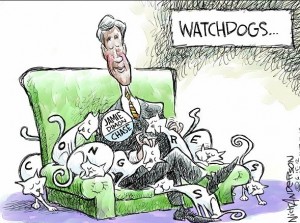
Jamie Dimon


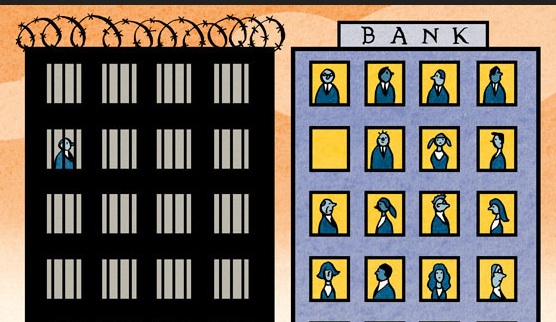
Bankers Jailed in Vietnam

Bankers in Vietnam are going from marble and plate glass to bars.  One banking tycoon is jaiined for tax evasion and illegal lending.

Stae-owned banks have made risky oans to state-owned enterprises.  Banks are often poorly managed and there is no oversight.  It is said that bankers take loans for bribes.

Moody’s estimated that 15% of al loans and investments made by Vietnam’s banks were “problem assets.”  Vietnam’s central bank reported 4.7%.

Eugene Tarzimanow of Moody’s sees the assets as a positiv step in cleaning the banks.

Bankers Jailed?

When Is Risk-Taking by Banks Criminal?

Mark Roe writes: At a closed-door conference attended by senior bankers, regulators, and some academics, Federal Reserve Governor Daniel Tarullo and Federal Reserve Bank of New York President William Dudley used their bully pulpit to do something unexpected. Instead of focusing on how to bolster bank stability – channeling more capital toward the largest institutions, curbing their riskiest activities, and determining how to manage a failing bank without bailing it out – the officials discussed the bankers themselves.

Tarullo focused on managerial misbehavior, arguing that managers who do not comply fully and willingly with regulations should face tougher sanctions than they do now. Instead of blaming “a few bad apples” for wrongdoing, he insisted, institutions should implement controls that prevent “bad apples” from poisoning the organization. To this end, organizations should embed respect for law, regulation, and the public trust in internal compensation systems.

Moreover, Tarullo cited criminal prosecution and imprisonment of individuals as the most effective way to deter illegal conduct, such as breaches of antitrust law. Of course, as he acknowledged, prosecuting an individual for such violations is difficult, because regulators lack criminal enforcement powers, evidentiary hurdles are high, and the circumstances are often uncertain. But regulators have not taken enough advantage of the authority that they do have to punish errant managers: they can ban these individuals from working in finance.

According to Tarullo, a few well-chosen “bans from banking” could change the financial industry for the better. He urged bank boards and senior executives to preempt such bans by firing highly problematic managers publicly, rather than sending them quietly out the back door. Public executions would deter the rest of the organization from bad behavior.

Dudley also placed the onus for change on senior bank managers. In discussing bank culture – a major topic of interest for him and the New York Fed – he encouraged senior bankers to align their organizations’ cultures with the public interest and regulatory parameters. Instead of viewing the law as a problem to manage and, if possible, evade, bankers should recognize and respect its vital importance (a point that Tarullo also made). In this sense, Dudley said, the banking industry “is not close to where it needs to be.”

Like Tarullo, Dudley stressed that violations should not be treated as isolated actions by deviant employees, but as evidence of failure by senior managers – from the boardroom to the executive suite – to orient bank culture properly. Violations should thus catalyze a concerted effort by senior managers to bring so-called rogue bankers under control and to infuse their organizations with an ethos of compliance and integrity. If they are unable to do so, Dudley argued, a reasonable conclusion would be that the organization is too big to manage.

For at least a few listeners, this statement probably evoked memories of the trader known as the “London Whale,” who lost at least $6 billion at JP Morgan Chase – America’s largest bank – in 2012. The bank’s risk-management team, reputedly the best in the world, failed to identify a rogue trader in their midst until it was too late.

The focus on individuals’ responsibility within banks represents a notable change in regulators’ approach, and it was reinforced by a third initiative, which other speakers emphasized: using deferred debt-based compensation to tie managers’ pay to bank safety and soundness.

Catalyzing a shift in bank culture will not be easy. Bankers know that assuming substantial amounts of low-probability, high-impact risk often benefits bank shareholders and bolsters their own bonuses. But, when things go wrong, the government picks up much of the bill – and the real economy suffers.

Complicating matters further is that risk-taking by banks – even at extreme levels – is not always unethical, rogue, or fraudulent. It often appears responsible and innovative. The problem with innovation is that no one can predict the precise impact it will have. In fact, the 2008-2009 financial crisis was more a consequence of error and misdirection than fraud and explicit misconduct by bankers.

Nonetheless, the kind of cultural and behavioral initiatives that Tarullo and Dudley proposed are worth pursuing. Indeed, aligning the financial interests of managers and senior bankers with regulators’ efforts to boost capital, reduce risk, and make bank failure a real possibility would go a long way toward making banks safer.

Bankers


To Regulate or Not, Those Are the Questions

What regulating the financial industry should and should not do in the US.  J Christopher GIancarlo, Commissioner of the Commodities Futures Trading Commission laid out six principles before the US Chamber of Commerce.  His full spech:  CFTC Commissioner Giancarlo’s Speech

Six Principles for Financial Market Regulation

Regulation must:

1. Not Restrain the U.S. Economy;

2. Not Threaten American Jobs;

3. Be Impartial and Balanced;

4. Be Competent;

5. Be Accountable; and

6. Not Create the Next Crisis

The question W-T-W Women and Finance keeps asking is how we divide the services of financial institutions.  Banks perhaps should be segregated out and function as despositories of other people’s money which is then invested in the community to yeild a reasonable profit (i.e., no one expects JP Morgan Chase’s 24%).  Institutions like Chase should not be called a bank.  They are investment institutions for high rolllers.  Their deposits are not insured.  Only ‘banks’ deposits will be insured.

Looking at banking and finance at the most fundamental level is critical for the development of regulations.  Perhaps the cowboys of finance should simply be allowed to invest as they wish as long as people who give them money realize the risk.

Investment Bank Calls a Gambling Hotline


Confidence in Juncker Faces Vote?

The motion, backed by 76 MEPs, including the UK Independence Party and the National Front in France, is unlikely to succeed.  It alleges Mr Juncker is unfit to hold office because of what it calls aggressive tax avoidance schemes in Luxembourg while he was PM there.

If the motion, which also has the support of the Five Star movement in Italy, did succeed, the Commission would have to resign.

It argues that EU member states have lost billions of euros of potential tax revenues because of tax avoidance schemes implemented in Luxembourg during the 18 years Mr Juncker was prime minister there.  Actually the US has lost a lot more money because of deals of which Juncker at the very least was knowledgeable.s.

UKIP MEP Steven Woolfe said: “This motion of censure means there must now be a debate on the behaviour of President Juncker and a vote to remove the entire European Commission.

Liberal Democrat MEP Catherine Bearder criticised UKIP leader Nigel Farage for joining the National Front, led by Marine Le Pen, in backing the motion.

Instead of this opportunist grandstanding, the EU needs a proper independent investigation into the allegations against Juncker and his possible involvement in tax evasion.”

Mr Juncker, who took over as head of the EU’s executive body at the start of November, has come under pressure over claims that some 340 global companies were granted deals to help them avoid tax during his 18 years in office, which ended last year.

Mr Juncker was Luxembourg’s finance minister before becoming its head of government in 1995. He has insisted all tax settlements reached under his leadership complied with national laws and international rules.

Speaking in Brussels last Wednesday, Mr Juncker said there was “nothing in my past indicating that my ambition was to organise tax evasion in Europe”

Luxembourg, Tax Haven?

Last Gasp for Financial Reforms Before Republicans Take Over?

In Washington all eyes wil be on the FederalReserve’s meeting notes for clues about a rise in interest rates.

Sen. Sherrod Brown (D-Ohio), chairman of the Senate Banking subcommittee on Financial Institutions and Consumer Protection, is scheduled to convene a hearing on Wall Street regulations.  The hearing will specifically spotlight a Sept. 26 report from NPR and ProPublica that raised questions about how the New York Federal Reserve Bank has regulated Wall Street.

That hearing will follow the U.S. Senate Permanent Subcommittee on Investigations’s Thursday plans to hold a hearing into how Wall Street banks have impacted the commodities markets. Chairman Carl Levin (D-Mich.) and Brown have been extremely critical about how big banks have stored physical commodities that some say has unfairly driven up costs.

The House Financial Services Committee will hold a hearingregarding how international regulatory standards affect the competitiveness of the U.S. insurance market. It will feature testimony from Thomas Sullivan, senior adviser for the Federal Reserve Board of Governors.

Mel Watt will testify before the Senate Banking Committee.  It will be one of the first times that Watt, a former Democratic lawmaker, will appear before Congress as the director of the Federal Housing Finance Agency since his turbulent confirmation process. Housing insiders will be watching for clues to see if anything comes up about whether the new Congress will tackle housing finance reform.

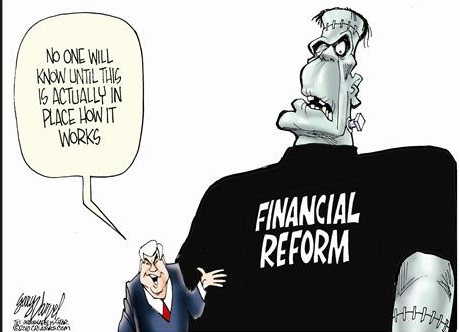
Financial Reforms?

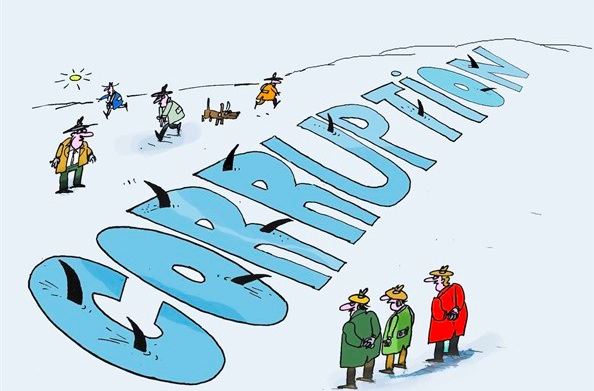
The Diaspora Votes Against Corruption in Romania

Leonid Bershisdky writes: Corruption and weak institutions are major reasons that East Europeans leave home to seek their fortunes. In developed countries, the public often sees them as economic emigres or even “benefits tourists” leeching off their hosts’ welfare systems. It would be more accurate, however, to see them as refugees from hopelessness. Had their motives for emigrating been purely economic, they wouldn’t be voting in such large numbers, and would have no interest in their home countries’ politics.

The way the emigres vote is telling. In the 2012 Russian presidential election, President Vladimir Putin lostt to billionaire Mikhail Prokhorov in France, Canada, Australia, the Czech Republic, Holland and Switzerland. In several other developed countries, Putin’s lead was narrower than in Russia. In the May 2014 Ukrainian presidential election, pro-Western billionaire Petro Poroshenko Ukrainian got 62.3 percent of the diaspora vote.

Corruption in Romania

Banking: Whose Head on the Block?

Mark Gilbert writes{  Regulators around the world are making good progress toward preventing future bank crises from hurting the global economy. Some of the new rules proposed for individual bankers, however, have more to do with revenge than safety. Unless the aim is to make life so difficult for the world of finance that the banks are forced to shrink — and, granted, that may be a desirable outcome — the proposals risk doing more harm than good.

Last week’s confirmation that foreign exchange traders conspired to rig currencies even as their banks were being fined for manipulating Libor is clear evidence that the finance industry hasn’t learned enough from the credit crisis. Vengeance, though, won’t help.

The Parliamentary Commission on Banking Standards, which has been at the forefront of the U.K.’s refurbishment efforts, issued a progress report on its June 2013 recommendations. One of its conclusions makes sense: Bonus payments should automatically end for the executives of any bank that needs a taxpayer bailout. All the work being done to make sure banks maintain adequate capital to avoid that outcome makes this bonus rule especially important.

But the report also says that regulations need to be changed to capture both the individuals who submitted false money-market rates in the Libor scandal and the traders who schemed to distort currency values. According to committee chairman Andrew Tyrie, banks to identify the people responsible for each risk-taking function. But it won’t work to try to extend accountability all the way down the food chain.

While it seems fair that any and all bank employees should be subject to rules designed to claw back bonus payments that turn out to have been unjustified, it’s still impossible to know in advance which new pocket of financial engineering might turn out to cause trouble. Tying the hands of individual traders, before it’s clear that their trades are unduly risky, just keeps them from doing their jobs.

If almost everyone within a financial institution is deemed responsible for risk-taking, then no one really carries the can. Designated supervisors should be held accountable for the departments they head, with the promise of sanctions up to and including criminal liability for bad things that might happen on their watch.

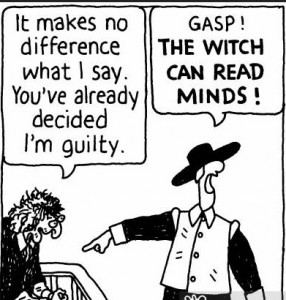
Witch Hunt?

Ukraine: Punishment Should Not Fit the Crime?

As nations have freed fhemselves from their tormentors, should they punish them or move on?  Hundreds of government employees in the Ukraine have been dismissed or banned from public service for ten years in a policy called ‘lustration,’ or cleansing.

Ukraine wants to distance itself from its past, join Europe and put Russia behind them. There is a baance to be struck between national reconciliation and retribution.  Laws should not cause further ruptures.  Iraq is an example of how wholesale justice without lenciency can sow the seeds fof future conflict.

A positive example is South Africa where people who told the truth were essentially forgiven.

Ukraine is correct to punish the irredeemable, but they must over compassion to those who admit their past transgressions.

Can Ukraine Fly?

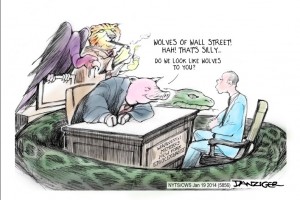
Whose Afraid of the Big Bad Wolves of Wall Street?

William Black, Associate Professor of Economics and Law, University of Missouri Kansas City.  The former Director of the Institute for Fraud Prevention now teaches Economics and Law at the University of Missouri, Kansas City. During the savings and loan crisis, it was Black who accused then-house speaker and five US Senators, including John Glenn  and John McCain of doing favors for the S&L’s in exchange for contributions and other perks. The senators got off with a slap on the wrist, but so enraged was one of those bankers like Charles Keating,- after whom the senate’s so-called “Keating Five” were named – he sent a memo that read, in part, ‘get Black – kill him dead.’ Metaphorically, of course. Of course

During the Savings and Loan crisis 1000 FBI agents were assigned to Savings and Loans crisis.  Currently there are fewer than one hundred FBI agents assigned to financial crimes and they only go after the little guys.  They are unwiling to investigate.  CEOs like Jamiie Dimon, who orchestrate Chase’s policy,  handles the investigation of charges. Jamie Dimon’s main priority is not to decrease his bonus.

The 2008 crisis has produced no criminal convictions.  Zero.  None of the eite bankers have been brought to justice.  Everyone has gotten out of jail free.  The SEC, the office of currency control, the FED, and other regulatory agencies simply have not moved against big banks.

Eric Holder, the Obama Attorney General  said  that the banks were too big to fail.  Some regulators said they were unable to sleep at ngiht for fear of hurting big bankers.  There has been a steady decine in prosecuting white collar crims.

After 9/11, national secuirty became the highest priority.  The best FBI agents were transferred out of white collar crime.  We have two FBI agents per industry that investigated white collar crimes.  Banks don’t make criminal accusations against their CEOs.  Cirminal referrals have ceased.  Whistleblowers whistle infrequently.  There is no system for prosecuting frauds.  And we are getting near the statute of limiitations on this crime.

People who work for Justice and the SEC are afraid because the criminals are so big and regulators need the revolving door and their future with the criminals.  Looting the underowrld of banking.

Jim Webb, who served as Senator from Virginia for one-term, is contemplating a run for the presidency.  Webb led an effort in the Senate to tax windfall profits of executives who had benefited from TARP.   He was told off the record by a Wall Street executive, “You have to punish these guys.  It is outrageous what they did.”   Webb could find support neither from Democrats or Republicans in the US.  As Senator Durbin of Illinois says, “The bankers own us (the Senate.)”

 Wolves of Wall Street?