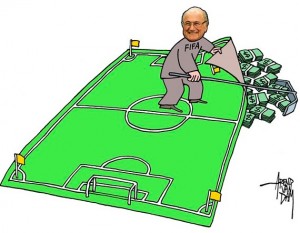
FIFA Keeps Fiefdom for Now

As expected, the tournament will still take place in Russia in 2018 and Qatar in 2022, after the 18-month investigation found insufficient evidence of corruption.

Garcia, a former U.,S. attorney, immediately fired back, accusing Eckert of whitewashing his original 430-page report and reporting him to FIFA’s appeals committee. “Today’s decision by the Chairman of the Adjudicatory Chamber contains numerous materially incomplete and erroneous representations of the facts and conclusions detailed in the Investigatory Chamber’s report,” Garcia said.

There’s lots to take issue with here, from the lack of cooperation from several Qatari officials, to Russia’s claim that destroying all records of the bidding process was standard operating procedure and not a cover-up. But the biggest problem remains the complete lack of independent oversight of one of the largest governing bodies in sports, tasked with investigating itself while having little motivation for transparency or the truth.

FIFA is also too big for its own good. Dozens of corruption scandals in the past decade have done little to ebb the endless profits that come from running the most popular sport in the world. FIFA made $2 billion in profit from this year’s World Cup in Brazil. And this in spite of endless protests by the local poor who would see not one cent of that money, and the “slave-like” conditions faced by the migrant workers who built the stadiums.

It will only get worse come 2022. In March, the International Trade Union Confederation estimated that 1,200 migrant workers had already died in Qatar. That number is expected to rise to 4,000 by the time the World Cup comes to Doha. Qatar has pledged numerous times to fix its problem with worker exploitation, most recently in an unenlightening interview with the Associated Press earlier this week. But report by Amnesty International released Wednesday demonstrated heavy foot-dragging by the Qatari government, stating that while some reforms have been proposed, most of them have yet to be implemented and offer solutions that are ancillary at best. “Time is running out fast,” the report states. “The legacy of the FIFA 2022 World Cup would be the hundreds of thousands of workers who were exploited to make it happen.”

While boycotts seem unlikely, foreign governments are remaining watchful of FIFA’s affairs. Unsatisfied with the ethics committee’s decision, the FBI will continue its own three-year investigation of FIFA. Meanwhile, a British MP has asked the UK’s Serious Fraud Office to look into the matter as well.

Supporters of Russia and Qatar will no doubt cry foul, accusing these governments of bias and sour grapes for losing their own bids.
FIFA Corrupt?

Push to Legalize Sports Gambling in the US

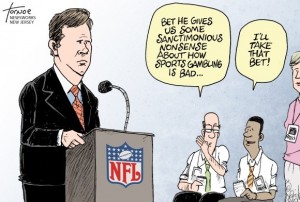
The Commissioner of the National Basketball Association is asking Congress to legalize sports betting.  Commissioner Adam Silver’s call to legalize sports betting faces a difficult path forward in Congress, where previous attempts to expand gambling allowances have stalled in recent years.
Legalizing sports betting would only feed the “obsessive compulsive” behavior of some fans, Rep. Glenn Thompson (R-Penn.) said Friday.  “I don’t think ever expanding gambling is a good thing,” said Thompson, who was a high school wrestler.  “You see ruined lives and ruined families.”

Rep. Phil Roe (R-Tenn.) expressed similar concerns about any effort to legalize sports gambling. While Roe doesn’t have a problem with a “little friendly bet,” he said organized gambling “is just encouraging bad behavior.”

But Silver and gambling proponents say regulating sports betting would shed some light on an estimated $400 billion in illegal sports bets placed each year.  “There is an obvious appetite among sports fans for a safe and legal way to wager on professional sporting events,” Silver wrote.

But some hiighly placed people in the professional sports world point out that the result may be fans cheering for a spread and not their team.

Along with the NBA, the NFL, and other professional sports leagues have traditionally opposed sports gambling.  Silver argues that regulating gambling could ensure bets are monitored to prevent games from being fixed and require bookies to be licensed so they don’t scam gamblers.

The current illegal sports gambling business in the US  is estimated at $400 billion a year.  Despite legal restrictions, sports betting is widespread,  It is a thriving underground business that operates free from regulation or oversight.

The American Gaming Association, which represents the casino industry, quickly jumped into the mix, pledging to work with the NBA on regulations the group says could help thwart illegal gambling.

Still, Republicans have proven to be a tough sell in recent years, attacking efforts to expand online gambling.  Sen. Lindsey Graham (R-S.C.) and Rep. Jason Chaffetz (R-Utah) introduced legislation in March to ban most forms of online gambling.

Their bill would rollback a decision by the Department of Justice in 2011 to allow online gambling, except sports betting, which is still banned. Graham, along with Sens. Kelly Ayotte (R-N.H.) and Dianne Feinstein (D-Calif.), wrote a letter to the Justice Department in July asking the agency to reinstate the online gambling ban.

“We must act before we find virtual casinos making gambling pervasive in our society, invading living rooms, bedrooms, and dorm rooms across the country; a result we know the DOJ does not want to see,” they wrote.

Efforts to expand legalized gambling have gained more traction in the states, where both Democratic and Republican governors have shown support for initiatives that represent a potential boon in tax revenue.

Sports Gambling in the US

Is the US Going to Waive Hello to Credit Suisse?

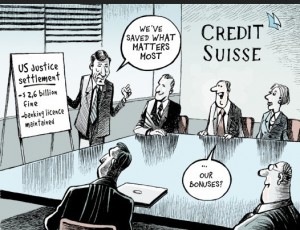
The Labor Department announced it would hold a public hearing in January to review whether Credit Suisse should be granted a waiver to continue overseeing many pension funds and individual retirement accounts. The agency gave the bank a temporary exemption to continue doing such work while the review continued to “avert possible disruptions in retirement plan investments.”

The Labor Department also announced that it had proposed a waiver for Credit Suisse, but that no decisions would be finalized until after the public has had its say at the Jan. 15 hearing.

After intense scrutiny from some lawmakers, Credit Suisse pleased guilty in May to helping U.S. citizens evade taxes, making it the largest bank in the last two decades to do so.

Credit Suisse on Waivers

Eike Batista Plans to Get Out of Jail Lustful

Eike Batista, the Brazilian oil tycoon due to go on trial next week over insider … attempting to stage a comeback by investing in a South Korean pharmaceutical … Mr Batista’s EBX group signed a joint venture with the Seoul-based company … If impotence medication and dog cloning prove to be successful …

Mr Batista’s EBX group signed a joint venture with the Seoul-based company C. L. Pharm this year in a ‘development agreement’ worth $12m, according to the South Korean group’s website.

Investors around the world are still reeling from the collapse of Mr Batista’s oil and mining empire last year and the bankruptcy of its prized oil company OGX in October, which triggered Latin America’s largest-ever corporate default.

If found guilty, Mr Batista could be the first person in the Latin American country to go to jail for capital markets crimes. Mr Batista has denied any wrongdoing.

Mr Batista began negotiating with C. L. Pharm when he travelled to South Korea in April this year and has paid $1m just for the rights to set up a factory in his home country, according to a book due to be released on Friday about the tycoon titled ‘All or Nothing’ by Brazilian journalist Malu Gaspar.

Mr Batista is also said to have held business meetings with Hwang Woo-suk, a South Korean scientist who is looking to make his own comeback by setting up a dog cloning laboratory in Brazil, according to the book. After making the world’s first cloned dog Snuppy in 2005, Mr Woo-suk was accused of faking research on human stem cell cloning. Mr Woo-suk could not be reached for comment.

This week, EBX said Mr Batista also signed an agreement with Swiss property investor Acron to resume the joint development of Rio’s landmark Gloria Hotel.

Mr Batista had initially hoped to set up an infrastructure fund after the collapse of his commodities empire last year, according to Ms Gaspar’s publication. However, after reportedly receiving little interest from investors, especially in New York, he turned his focus to healthcare and technology opportunities in Asia.

If impotence medication and dog cloning prove to be successful businesses for Mr Batista, it would be the third time the entrepreneur has managed to reinvent himself.

Get Out of Jail Lustful

Petrobras Implicated in Money Laundering

Brazil’s state-run oil firm, Petrobras delayed releasing its earnings results amid a police investigation into corruption that has already ensnared a former senior executive.

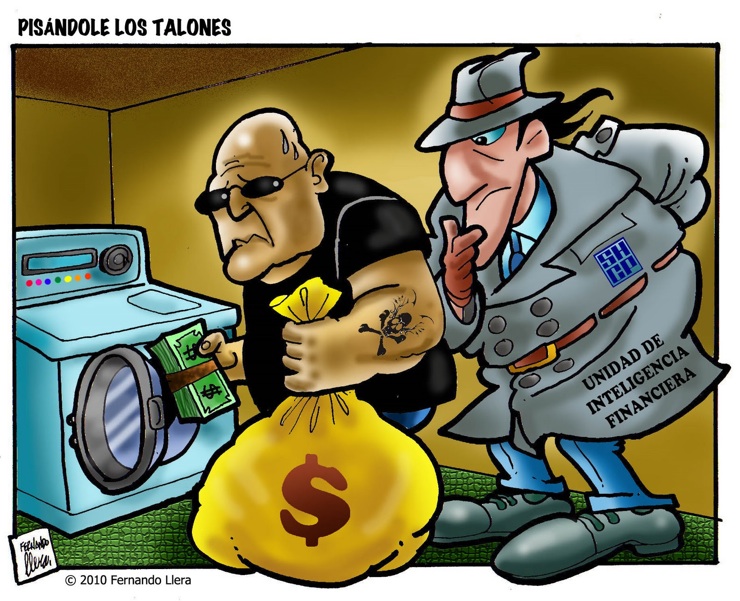
Police arrested 18 people suspected of involvement in a money laundering and bribery scheme centered on Petrobras. They raided Brazilian construction and engineering companies and seized potentially incriminating documents.

Investors are concerned the postponed publication of audited results for the third quarter puts the world’s most indebted oil company at risk of a technical default on tens of billions of dollars in bonds.

Analysts warned that the investigation and postponed earnings statement could result in the company being stripped of its investment grade by ratings agencies and prompt it to write down fixed assets.

Petrobras shares opened over an hour and a half after the rest of the Bovespa index with the chief executive of the bourse, Edemir Pinto, saying at an event in Sao Paulo the delay was to ensure time for the market to digest the news.

A note from Credit Suisse Securities said Petrobras may be barred from accessing bond markets in the United States. The note estimated Petrobras might need to borrow as much as $20 billion from bond investors to finance projects next year.

The price on Petrobras’ global bond due in 2024 tumbled to 100.75 cents on the dollar early on Friday, compared with 104.5 cents the prior session, amid concerns of a default.

Authorities deployed 300 police officers and 60 tax fraud agents in five states and the capital district. The probe, known as “Operation Car Wash,” was first launched in March as police investigated the alleged money laundering scheme.

The continuing fallout of the scandal has put pressure on leftist President Dilma Rousseff, who won a narrow re-election last month.

A former Petrobras executive previously jailed in the case has said in a plea bargain deal that kickbacks from contracts were funneled to Rousseff’s Worker’s Party and its allies in Congress.

At a news conference, the police said seven companies that had contracts worth billions of dollars with Petroleo Brasileiro SA, as the company is formally known, were being searched.

Odebrecht, a large private Brazilian construction firm, said in a statement its offices in Rio de Janeiro had been searched.

Money Laundering


US Taxpayer Aid to Warren Buffett and Carlos Slim?

The United States Export-Import Bank is the official export credit agency of the United States. Ex-Im Bank’s mission is to assist in financing the export of U.S. goods and services to international markets.

Ex-Im Bank enables U.S. companies — large and small — to turn export opportunities into real sales that help to maintain and create U.S. jobs and contribute to a stronger national economy.

However, the bank’s mission is to assist companies realize export opportunities and a recent study suggests that it has been aiding companies like those owned by Warren Buffett and Mexco’s Carlos Slim who don’t need tqxpayer help.

What Reuters has uncovered needs further analysis to see whether these smaller companies under larger umbrellas may be deserving.

The Bank says:  “Ex-Im Bank provides working capital guarantees (pre-export financing); export credit insurance; and loan guarantees and direct loans (buyer financing). No transaction is too large or too small. On average, more than 85% of our transactions directly benefit U.S. small businesses.

With 80 years of experience, Ex-Im Bank has supported more than $567 billion of U.S. exports, primarily to developing markets worldwide.”

Buffett


Lawsky to Leave NYS Department of Financial Regulation

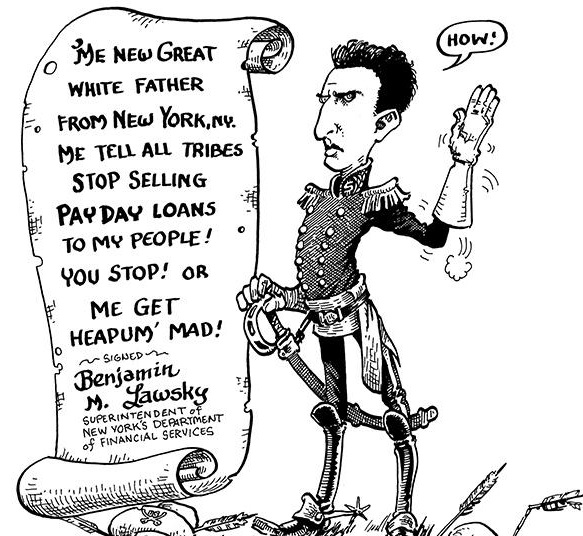
Lawsky was a tiger in his job.  Reports on his departure talk about is interest in the Bitcoin and bringing it into the monetary system.  He came to know many people prominrent in the Bitcoin community.

But more than virtual currency, Lawsky fought Payday Loans,  He was also a spokeman for ‘No Banker Too Big to Jail.”  He irritated NY State Attorney General Eriic Schneiderman, who he also got to be more active in looking into banking activities.  Lawsky had shamed him by speaking out.

One wonder why this brave soul is leavaing before his work is done.  Maybe no one wants him to do his work.

Lawsky


Smuggling Costs Tunisia

Smuggling has become a serious problem in Tunisia.  It is almost impossible to monitor Sahel, its surfae, the desert terrain, and the need for several countries to corrdinate.

Rising prices and the hgih cost of living drive Tunisians to buy smuggled televisions, food products, cigaretes and even gas.  The losses to the state are about $650 mllion, and to customs about $270 million.  The turnver of parallel trade is baout $970 million, or half the trade with Libya.

On the border, “knatreya” or smuggling lords live in palaces as they fiercely control their trade.  Stakeholders know what is going on, and express a willingness to control this traffic and yet nothing happens.  Why does no one act?  The equivalent of the entire Health Department’s annual budget is on the line.

Tunisian Borders

Corruption in Iran

Sooner rather than later, Iran will open up to the Western worlld.  The following reports on economic problems in the country  that particulary impact women and children.

If Iranian President Hassan Rouhani were to battle poverty as he said he would, he must address the corruption that resulted from efforts to evade sanctions.

The Statistical Center of Iran released a report last month showing the average expediture for an  urban household is about 10,925,000 rials ($336), much lower than 25 million rials ($780) estimated by independent economists..

Thirty-six years after the “anti-capitalist” revolution, Islamic leaders have failed to ensure the fair distribution of wealth and equality of opportunity. In Iran, 7 million people now live in absolute poverty and their food security is at risk. At the other end, 5 million are superich with wealth comparable to that of the richest Americans, as Labor Minister Ali Rabiee has put it.

Fighting poverty has been a focal point for President Hassan Rouhani since he took office last summer. In his Oct. 22 speech in the northwestern city of Zanjan, the president reiterated there was “no evil worse than unemployment and poverty.”

Officials predict that unemployment will become a major issue in a few years when about 4 million unskilled university graduates join the 4 million unemployed.  According to the latest data available, in the last fiscal year, almost one-fourth (24%) of Iranian households did not have even one employed member. The figure was 10% back in 1992-93, indicating that many families have lost a reliable income source since 21 years ago.

In the past year, measures taken by Rouhani’s economic team have helped curb inflation and end two years of negative growth, but observers believe the moderate president will face grave challenges in reducing poverty as the lucrative parts of the economy are mainly controlled by either the government or semi-private entities that have close links with power circles.

So far, Rouhani has adopted a three-part policy to assist the most vulnerable population in the short run, earn the trust of the private sector in the middle term and achieve sustainable economic development in the long run, with each requiring a separate strategy.   Iranian Economy

Lining Up for Food Supplies in Teheran


Why Did Obama Nominate Loretta Lynch to the Post of US AG?

The Attorney General in Waiting for Senate confirmation has treated big banks with kid gloves in the past. As a lawyer, her clinets were often white collar criminals from the financial industry.  She was involved in LIBOR, many issues involving subprime mortgages and also security ratings agencies.

Lynch basically got her first six years of white collar criminal defense experience working at the firm that is currently responsible for keeping the bankers behind the great subprime mortgage grift out of jail. The firm is also defending the financial institutions that jacked up interest rates on everything from student loans to home loans out of greedy self-interest. They even defended the agencies that knowingly rated worthless mortgage-backed securities as AAA, setting up millions to lose their retirement savings in a snap.

After six years of exemplary work at this law firm, Lynch walked through the revolving door to the U.S. Attorney’s office in the Eastern district of New York, which plays a major part in investigating financial crimes.   She was chief of the office’s Long Island division by 1998, and was tapped as U.S. Attorney by June of 1999, where she remained until 2001. Then, Lynch walked back through the revolving door to return to defending white collar criminals.

From 2003 to 2005, Lynch sat on the board of the New York Federal Reserve, working directly under future US Treasury secretary Geithner.

Unless some unforesenn issue arises, Lynch will survive her senate confirmation hearing. Senator Dick Durbin once referred to his chamber as overly subservient to the big banks, saying,  “They own the place.”  It is well to remember that Hillary Cinton, the presumptive democratic Presidential nominee got to know the same bankers in her husband’s administration that have continued in the Obama administration, are connected to Lynch and of course Mrs.Clinton’s favoirte Wall Street bank, Goldman Sachs.

Banks