Too Big To Fail Means Too Big to Jail

The Attorney General of New York State remarked:  “I am concerned that the size of some of these institutions becomes so large that it does become difficult for us to prosecute them when we are hit with indications that if you do prosecute, if you do bring a criminal charge, it will have a negative impact on the national economy, perhaps even the world economy. And I think that is a function of the fact that some of these institutions have become too large. Again, I’m not talking about HSBC; this is just a more general comment. I think it has an inhibiting influence—impact on our ability to bring resolutions that I think would be more appropriate.

What were the banks doing?  Mortgage lenders  would go out into neighborhoods, and during this boom period, they were giving mortgages to anybody and everybody with a pulse, essentially. They were especially low-income neighborhoods. They were offering these very advantageous loans to people, whether they could afford the houses or not. They were buying huge masses of these loans.  They were called like “liar’s loans,” or stated income where no one even checked whether the person had the income to actually pay it off.

Investigative journalist Matt Taibbi writes: Tthese settlements, they always come up with a big number, but the number is always actually—when you actually look at the accounting, it turns out to be smaller than they announce. In the case of the Chase settlement, the number they announced was $13 billion. But there’s a couple of really important factors here. One is that $7 billion of that—it’s $7 billion, right?—was tax-deductible, which means that all of us, American citizens, anybody who pays taxes, actually picked up the check for about $2.4 billion worth of the settlement. So we paid part of that settlement, which is crazy. I mean, the ordinary person, if we get a speeding ticket, we can’t deduct that when we go to pay our taxes. But these people cratered the world economy, and they get to write a tax deduction for it.

Bankers who condcut business this way are careful not to do anything illegal, although their activities are often immoral, unethical and wrong.

In most developed countries there are laws on the books which prevent bankers from conducting fradulent business.  These laws are often not enforced.  If we are goiing to clean up corrupt business practices of banks, we must enforce the laws on the books.   Banks have to be treated as a special form of business.  They deal in other people’s money and be watched like hawks by public officals and citizens alike.
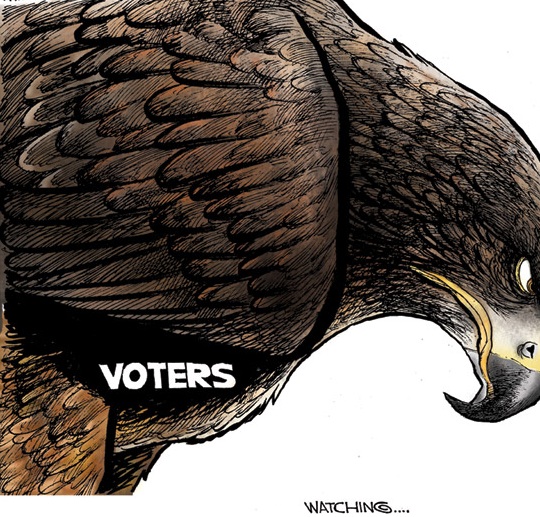
Watching Bankers


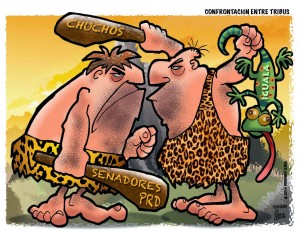
Mexico Retreats

No Free Lunch. Eat Bitcoins.

Matt Levine writes, capturing the fundamental spirit of investment and financier:  Trendon Shavers, alias “pirateat40,”1 ran a bitcoin fund called “Bitcoin Savings and Trust.” BCS&T was apparently a Ponzi scheme. We knew that; the Securities and Exchange Commission brought a civil case against him last year, which resulted in a $40 million judgment. But other people knew it before the SEC did. Individual-2, for instance, had a pretty good idea:

In or about early July 2012, SHAVERS and another participant on the Bitcoin Forum (“Individual-2”) made a bet as to whether BCS&T was a Ponzi scheme. Specifically, Individual-2 alleged that SHAVERS was operating BCS&T as a Ponzi scheme. SHAVERS denied that allegation and placed a bet with Individual-2 that BCS&T was not a Ponzi scheme.

That actually happened! They found another person (Individual-1) to serve as escrow agent, they each escrowed 5,000 bitcoins with him, they specified the terms of the bet (if Shavers failed to meet a withdrawal request within 14 days, he would be deemed to be running a Ponzi), and the bet paid off less than two months later. This is how the bitcoin legal system operated:

On or about August 30, 2012, Individual-1 declared Individual-2 the winner of the bet, and wrote:

I hereby declare the bet decided, in favor of [Individual-2] . A withdrawal request made on August 15[,] 2012, is still outstanding as of today, Aug[ust] 30[,] 2012, which triggers default as specified in the contract, via “late by at least 14 calendar days, in disbursing either any regularly-scheduled interest payment, or any withdrawal request, by a valid account holder of [BCS&T]” clause.

In private communication, pirateat40 [i.e., SHAVERS] has agreed with this assessment and conceded the bet.

The appeal of bitcoin is that it doesn’t require trust in people or institutions. You don’t have to believe that people are honest, or that governments will keep them honest. You can just exchange bitcoins with them and trust in the cryptography.

That works great for giving people bitcoins in exchange for drugs or whatever. It works less great for investment management: If you give money to someone to invest for you, and want to get it back, you have to either trust her to give it back or have some enforcement mechanism to make her give it back. In that bet, you can see the bitcoin forum groping toward a bitcoiny solution to that problem, with the carefully specified bet and the escrow agent. It’s not quite pure cryptography,2 but it is a very bitcoiny and libertarian and charming gesture at private regulation.

It did not especially work, though, insofar as Shavers took the bet and nonetheless continued to operate what sure looks like a Ponzi.

The actual pitch was completely impenetrable, just some mumbo-jumbo about bitcoin arbitrage and lending.5 And, similarly, when Shavers shut down his scheme in August 2012, he explained it impenetrably:

The decision was based on the general size and overall time required to manage the transactions. As the fund grew there were larger and larger coin movements which put strain on my reserve accounts and ultimately caused delays on withdraws and the inability to fund orders within my system. On the 14th I made a final attempt to relieve pressure off the system by reducing the rates I offered for deposits. In a perfect world this would allow me to hold more coins in reserve outside the system/ but instead it only exponentially increased the amount of withdrawals overnight causing mass panic from many of my lenders.

c. BCS&T was allegedly primarily in the business of lending Bitcoin to “various investors or lenders” for a fixed period of time. A small percentage (about 10%) was used by SHAVERS to “buy[] and sell[] [B] itcoin [] locally.”

…

g. In or about July 2012, SHAVERS lent about 202,000 Bitcoin to a borrower he identified as “The Big One” and those 202,000 Bitcoin were never returned. SHAVERS has no record or proof that he (SHAVERS) made this loan to “The Big One,” nor does SHAVERS know who “The Big One” is.

h. In or about August 2012, SHAVERS shut down BCS&T, redeemed recent investors, and kept some investor Bitcoin in order “to be able to trade so [he] could make [Bit]coin[] to pay them back.”

700,000 bitcoins were worth around $6.4 million; at the time Shavers shut down BCS&T, they were worth around $9.5 million.     When the SEC got its judgment, they were worth $280 million, though the court went easy on him and only required him to pay $40 million.10 Now they’re worth around $240 million.

  • Don’t do anything with people you meet on Internet forums!
  • Don’t go on Internet forums!
  • Don’t go on the Internet!

Bitcoin Ponzi Scheme

US Probes Putin Allies for Money Laundering

Prosecutors in the Eastern District of NY are investigating members of Putin’s inner circle for  money-laundering.   Did billionaire Russian gas trader and Putin associate Gennady Timchenko transfer funds related to allegedly corrupt deals in Russia through the U.S. financial system? The Justice Department is helping the investigation.

The prosecutors are investigating transactions in which Gunvor Group, a commodities firm founded by Timchenko, bought oil from Russia’s Rosneft and sold it to third parties.

The report said the transactions predated U.S. sanctions against Russia introduced in March on Timchenko and others over the Ukraine crisis. Timchenko is also co-owner of Russia’s No. 2 gas producer Novatek.

Transfers of funds related to the transactions could constitute illegal money laundering if the funds were found to have originated from illicit activity such as, for example, irregular sales of state assets such as oil, the newspaper said.

The newspaper cited one source as saying the probe was also examining whether any of Putin’s personal wealth was connected to allegedly illicit funds.

The U.S. Treasury has said Putin has investments in Gunvor and may have access to Gunvor’s funds. Both the company and the Kremlin have strenuously denied those allegations.

“When it comes to President Putin, he does not and never has had any ownership, beneficial or otherwise in Gunvor. He is not a beneficiary of Gunvor or its activities, directly or indirectly,” Gunvor said.

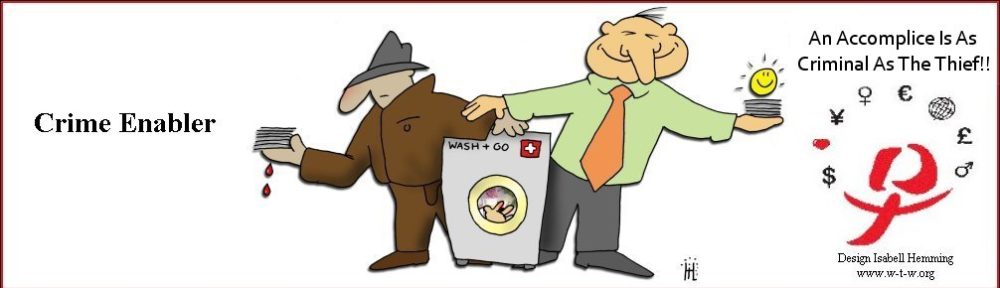
money laundering

Is the US Government’s Investigation of Foreign Banks a Diversionary Tactic?

US regulators are re-upping their case against Standard Chartered, a British bank.  They are doing this under US domestic laws which forbid trading with Iran.   These laws do not apply to foreign banks, so the case is a false one.  Nonetheless, shares in the bank fell precipitously when the US announced its new investigation.

British politica leaders have refused to get involved.  Some think that the bank has no choice but to move back to Shanghai where it began in 1858.

US regulators will not touch a US banker like Jamie Dimon, who until recently was the President’s personal banker among his many roles.  They are trying to defend themselves to US citizens cangry at banks by attacking foreign banks like Credit Suisse and Deutsche Bank.  Meanwhile Bank of America, JP Morgan Chase and Citibank are sailing through with no criminal charges lodged against them.  Fines which seem huge to ordinary citizens are just the cost of doing business for big banks.

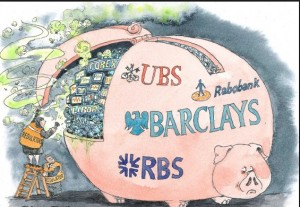
Fining Big Banks

Israel Arrests 14 for Tax Evasion

Steven Scheer writes:   Israel arrested 14 people, including a senior UBS investment adviser, as part of an investigation into Israelis allegedly holding undisclosed bank accounts with UBS worth hundreds of millions of euros, the Tax Authority said on Wednesday.  All 14 had been released on bail soon after their arrests.
In addition to the unnamed senior investment adviser at UBS who was arrested in June in Tel Aviv, 12 Israelis with accounts at UBS had also been arrested, including two suspects who own a chain of health clinics abroad, said the tax authority. An accountant for the clinics was also arrested.  An Israeli court allowed publication of the arrests and allegations following a petition by an Israeli newspaper. The court is considering whether to release the names of those arrested.
Israel is starting to crack down on foreign bank accounts held by its citizens after a similar move by the United States to track accounts held by Americans abroad.  The tax authority said it had carried out a long investigation into accounts held by Israelis in Swiss banks and received information that thousands of Israelis maintain accounts in Switzerland, worth hundreds of millions of euros.

The authority said that the UBS adviser had arrived in Israel the day before he was arrested. He had met Israeli clients at a luxury hotel in Tel Aviv the following day.
“The meetings were held under secret surveillance of tax authority investigators,” it said. “At the end of the meeting …all the participants were arrested.”
Searches were subsequently made in the hotel room of the UBS adviser, UBS’s office in Israel and in other locations.  Among the adviser’s possessions, investigators found lists of hundreds of Israelis with unreported bank accounts in Switzerland, the authority said, adding that he is accused of helping clients intentionally and deliberately avoid reporting and paying taxes.
It said the adviser — directly responsible for dealing with the accounts — would visit Israel for secret meetings with clients who did not want to send instructions and documents to the bank by phone, mail or fax to avoid revealing that they held Swiss bank accounts.
Leumi, Israel’s second largest bank, last week said a settlement with U.S. authorities over possible tax evasion by the bank’s American clients could be far higher than previously estimated.
The total penalty could reach as much as $600 million, based on Leumi’s previous estimate as well as a settlement offer from New York State’s financial regulator.

Arrests

The Kremlin’s Cleanest Hands?

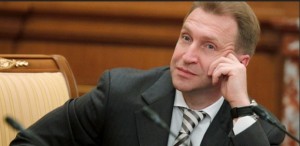
Michael weiss writes;  Igor Schualov, Moscow’s first deputy prime minister, is worth 250 million dollars.   Called Mr. Clean, where di he get his money?

Shuvalov used offshore companies to purchase close to $2 million in building materials from a Belgian contractor in order to outfit a lavish greenhouse for his 18.5-acre estate just outside Moscow. The company, Glas & Metaal Engineering, which filed for bankruptcy in June 2011 and no longer exists, was based in the municipality of Menen, Belgium. It was contracted in February 2006 to sell “glass-panels and the support-structures in stainless steel, and aluminium outside cleaning-gantry” for the glazed dome and walls for the “Wintergarden” on Shuvalov’s sprawling estate in Zarechye village in the Odintsovo district of Moscow, the buildings of which were designed by Italian architect Giuliano Moretti.

The land of Zarechye-4, Shuvalov’s property, formerly belonged to members of the Soviet Politburo, including hard-line communist ideologist Mikhail Suslov, for the purpose of hosting VIPs. Shuvalov’s neighbors include billionaire oligarchs Roman Abramovich and Suleyman Kerimov, with whom Shuvalov has profited enormously in financial dealings uncovered in 2011 and 2012.

Shuvalov was meant to be different. A reputed liberal in the Kremlin, once considered Russia’s business-friendly “sherpa” to the G-8, Davos, and the World Trade Organization, Shuvalov has long been thought of as an agreeable counterpoint to the hard-line siloviki, or strongmen, a faction that now seems dominant in the Kremlin. In congratulating the formation of the new Russian government after Putin’s return to the presidency in May 2012, the influential U.S.-Russia Business Council named Shuvalov first as an “[advocate] for improving the business climate and strengthening the U.S.-Russia bilateral commercial relationship.”

Shuvalov’s role has been to put a more respectable face on international Russian commerce, a face never more urgently needed than it is now.  Corruption in Control in Russia

Shuvalov

SEC Fines Bio-Red Laboratories for Bribery

An SEC investigation found that Bio-Rad Laboratories lacked sufficient internal controls to prevent or detect approximately $7.5 million in bribes that were paid during a five-year period and improperly recorded in books and records as legitimate expenses like commissions, advertising, and training fees. The improper payments enabled Bio-Rad to earn $35 million in illicit profits.Bio-Rad, which self-reported its misconduct and extensively cooperated during the investigation, agreed to pay $55 million to settle the SEC’s charges and a parallel action announced today by the U.S. Department of Justice. Said Andrew J. Ceresney, Director of the SEC’s Division of Enforcement:

Bio-Rad Laboratories failed to detect a bribery scheme and did not properly address red flags that such a scheme was underway. This enforcement action, which reflects credit for Bio-Rad’s cooperation in our investigation, reiterates the importance of all companies ensuring they have the proper internal controls to prevent FCPA violations.

According to the SEC’s order instituting settled administrative proceedings, Bio-Rad made excessive payments disguised as commissions to foreign agents with phony Moscow addresses and off-shore bank accounts. The agents had no employees and no capacity to perform the purported services for Bio-Rad, and were retained primarily to influence Russia’s Ministry of Health and help the company win bids for government contracts. Bio-Rad managers repeatedly ignored various red flags indicating that the Russian agents were likely bribing government officials, and they condoned an atmosphere of secrecy. Country managers were allowed to communicate through at least 10 different personal e-mail addresses with aliases, and referred to the commissions with code words such as “bad debts.”

According to the SEC’s order, Bio-Rad employees used local intermediaries in Vietnam and Thailand to funnel bribes through to foreign officials in exchange for business. Bio-Rad’s Singapore subsidiary sold products at a deep discount to Vietnamese distributors, who passed through a portion of it as bribes. Bio-Rad acquired a company in Thailand and failed to uncover a pre-existing bribery scheme in which Thai agents received inflated commissions that were partially used for improper payments.

The SEC’s order finds that Bio-Rad, headquartered in Hercules, Calif., violated the anti-bribery, internal controls, and books and records provisions of the Securities Exchange Act of 1934. The company agreed to pay $40.7 million in disgorgement and prejudgment interest to the SEC, and a $14.35 million criminal fine to the Department of Justice. The company also must report its FCPA compliance efforts to the SEC for a period of two years.

The SEC’s investigation was conducted by FCPA Unit members Catherine W. Brilliant and Alka N. Patel in the Los Angeles office. The SEC appreciates the assistance of the Fraud Section of the Criminal Division at the Department of Justice as well as the Federal Bureau of Investigation, Bank of Lithuania, Financial and Capital Market Commission of Latvia, and British Virgin Islands Financial Services Commission.

When governments put their mind to it, coruption can be stopped.

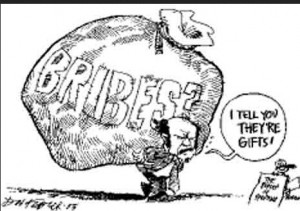
Bribes


AIG Against the US

Lawyer David Boies has a shot at an upset win in the trial of Maurice “Hank” Greenberg’s $25 billion bailout case against the U.S. government, a turnaround from the weak odds he was given just a month ago.

Boies, representing Greenberg and other AIG shareholders, has had a series of evidentiary rulings go his way since the trial began Sept. 29 in Washington.

Beyond the money at stake, Justice Department lawyers are also fighting to prevent a verdict that the Federal Reserve acted illegally by charging a high interest rate and demanding equity as a condition for the loan. Such a ruling could limit the tools available to the government in a future economic crisis.

In their defense, the three top designers of the bailout, former Treasury Secretary Henry Paulson, ex-Federal Reserve Chairman Ben Bernanke and Timothy Geithner, the former Treasury secretary who was president of the Federal Reserve Bank of New York in 2008, all testified that the U.S. rescued AIG to avert the catastrophic damage that would have occurred if the insurer went bankrupt.

The heart of Starr’s argument is that however noble the government’s aims, it used power it didn’t have to take over AIG and further harmed shareholders by failing to pay just compensation.

As an example of how shareholders’ due process rights were violated, Boies highlighted the more favorable treatment troubled investment banks including Goldman Sachs and Morgan Stanley.

U.S. Court of Federal Claims Judge Thomas Wheeler frequently overruled government objections to Boies’s questions and handed him beneficial evidence rulings.

In a skirmish over the so-called Doomsday Book, the New York Fed’s compendium of confidential legal opinions on its emergency powers, Wheeler said he was inclined to grant broad access to Starr.

Wheeler rebuked Justice Department lawyers several times for attempting to rely on hearsay testimony, introducing exhibits in violation of trial rules about redactions, and dragging out proceedings by reading lengthy passages from documents.

The case going to trial at all was a victory for Boies and Greenberg, because the judge’s refusal to dismiss it was a rejection of the notion by some legal experts that the lawsuit was without merit.  .

Wheeler in July 2012 wrote that he agreed with Starr’s argument that the only consideration for a loan under the Fed’s emergency powers can be an interest rate set by the Board of Governors — not a demand for equity.  In the same 2012 ruling, Wheeler wrote that he didn’t buy a government assertion that authority for demanding equity came from the “incidental powers” section of the Federal Reserve Act, which deals with unspecified actions needed “to carry on the business of banking.”

Boies’s position that the U.S. didn’t have authority to demand equity was bolstered by testimony from Bernanke, who told Boies that he didn’t read the word ‘rate’ in the emergency-powers section of the Federal Reserve Act to include equity.

The government countered with testimony from the general counsel for the Federal Reserve Board of Governors. Alvarez said he concluded that the board could empower a reserve bank “to extend credit and in giving that authorization can set whatever limits and restrictions and rules the Federal Reserve Board believes is appropriate,” including demanding equity..

Geithner testified he barely looked at the Doomsday Book because much of its counsel for the Fed was formulated during the Great Depression.

If guidance for the future is Wheeler’s goal, it may nonetheless have little impact, said Philip Wallach, a fellow at the Brookings Institution.  Regulators faced with a crisis will do what they think is necessary and worry about the consequences later.

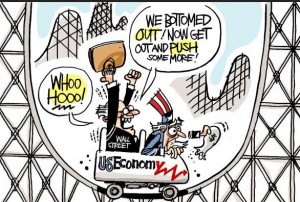
Bailing Out

Deutsche Bank Struggles

Deutsche Bank is in trouble, some of it its own making.  Its history is in many ways the history of big banks in the 20th going into the 21st century.  To sum up:

1.  About 25 years ago DEutsche Bank started its transformation from a small German lender to a global investment bank, trading bonds, currencies and commodities (FICC).

2. DB offered issuing of bonds, hedging of foreign exchange risks to its corporate clients, mostly mid sized colmpanies in Germany.

3.  Gobal markets gave DB a chance to speculate for its own account and DB shares traded at twice the vallue of tangible DB assets.

4.  The outsized FICC business becomes a liability andthe hgiher the ahreof cinome from trading, the lower the share price.

5.  European banks argue that they need a trading floor to serve corporated clients.

6.  Low interest rates and bond market stability make corporate clients less prone to juggle their accounts

7.  All the big banks have been subected to big fines including DB.

8.  Post recession regulation is a big drag on big banks.  Rules imposed on domestic lenders in the US will be extended to foreign banks.  Regulators in the US have called DB reprorting, “low quality, inacurate, and unreliable.

Deutsche Bank Struggles