Entrepreneur Alert: The End of Coal

Call it a one-two punch against coal. As global demand for U.S. coal exports continues to sag, domestic demand at power plants has been sliding as well.

For the first time ever, natural gas trumped coal as the top source of electric power generation in the U.S. In April, roughly 31 percent of electric power generation came from natural gas, whereas coal accounted for 30 percent.

It’s a dramatic difference from April 2010, when coal accounted for 44 percent of the mix and natural gas just 22 percent.

Coal prices have continued to crater this year, extending a years-long downward trend.

American Electric Power's coal-fired John E. Amos Power Plant in Winfield, West Virginia.

American Electric Power’s coal-fired John E. Amos Power Plant in Winfield, West Virginia.

This has been particularly true of coal mined in the eastern U.S. Since the start of the year, Central Appalachian coal (CAPP) futures have plunged nearly 15 percent to roughly $41 per ton; since their 2011 peak, prices have nearly halved. Tepid global economic growth, a stronger dollar, cheap natural gas and expanding U.S. regulations have pressured prices.

Coal breaks down into two categories: utility coal, used to generate electricity at power plants in the U.S.; and export coal, for example, metallurgical coal used by China and developing countries to make steel.

On Monday Chinese customs data showed coal imports in China plunged 33.7 percent in June versus a year earlier, thanks largely to sluggish demand. China is the largest consumer of the commodity in the world.

U.S. coal exports have been in free fall for years as countries like Australia and Indonesia have provided supply to China more inexpensively. The stronger dollar is also making American supply pricier abroad. Natural gas futures continue to trade below $3 per mmbtu, as the onshore drilling boom has increased production by 30 percent since 200

Coal, a historically high-margin business for railroads, accounted for nearly 19 percent of revenue for the Class I railroads in the U.S. in 2014. Call it a one-two punch against coal. As global demand for U.S. coal exports continues to sag, domestic demand at power plants has been sliding as well.

German Battle Over Greece

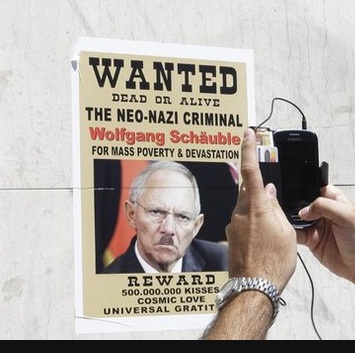
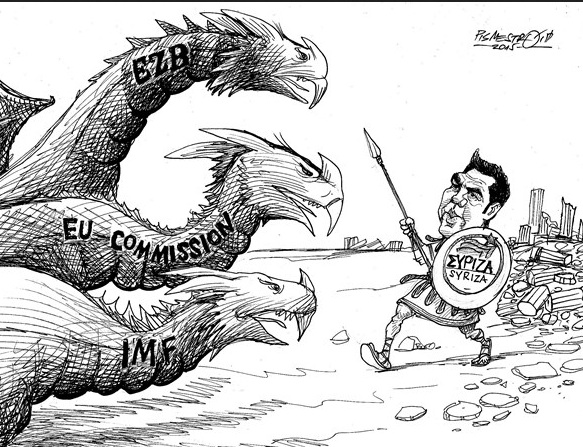
In Athens Wolfgang Schaeuble has been labelled a “bloodsucker” and a “Wanted” poster has appeared showing him with a Hitler mustache.

He may go down in history as the man with a Grexit plan.

He was behind a proposal to offer Greece a five-year “time-out” from the eurozone if no credible bailout could be agreed.

The final deal sets out a strategy to keep Greece in the euro – and the Grexit plan was not on the eurozone ministers’ agenda. Ms Merkel said Grexit would only be an option if Greece had asked for it, but Greece insisted on staying in the euro.

Under Mr Schaeuble’s plan, Grexit would make it possible to give Greece large-scale debt relief – something that would not be in line with current eurozone rules.

In the end, the overriding priority of keeping the eurozone intact trumped any talk of Grexit.

There were frayed nerves in the hours of tough talking. At one point, reports said, Mr Schaeuble snapped at European Central Bank chief Mario Draghi: “Do you take me for a fool?”

The bruising summit forced Mr Schaeuble to give some ground – there are now plans to extend Greece’s debt repayment schedules. And many believe that billions of euros owed by Greece will never be recovered.

According to Greece’s ex-Finance Minister Yanis Varoufakis, Mr Schaeuble wanted Greece to be “pushed out of the single currency to put the fear of God into the French and have them accept his model of a disciplinarian eurozone”.

When proposals emerged for €50bn of Greek assets to be placed in a Luxembourg fund, it was pointed out that the fund was a subsidiary of a bank in which Mr Schaeuble himself was a board member.

Mr Schaeuble became finance minister in 2009, in the midst of the global financial crisis, having served previously as German interior minister and CDU leader.

In his key role at the heart of the eurozone – with Germany the biggest contributor to EU bailouts – he has performed a double act with Ms Merkel, enforcing budget discipline.

They argue that relaxing the rules only encourages “moral hazard” – the reckless borrowing of the pre-crisis bubble years.

Yet back in 2003 France and Germany broke EU budget deficit rules. And critics say it is unfair for Germany to claim the moral high ground since it benefited from massive debt relief after World War Two.

Mr Schaeuble’s role as “Europe’s enforcer” is driven partly by the need to keep skeptical CDU and Bavarian CSU politicians on board.  There is much German opposition to the eurozone bailout.  Mr Schaeuble was formerly a rival of Ms Merkel. She replaced him as CDU leader in 2000 when his reputation took a battering in a CDU party funding scandal under ex-Chancellor Helmut Kohl.

He admitted that he had met the arms dealer and lobbyist at the centre of the scandal, Karlheinz Schreiber, and accepted an undeclared DM100,000 (£36,300) cash donation from him.

However, he denied doctoring CDU records or any other wrongdoing.

Greek Poster


Iran Opens?

US Secretary of State John Kerry announced a deal with Iran.  While the US Senate still has to approve, it is likely that opening Iran is finally on track.  The west got conditions for building trust around the verification of nuclear materials.  Sanctions against Iran will be dropped.

Saudi Arabia is not happy, because they want to continue to control military affairs in the area.  Israeli PM Netanyahu feels betrayed.

 Iran Deal

Spreading the Pain of Austerity?

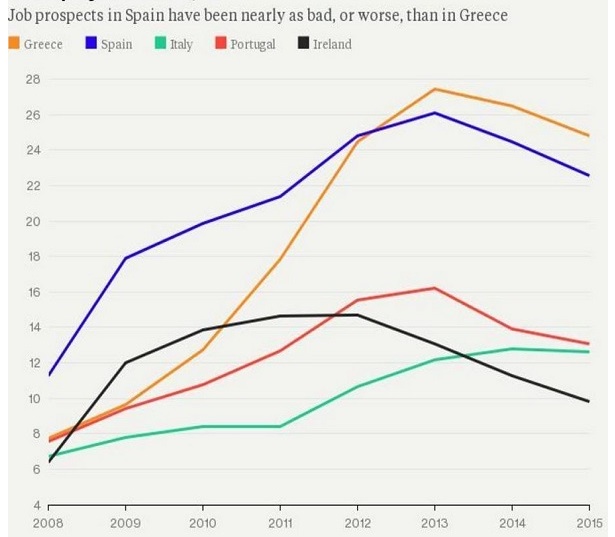
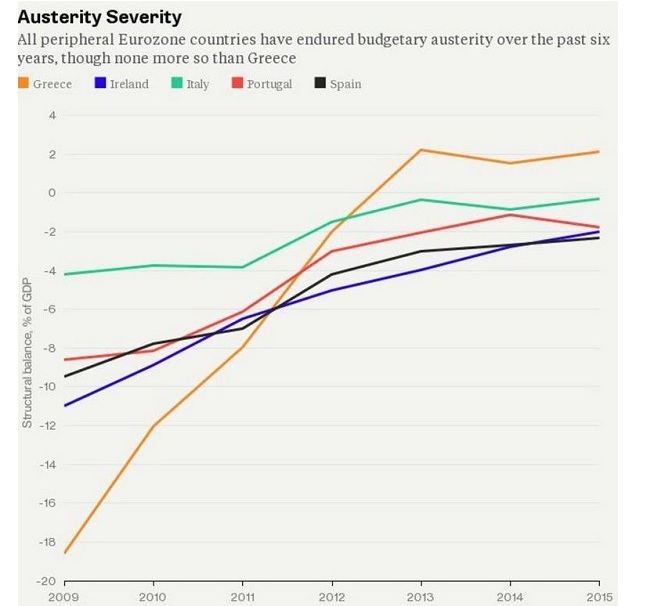
Comparing PainIf Ireland, Portugal, Spain, and Italy had to swallow the bitter pill of austerity, the argument goes, so should Greece. But are the situations similar? When it comes to GDP impact none are close to Greece (first graph below). Only with unemployment, and then only for Spain, has there been comparable pain.

Austerity Severity

Does Japan Need Shock Therapy?

Bank of Japan Governor Haruhiko Kuroda fails to get much traction in his bid to revitalize his country’s economy.

Former Bank Governor Shirakawa always claimed the causes of Japan’s deflation were a rigid economy and bad demographics, not a lack of money supply. Kuroda has yet to concede the point explicitly, but his bank’s actions essentially do.  BOJ officials have started issuing tacit admissions that Kuroda’s efforts at monetary stimulus have failed.

To be sure, sustained inflation would give the Prime Minister major bragging rights, and vindicate his decision to axe Shirakawa and take a more aggressive tack to end Japan’s lost-decade ordeal.

India’s credibility is still taking hits from its abrupt recalculation of the country’s 2014 gross domestic product, from 4.7 percent  to 6.9 percent. At the time, one analyst fumed that officials were “smashing India’s credibility and making its statistics bureau a laughing stock in global financial circles.”

BOJ officials argue that “the price stability target and the quantitative and qualitative monetary easing, introduced by the Bank in 2013, contributed to strengthening the anchor of inflation expectations.” Too bad the neither data nor bond rates jibe with that view. Yields on 10-year government debt are currently around 0.43 percent, lower than 0.54 percent 12 months ago. If anything, the inverse of what the BOJ is arguing is true.

Meanwhile, the BOJ’s lobbying efforts to tweak official statistics are starting to fall flat.

The truth is, Kuroda’s team has gotten as far as it can with its two huge monetary infusions since April 2013. In addition to buying about $700 billion of government debt annually, the BOJ is also pumping money into everything from asset-backed securities to exchange-traded funds. The results can be seen in the 56 percent rally in the Nikkei, but not in the areas needed to generate a sustainable recovery like sizeable wages gain or capital investments by huge companies.

That has the BOJ resorting to cheerleading. Kuroda’s team continues to churn out report after report insisting reflation efforts are working. The common theme (including last week’s report by Kamada) is that the BOJ’s moves are lifting trend inflation, stimulating the economy and loosening financial conditions. Yet the International Monetary Fund seems to have missed the memo. It just downgraded its forecast for Japanese growth this year to a 0.8 percent from a prediction of 1 percent in April.

If Kuroda wants to motivate any audience it should be Abe’s cabinet. As BOJ governors past warned, ending deflation requires much more than printing yen — or moving the data goalposts. Aside the devaluation of the yen and modest efforts to improve corporate governance, the government has done little to remake the economy. Plans to encourage startups, loosen labor markets, cut red tape and better utilize the female workforce remain largely on the drawing board. Kuroda’s monetary bonanza was meant to pave the way for structural shock-therapy that has yet to materialize. Kuroda should know that applauding the government’s failures won’t do much to restore his credibility.


Greece Re-Joins EU for 90b Euros

Given the choice of being moneyless or giving up sovereignty to confirm its membership in the Eurozone and the EU, Greece has signed off on a deal which will give them operating money in exchange for firm and immediate dates for putting in place VAT taxes and new pension rules, among other economic reforms.

The banks care still closed, credit cards can be used in Greece in only.  Re-capitalization of Greece to begin soon and in Greece.

Has fiscal sovereignty been given up?  Is the deal undemocratic?  To be seen.  But if you are a member of a group, you obey its rules.  This is the rocky road to globalization.

Greece and the Eurozone

Yanis Varoufakis Assesses Greece’s Future

Greece’s financial drama has dominated the headlines for five years for one reason: the stubborn refusal of our creditors to offer essential debt relief. Why, against common sense, against the IMF’s verdict and against the everyday practices of bankers facing stressed debtors, do they resist a debt restructure. The answer cannot be found in economics because it resides deep in Europe’s labyrinthine politics.

Two options consistent with continuing membership of the eurozone presented themselves: the sensible one, that any decent banker would recommend – restructuring the debt and reforming the economy; and the toxic option – extending new loans to a bankrupt entity while pretending that it remains solvent.

Official Europe chose the second option, putting the bailing out of French and German banks exposed to Greek public debt above Greece’s socioeconomic viability.

To frame the cynical transfer of irretrievable private losses on to the shoulders of taxpayers as an exercise in “tough love”, record austerity was imposed on Greece whose national income, in turn – from which new and old debts had to be repaid – diminished by more than that.

Once the sordid operation was complete, Europe had automatically acquired another reason for refusing to discuss debt restructuring: it would now hit the pockets of European citizens! And so increasing doses of austerity were administered while the debt grew larger, forcing creditors to extend more loans in exchange for even more austerity.

Our government was elected on a mandate to end this doom loop; to demand debt restructuring and an end to crippling austerity. Negotiations have reached their much publicised impasse for a simple reason: our creditors continue to rule out any tangible debt restructuring while insisting that our unpayable debt be repaid “parametrically” by the weakest of Greeks, their children and their grandchildren.

In my first week as minister for finance I was visited by Jeroen Dijsselbloem, president of the Eurogroup (the eurozone finance ministers), who put a stark choice to me: accept the bailout’s “logic” and drop any demands for debt restructuring or your loan agreement will “crash” – the unsaid repercussion being that Greece’s banks would be boarded up.

Five months of negotiations ensued under conditions of monetary asphyxiation and an induced bank-run supervised and administered by the European Central Bank. The writing was on the wall: unless we capitulated, we would soon be facing capital controls, quasi-functioning cash machines, a prolonged bank holiday and, ultimately, Grexit.

The threat of Grexit has had a brief rollercoaster of a history. In 2010 it put the fear of God in financiers’ hearts and minds as their banks were replete with Greek debt. Even in 2012, when Germany’s finance minister, Wolfgang Schäuble, decided that Grexit’s costs were a worthwhile “investment” as a way of disciplining France et al, the prospect continued to scare the living daylights out of almost everyone else

By the time Syriza won power last January, and as if to confirm our claim that the “bailouts” had nothing to do with rescuing Greece (and everything to do with ringfencing northern Europe), a large majority within the Eurogroup – under the tutelage of Schäuble – had adopted Grexit either as their preferred outcome or weapon of choice against our government.

Greeks, rightly, shiver at the thought of amputation from monetary union. Exiting a common currency is nothing like severing a peg. Alas, Greece does not have a currency whose peg with the euro can be cut. It has the euro – a foreign currency fully administered by a creditor inimical to restructuring our nation’s unsustainable debt.

To exit, we would have to create a new currency from scratch. In occupied Iraq, the introduction of new paper money took almost a year, 20 or so Boeing 747s, the mobilisation of the US military’s might, three printing firms and hundreds of trucks. In the absence of such support, Grexit would be the equivalent of announcing a large devaluation more than 18 months in advance: a recipe for liquidating all Greek capital stock and transferring it abroad by any means available.

With Grexit reinforcing the ECB-induced bank run, our attempts to put debt restructuring back on the negotiating table fell on deaf ears. Time and again we were told that this was a matter for an unspecified future that would follow the “programme’s successful completion” – a stupendous Catch-22 since the “programme” could never succeed without a debt restructure.

This weekend brings the climax of the talks.

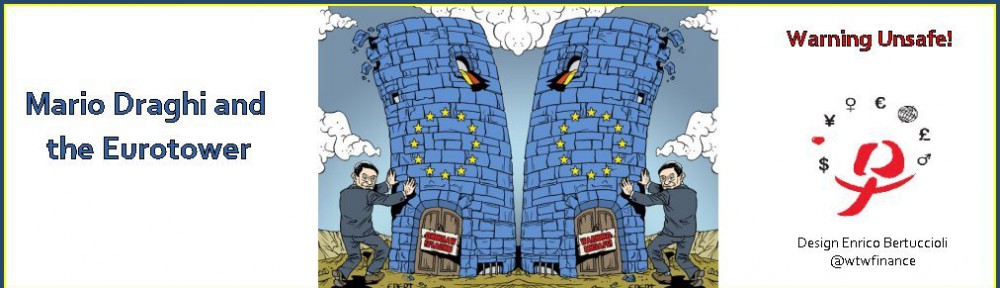
The euro is a hybrid of a fixed exchange-rate regime, like the 1980s ERM, or the 1930s gold standard, and a state currency. The former relies on the fear of expulsion to hold together, while state money involves mechanisms for recycling surpluses between member states (for instance, a federal budget, common bonds). The eurozone falls between these stools – it is more than an exchange-rate regime and less than a state.

And there’s the rub. After the crisis of 2008/9, Europe didn’t know how to respond. Should it prepare the ground for at least one expulsion (that is, Grexit) to strengthen discipline? Or move to a federation? So far it has done neither, its existentialist angst forever rising. Schäuble is convinced that as things stand, he needs a Grexit to clear the air, one way or another. Suddenly, a permanently unsustainable Greek public debt, without which the risk of Grexit would fade, has acquired a new usefulness for Schauble.

What do I mean by that? Based on months of negotiation, my conviction is that the German finance minister wants Greece to be pushed out of the single currency to put the fear of God into the French and have them accept his model of a disciplinarian eurozone.
Risk Necessary for Growth?

Robert Litan writes:  We’re going to hear a lot from 2016 presidential candidates about the need for faster economic growth. Jeb Bush says annual growth of 4% would be his goal; that’s almost double the 2.2% U.S. growth rate since June 2009. Hillary Clinton has called for “inclusive” growth, or economic expansion that is distributed more fairly. (I suspect that many Republicans agree with her objective, while differing on what government should do to achieve it.)

Presidential elections are occasions for debating government’s role, so it’s natural to focus on things government can do to affect economic growth, such as simplifying the corporate tax code, removing distortions, and, for some, lowering rates; investing more in infrastructure and early-childhood education; and easing regulatory burdens, especially for new businesses, which have been the source of many major technological advances.

While some or all of these things should help growth, government has limited ability to influence the appetite for taking risks among entrepreneurs, investors, and larger companies. And without risk-taking, we are unlikely to see the kinds of major new innovations that will propel our economy toward a higher growth trajectory.

Two recent essays define this challenge. One is a thoughtful piece by Bloomberg View’s Barry Ritholtz on the decline in publicly traded companies in the U.S., from a peak of more than 7,300 in 1996 to just 3,700 in 2014. After surveying multiple possible causes for the nearly 50% decline–including the much-criticized Sarbanes-Oxley Act, which tightened public company reporting rules–Mr. Ritholtz cites academic research showing that mergers have played an outsize role in reducing the number of public companies.

This is important because when big companies swallow up others, it signals that acquiring companies have essentially outsourced their ideas rather than growing internally. It also suggests that the safer thing to do is to buy someone else rather than develop new products and services yourself. The merger trend is a sign of a collective failure of nerve, the risk-taking that historically contributed to much higher economic growth rates, such as the roughly 4% average from 1948 to 1973.

\Fortune editor Alan Murray reports that revenues of the Fortune 500 companies combined equal 71.9% of U.S. gross domestic product, or more than twice the 35% it totaled in 1955. In other words, despite continuing turnover in the Fortune 500′s composition, big companies are more important than ever as a share of the overall economy.

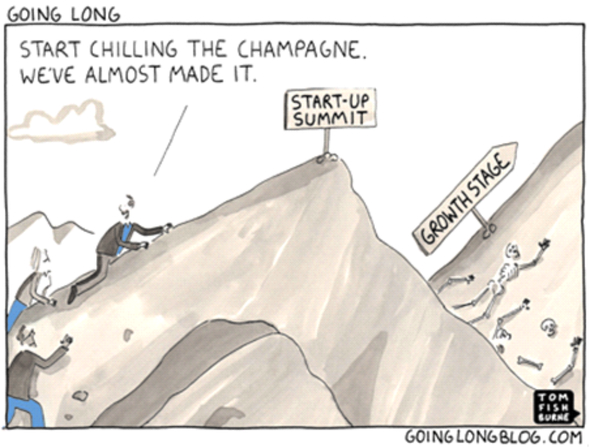
This wouldn’t be so worrisome for future growth were it not for the decline in the start-up rate, or share of new companies in the number of overall firms, which I have written about before. Despite the continuing emergence of new billion-dollar start-ups (“Unicorns”), the execs of big companies don’t appear to be especially worried. According to the Fortune survey, only 20% think their greatest challenges will come from start-ups.

At the top of their worry list, Fortune found, is the “rapid pace of technological change,” which is ironic since, so far, hype has exceeded reality. As Princeton professor Alan Blinderhas noted, productivity growth since 2010 has clocked in at just 0.4% a year, down from 2.6% over the preceding 15 years.

Unless a big boost in start-ups puts real pressure on large companies, the answer to the growth challenge lies mostly with large companies and those who head them.

startup-cartoon

Entrepreneur Alert: Vertical Urban Farming

Goldman Sachs and Prudential are investing in vertical urban gardening.  Entrepreneurs envision selling fresh produce to high end restaurants and discounting to low income neighbors.  Land costs high, but some in the sky.  Entpreneurial opportunities abound.

Efforts to grow green business in New Jersey’s largest city Newark were bolstered by the announcement of a $30 million public-private commitment to create the world’s largest indoor aeroponic garden in Newark’s Ironbound, a community in serious need of investment, good jobs, and fresh produce.

Essentially, aeroponics is a plant-cultivation technique that doesn’t require soil or sun: Roots are exposed to the air and nutrition delivered via a fine mist.

Vertical Farming

Greece Makes its Promises

The General Director of the International Monetary Funds (IMF), Christine Lagarde, said a restructuration of the Greek debt is “necessary”.
She added she was “committed” to finding a solution to the crisis in the country. “We feel a restructuration of Greece’s debt is necessary to make its debt viable”, the IMF boss said during a conference in Washington. She was going against the opinion of European authorities, who have rejected that option for the moment.Greece, which is calling for its enormous debt to be reduced, promised to present a new program of “credible” reforms on Wednesday: its response to the ultimatum given by European authorities.Without directly talking about the propositions, Mrs Lagarde spoke of “important developments”, and said Greece was dealing with a “painful crisis that must be dealt with”. Despite Greece defaulting on its debt to the institution, Mrs Lagarde said the IMF was still “committed” to Greece. “We are still fully committed to finding a solution”, she said.
Greek Proposal   Greek Reform
Tsipras