China and US: How Slow is Slow?

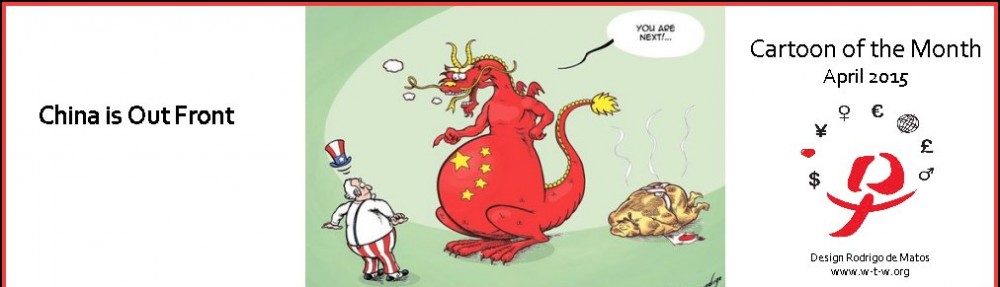
Michael Spence writes:  The world’s two largest economies, the United States and China, seem to be enduring secular slowdowns. But there remains considerable uncertainty about their growth trajectory, with significant implications for asset prices, risk, and economic policy.

The US seems to be settling into annual real (inflation-adjusted) growth rates of around 2%, though whether this is at or below the economy’s potential remains a source of heated debate. Meanwhile, China seems to be headed for the 6-7% growth rate that the government pinpointed last year as the economy’s “new normal.” Some observers agree that such a rate can be sustained for the next decade or so, provided that the government implements a comprehensive set of reforms in the coming few years. Others, however, expect China’s GDP growth to continue to trend downward, with the possibility of a hard landing.

There is certainly cause for concern. Slow and uncertain growth in Europe – a major trading partner for both the US and China – is creating headwinds for the US and China.

Moreover, the US and China – indeed, the entire global economy – are suffering from weak aggregate demand, which is creating deflationary pressures. As central banks attempt to combat these pressures by lowering interest rates, they are inadvertently causing releveraging (an unsustainable growth pattern), elevated asset prices (with some risk of a downward correction, given slow growth), and devaluations (which merely move demand around the global economy, without increasing it).

For China, which to some extent still depends on external markets to drive economic growth, this environment is particularly challenging – especially as currency depreciation in Europe and Japan erode export demand further. Even without the crisis in major external markets, however, a large and complex middle-income economy like China’s could not realistically expect growth rates above 6-7%.

Yet, in the aftermath of the global economic crisis, China insisted on maintaining extremely high growth rates of 9% for two years, by relying on fiscal stimulus, huge liquidity injections, and a temporary halt in the renminbi’s appreciation. Had the government signaled the “new normal” earlier, expectations would have been conditioned differently. This would have discouraged undue investment in some sectors, reduced non-performing loans, and contained excessive leverage in the corporate sector, while avoiding the mispricing of commodities. Growth would still have slowed, but with far less risk.

In the current situation, however, China faces serious challenges. Given weak growth in external demand and an already-large market share for many goods, China cannot count on export growth to sustain economic performance in the short run. And, though support for infrastructure investment by China’s trading partners – especially through the “one belt, one road” policy – may help to strengthen external markets in the longer term, this is no substitute for domestic aggregate demand.   Slow Down in US and China

Planetary Life Support?

Johan Rockström writes: The challenge before us  to provide for the needs of more than ten billion people while safeguarding our planetary life-support systems. Recent scientific insights have made us better equipped than ever to strike that balance. Doing so will be our generation’s great task.

Ending poverty has become a realistic goal for the first time in human history. We have the ability to ensure that every person on the planet has the food, water, shelter, education, health care, and energy needed to lead a life of dignity and opportunity. But we will be able to do so only if we simultaneously protect the earth’s critical systems.

For the last 10,000 years, the earth’s climate has been remarkably stable. Global temperatures rose and fell by no more than one degree Celsius (compared with swings of more than eight degrees Celsius during the last ice age), and resilient ecosystems met humanity’s needs. This period – known as the Holocene – provided the stability that enabled human civilization to rise and thrive. It is the only state of the planet of which we know that can sustain prosperous lives for ten billion people.

But humans have now become the single largest driver of ecosystem change on earth, marking the start of a new geological age that some call the Anthropocene.

Human activity has undergone what is being called the Great Acceleration.

The planet’s response to our pressures is likely to be unpredictable. Indeed, the surprises have already begun. As we overdraw on our planet’s accounts, it is starting to levy penalties on the global economy, in the form of extreme weather events, accelerated melting of ice sheets, rapid biodiversity loss, and the vast bleaching of coral reefs.

We face an urgent need to define a safety zone that prevents us from pushing our planet out of the unusually benevolent Holocene state. For each of the earth’s key processes, a boundary is proposed  – a quantitative ceiling – beyond which we risk inducing abrupt changes that could push our planet into a state that is more hostile to humanity.

These nine boundaries include climate change, ozone depletion, ocean acidification, interference in the global nitrogen and phosphorus cycles, land-use change, global freshwater use, biosphere integrity, air pollution, and novel entities.. Humanity has already transgressed four boundaries: climate change, nitrogen and phosphorus use, biodiversity loss, and land-use change.

Our challenge is to bring the earth’s systems back within the safety zone, while simultaneously ensuring that every person has the resources he or she needs to lead a happy and fulfilling life.

Meeting these goals will require a far more equitable distribution of the planet’s resources and far greater efficiency in how we use them.


Which Internet in Europe?

James Waterworth writes: When the European Commission announces its new digital strategy on May 6, it will face a decisive choice between two very different approaches to the Internet. Will it choose a forward-looking, market-driven path? Or will it opt for a defensive, backward-looking, insular retreat?

First the good news: the high profile of the planned announcement shows that the continent’s leaders recognize that the Internet can no longer be shunted to the sidelines of European policymaking. It is central to economic performance and to modernizing Europe’s industrial base.

Over the past five years, while Europe has grappled with its macroeconomic woes, the United States and Asia have raced ahead, reaping digital benefits. According to a recent study by Plum Consulting, information and communications technology (ICT) contributed nearly 1.6% to annual productivity growth in the US during this period – double its contribution in Europe. Perhaps that should come as no surprise, given that nearly 5% of US investment is spent on ICT, compared to 2% in Europe.

The question facing European policymakers is how to close this gap. The best way forward would be to embrace the Internet, even where it is disruptive. In practice, this means cutting red tape so that all businesses can sell their goods and services across a common market of 500 million people. European companies today must navigate 28 sets of rules. It is little wonder that only 15% of consumers shop online across European borders.

Europe’s focus should be on removing barriers and updating regulation to encourage more, not less, use of the Internet. This will require having the courage to face down those who would retreat behind national borders and protect existing business models. .

European policymakers should also guarantee non-discriminatory wholesale access to communications networks, and that consumers and businesses have a range of choices for telecommunications and online services.

Unfortunately, ominous signs are pointing in the wrong direction. Europe’s two heavyweights, France and Germany, have been vocal in their determination to roll back digital progress. Recently, European Commissioner for Digital Economy and Society Günther Oettinger referred to the concept of net neutrality as “Taliban-like” and called for a new levy on online services.

German and French pressure has led to calls for beefed-up regulatory powers to rein in powerful, usually American platforms, such as Google and Facebook.

All of these moves add up to an alarming and wrongheaded approach to the Internet. If Europe continues on this path, it risks missing out on the potential of the online economy. After all, it is European small businesses, not just American, that benefit from e-commerce platforms like eBay and Amazon and the advertising services of Google and Facebook. And European app developers, too, build businesses on mobile phone software.

The Internet is not a game of winners or losers; everyone can win. Nor does it pit Europe against other regions. After all, Europe has almost as many billion-euro Internet firms as the US. The wisest choice for Europe would be to ensure that many more successful Internet firms emerge, by creating the best possible conditions for digital innovators.

Internet

Trade is More than Trade

Robert Samuelson writes: The trouble with our trade debates is that people assume they’re only about economics. Since World War II, U.S. trade policy has also been a pillar of U.S. foreign policy. In the early postwar decades, America encouraged trade with Europe and Japan — allowing more of their exports into the United States — as a way of achieving our political goals. Trade would build their prosperity, and their prosperity would promote democracy over communism.

“There was a confluence of security and economic considerations,” says Harvard political scientist Jeffry Frieden.  U.S. officials recognized that “giving [our allies] access to the American market was a lot cheaper than foreign aid.” Besides, U.S. economic superiority was taken for granted. Before the war, U.S. and German chemical companies had been rivals. “By 1945, we didn’t have to worry about the German chemical industry,” he says.

It’s true, as Frieden notes, that this consensus weakened in the 1970s. Once Europe and Asia rebuilt, their exports — of steel, shoes, televisions, cars — threatened U.S. jobs. The Reagan administration pressured foreign governments to impose “voluntary” limits on some exports to the United States. Still, the pursuit of political ends by economic means remains at the core of U.S. trade policy.

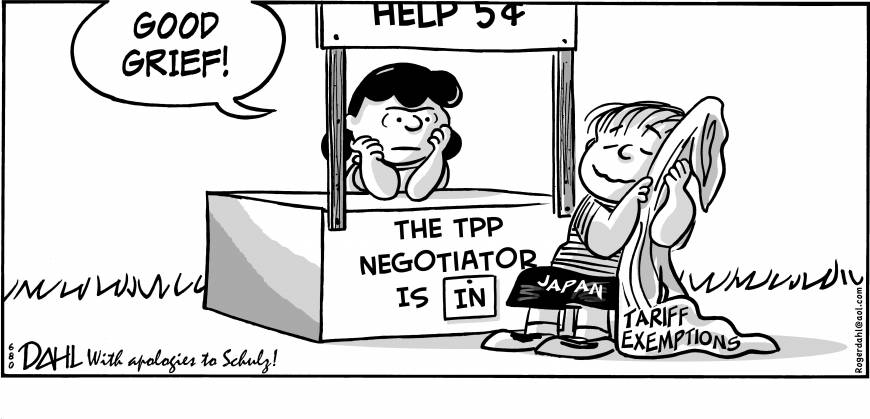
All this provides context for the controversy over the Trans-Pacific Partnership (TPP), the trade negotiation among 12 countries (Australia, Brunei, Canada, Chile, Japan, Malaysia, Mexico, New Zealand, Peru, Singapore, the United States and Vietnam). Together, these nations represent almost 40 percent of the world economy, with the United States and Japan accounting for about four-fifths of that.

Negotiations cover many issues. Japan has tariffs of 600 percent or more on rice. Presumably, these would be reduced or eliminated. Although the average trade-weighted U.S. tariff is 1.4 percent, there are exceptions. U.S. tariffs on shoes range from 11 percent to 70 percent; Vietnam wants them curbed. Talks also involve less traditional issues: limits on subsidies to state-owned companies; patent protection, especially for drug companies; rules governing where computer data must be stored.

Still, plausible economic gains from expanded trade seem modest. By 2025, the incomes of the 12 countries could increase by 0.9 percent, according to a revised estimate by a study for the Peterson Institute. In today’s dollars, that would be about $320 billion (the U.S. share: $85 billion). By contrast U.S. GDP is approaching $18 trillion, and global GDP is quadruple that. The fuss over the Trans-Pacific Partnership seems disproportionate to the stakes.
TPP

The Problem with Financial Theories

Buttonwood in the Economic writes:  An important issue for academics to consider is that the financial sector is not static. Each crisis induces changes in behaviour and new regulations that prompt market participants to adjust (and to find new ways to game the system). In any case, regulators cannot eliminate risk altogether. In terms of consumer protection, regulators cannot set a standard for the right product that should be sold in all circumstances. Investors’ attitude towards risk may differ (indeed their ex ante willingness to take risk may differ from their ex post feelings when bad things happen.) And even if the salesman and the clients were equally well informed, the correct asset allocation (between, say, equities and bonds or America and Japan) cannot be known in advance.

Indeed, the attempt to create a riskless world may be counter-productive. Cliff Asness of AQR says that “Making people understand that there is a risk (and a separate issue, making them bear that risk) is far more important, and indeed far more possible than making a riskless world. And if I may go further, trying to create and worse, giving the impression you have created, a riskless world makes things much more dangerous.”

There will never be an “answer” that eliminates all crises; that is not in the nature of finance and economics. But for too long economists ignored the role that debt and asset bubbles play in exacerbating economic booms and busts; it needs to be much more closely studied. Even if the market is efficient most of the time, we need to worry about the times when it is not. Academics and economists need to deal with the world as it is, not the world that is easily modelled.  The Trouble with Theory

Who Knows?

Teachout on Corrupt Campaign Finance Practices

Zephyr Teachout writes: More than 200 years ago, we included in our Constitution a provision that forbids federal officers from accepting a gift of any kind whatever from foreign interests without first getting permission from Congress (Article I, Section 9, the so-called Emoluments Clause). We borrowed the provision from the Netherlands, where it was ridiculed for being overly fussy about corruption. But we put it in both our Constitution and in that document’s forerunner, the Articles of Confederation, as a defense against emulating the corrupt culture of Europe.

The unlikely source of the provision was a snuff box. A few years before the constitutional convention, the King of France gave Benjamin Franklin a diamond encrusted snuff box after his diplomatic tour. Franklin did not appear to offer anything in return, but the gift nonetheless led to concerns that Franklin might be quietly corrupted by French interests—perhaps even without his knowing it.

The Americans, rigidly rejecting European custom, believed that acceptance of a luxurious gift by someone in power was itself a threat. Perhaps Franklin would be more generous toward French commercial interests simply by the operation of normal human sympathies, which to tend to be more charitable toward those who give us gifts. The framers tried to put a check on those sympathies, or at least put a block in the relationship, by requiring that Congress approve any gifts to federal officials.

Ironically, at the constitutional convention, Franklin was among the most outspoken in favor of anti-corruption provisions. His own lifelong experience with governments around the world had made him wary of the many ways in which officials could be tempted. James Madison, Thomas Jefferson, George Mason, and Franklin weren’t wrong to be concerned about foreign powers attempting to use money to buy influence and favorable treatment.

According to The New York Times, Bill Clinton received a $500,000 personal payment from a Russian bank as payment for a speech in 2010. (In some cases, Bill Clinton directs his speaking fees to the Clinton Foundation, though there’s no evidence that happened in this case.) This payment happened around the same time that Hillary Clinton’s State Department was participating in the decision-making process on the legitimacy of Russian takeover of American uranium interests (the decision was made by an inter-agency body on which State was represented, but was chaired by Treasury). Many people have raised concerns that this fee, like Benjamin Franklin’s snuff box, might have swayed Bill Clinton’s—and Hillary’s—general thinking toward Russian interests at the time.

In effect, the troubling morality of Citizens United has become the official morality of Clinton’s defenders.  Over the past several years, Bill Clinton has been given millions of dollars for foreign and domestic speeches, with the greatest number of sponsors coming from the financial industry. At the same time, he solicited and received millions of dollars from foreign and domestic interests, including. Many of the donors and sponsors had interests that were affected by State Department policies, and all of the donors, past and current, have interests that would be affected by a Hillary Clinton presidency.

Hillary Clinton has not addressed the issue publicly, but some of her defenders have argued that without a smoking gun, or evidence of quid pro quo, there’s nothing to be concerned about.

As the framers knew, we don’t need that in order to be concerned.

Here is Teachout’s artcile on Anti-corruption in the US constitution.  Anti Corruption

Teachout recently ran for Governor of New York State.

Franklin


A Clue to Life in Space?

Scientists have discovered salty groundwater underneath the dry valleys of Antarctica that is buzzing with microbial life. As the valleys are geologically similar to what Mars was like in the past, the discovery could help us understand what life on the red planet could have looked like. It could also help us search for life elsewhere in the solar system, such as on the icy moons surrounding Jupiter and Saturn.

The dry valleys west of McMurdo Sound are some of the most geologically intriguing regions of Antarctica. While we know a lot about their geology and surface hydrology, we have little understanding about what is happening beneath the glaciers and lakes. A new study has revealed that a large, inter-connected series of flowing ground-water streams lurks underneath the glaciers, lakes and permafrost.

Moreover, this ground-water system is home to a variety of microbial life feeding off the rich mineralogy of the environment. This could be micro-organisms that produce energy by chemical reactions involving iron and sulphur, for instance sulphur-reducing bacteria.

The groundwater is very salty, containing a number of chemicals dissolved from sediments which were once many metres below sea level. The levels of salt, sodium chloride, are indeed very similar to ocean water. The salty water also explains the distinct red colour of the wonderfully named, Blood Falls, which lies at the foot of the Taylor Glacier to west of the valleys, where it mixes with iron and oxygen.


The creepy, iron-rich Blood Falls

The discovery was made by shining a sensor on the ground, which measures the electromagnetic resistance of the material beneath. This allowed the team to distinguish between salt-containing sediments and frozen, ice-bound layers. Strikingly, they discovered that the salty ground-water system extends throughout large parts of the valleys, extending from the coast to at least 7.5 miles inland in the valleys.

The authors make the connection between the microbial habitat and similar geological environments that may have existed once on Mars.

Liquid water is essential for life and it is therefore a major driver for astrobiology. It can be found in many different types of geological environment, locked within microscopic cavities of minerals or encased in ice. Surprisingly, life can actually exist in such extreme environments, within certain limits. Moreover, metals – such as the iron and magnesium that were found in this study – are also crucial to driving the chemical processes of living, as they are found at the heart of many key enzymes.

While it is not a “smoking gun” for the existence of life elsewhere in the universe, the present study reminds us what we should be looking for.

It is possible that liquid, salty water underneath the vast ice sheets of other solar system bodies such as Saturn’s moons Enceladus and Mimas; Jupiter’s moon Ganymede or even Neptune’s moon Triton could hold similar microbial life. Underneath thick layers of ice, such water would be protected from potentially damaging cosmic rays, harmful radiation, meaning life there would be relatively safe.

Identified as part of Scott’s Discovery science mission of 1901-4, the McMurdo Dry Valleys were explored in greater detail during Scott’s second, fateful, Terra Nova expedition of 1910-13. Little did they know back then that their discoveries had the potential to one day inform missions to space.

Batteries for Coal?

AGL Energy Ltd., Australia’s biggest power producer, said it would debut a 6 kilowatt-hour home storage battery, challenging Tesla Motors Inc. which announced 7- and 10-kWh models Friday.AGL’s suitcase-sized battery will use lithium-ion cells and come with extended warranties and finance plans to make it affordable, the company said it will be suitable for a family home with solar panels providing 3 to 4.5 kilowatts of power, AGL said. It’s the first such product to be offered by an Australian energy retailer.Tesla Chief Executive Officer Elon Musk unveiled a suite of batteries to store electricity for homes, businesses and utilities and reduce dependence on fossil fuels. Tesla’s home batteries will be delivered from late in the northern hemisphere summer at prices starting from $3,000, the company said.

AGL’s product “will provide consumers with backup for essential home services such as lighting, refrigeration and communications,” Ed Lynch-Bell, AGL’s lead for energy storage, said in the statement. That will help iron out “potential disruptions of energy supply,” he said.

AGL, whose assets include the Loy Yang coal-fired power station which provides about 30 percent of Victoria state’s electricity will close all its coal plants within 35 years and expand its investments in renewable energy.

Batteries Replace Coal?

Should China Cut US Treasury Holdings?

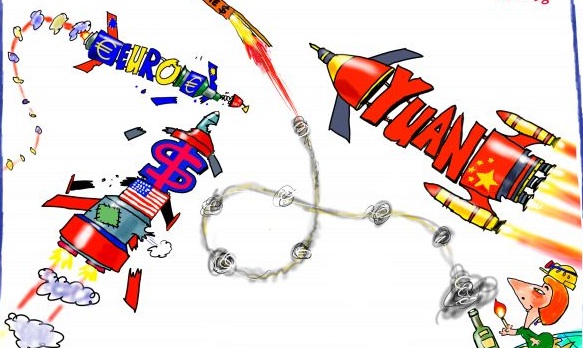
Should China cut US Treasury Holdings?  Yuhua Zhang writes;  In February, China cut US treasury securities holdings by $15.4 billion to $1223.7 billion, which is the sixth consecutive month that China has reduced US treasuries and falls to the lowest US debt holdings since January 2013. Although China is no longer US largest creditor, the further cut in US treasury holdings would still be a wise strategy to China.

In all, cutting US treasury securities holdings is a reasonable choice for China during the period of economic reform because China will encounter economic slowdown for its “new normal” and diversifying its economy.

However, some economists are anxious that the strategy may bring negative effect on US economy.

On the one hand, in comparison with US treasury securities holdlings by top foreign creditors during the past year, the amount of treasuries sold by China is not large enough to disturb the market, and some other top US foreign creditors such as Japan are still willing to increase their holdings. In other words, it is quite limited effect on US treasury market for China (or some other governments’ authorities) to pursue diversification out of US treasury securities.

Instead of facing problems, the US dollar strength and current yield advantage still guarantee high attractiveness and liquidity for US treasury securities market, which positive trend is expected to continue in the future.

Yuan and Dollar

Entrepreneur Alert: Men Pay 100%, Women Pay 76%

Elizabeth Daley writes: Elana Schlenker’s small pop-up shop, which opened on a struggling businesses corridor in April, drew customers, news crews and guest speakers not solely for its female-made merchandise but also its premise. At 76 < 100, as the boutique was called, men paid full price, while women paid 76 percent of that.

Schlenker wants to draw attention to gender-based wage inequality, prevalent around the world. At the chic store on Penn Avenue in Pittsburgh, items for sale ranged from honey collected by a female beekeeper to books by the Guerilla Girls art activist collective, with a quarter of products produced locally. Schlenker sourced female talent to cater events and design and build the store’s modern wooden displays.

Now, Schlenker is looking to take her wage-gap crusade down south to Louisiana. For the New Orleans pop-up, Mercure is scouting locations primarily in the Central Business District and the pair are aiming for a November opening.

In Pittsburgh, patrons were drawn to the shop for its programming but gender-based pricing was also an attraction.

The items for sale at 76 < 100 were made by female artists and craftspeople, with about a quarter of the products produced locally.

Schlenker, a Pittsburgh-based freelance graphic designer, said she got the idea for her temporary store from an art project she read about. “The artist had printed copies of a work and charged women $1 and men $2,” she said, explaining that she was reading articles on the wage gap at the time, and the ideas converged.

Fair compensation has nudged its way to the forefront of national conversation, with increasing public pressure to raise the federal minimum hourly wage from $7.25 (where it has remained since 2009), the Fight for $15 campaign (aimed at obtaining higher wages for fast-food employees) and lawsuits targeting unpaid internships.

Mary-Wren Ritchie, a Planned Parenthood employee who attended a panel discussion on the wage gap at 76 < 100, said she was frustrated by the injustice.

“It’s insane that it’s 2015 and we are still fighting to make an equal wage,” she said. “The system was built by men to benefit men, and we work so hard to be on an equal playing ground, but it sucks that we are still fighting.

76<100 pop-up shop in Pittsburgh

Women attend a wage negotiation workshop at 76 < 100.
Babcock, whose research informed the store’s wage negotiation workshop led by her students, said men were more likely to think it was their responsibility to obtain a fair wage. In a 2002 study of graduating Carnegie Mellon seniors, she found that only 12.5 percent of women were likely to negotiate for higher wages, compared with 51.5 percent of men. She said part of the reason for lack of negotiation among women is conditioning.“Women are taught that they are supposed to be looking after other people and not thinking about themselves,” she said. “Something that might seem fine for a man to do — like negotiate effectively — might be viewed differently if a woman is doing it.”At the training, Babcock’s students said negotiating successfully as a woman might involve a cooperative style of negotiation more in line with stereotypically feminine behavior — a help-me-help-you approach. While such behavior may produce more successful results, some women resist playing into female stereotypes.

Though Babcock’s work aims to improve women’s status, she said she is often afraid her research might be used to reinforce negative gender stereotypes.