Cronyism Greases the Wheels?

Jonathan Rausch writes:

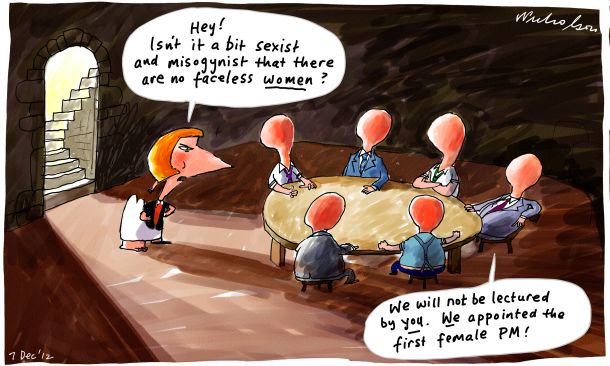
  • Government cannot govern unless political machines or something like them exist and work, because machines are uniquely willing and able to negotiate compromises and make them stick.
  • Progressive, populist, and libertarian reformers have joined forces to wage a decades-long war against machine politics by weakening political insiders’ control of money, nominations, negotiations, and other essential tools of political leadership.
  • Reforms’ fixations on corruption and participation, although perhaps appropriate a long time ago, have become destabilizing and counterproductive, contributing to the rise of privatized pseudo-machines that make governing more difficult and politics less accountable.
  • Although no one wants to or could bring back the likes of Tammany Hall, much can be done to restore a more sensible balance by removing impediments which reforms have placed in the way of transactional politics and machine-building.
  • Political realism, while coming in many flavors, is emerging as a coherent school of analysis and offers new directions for a reform conversation which has run aground on outdated and unrealistic assumptions.

Rauch also explores possible realist solutions, such changes to campaign finance laws, congressional earmarks, primary elections, and transparency rules.

2012-12-07-faceless-women-610

Currency Wars and Trade?

Nouriel Roubini writes: In a world of weak domestic demand in many advanced economies and emerging markets, policymakers have been tempted to boost economic growth and employment by going for export led-growth. This requires a weak currency and conventional and unconventional monetary policies to bring about the required depreciation.

Since the beginning of the year, more than 20 central banks around the world have eased monetary policy, following the lead of the European Central Bank and the Bank of Japan. In the eurozone, countries on the periphery needed currency weakness to reduce their external deficits and jump-start growth.

In Japan, quantitative easing was the first “arrow” of “Abenomics,” Prime Minister Shinzo Abe’s reform program. Its launch has sharply weakened the yen and is now leading to rising trade surpluses.

The upward pressure on the US dollar from the embrace of quantitative easing by the ECB and the BOJ has been sharp. The dollar has also strengthened against the currencies of advanced-country commodity exporters, like Australia and Canada, and those of many emerging markets. For these countries, falling oil and commodity prices have triggered currency depreciations that are helping to shield growth and jobs from the effects of lower exports.

The dollar has also risen relative to currencies of emerging markets with economic and financial fragilities: twin fiscal and current-account deficits, rising inflation and slowing growth, large stocks of domestic and foreign debt, and political instability. Even China briefly allowed its currency to weaken against the dollar last year, and slowing output growth may tempt the government to let the renminbi weaken even more.

Things look different today, and US officials’ exchange-rate jitters are becoming increasingly pronounced. The dollar appreciated much faster than anyone expected; and, as data for the first quarter of 2015 suggest, the impact on net exports, inflation, and growth has been larger and more rapid than that implied by policymakers’ statistical models. Moreover, strong domestic demand has failed to materialize; consumption growth was weak in the first quarter, and capital spending and residential investment were even weaker.

As a result, the US has effectively joined the “currency war” to prevent further dollar appreciation.

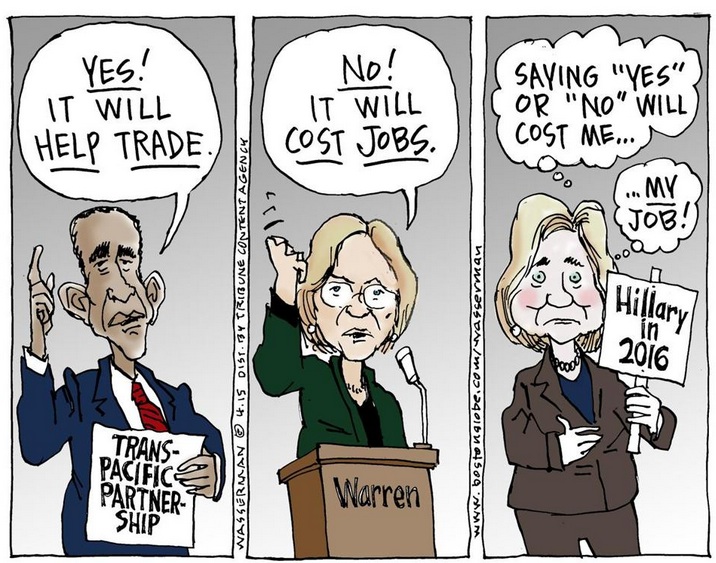
Currency frictions can lead eventually to trade frictions, and currency wars can lead to trade wars. And that could spell trouble for the US as it tries to conclude the mega-regional Trans-Pacific Partnership. Uncertainty about whether the Obama administration can marshal enough votes in Congress to ratify the TPP has now been compounded by proposed legislation that would impose tariff duties on countries that engage in “currency manipulation.” If such a link between trade and currency policy were forced into the TPP, the Asian participants would refuse to join.

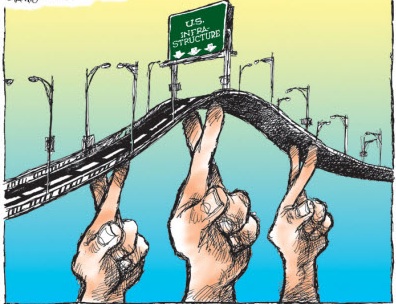
The world would be better off if most governments pursued policies that boosted growth through domestic demand, rather than beggar-thy-neighbor export measures. But that would require them to rely less on monetary policy and more on appropriate fiscal policies (such as higher spending on productive infrastructure). Even income policies that lift wages, and hence labor income and consumption, are a better source of domestic growth than currency depreciations (which depress real wages).

The sum of all trade balances in the world is equal to zero, which means that not all countries can be net exporters – and that currency wars end up being zero-sum games. That is why America’s entry into the fray was only a matter of time.

Infrastructure


Economic Debates

J. Bradford DeLong writes: For the past 25 years, a debate has raged among some of the world’s leading economists. At issue has been whether the nature of the business cycle underwent a fundamental change after the end of the “30 glorious years” that followed World War II, when the economy was characterized by rapid growth, full employment, and a bias toward moderate inflation. Three positions have been staked out.

First out of the gate, in 1991, was Larry Summers, with his seminal paper, “How Should Long-Term Monetary Policy Be Determined?” Summers was unconvinced that the underlying economic reality had changed, so his focus was technical – an attempt to guard against a repetition of the inflationary disturbances of the 1970s that marked the end of the glory years. His prescription was to strengthen the technocratic independence of central banks.

The debate continued with Paul Krugman’s 1998 paper, “It’s Baaack: Japan’s Slump and the Return of the Liquidity Trap” and his book The Return of Depression Economics, published the following year. Krugman made the case that central banks had already succeeded in anchoring inflation expectations to low levels, but had nonetheless failed to put the economy back on track.

Then Ken Rogoff entered the fray with a comment on Krugman’s paper. In Rogoff’s view, what Krugman described as a long-term return to “depression economics” was a temporary condition, the consequence of failures to regulate properly and curb debt accumulation.

Today, a degree of consensus has emerged. There is no longer much point in questioning whether the glory days are over. The models and approaches developed to understand the post-war business cycle and its bias toward moderate inflation are worse than useless today. Disagreement among economists nowadays reflects different positions not so much on the state of the economy, but on whether macroeconomic policy can provide an effective cure.

Summers has more or less abandoned his belief that central banks can, will, and perhaps even should attempt to prevent the return of depression economics. Central banks might have been able to attain the technocratic ideal of macroeconomic business-cycle management that Summers hoped for back in 1991, but they failed to do so.  In Summers’s view governments need to assume greater responsibility for risk-bearing, long-term planning, and investment. Indeed, those governments lucky enough to issue the world’s reserve currencies are able to take on this role without overloading future taxpayers with inordinate debt burdens.

Whichever policies – macro or micro – turn out to work best for addressing today’s economic problems, one thing has become abundantly clear: optimism is out of fashion.

Debt

Pacific Trade Deal: Advantages

Tammy Kim writes:  The TPP aims to establish the world’s largest free-trade zone, affecting an estimated 40 percent of global commerce. Japan and the U.S. are the biggest players in this 12-country agreement, nearly a decade in the works, but their citizens still know little of the agreement’s contents. Now, in the U.S. a fast-track bill moving through the Senate could accelerate the process for making the TPP binding.

All this trade talk can seem an impenetrable thicket of arcane economics and alphabet soup. Here we provide answers to some basic questions: Are accords like the TPP still necessary in our Internet-enabled, globalized world? What makes trade more or less free? And what does it all mean for workaday people in the U.S. and the other TPP nations?  Trans Pacific Trade Deal

Pacific Trade Deal

An Opportunity for Greece?

Joshka Fischer writes:  One can only feel sorry for Greece. For more than five years, the “troika” (the European Commission, the European Central Bank, and the International Monetary Fund) has made it the object of a failed experiment with austerity that has exacerbated the country’s economic crisis. And now Prime Minister Alexis Tsipras’s government seems hell-bent on plunging Greece into the abyss.

It never had to be this way. By the time Tsipras’s leftist Syriza party came to power in January, a new, more growth-oriented compromise had become possible. Even hardcore German proponents of austerity – and certainly Chancellor Angela Merkel – had begun to reconsider their position, owing to their policy prescriptions’ undeniable adverse consequences for the euro and the stability of the European Union.

The Tsipras government, with some justification, could have presented itself as Europe’s best partner for implementing a far-reaching program of reform and modernization in Greece.

But Tsipras squandered Greece’s opportunity, because he and other Syriza leaders were unable to see beyond the horizon of their party’s origins in radical opposition activism.

Of course, it is precisely the acceptance of necessity that marks the difference between government and opposition. An opposition party may voice aspirations, make promises, and even dream a little; but a government party cannot remain in some imaginary world or theoretical system.

Indeed, Tsipras seems to have forgotten the Marxist tradition’s emphasis on the dialectical unity of theory and practice. If you want to negotiate a change of tack with your creditors, you are unlikely to succeed if you destroy your own credibility and rant and rave about those whose money you need to avoid default.

But Syriza’s inability to escape its radical bubble does not explain why it formed a coalition with the far-right Independent Greeks, when it could have governed with one of the centrist pro-European parties.

Within Europe’s monetary union, a consensus has been established that everything possible must be done to keep Greece inside. But Greece’s government needs to understand that other eurozone members will not be willing to accommodate its demands if it means delegitimizing their own painful reforms.

A disorderly Greek exit from the euro – currently the greatest danger – can be averted only if both sides operate on the assumption that the upcoming negotiations are not about who wins and who loses.

But others in Europe need to abandon their illusions as well. The Greek crisis cannot be used either to weaken European conservatives and change the balance of power within the EU, or to remove the Greek left from office.

The current crisis and the negotiations to resolve it are about only one thing: Greece’s future within Europe and the future of the joint European project.

Grexit


EU: Immigrants for Some or All?

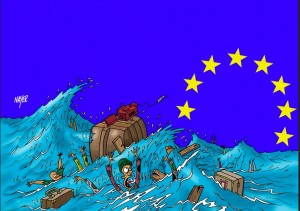
The European Union is once again struggling to come up with a coherent asylum strategy for its 28 members. In recent years, the rising number of asylum seekers entering the European Union through countries such as Italy and Greece has generated friction among member states, fueled criticism of the Schengen Agreement and contributed to the growing popularity of nationalist parties.

However, the European Union will not reform its asylum policies in any significant way. Member states will provide more financial assistance to Mediterranean countries, but they will refuse to accept quotas of immigrants over the coming months and years. Anti-immigration sentiments will persist across the Continent, putting substantial pressure on one of the European Union’s founding principles: the free movement of people.

On April 23, the European Union submitted to pressure from Italy and Malta and held an emergency summit to address the immigration crisis in the Mediterranean. Between January and April, more than 1,750 migrants died in shipwrecks at sea, a death toll 30 times higher than that of the same period in 2014. Over the past year and a half, Italian ships have rescued more than 200,000 people in the Mediterranean Sea.

After the summit concluded, EU leaders decided to triple the financial resources for the bloc’s operations in the Mediterranean Sea and to boost cooperation with certain countries like Tunisia, Egypt, Sudan, Mali and Niger to better control borders and combat human trafficking. They also asked EU Foreign Affairs Chief Federica Mogherini to begin preparing for a possible military operation aimed at identifying, capturing and destroying vessels before traffickers could use them. However, the bloc’s leaders did not reach any agreements on the distribution of asylum seekers across the Continent. Moreover, many of the goals discussed during the summit will prove difficult to achieve.  EU Immigration

Immigration to EU Countries?

Saudia Arabia Struggles with Oil

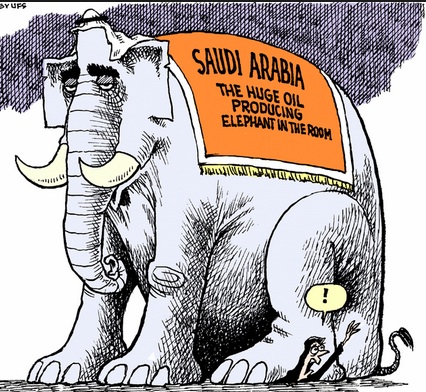
Nafeesa Syeed and Rinat Gaynullin writSaudi Arabia is burning through foreign reserves at a record pace as the largesse of the new king and regional turmoil ratchet up pressure on public finances already hurt by the oil price slump.

The kingdom spent $36 billion of the central bank’s net foreign assets — about 5 percent of the total — in February and March, the biggest two-month drop on record, data released this week show. The fall was in part due to King Salman’s order to give government employees and pensioners a two-month bonus after he ascended to the throne of the world’s biggest oil exporter in January.

The early months of Salman’s rule also saw a sharpening of the country’s rivalry with Iran — most strikingly over the Saudi-led air offensive in Yemen — and mounting security threats at home, challenges that had already led to a surge in military spending in 2014. The 48 percent drop in oil prices last year has prompted the government to use reserves and borrow from domestic banks to maintain spending on wages and investments.

The task of balancing Saudi Arabia’s economic and regional policies is increasingly falling to a new generation of princes, including the king’s son, Prince Mohammed Bin Salman. The prince, who was made second-in-line to the throne on Wednesday, heads a newly-created economic council and, as defense minister, is instrumental in the bombing campaign against Houthi rebels and their allies in Yemen.

The budget deficit is expected  to widen to 14.5 percent of gross domestic product this year, compared with a gap of 1.9 percent in 2014. The king’s handouts are likely to boost domestic consumption, supporting non-oil economic growth, she said.

Saudi Arabia accumulated tens of billions of dollars in reserves amid high oil prices. King Salman’s predecessor King Abdullah increased social and infrastructure spending after the 2011 revolts toppled rulers elsewhere in the region.
Military Spending

Military spending had increased well before the kingdom gathered a coalition of mainly Sunni-led countries behind its Yemen campaign. The “big $10-$15 billion” procurement deals have already been signed for the next three years, Michael Stephens, head of the Royal United Services Institute in Qatar, said by phone.

Saudi Arabia’s desire to play a larger role in the region means it’s likely to continue spending, Ibrahim Sharqieh Frehat, a professor of conflict resolution at Georgetown University in Qatar, said by phone.

The kingdom became the largest buyer of defense equipment last year, surpassing India, with inbound shipments jumping 54 percent.

“We are going to see this policy continuing and being reinforced,” which sits “neatly with the vision of the king of taking a regional leadership role,” said Frehat.

Saudi Arabia Needs Money

Putting the Community Back in Banking

Victoria McCrane writes: Hundreds of community bankers in Washington, DC this week will be raising concerns with lawmakers about the stalled nomination of one of their own to fill an open seat on the Federal Reserve’s seven-member board of governors.

Nearly 1,000 small bankers are in town for a policy summit hosted by the Independent Community Bankers of America, a trade group, and will be meeting with members of Congress and regulators to press policy priorities, including the pending nomination of former Bank of Hawaii chief executive Allan Landon to fill one of two empty seats on the Fed board.

Senate Banking Chairman Richard Shelby (R., Ala.), whose panel must consider Mr. Landon’s nomination before it can get a full vote on the Senate floor, said he told the White House a couple of weeks ago he won’t schedule a hearing for Mr. Landon until the president nominates a candidate for the other open seat at the Fed.

“We’ll see if they come up with two, and we’ll see what we can do,” Mr. Shelby said Tuesday. “They’ve got another opening. You know, they’ve never been in a hurry,” he said of the administration’s speed on filling open Fed seats.

The delay does not appear fueled by any GOP objections to Mr. Landon himself. Republicans as well as Democrats had been pushing the White House to embrace a candidate with community banking experience and none has publicly raised any complaints about Mr. Landon’s background.

“As is standard when we have vacant positions, the White House is conducting a comprehensive search for experienced and highly qualified individuals,” a White House spokeswoman said about the other vacant Fed governor slot. “When we are prepared to make an announcement, we will do so.”

Mr. Shelby noted that Mr. Obama also has failed to nominate a vice chairman of supervision at the Fed, a new role created by the 2010 Dodd-Frank law to oversee the central bank’s significant regulatory powers. “We’ve asked them about [that vacancy] over and over. They ought to think about that too,” Mr. Shelby said.

ICBA is now pressing the White House to produce another Fed nominee as well as pushing the issue on Capitol Hill.

Community bankers lobbied for years to get someone who understands their point of view onto the Fed board, and enlisted the help of several members of Congress to press the White House. President Barack Obama’s nomination of Mr. Landon in January was seen as a major victory for small bankers.

Entrepreneur Alert: New Price Control Technique from US Govt.

The Army announced it had chosen Harris and Thales to make its Rifleman Radio, the 21st century walkie-talkie that links foot troops into the Army’s command network.

Thales and Harris will split the next five years of Full Rate Production. It won’t be a 50:50 split, but rather an ongoing competition: Assuming that both Thales and Harris pass Army testing, the service will then buy radios in lots, with both companies competing to offer the lowest price. The Army will ultimately buy more than 150,000 FRP Rifleman Radios, but after five years, there’ll be a new competition, so Thales and Harris hardly have a perpetual lock on the program.

The award marks a historic shift in how the military buys radios — a shift that may be replicated in other areas. General Dynamics is a classic defense contractor: Its divisions build everything from nuclear powered submaines to armored ground vehicles, but it builds them all for the armed forces. Harris just builds radios, but it builds them for everybody: the police and the general public.

As Moore’s Law races ahead, high-tech has become a commodity, and with Rifleman Radio, the Army is buying it as such. Modern digital, software-defined radios are essentially computers that communicate wirelessly — something the civilian IT world builds far better than most traditional defense contractors. So instead of developing military-specific systems like JTRS, only to have the commercial sector lap the Pentagon procurement process and render the military tech obsolete on arrival, the Army is buying the radios as Non-Developmental Items (NDIs).

The crucial question is whether the military can replicate this model and take better advantage of competition and commerce innovation.  The  Defense Secretary went to SIliocn Valley to find out.

 Radios?

Accessing Information: War by Any Name?

Robert Hackett writes:  A report out of Arlington, Va.-based cyber security firm Lookingglass reveals a cyber campaign, allegedly Russian, waged against Ukrainian targets, such as the government, law enforcement, and military. The purpose of the state-sponsored espionage has apparently been to gather intelligence on its adversary, bolstering Russian war efforts.

The researchers dubbed the campaign “Operation Armageddon”. “For the most part the technologies were not advanced,” says Jason Lewis, chief collection and intelligence office at Lookingglass. “It’s not super sophisticated, but it’s certainly persistent.”

Lookingglass researchers worked with neither Ukraine nor Russia in its investigation, sourcing its materials rather from proprietary methods and through sites like VirusTotal, a public database where people can upload and scan files for known viruses.

Often, the researchers found, the hackers stole documents relevant to the outside conflict from victims’ machines, and then used those files to compromise future targets.

Once Ukraine’s interim President announced the start of an “anti-terrorist operation” against pro-Russian separatists in mid-April 2014, the conflict’s cyber activities significantly increased. From this point onwards, waves of cyber attacks from the Russians directly correlated with the timing of military events and were geared towards gathering intelligence to empower themselves on the physical battlefield – a digital method of espionage in its truest of forms.

The Lookingglass researchers, convinced that Russia is the culprit, agree with the Security Service of Ukraine (SBU) that the Russian Federal Security Service (FSB, descendant of the KGB) is to blame. (SBU, too, has called out FSB as being responsible for recent phishing attacks.) “We’re highly confident that the claims the SBU made are accurate,” Lewis says. “We didn’t find any evidence to the contrary to dispute those claims.”

That nation states are using cyber attacks to achieve geopolitical ends should come as no surprise.

Last year, CrowdStrike associated Chinese cyber espionage campaigns with China’s movement into disputed territory in the South Pacific as well as with an ISIS-led takeover of an Iraqi oil refinery. The security firm FireEye FEYE -1.07% found state actors using attack methods similar to those outlined above to target rebel forces during conflict in Syria. The security firm Cylance recently implicated Iran as having probed critical U.S. energy infrastructure, just prior to nuclear negotiations. And then, of course, there are the claims about Sony Pictures Entertainment and North Korea.

Espionage and cyber attacks can give countries that engage in the practice an upper hand in international affairs. “Nation states need to be able to asses how seriously people will take their threats and what they’ll do as result of a threat,” says Adam Meyers, vice president of intelligence at the security firm CrowdStrike, presenting a rationale for digital incursions. “It puts them in a better position to make a credible threat if they know what the response is going to be.”

Indeed, recent reports suggest that Russian spies have penetrated deep inside Ukraine’s intelligence apparatus.

Hacking as War?