Why QE Does Not Work Post Crisis

Stephen S. Roach writes:  QE may have been a resounding success in some ways – namely, arresting the riskiest phase of the crisis. But it did little to revive household consumption, which accounts for about 70% of the US economy. In fact, since early 2008, annualized growth in real consumer expenditure has averaged a mere 1.3% – the most anemic period of consumption growth on record.

This is corroborated by a glaring shortfall in the “GDP dividend” from Fed liquidity injections. Though $3.6 trillion of incremental liquidity has been added to the Fed’s balance sheet since late 2008, nominal GDP was up by just $2.5 trillion from the third quarter of 2008 to the second quarter of this year. As John Maynard Keynes famously pointed out after the Great Depression, when an economy is locked in a “liquidity trap,” with low interest rates unable to induce investment or consumption, attempting to use monetary policy to spur demand is like pushing on a string.

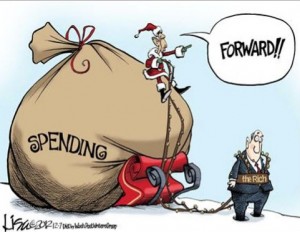
This approach also has serious financial-market consequences. Having more than doubled since its crisis-induced trough, the US equity market – not to mention its amply rewarded upper-income shareholders – has been the principal beneficiary of the Fed’s unconventional policy gambit. The same is true for a variety of once-risky fixed-income instruments – from high-yield corporate “junk” bonds to sovereign debt in crisis-torn Europe.

The operative view in central-banking circles has been that the so-called “wealth effect” – when asset appreciation spurs real economic activity – would square the circle for a lagging post-crisis recovery. The persistently anemic recovery and its attendant headwinds in the US labor market belie this assumption.

Nonetheless, the Fed remains fixated on financial-market feedback – and thus ensnared in a potentially deadly trap. Fearful of market disruptions, the Fed has embraced a slow-motion exit from QE. By splitting hairs over the meaning of the words “considerable time” in describing the expected timeline for policy normalization, Fed Chair Janet Yellen is falling into the same trap. Such a fruitless debate borrows a page from the Bernanke-Greenspan incremental norm.  QE Post Crisis

Consumers Must Spend


US VP Biden Announced Job Driven Training Grants

Much unemployement in the US is a disconnect between jobs available and people trained for the jobs.  Wlelcome news from Vice President Biden:

Training America’s workers with the skills they need for a good job can help middle class families and help American businesses grow our economy. While America’s businesses have created 10 million jobs over the past 54 months, the longest streak of uninterrupted job growth in our country’s history, we need to do more to train Americans with the skills they need, and connect them with businesses that are looking for skilled workers. The funding is part of the Trade Adjustment Assistance Community College and Career Training (TAACCCT) competitive grant program, which is co-administered by the Department of Labor and Department of Education.

The grants will provide community colleges and other eligible institutions of higher education with funds to partner with employers to expand and improve their ability to deliver education and career training programs that will help job seekers get the skills they need for in-demand jobs in industries like information technology, health care, energy, and advanced manufacturing.

Building on the strategies advanced in the Workforce Innovation and Opportunity Act, these types of job-driven training partnerships are an important way to successfully prepare and place workers in jobs that pay a middle class wage.

Job Training in US

Russia Needs Closer Ties to Europe

Since Vladimir Putin has held the reins of the Russian leadership, Russia has actively integrated into the global economy, making the era of his rule even more liberal in an economic respect than it was under former President Boris Yeltsin. Russia ranked seventh in the world for stock market capitalization at the time of the 2008 crisis, foreign assets in its banking system reached 26 percent, and foreign trade increased by almost five times from 2000 to 2008.

The number of Russians traveling abroad rose from 9.8 million in 2000 to 32.7 million in 2008, and Russia’s rate of development in modern communications and various segments of the Internet economy was one of the fastest in the world.

But the situation began to change in 2011 when two important circumstances became clear. On one hand, the relative success of the Russian economy gave rise to a call for political change, and many anticipated a “new perestroika” under the more progressive and tech-savvy President Dmitry Medvedev.

On the other hand, it became evident that Russia lacked the mobilization and technological capacity to achieve large-scale modernization and end the country’s reliance on natural resource exports in the near future.

That began Russia’s “reversal of 2012” — the point at which the political elite understood that a gas and oil economy worked best under a nondemocratic “power vertical” and that restructuring the country’s political foundations in hopes of achieving an uncertain result — and at a time when mass public protests were on the rise — was simply too risky.

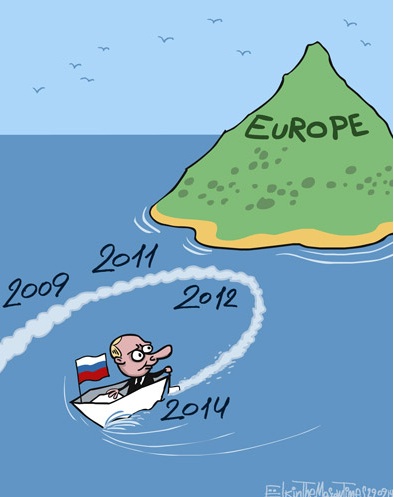
Russia began turning away from Europe, and the West as a whole, not during the Ukrainian revolution in February, but when Putin began his third term as president in 2012. The fact that many Western leaders in recent years had what Polish President Bronislaw Komorowski called “hopes for Russia’s democratic modernization” only proves that they misunderstood the nature and outlook of the Russian elite and people.

By 2014, Russia had once again become a country whose leadership showed no intention of complying with the rules of foreign or domestic policy. In fact, those leaders would probably act even more decisively if economic considerations did not hold them back. But the truth is that Russia depends heavily on the world economy, even if its political elite believe otherwise.

Hardships will hit Russia’s private businesses hardest, even while the government continues pumping budgetary funds into bailouts for state-owned corporations headed by Putin’s close associates. Over the next few years, Russia will also fail to benefit in almost any way from its “turn toward the East.” The failure of that project will grow increasingly evident just as anti-Western sentiment in Russia declines, giving way once again to envy of Western prosperity and a desire for renewed friendship.

Russia cannot survive without the outside world. The external debts of its banks and corporations exceed the size of its foreign exchange reserves. Russia finances more than half of its budget with the export of raw materials and imports 100 percent of its computers, mobile communications devices, telecommunications technology and many types of equipment. Under such conditions, the economy itself will have an impact on the country’s political course.

Many people raise the objection that the process of globalization in the early 20th century did not prevent the outbreak of World War I. That is true, but 100 years ago European powers were constantly fighting either each other or in their colonies, human life meant less, and war seemed like a perfectly appropriate means for solving many problems.

Today nobody is prepared to give their life for the sake of Gazprom or Rosneft, and most citizens and politicians understand that it is no longer possible to solve serious problems through direct confrontation. Russia’s “foreign offensive” will fail not because of a defeat at the front, but for lack of support at the rear. And the more actively Russia isolates itself from the international system, the sooner that mutiny will occur.

No further sanctions are even necessary: Those already in effect are enough to prod Moscow leaders into taking retaliatory measures that will derail Russia’s economy.

And when that happens, Russia will turn once again to the West — as it has turned many times in the past — in search of investment, technology and innovation. At that point, both sides will need to build economic and political ties that are strong enough to resist the machinations and adventurism of a handful of oligarchs with close ties to the Kremlin.
Russia and Europe

Tusk Appointment in EU a Reason for Optimism?

Ian Hansen writes: The recent choice of Polish prime minister Donald Tusk as the next president of the European Council is an auspicious sign.

The selection process that brought him to power remains more about expedience than merit. Yet, replacing Herman Van Rompuy with Tusk as “president of the presidents” suggests the Council will have more determined leadership to enact Europe’s agenda. Tusk’s political style and already strong European connections can help drive the Council to more united policies on critical issues.

Just as Belgium has not solved its long-term problems, the eurozone and greater EU still face a grave economic future for failing to remedy structural problems. From the eurozone crisis to the crisis in Ukraine, examples abound of the EU not taking unified action until it is too late.

The press describes Tusk as a soft-spoken and humorous man with a shrewd ability to defeat rivals while achieving political success. He is the only founder of his ruling center-right Civic Platform (PO) party still in the party. With strong political acumen and experience leading a rising European power and strong relationships with key European leaders, one can envision Tusk developing the president’s role from Van Rompuy’s backdoor facilitator part into a more powerful agenda-setting role.

Unlike Federica Mogherini, Tusk was unanimously named to his position by his European counterparts. French concerns over Tusk coming from a non-euro country and British concerns over EU migration even faded away as a result of Tusk’s positive working relationships with Francois Hollande and David Cameron. Yet, the most vital relationship and Tusk’s closest is with Angela Merkel.

Extremely pragmatic, both leaders have been repeatedly described as allies and confidantes as their countries have grown stronger while becoming more interlinked in recent years. Merkel even urged Tusk to consider the office of president before he truly became a candidate. Thus, while Tusk’s appointment was a symbolic win for Poland and other new EU members, it was also a win for Germany.
From ‘Merkozy’ to ‘Tuskel’

This matters immensely because Tusk’s ability to coalesce a strong negotiated position with the support of the indispensable Merkel would quickly and forcefully cement EU policies. While “Merkozy” talk once dominated the EU, decreasing French influence and uncertainty over the British role means a theoretical “Tuskel” could move Europe forward with policies aligned around a central European view.

For instance, Merkel, Tusk, and the new President of the European Commission Jean-Claude Juncker have all acknowledged the importance of keeping the UK in the EU. Their appreciation of the UK’s role in Europe, which is not universally shared within Europe, greatly increases the likelihood of passing reforms amenable to British voters before a possible in/out referendum by 2017.

Donald Tusk


Economic Impact of Turkey’s Ambivalence on Middle East Wars

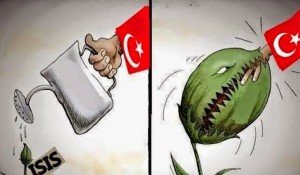
The Turkish government has not recognized the true nature of the Islamist group. It may already have been too late, however, with foreign policy tactics beginning to become contaminated with apprehension. Corruption, ineptitude and chaos within Turkey’s security apparatus no doubt also played a role, all of which made it more difficult to control the border.

Now, Ankara is facing an extremely difficult situation. Providing care to the masses of refugees costs billions of euros and weighs on the country’s already weak economy. Social tensions are on the rise with poor Turks in the region envious of the relatively good care received by the refugees and concerned about increased competition for jobs. Well-off Syrians have also driven up rents in the cities.

 The government’s biggest fear is of terror attacks. “Tourism is one of the most important economic sectors,” he says. “If a bomb goes off in a hotel and a couple of vacationers die, it’s over.” The fear is certainly well-founded. Several hundred Islamic State fighters come from Turkey and, in contrast to jhihadits from elsewhere,  they can move about freely in their home country.

Like Ahmet, a 21-year-old from Istanbul who fights for the Islamic State. “We are everywhere in Turkey, in Istanbul, in Ankara, in Gaziantep,” he says. It is impossible to confirm such claims, but Western intelligence agents believe that the Islamic State actively tries to recruit young men in Turkey. One intelligence agent who asked not to be identified says that warnings have been delivered to Turkey for years. “But the government always insists that it has the radicals under control.”

Ahmet was recruited two years ago in Istanbul by a precursor group to the Islamic State. Even then, he was full of admiration for the older boys at the Koran school who spoke about their dreams of joining the jihad. He says he has already been in Syria twice and is planning to return soon to fight “to the end.” His final battle, he says, is rapidly approaching.

Turkey and ISIS


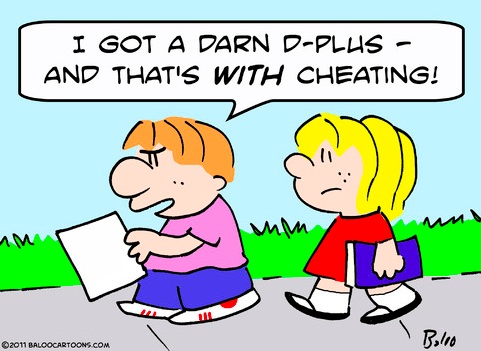
Atlanta Prosecutes Teachers Who Helped Students Cheat

Prosecutors outlined the case against a dozen former principals, teachers, and administrators accused of orchestrating a massive cheating conspiracy in 2009 in Atlanta public schools, as the high-profile trial got under way.

Prosecutors had brought charges against 35 individuals in the case, one of the most sweeping and widespread cases of cheating to come to light in US public education. Most of those individuals have pleaded guilty and won’t go to trial. According to the charges, educators allegedly used a variety of schemes to inflate students’ test scores, including erasing incorrect answers, telling children to change their answers, and opening sealed exams ahead of time to coach students on the answers.

It’s a case that has received widespread attention both because of the nature of the charges and the fact that it seemed to have emanated from the very top – former Atlanta superintendent Beverly Hall is one of the defendants, though her trial has been delayed while she deals with a health issue  – as well as the questions it raises about the possible negative incentives from the culture of high-stakes standardized testing.Prosecutors on Monday outlined the case against a dozen former principals, teachers, and administrators accused of orchestrating a massive cheating conspiracy in 2009 in Atlanta public schools, as the high-profile trial got under way.

Test Cheating

Australians Arrest ISIS Financier

Melbourne raids follow a heightened terror alert earlier in September and the tabling of new security laws in Australia’s parliament.

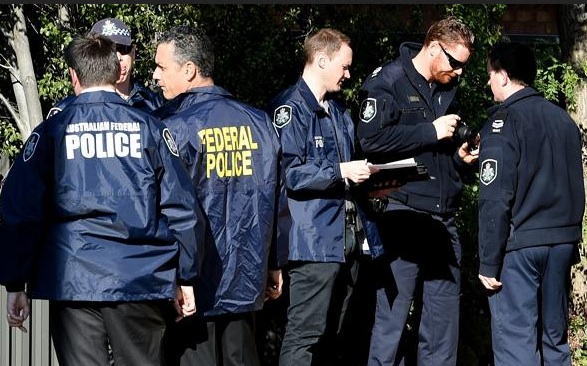
Security forces in Australia carried out a new round of anti-terror raids, resulting in the arrest of a 23-year-old man in Melbourne on suspicion of funding a US citizen to fight for Islamic State.

Hassan El Sabsabi, is accused of sending about $12,000 to a US citizen he met on social media, in order to help fund his travel to Syria, where IS and other jihadist groups are active. Mr. El Sabsabi was arrested today after an eight-month investigation by Australian police, which were tipped off by the FBI.Security forces in Australia carried out a new round of anti-terror raids today, resulting in the arrest of a 23-year-old man in Melbourne on suspicion of funding a US citizen to fight for Islamic State.

Arrests in Australia

Obama: My Dinner with Modi

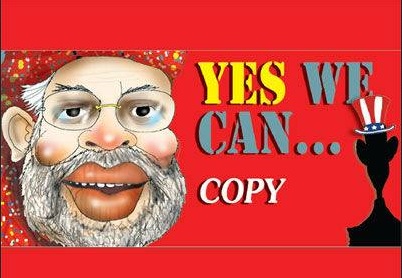
As President Obama welcomes new Indian Prime Minister Narendra Modi to the White House for a private dinner, it will be more than US amends for having denied Mr. Modi a visa (and maintaining the ban for nearly a decade) over his handling of sectarian riots in India’s Gujarat state in 2002 when he was chief minister.

It represents an opportunity for both Modi and Mr. Obama to address – and they hope, advance – key issues to both countries. Here are five of those issues:

Economic issues: Modi met with CEOs of Fortune 500 companies in New York, and clearly the US and India are doing business and want to do more business. But talks at the top on this subject have failed in the past.

Relations with China: Modi has expressed his interest in economic relations with China, but is fearful of incursions on the border. He wants increase US-India security ties.

Counter-terrorism: The US wants help from India in stemming local recruiting by terrorist organizations. India wants help with Pakistan.

Climate change: Obama has made this a priority. Modi says that the economic costs of addressing climate change should be borne by wealthy countries.

Indian-Americans. A rousing rally from this group greeted Modi at Madison Square Garden. Modi would like them to help build India. Obama would like their votes for Democrats.

Obama and Modi Dine

Obama, Unquestionably Bright, Started at Zero in Economics and Appears to Have Learned

Juan WIlliams writes: President Obama may be “on to something” with his statements that echo President Ronald Reagan’s famous question that asked voters if they are better off than they were four years ago.

Reuters has confirmed the president’s claims on the economy, and it’s lasting longer than average.  “‘On Obama’s watch, 5.1 million jobs have also been added to payrolls, the S&P/Case-Shiller national home price index is up about 17 percent and the S&P 500 stock index has more than doubled while hitting all-time records,'” Williams quotes the report as saying.

According to a Kiplinger economic outlook, Williams says, the nation’s economy “looks better than was previously thought, setting the stage for more sustained growth in coming months.”

In addition, Williams notes, the unemployment rate has been lower for the past five months than during the last five years, and is now at 6.1 percent. Meanwhile, the Dow Jones industrial average is near an all-time high, now regularly closing at over 17,000 points.

Consumer confidence is also up, said Williams, to its highest point in nearly seven years.
Obama said on CBS’ “60 Minutes” Sunday that he plans to spend the weeks before the November midterm election campaigning for Democrats on his economic record, and that he would put it “against any leader around the world in terms of digging ourselves out of a terrible, almost unprecedented financial crisis.”

Obama admits that Americans aren’t feeling the recovery, and blamed that on incomes and wages that are not increasing. That problem can be addressed through Democratic policy, said Obama.

The president’s job approval, when it comes to the economy, has a negative ranking, with RealClearPolitics showing that 55 percent of Americans disapprove of the president’s handling of the economy, with 40 percent approving.  The economy is the top issue to voters, Williams said, so Democrats will need to work to turn the negative numbers around.

Americans have a low opinion of the economy because median household incomes have fallen by some $2,100 during the president’s first term in office, according to Census Bureau figures.

But if the midterms turn into a referendum on which party can boost middle class wages, the Democrats may hold the Senate.

Obama and the Eonomy


Rene Pape, the World’s Great Bass, in Recital in New York

Pape is a natural. With a large voice that flows easily and a perfect instinct for the phrase, for dynamics and for drama he is one of the most gifted singers performing today. He is completing 2014 in performances in Macbeth and the Magic Flute and also Tristan and Iseult. No one will ever forget his Gurnemanz in Parsifal.
There was a moment in Parsifal when Pape sang about the annointment of the new King. He said, “I was so moved that I was shaking…it took me several minutes to calm down.” Everyone felt the tension in the air. Pape wa not talking about his singing, but about his reaction to Wagner’s music.
In his selection of songs, it was clear that he was listening and delivering the music of Beethoven and Dvorak, of the composers and their intention. He was not commenting on his own singing.
His program was brave and daring. Beethoven songs which began the afternoon were based on the poetry of Gellert and are a variety of addresses to God. In his commanding presence, and complete attention to emotional implication, Pape showed us how far he can extend dynamic range. Other singers try to pull off the whispered phrase, but only Pape does it perfectly. The stars flickered in the sixth song, and Camillo Radicke accompanied in seamless rhythms.
Pape’s sense of humor is as graceful and compelling as his dramatic range. When applause erupted at an inappropriate place, he glared with a teasing good humor. Rattled by the unfortunate soprano who the Met keeps casting, Marina Poplavskaya, in a recent Faust production, he whispered in her ear so the entire Met audience could hear as she began Marguerite’s famous Jewel Song, “Diamonds are a Girl’s Best Friend.”
Pape is known to be indulgent of women, booze, cigarette, and let’s face it, life. He has said, “I suppose I should be more careful, but on the other hand, you will be good onstage if you live a real life. If you take yourself out of real life and overprotect yourself, you cannot make real music. It will always be fake.”
Pape’s low placement does not sound guttural. It does not wobble. His tones are totally focused. He smiles as he sings, but not because he is amused, but so he can facilitate his technique and keep his tone frontal. His perfect technique is used to produce tonal color as he wants it. He can make his notes round and dark or bright and open. He is relaxed because this is his voice, not one that is made up of many selected pieces, the fault of so many singers today. His vibrato is also natural and pleasing. With hiis superior technique, he explores expression in the service of musicianship.

Rene Pape, SuperbPape’s English is first rate. Songs from Shakespeare, by the late 19th century composer Quilter,were delightful. His final encore was a selection was from Camelot. His promise ‘never to leave’ was not kept, but enticed an audience that would never let this great lyric bass go. Pape loves blues and hard rock too. He is a musical polymath.