Singapore Gives Up Online Sports Betting. New Jersey Takes it On

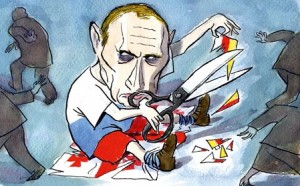
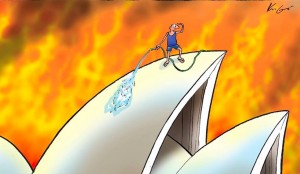
Singapore proposed a law that is ust short of outlawing online gambling. They were tired of betting and related crime syndicates that fix sports matches worldwide.

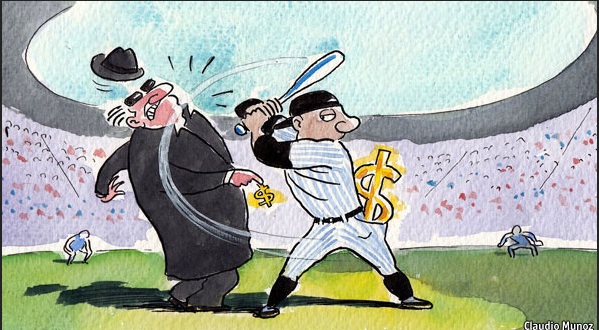
Governor Christie of New Jersey in the US made a surprise move, offering to Atlantic City”s ailing casinos.  In defiance of federal law, he decided to let casinos accept remote wages on most sports events.

Singapore is now doing its part, but New Jersey is going in the opposite direction.

Gambling on Sports

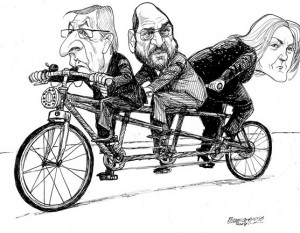
Schulz, head of EP, Demands Response from Juncker on Health and Environment Portfolios

Advocates unhappy with new structure on heath and environment.  Schulz has said about the environment:  We need to diversify our energy sources, and reduce the high energy dependency of several of our Member States.  We need to keep our European energy market open to our neighbours. Howeveri if theprice for energy from the East becomes too expensive.

in political terms, Europe should be able to switch very swiftly to other supply
channels.  We need to be able to reverse energy flows when necessary.
And we need to strengthen the share of renewable energies on our continent. This is
not only a matter of a responsible climate change policy. It is, at the same time, an
industrial policy imperative if we still want to have affordable energy at our disposal in
the medium term. I strongly believe in the potential of green growth.
I therefore want Europe’s Energy Union to become the world number one in renewable
energies I would also like to significantly enhance energy efficiency beyond the 2020
objective notably when it comes to buildings and I am in favour of an
ambitious, binding target to this end.  I want the European Union to lead the fight
against global warming ahead of the United Nations Paris meeting
in 2015 and beyond.
Direction of the EU


US Fed Failed to Regulate Banks

Michael Lewis writes: The US Fed failed to regulate the banks because it did not encourage its employees to ask questions, to speak their minds or to point out problems. These are detailed in 46 hours of tapes obtained by Jake Bernstein.


Just the opposite: The Fed encourages its employees to keep their heads down, to obey their managers and to appease the banks. That is, bank regulators failed to do their jobs properly not because they lacked the tools but because they were discouraged from using them.

The report quotes Fed employees saying things like, “until I know what my boss thinks I don’t want to tell you,” and “no one feels individually accountable for financial crisis mistakes because management is through consensus.” Beim was himself surprised that what he thought was going to be an investigation of financial failure was actually a story of cultural failure.

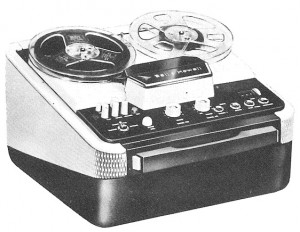
Financial Regulation Tapes

What Do CEOs Look Like?

Tall, fit, wel-spoken, well-dressed.  So what’s new?  Even female CEOs follow the old CEO model. Oscar Wilde quipped: Only shallow people do not udge by appearances.

Schumpeter writes in the Economist:  In Gorilla society, power belongs to silverback males. These splendid creatures have numerous status markers besides their back hair: they are bigger than the rest of their band, strike space-filling postures, produce deeper sounds, thump their chests lustily and, in general, exude an air of physical fitness. Things are not that different in the corporate world. The typical chief executive is more than six feet tall, has a deep voice, a good posture, a touch of grey in his thick, lustrous hair and, for his age, a fit body. Bosses spread themselves out behind their large desks. They stand tall when talking to subordinates. Their conversation is laden with prestige pauses and declarative statements.  CEO Appearance

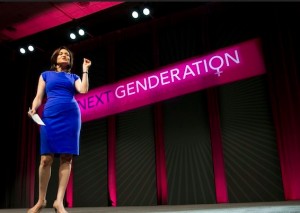
Next Genderation


UAE Announces a Woman Pilot Led Their Airstrikes against ISIS

 The UAE airstrike mission in the U.S.-led coalition against the Islamic State (ISIS) flew their planes during Monday evening’s attacks under the leadership of a female pilot, UAE Ambassador to the U.S. Yousef Al Otaiba announced.”I can officially confirm that the UAE strike mission on Monday night was led by female fighter pilot Mariam Al Mansouri. She is fully qualified, highly trained, combat-ready pilot, and she led the mission,” Al Otaiba said Thursday.

Al Mansouri was the first female pilot of the UAE Air Force.  She is 35 years old with an undergraduate degree in English, and was among the first women to joint the UAE Air Force Academy when membership became open to females, graduating in 2008.

Al Otaiba said U.S. tanker pilots were surprised when they heard a female voice during Monday’s mission and “actually paused for about 20 seconds.” While some countries in the region tended to be “a little more conservative,” Al Otaiba said the UAE took a more “open minded, pragmatic view” to the status of women, possibly due to their “open minded, young leadership.”

Al Mansouri was representative of the greater debate about the fight against ISIS, as it showed the choices people in the region could have for their culture, Al Otaiba explained.

“The whole campaign and coalition on ISIS, and extremists in general, boils down to ultimately this — Do you want a model or a society that allows women to become ministers in government, female fighter pilots, business executives, artists? Or, do you want a society where, if a woman doesn’t cover up in public, she’s beaten or she’s lashed or she’s raped? This is ultimately what this breaks down to,” he said.

The UAE was one of five Arab states that joined with the U.S. in Monday’s airstrikes. Al Otaiba predicted more Arab states would join the battle against ISIS.

“I don’t think it’s a question of which, or what, Arab countries will step up. We will. But, you can’t do this without us, and we can’t do this without you,” he said.

Al Otaiba said moderate Muslims needed to speak up about combating radical Islamists.
“I’ve heard a lot of comments. One of them was, there is no such thing as moderate Islam. There is no such thing as moderate Muslims. You know what? You’re looking at one,” he said. “We need to do more. We need to say more.”


 UAE Pilot


Juncker Defends Emphasis on Finance in His EC Cabinet

Jean-Claude Juncker, the incoming president of the European Commission, has brushed aside criticisms that his re-organisation of the Commission will compromise European healthcare.

Health technology and pharmaceutical policy is being moved from the Health and Food Safety Commissioner to the new Commissioner for Internal Market, Industry, Entrepreneurship and SMEs.  The European Public Health Alliance has not supported this decision which threatens Europe’s ability to prepare for major health crises such as outbreaks of infectious diseases and health threats arising from climate change, whilst putting the public interest behind the drive for profits in drug authorisation procedures.

The European Public Health Alliance believes that this move undermines the College of Commissioners and will deepen the rift between the institutions and ordinary people. We also deeply regret that the decision had not been subject to public debate, the lack of explanation provided for this policy shift, and that the announcement of portfolios came after the deadline for written questions in the Parliament. The unfortunate timing essentially inhibits the European Parliament’s right of scrutiny.

Health technology and pharmaceutical policy was transferred to the Health Commissioner in 2009 to, among other reasons (3), facilitate emergency preparedness (in response to the emergence of H1N1 and the alleged inability of DG Enterprise to provide the necessary leadership and coordination of vaccines) and to harmonise pharmaceutical governance along the lines of Europe’s Member States, all of whom manage pharmaceutical policy under their Ministries of Health.

“It is disappointing that President-elect Juncker believes these objectives fall a pale second place to appeasing big business,” said Peggy Maguire, President of EPHA. “It sends a terrible message during times when criticism is being levelled at Europe: the College of Commissioners should work for the interest of citizens and not anonymous corporate masters,” continued Ms Maguire.

With the responsibility for pharmaceutical and medical devices policies removed from the Commissioner for Health and Food Safety, Dr Andriukaitis the nominated Commissioner has effectively been denied the opportunity to achieve what his services are being requested to do. Pharmaceutical policy is an integral part of public health policy making. Medicines form a major part of prevention and treatment measures and are therefore of key importance in safeguarding health. Access to safe, effective and high quality medicines (4), accompanied by independent and unbiased information to patients, is a minimum requirement for sustainable health systems. Previous experience with the Directive on information to the general public on medicinal products subject to medical prescription demonstrated the difficulty of providing information that must be reliable, comparable, objective and user-friendly when the main policy consideration was increasing sales.

“When I was negotiating the transparency laws for clinical trial results, it was DG Enterprise that wanted to water the rules down. Now they will be overseeing the European Medicines Agency as it implements the transparency regime, which is frankly concerning,” said Glenis Willmott, MEP S&D UK.


In an announcement on Wednesday 10 September, the President-elect (1) revealed that health technology and pharmaceutical policy is being moved from the Health and Food Safety Commissioner to the new Commissioner for Internal Market, Industry, Entrepreneurship and SMEs (2). The European Public Health Alliance cannot support this decision which threatens Europe’s ability to prepare for major health crises such as outbreaks of infectious diseases and health threats arising from climate change, whilst putting the public interest behind the drive for profits in drug authorisation procedures.

The European Public Health Alliance believes that this move undermines the College of Commissioners and will deepen the rift between the institutions and ordinary people. We also deeply regret that the decision had not been subject to public debate, the lack of explanation provided for this policy shift, and that the announcement of portfolios came after the deadline for written questions in the Parliament. The unfortunate timing essentially inhibits the European Parliament’s right of scrutiny.

Health technology and pharmaceutical policy was transferred to the Health Commissioner in 2009 to, among other reasons (3), facilitate emergency preparedness (in response to the emergence of H1N1 and the alleged inability of DG Enterprise to provide the necessary leadership and coordination of vaccines) and to harmonise pharmaceutical governance along the lines of Europe’s Member States, all of whom manage pharmaceutical policy under their Ministries of Health.

“This is a potential disaster. President Barroso took the decision to strengthen Europe’s ability to respond to pandemics, and to bring the European Commission in line with national governments. It is disappointing that President-elect Juncker believes these objectives fall a pale second place to appeasing big business,” said Peggy Maguire, President of EPHA. “It sends a terrible message during times when criticism is being levelled at Europe: the College of Commissioners should work for the interest of citizens and not anonymous corporate masters,” continued Ms Maguire.

With the responsibility for pharmaceutical and medical devices policies removed from the Commissioner for Health and Food Safety, Dr Andriukaitis the nominated Commissioner-designate, has effectively been denied the opportunity to achieve what his services are being requested to do. Pharmaceutical policy is an integral part of public health policy making. Medicines form a major part of prevention and treatment measures and are therefore of key importance in safeguarding health. Access to safe, effective and high quality medicines (4), accompanied by independent and unbiased information to patients, is a minimum requirement for sustainable health systems. Previous experience with the Directive on information to the general public on medicinal products subject to medical prescription demonstrated the difficulty of providing information that must be reliable, comparable, objective and user-friendly when the main policy consideration was increasing sales. (5)

“When I was negotiating the transparency laws for clinical trial results, it was DG Enterprise that wanted to water the rules down. Now they will be overseeing the European Medicines Agency as it implements the transparency regime, which is frankly concerning,” said Glenis Willmott, MEP S&D UK.
Health Care in the EU


Tamping Down on Housing Investor Loans in Australia

The Australian Reserve Bank governor has confirmed that a housing investor surge is his “one area of concern” and lending limits are “worth a try”.   Mr Stevens reiterated that the focus of the bank’s concerns is a surge in property investors, especially in Australia’s two largest cities.  “There is one area that I think is of concern right now, and that is that investor finance is growing at double-digit rates,” he observed.

“It’s nearly half the flow of new approvals, a lot of this is interest only lending in an environment of rising house prices, especially in Sydney and Melbourne.”

Mr Stevens reluctantly talked about so-called macroprudential policies that would place some extra restrictions on bank lending after being quizzed on the subject during the panel discussion.

In the bank’s latest half-yearly Financial Stability Review released yesterday, the RBA had revealed that it was in discussions with the banking regulator about imposing some such restrictions specifically on housing investment loans.  Mr Stevens said such rules would not be a panacea to cure all ills, but he did not back away from the prospect of temporary, investor-targeted lending rules to curb finance growth in that sector.  “I think it’s perfectly sound and sensible to ask ourselves whether there are tools that might at least lean on that a bit,” he said.  “I see not much downside in doing so – the worst that could happen is it doesn’t have that big an effect, but if it had some and that helped us to square in some small way all the conflicting things that we have going on that is worth a try.”

The main topic of the governor’s talk was the current inquiry into Australia’s financial system.  The Financial System Inquiry, commissioned by the Federal Government and chaired by former Commonwealth Bank chief David Murray, is due to complete its final report in November.  Mr Stevens told the forum that regulation of risk is one of four areas he hopes the review will address.  He says risk taking can be good, provided it is the right kind.  “A feature of the world economy is there’s a lot of financial risk taking and not all that much real economy risk taking: the entrepreneurs with a project, an idea, a market, a product, a new worker,” he lamented.  “That type of risk taking, which is the one we really want, there’s less of that than we would like.”

Risk Taking in Australia

Big Car Market Untapped in India

Kettan Takkar writes: India deserves a much larger car market and the country’s automobile manufactueres must introspect why so few cars are sold here compared to China,Ratan Tata, chairman emeritus of Tata Sons has said.

“Indian car market doesn’t deserve to be 3 million. We need to ask ourselves have we made cars too expensive for consumers to own. Have we focused on a low-scale, high-margin business,” Tata told an audience at a function organised by Frost and Sullivan, a consultancy. The audience was predominantly from the automobile industry.

Tata was speaking at the Frost & Sullivan Growth and Innovation Leadership (GIL) 2014 Summit. He received the GIL Visionary Leadership Award and entered the GIL Community’s Hall of Fame joining an elite roster including Archbishop Desmond Tutu, Sir Richard Branson, Mitchell Baker, Jack Andraka, Marc Benioff, Steve Woods, and Judy Estrin, among others.

Cars for India

Dubai Residential Property Values?

Depending on who you talk to…prices went up easily by 50% and perhaps by 70% over the past five years since the bottom in early 2009; everyone appears to agree that they are back to where they were in January 2008. What happened between then and now is a subject of collective amnesia as are many of the statements made at the 2008 Cityscape…for example the spectacularly miss-timed pronouncement by one expert… “Investors say 2009 will be the best year for real estate investment in MENA, ever”.

Two things can happen once real estate prices start to “cool” after a period of energetic growth. If that 50% to 70% was a “bubble” the next thing will likely happen will be a “bust”…good time to panic. There again, according to our calculations, prices went up by 100% in the five years preceding 2008, so perhaps that cooling could simply be a “Soros-Dip”, signaling that a new bubble is brewing in the background…good time to buy. Our view is neither:

This is a model of Dubai’s residential property prices published in July 2009. It offered an explanation of what had just happened (the Bubble & Pop); with a prediction in hard numbers for what was going to happen next.


http://www.marketoracle.co.uk/Article12114.html

The historical line was based mainly on tracking asking prices of apartments in the Greens and Dubai Marina and weighting those back to a smaller data-base of actual transactions. It may not be representative of the market as a whole; compared to other indexes up to 2009 it agrees pretty well with Colliers and ASTECO, there is however a wide variation of opinions regards to the details amongst the experts. All the same, no one disagrees that there WAS a bubble up to late 2008 and there WAS a bust.

The thesis behind the prediction, i.e. the dotted-line, (explained in that article) is that in every market there is the “correct” price. But markets sometimes go into “disequilibrium”. When that happens, the amount of disequilibrium “UP” tends to be reflected in the amount of the subsequent disequilibrium “DOWN”.

From a practical standpoint, if you know what the “correct” price is; the theory says you can make reasonably accurate predictions about the gyrations in the immediate future, following the bust. Granted working out the “correct price” requires an understanding of valuation as in figuring out what International Valuation Standards calls “Other than Market Value”. Often the experts call that “Fair Value” although there is nothing “fair” about it. More confusing, different experts have different definitions about what “Fair Value” means, so it can mean just about anything, which is why real estate agents use the phase in the same breath as “sought-after”, pristine”…“prime”, whatever those words mean?

Semantics aside; if you know what the price “should” have been…if not for an episode of “disequilibrium” then after a bubble pop’s you can figure out

  1. at what point the prices will likely bottom, and
  2. where they will bounce back to, that’s the dotted line on the chart. You also get an idea about
  3. timing, although that’s harder to predict because it depends mainly on how long it takes the banker-fall-guys to wake up from their jingle-mail-induced paralysis.

Housing in Dubai